
The Writing Boy: The World’s First Android and the Marvel of 18th-Century Engineering
Ancient Civilization

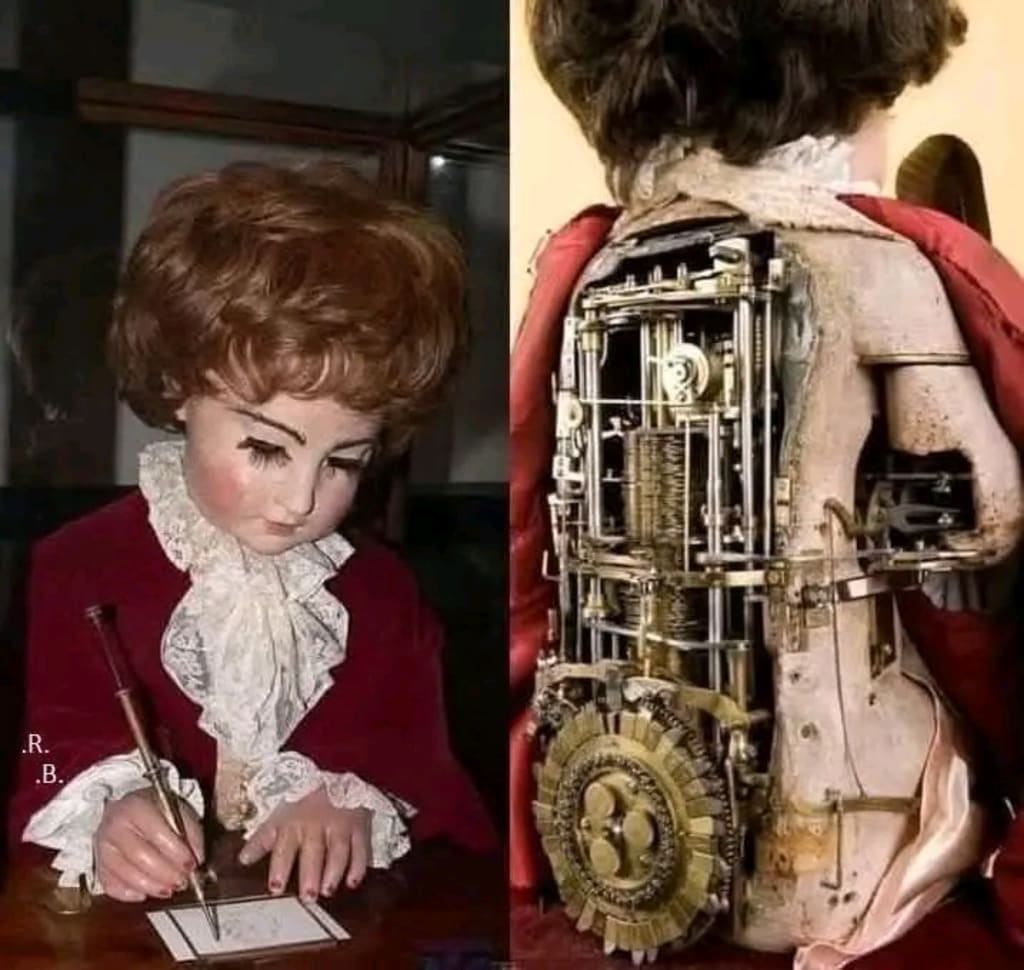
In the annals of technological history, the term "android" might conjure images of modern humanoid robots powered by artificial intelligence. However, the origins of programmable automatons stretch far back into the 18th century, a time when craftsmanship and mechanical ingenuity reached astonishing heights. Among the pioneers of this era was the Swiss watchmaker Pierre Jaquet-Droz, whose creation, The Writing Boy, stands as one of the world’s earliest androids.
Unveiled in 1774 during the reign of Louis XVI, this masterpiece left audiences—including the French court—spellbound. The Writing Boy wasn’t just a toy or a curiosity; it was a marvel of engineering and artistry that showcased the extraordinary potential of mechanical automation.
A Glimpse of Genius
At first glance, The Writing Boy appears deceptively simple. It is a wooden doll with a porcelain head, barefoot, and holding a goose feather quill. Clad in 18th-century attire, the figure seems unassuming. Yet hidden within this seemingly modest exterior lies an intricate mechanism consisting of 6,000 moving parts.
Developed over 20 painstaking months, The Writing Boy was designed to mimic the act of writing with remarkable precision. His head moves slightly as if in thought, his eyes follow the motion of the quill, and his hand glides gracefully across the page. What makes this automaton truly extraordinary is its ability to write programmable sentences—an unprecedented achievement at the time.
The Writing Mechanism
The genius of The Writing Boy lies in its internal mechanism. At the heart of the automaton is a complex system of cams, gears, and levers meticulously crafted by Jaquet-Droz. These components work in harmony to replicate human-like writing movements.
The automaton’s sentences are determined by a series of replaceable cams, which encode the strokes needed to form each letter. By rearranging these cams, The Writing Boy can write different phrases, making it one of the earliest examples of programmable technology. When presented in Paris in 1774, the automaton inscribed its first sentence: “My inventor is Jaquet-Droz.”
The mechanical precision of The Writing Boy allowed it to produce clear, elegant script—a feat that amazed even the most skeptical observers.
The Paris Debut
When Pierre Jaquet-Droz unveiled The Writing Boy at the court of King Louis XVI, the reaction was one of astonishment. The French nobility, accustomed to opulence and innovation, had never seen anything like it. The automaton’s lifelike movements and ability to write seemed almost magical, blurring the line between machine and human.
The Writing Boy quickly became a sensation, drawing crowds wherever it was displayed. Its debut in Paris not only cemented Jaquet-Droz’s reputation as a master craftsman but also highlighted the intersection of art, science, and technology in the Enlightenment era.
Automatons in the Enlightenment Era
The Writing Boy was not an isolated creation but part of a broader tradition of automaton-making in the 18th century. During this period, European watchmakers, inventors, and artisans sought to push the boundaries of mechanical design. Automatons were viewed as symbols of ingenuity and intellectual achievement, blending functionality with aesthetic beauty.
Jaquet-Droz himself created other famous automatons, including The Musician and The Draughtsman. Together with The Writing Boy, these mechanical figures showcased the potential of automation long before the Industrial Revolution.
Why The Writing Boy Matters
The significance of The Writing Boy extends beyond its historical and artistic value. It represents a turning point in human ingenuity, demonstrating how mechanical systems could be programmed to perform complex tasks. In many ways, The Writing Boy foreshadowed the development of modern robotics and computer programming.
By encoding specific instructions into replaceable cams, Jaquet-Droz essentially created a mechanical “memory” system—an early precursor to the programmable logic we see in today’s technology. This innovation paved the way for future advancements in automation, from factory machines to artificial intelligence.
The Legacy of The Writing Boy
Today, The Writing Boy continues to inspire awe and admiration. It is housed in the Museum of Art and History in Neuchâtel, Switzerland, where visitors can witness its intricate mechanisms in action. Despite being over 250 years old, the automaton remains fully functional, a testament to the skill and craftsmanship of its creator.
The legacy of The Writing Boy also endures in the field of robotics. Modern engineers and designers often look to historical automatons for inspiration, recognizing the ingenuity and artistry that went into their creation. Pierre Jaquet-Droz’s masterpiece serves as a reminder of how far we’ve come—and how much we owe to the visionaries of the past.
Conclusion
The Writing Boy is more than just an automaton; it is a symbol of human creativity and determination. In an era without advanced tools or digital technology, Pierre Jaquet-Droz crafted a machine that could mimic one of humanity’s most intricate skills: writing.
Its debut in 1774 captivated the court of Louis XVI and cemented its place in history as the world’s first programmable android. Today, The Writing Boy stands as a testament to the power of innovation, inspiring generations to explore the boundaries of what is possible.
In the story of The Writing Boy, we find not only a fascinating piece of history but also a glimpse into the limitless potential of human imagination and ingenuity.
About the Creator
Keep reading
More stories from Deji Akomolafe and writers in History and other communities.
L'Eschif of Périgueux: A Timeless Marvel of Medieval Architecture
Nestled in the heart of Périgueux, France, L'Eschif is a living testament to the ingenuity and resilience of medieval architecture. Built in 1347, this oak-and-timber-framed building has stood steadfastly for nearly 700 years, captivating locals and visitors alike with its historical significance and architectural brilliance. Perched precariously on the narrow wall of Puy-Saint-Front, the ancient medieval center of Périgueux, L'Eschif offers a fascinating glimpse into the past, where function and form merged seamlessly to create enduring structures.
By Deji Akomolafeabout a year ago in History
Alexander the Great: Conqueror of Empires
Alexander was born in 356 BCE in the ancient kingdom of Macedon, a rugged land of warriors and kings. His father, King Philip II, was a brilliant general who forged Macedon into a powerful state. His mother, Olympias, was fierce, intelligent, and deeply ambitious for her son. From the beginning, Alexander’s life was wrapped in stories of destiny. Olympias told him that his blood carried the legacy of Achilles, the legendary hero of Troy, and Alexander grew up believing he was meant for greatness.
By The best writer 4 days ago in History



Comments
There are no comments for this story
Be the first to respond and start the conversation.