
L'Eschif of Périgueux: A Timeless Marvel of Medieval Architecture
Medieval Structure


Nestled in the heart of Périgueux, France, L'Eschif is a living testament to the ingenuity and resilience of medieval architecture. Built in 1347, this oak-and-timber-framed building has stood steadfastly for nearly 700 years, captivating locals and visitors alike with its historical significance and architectural brilliance. Perched precariously on the narrow wall of Puy-Saint-Front, the ancient medieval center of Périgueux, L'Eschif offers a fascinating glimpse into the past, where function and form merged seamlessly to create enduring structures.
The Origins of L'Eschif
The story of L'Eschif begins in the tumultuous 14th century, a time marked by wars, plagues, and significant socio-political changes in Europe. Constructed as a watchpoint for a toll bridge spanning the Isle River, L'Eschif was strategically designed to monitor and protect the flow of goods and people. Toll bridges were vital economic lifelines for medieval cities, and structures like L'Eschif ensured their security while providing a vantage point for potential threats.
The building’s location atop the walls of Puy-Saint-Front was no accident. The ancient city center was a fortified hub, with its walls offering protection against invaders. L'Eschif, with its elevated position and commanding views of the surrounding area, was an integral part of this defensive network.
A Marvel of Medieval Engineering
What makes L'Eschif remarkable is not just its historical role but also its construction. The building is a quintessential example of colombage (timber framing), a technique widely used in medieval Europe. Its oak beams, expertly joined and reinforced, provide both strength and flexibility—qualities essential for a structure perched on a narrow wall. The infill of plaster between the wooden framework not only adds insulation but also enhances the building’s visual appeal.
The use of oak, a durable and readily available material, reflects the resourcefulness of medieval builders. Oak's natural resistance to decay and pests has contributed to the longevity of L'Eschif, allowing it to withstand centuries of wear and tear, as well as the harsh French climate.
Another notable feature of L'Eschif is its overhanging design, a common characteristic of medieval architecture. This cantilevered structure not only maximized interior space but also reduced the load on the narrow wall beneath. The ingenuity of this design speaks volumes about the engineering prowess of the time, proving that medieval builders were masters of balancing practicality with aesthetics.
Historical Significance
Beyond its architectural brilliance, L'Eschif holds immense historical significance. Its construction in 1347 coincided with the early years of the Hundred Years' War (1337–1453), a period of prolonged conflict between England and France. During this time, Périgueux was a contested territory, making structures like L'Eschif critical for the city’s defense and administration.
As a watchpoint, L'Eschif played a dual role—ensuring the safe collection of tolls and serving as an early warning system against potential attacks. The structure would have been manned by guards or lookouts, who kept a vigilant eye on the bridge and the surrounding area. This strategic function highlights the interconnectedness of commerce, security, and urban planning in medieval society.
Over the centuries, as Périgueux evolved and expanded, the role of L'Eschif shifted. By the modern era, it had become a cherished historical landmark, a tangible link to the city’s medieval past.
Preservation and Legacy
The fact that L'Eschif has survived for nearly seven centuries is nothing short of extraordinary. Its longevity is a testament to the quality of its construction and the care it has received over the years. In a world where historical buildings are often lost to neglect or urbanization, L'Eschif stands as a symbol of preservation and respect for heritage.
In recent years, efforts have been made to maintain and restore the structure, ensuring its continued survival for future generations. Preservationists and historians have worked tirelessly to protect L'Eschif from the ravages of time, using modern techniques to reinforce its medieval framework while retaining its original character.
Today, L'Eschif is more than just a building; it is a cultural treasure. Visitors to Périgueux are drawn to its quaint charm and historical significance, marveling at how a structure so seemingly fragile can have such an enduring presence. It serves as a reminder of the ingenuity of our ancestors and their ability to create structures that are both functional and beautiful.
A Visit to L'Eschif
For those fortunate enough to visit Périgueux, L'Eschif is a must-see attraction. Its picturesque location on the walls of Puy-Saint-Front offers stunning views of the surrounding cityscape and the Isle River. Walking along the medieval walls, one can almost imagine the hustle and bustle of the 14th century, with merchants, guards, and townsfolk going about their daily lives.
The building itself, with its weathered oak beams and plastered walls, exudes a sense of timelessness. Despite the passage of centuries, it remains a proud sentinel of Périgueux’s rich history.
Conclusion
L'Eschif is more than just a relic of the past; it is a symbol of resilience, ingenuity, and cultural heritage. As it approaches its 700th anniversary, this medieval marvel continues to inspire awe and admiration, reminding us of the enduring legacy of those who came before us. Whether you’re an architecture enthusiast, a history buff, or simply a curious traveler, L'Eschif offers a unique window into the world of medieval France—a world where craftsmanship and purpose combined to create structures that stand the test of time.
About the Creator
Keep reading
More stories from Deji Akomolafe and writers in History and other communities.
Bamburgh Castle: England’s Majestic Coastal Fortress
Perched dramatically atop a basalt outcrop overlooking the rugged Northumberland coastline, Bamburgh Castle is a sight to behold. For over 1,400 years, this imposing structure has stood as a sentinel, guarding the coast and bearing witness to the ebb and flow of English history. From its beginnings as an Anglo-Saxon stronghold to its role as a royal sanctuary, Bamburgh Castle is more than just a fortress; it is a treasure trove of history, archaeology, and legend.
By Deji Akomolafeabout a year ago in History
Once Wealthy Estates Now Lost to Ruins
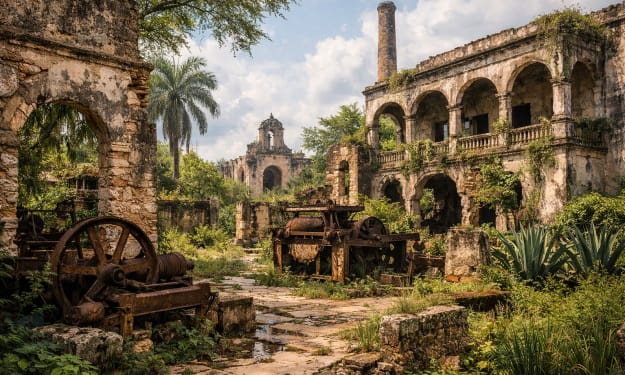
In the tropical landscapes of southern Yucatán, Mexico, the ruins of once-grand haciendas stand quietly among overgrown fields and crumbling stone walls. These estates were once the heart of a booming industry built around a plant that locals called “green gold.” For decades, the production of sisal fiber brought enormous wealth to the region, transforming the economy and shaping the lives of thousands of people. Today, however, many of these estates lie abandoned, their glory fading into history.
By Irshad Abbasi 2 days ago in History



Comments
There are no comments for this story
Be the first to respond and start the conversation.