
The Sweet and Sticky History of Fun, Part 4 Finale: The 1990s
Iron Lighthouse Presents

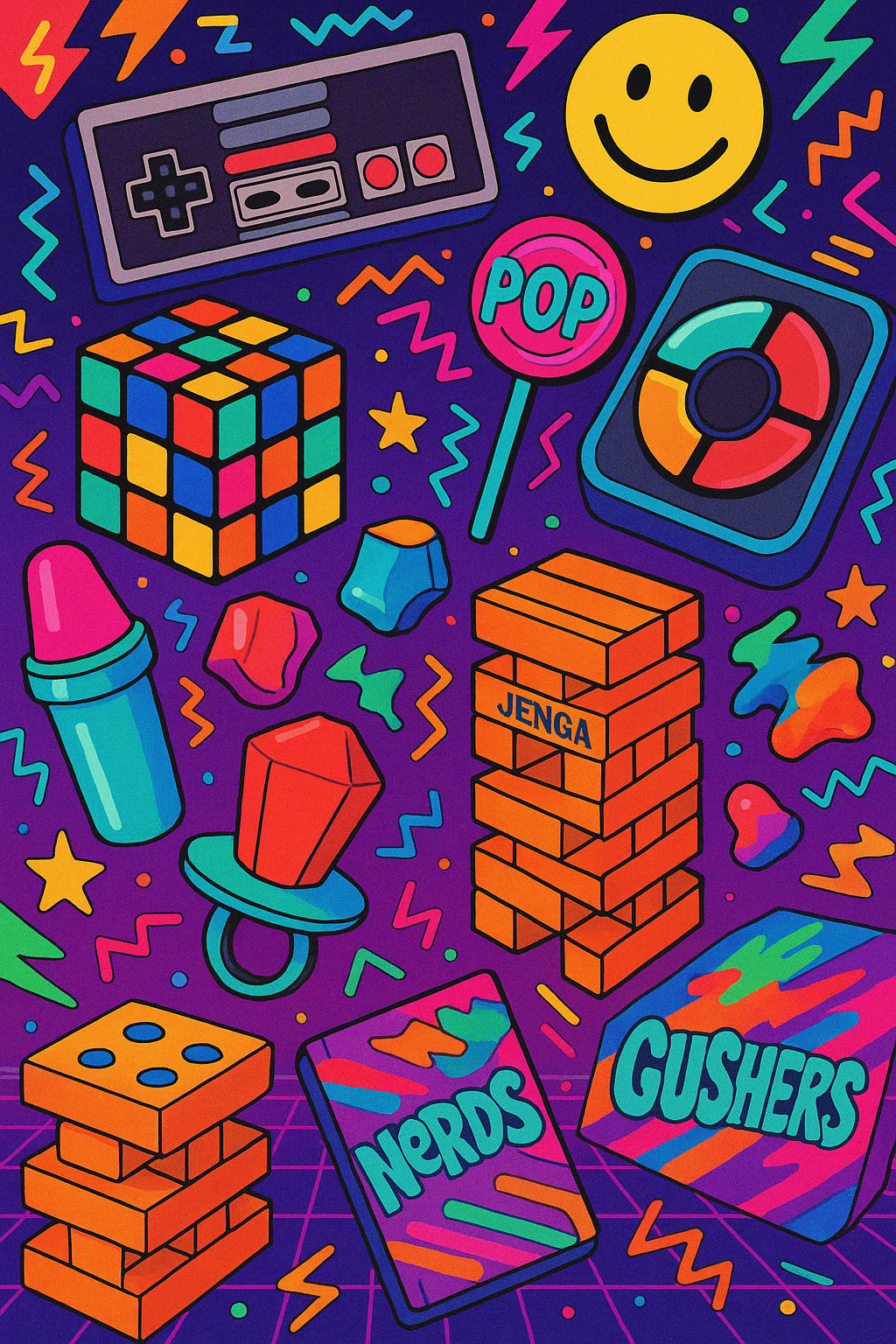
Fog Horn Blast 🚨
Welcome to the 1990s: a decade of Tamagotchis beeping for food, AOL chat rooms screeching through dial-up, and Nickelodeon dumping slime on anyone within a five-mile radius. For adults, it was the rise of the internet, grunge, and Bill Clinton playing saxophone on late-night TV. For kids, though, the 90s were defined by two forces of nature: board games and candy.
By this point, video games were everywhere, but the magic of board games hadn’t disappeared. It had just mutated into something louder, grosser, and slimier. And candy? Candy had turned into a full-contact sport. The 90s didn’t just give kids treats; it gave them dares, challenges, and marketing campaigns screaming in neon letters. It was the last great sugar-soaked stand before cell phones and social media rewired childhood forever.
So, strap in. Let’s revisit the board games and candy that made the 90s not just sweet and sticky, but X-treme.
🎲 The Board Games of the 1990s
A. The Gross-Out & Gimmick Craze
The 90s had no shame. If it was gross, it sold. Grape Escape let kids mold little grape figures out of Play-Doh, then gleefully squash them with plastic traps; steamrollers, scissors, presses. It was less about winning and more about creative destruction.
Crocodile Dentist gave kids the thrill of poking a crocodile’s teeth until... SNAP!... the jaws clamped down. It was Russian roulette with reptilian orthodontics.
And who could forget Gooey Louie? Players yanked neon-green boogers, out of a plastic nose until Louie’s brain popped out. If you’re wondering how that passed a pitch meeting, remember: this was the 90s. If it was disgusting, it was “family fun.”
B. Nickelodeon Nation
Nickelodeon wasn’t just a channel, it was a way of life. And it infiltrated the board game aisle.
Double Dare brought the slime-fueled game show to the living room. Legends of the Hidden Temple let kids pretend they were Blue Barracudas or Silver Snakes, though sadly without Olmec’s booming voice.
Gak Attack capitalized on Nickelodeon’s obsession with fluorescent goo. Kids launched sticky blobs of gak onto targets, furniture, siblings... basically anything within reach.
These games were less about strategy and more about recreating the chaotic, messy joy of Nickelodeon at home. Parents despaired. Kids rejoiced.
C. Party Game Mania
The late 80s had planted the seeds, and the 90s harvested them: party games were everywhere.
Cranium (1998) was like a Frankenstein’s monster of every party game. Drawing, charades, trivia, word puzzles. It was designed so “everyone could shine,” though usually it just meant Uncle Bob did bad impressions while someone else cheated at spelling backwards.
Catch Phrase came in its clunky, electronic, pass-the-timer form. The goal: get your team to guess the word before the buzzer. The result: frantic shouting, panicked handoffs, and inevitable accusations of sabotage.
Apples to Apples debuted in 1999, introducing the world to card-based humor competitions long before Cards Against Humanity made it edgy. For families, it was a way to find out how weird your cousin really was when they matched “Abraham Lincoln” with “Cheesy.”
D. Classics Reinvented
The 90s also went wild with rebranding. Monopoly churned out endless themed editions: Star Wars Monopoly, Pokémon Monopoly, The Simpsons Monopoly. You could buy the same game ten different times, each with a new coat of paint.
Jenga became a household staple. Simple, tense, and guaranteed to end with the sound of collapsing wood and a chorus of screams.
Tie-in board games spread like wildfire: Power Rangers, Teenage Mutant Ninja Turtles, Pokémon, even Beavis and Butt-Head. If it had a fanbase, it had a board game, usually involving dice and flimsy cardboard cutouts.
By the end of the decade, board games weren’t just about family bonding, they were loud, messy, and tailor-made for kids raised on slime and commercials every seven minutes.
🍬 The Candy of the 1990s
A. Sour Apocalypse
If the 80s made candy loud, the 90s made it painful. Warheads became a playground legend. With their face-melting sour coating, they weren’t just candy, they were dares. “Bet you can’t keep it in your mouth for ten seconds” became the recess challenge of champions. Few survived without puckering into oblivion.
Cry Baby Gum doubled down on the sour trend, stuffing jawbreakers with eye-watering tartness. Kids looked like they’d bitten into lemons, but they kept coming back for more.
And then came Toxic Waste, marketed like hazardous material in tiny barrels. It was less a treat and more an endurance sport. Kids bragged about surviving “double barrel” challenges as though they’d climbed Everest.
B. Novelty Rules the Aisle
The 90s candy aisle was a carnival of gimmicks. Ring Pops carried over from the 80s, but now every schoolyard proposal involved cherry-flavored bling. Push Pops got bigger, brighter, and more pocket lint covered.
Baby Bottle Pop let kids dip lollipop “nipples” into flavored powder while singing along to its maddeningly catchy jingle: “Baby Bottle Pop, Baby Bottle Pop!” (Apologies if that’s now stuck in your head for eternity.)
Fruit by the Foot and Gushers blurred the line between candy and lunchbox snack. Ads featured kids transforming into rainbow-colored superheroes or their heads exploding with fruity goo. Subtle? No. Effective? Absolutely.
C. The Chocolate Scene
Chocolate didn’t sit idly by. Butterfinger BB’s became the 90s candy icon thanks to The Simpsons’ relentless ads. “Nobody better lay a finger on my Butterfinger” became Bart Simpson’s personal brand. Kids loved them, adults cursed the chocolate shrapnel they left everywhere.
Hershey’s Cookies & Cream Bar debuted in the 90s and instantly gained a cult following among kids who wanted something different from the usual chocolate lineup.
Meanwhile, Reese’s expanded its empire with Reese’s Fast Break and other experiments, ensuring peanut butter addicts never went hungry.
D. The 90s Ritual: VHS, Sugar, and Surge
The 90s convenience store run was legendary. Kids piled into Blockbuster to rent VHS tapes of Space Jam or Jurassic Park, then raided the candy aisle like marauders.
Airheads, Skittles, Shock Tarts, and Surge soda became the holy trinity of weekend binges. Surge was basically Mountain Dew with a death wish, and parents swore it was turning their children into gremlins.
Candy in the 90s wasn’t just fuel, it was identity. What you brought to lunch, what you munched during a sleepover, what you traded at recess, these choices mattered. Were you a Warheads daredevil, a Gushers loyalist, or a Butterfinger BB’s devotee? Lines were drawn, alliances formed, cavities inevitable.
🗼 Beacon of Irony
The 1990s were the last great decade of unfiltered kid chaos. Board games embraced slime, Play-Doh, and gross-out gags. Candy became a competition, a dare, a badge of honor. Every snack was extreme, every commercial shouted at you, and every sugar rush ended with a crash on the couch in front of Nickelodeon.
It was the perfect capstone to three decades of fun. From the board games of the 60s to the extreme candies of the 90s, childhood in America had been defined by cardboard, dice, neon wrappers, and pure chaos. Today, nostalgia keeps these memories alive because they were more than just games or treats, they were rites of passage.
And so our sweet and sticky saga comes to a close. The next time you see a Ring Pop or stumble across a dusty box of Crocodile Dentist at a yard sale, remember: fun may change with the times, but the sugar rush is eternal.
About the Creator
The Iron Lighthouse
Where folklore meets freeway. A guide to the strange heart of the American backroads...
Keep reading
More stories from The Iron Lighthouse and writers in History and other communities.
The Sweet and Sticky History of Fun, Part 2: The 1970s
Fog Horn Blast 🚨 Welcome to the 1970s... A decade of polyester leisure suits, lava lamps, and a suspicious number of products shaped like avocados. While adults were wrestling with the Vietnam War aftermath, an energy crisis, and Richard Nixon’s resignation, kids were too busy losing their minds over exploding candy and board games that either tested your brain or unleashed absolute plastic chaos on the dining room table.
By The Iron Lighthouse4 months ago in History
How I Learned That Aircraft Structures Are as Critical as Engines
When I first started studying aviation, I believed that engines and avionics defined an aircraft’s reliability. Over time, as I explored aerospace history and manufacturing records, I realized how incomplete that understanding was. Aircraft safety does not depend solely on thrust or navigation systems. It is deeply rooted in structural engineering, certified manufacturing, and the disciplined production of components that passengers never see.
By Beckett Dowhan4 days ago in History
Frames Through Time: Exploring a Love for Classic and Contemporary Film in Modern Culture
Movies hold a powerful place in everyday life. They entertain, teach, and inspire people across generations. Some viewers are drawn to old black-and-white films, while others prefer fast-paced modern movies. Many enjoy both. Classic and contemporary film exploration allows people to experience cinema as a living art form that grows without ever forgetting its roots. Exploring a love for classic and modern film helps viewers see how stories, emotions, and creativity connect across time. Film is a shared language. It crosses age, culture, and borders. When people watch movies from different eras, they discover that human feelings remain the same, even when styles change. This balance between tradition and innovation is what keeps cinema meaningful today.
By Matthew Carluccioa day ago in History


Comments
There are no comments for this story
Be the first to respond and start the conversation.