
The Success of Japan
Innovation, Discipline, and Resilience in a Global Power
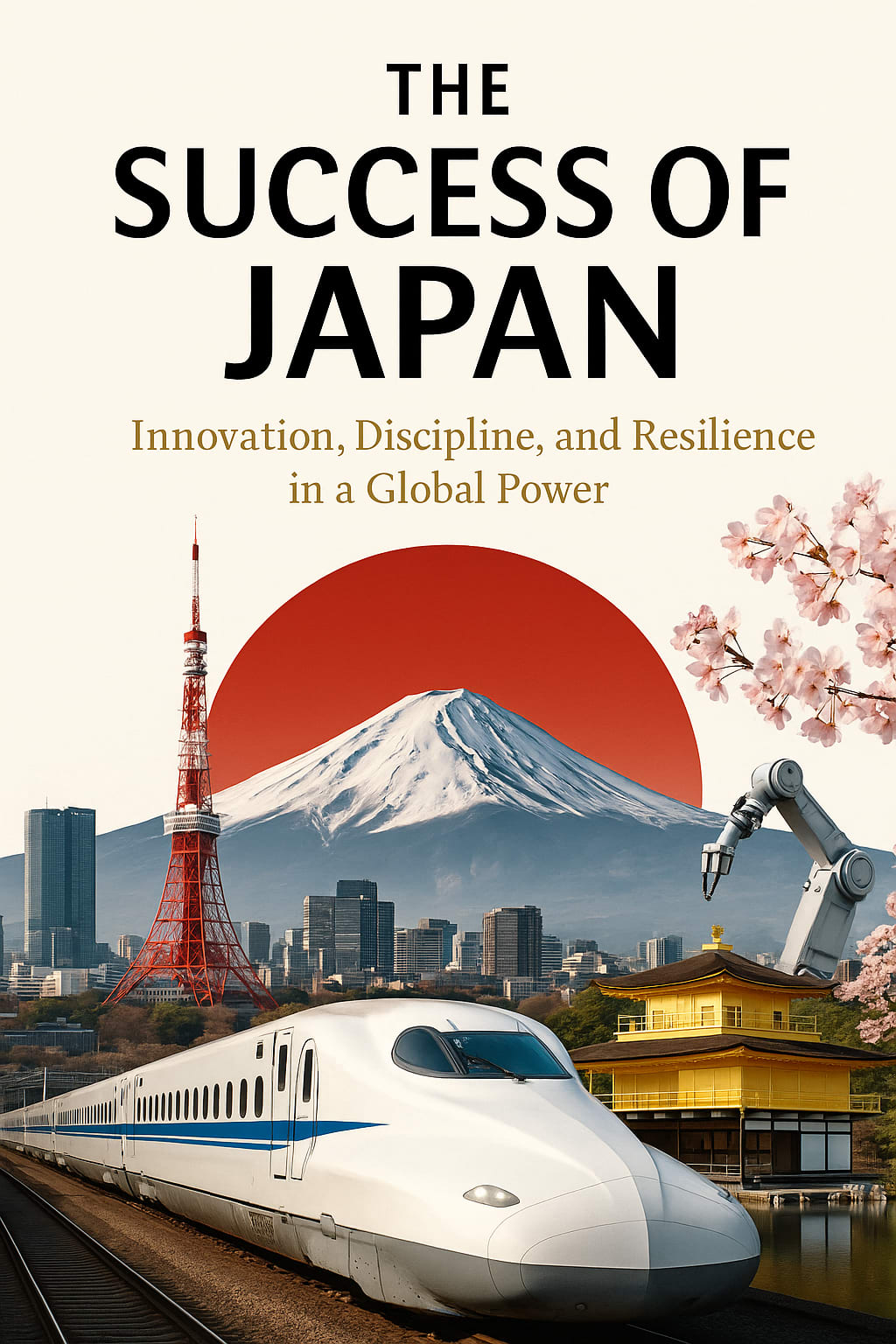
The Success of Japan: A Model of Innovation, Discipline, and Resilience
Japan, an island nation in East Asia, is often cited as a global example of how a country can rise from adversity to become a technological, economic, and cultural powerhouse. From the ashes of World War II to its current standing as the world’s third-largest economy, Japan’s success story is marked by discipline, innovation, and resilience.
Post-War Recovery and Economic Boom
Japan’s modern success began in the aftermath of World War II. The country was left in ruins after the war, with cities like Hiroshima and Nagasaki devastated by atomic bombs. However, instead of succumbing to despair, Japan focused on rebuilding. With support from the United States through the Marshall Plan and other aid, Japan embarked on a path of industrial development. Key reforms in land ownership, education, and labor laid the foundation for growth.
During the 1950s and 1960s, Japan experienced a period known as the "Japanese economic miracle." The government, in collaboration with private industry, established long-term industrial policies that encouraged innovation and efficiency. Major companies like Toyota, Sony, and Panasonic emerged as global brands. By the 1980s, Japan had become a leading exporter of cars, electronics, and technology.
Technological Innovation and Manufacturing Excellence
One of Japan’s most significant strengths is its commitment to technological innovation and precision manufacturing. The country became synonymous with quality and reliability. The Toyota Production System, also known as "lean manufacturing," revolutionized how products were made and became a model for companies worldwide. Japanese firms emphasized continuous improvement, or "kaizen," ensuring steady enhancements in quality and productivity.
Japan also invested heavily in research and development. Its advancements in robotics, electronics, and automotive engineering are globally recognized. Companies like Honda and Nissan pioneered fuel-efficient vehicles, while Sony and Nintendo redefined entertainment and consumer electronics. Japan’s bullet train, the Shinkansen, stands as a symbol of high-speed, punctual, and efficient public transportation.
Education and Human Capital
Japan's success is also deeply rooted in its emphasis on education and human capital. The Japanese education system is known for its rigor, discipline, and focus on foundational skills. Students undergo a demanding academic journey, and excellence in education is deeply valued in society.
The country also fosters a culture of lifelong learning and professional development. This emphasis on education has produced a highly skilled and disciplined workforce that has driven innovation and productivity in all sectors.
Cultural Values and Social Cohesion
Cultural values such as discipline, respect, group harmony, and a strong work ethic have also played a vital role in Japan’s development. The Japanese concept of "wa," which emphasizes harmony and cooperation, has contributed to a stable and organized society. Teamwork is prioritized over individual achievement, which supports collaborative efforts in workplaces and communities.
Respect for tradition and authority, alongside a readiness to adopt beneficial foreign ideas, has allowed Japan to blend modernity with heritage. This balance has made Japan not only a technological leader but also a cultural icon with global influence in fashion, cuisine, and the arts.
Challenges and Adaptation
Japan has not been without challenges. It faces a rapidly aging population, low birth rates, and periods of economic stagnation. However, the country continues to adapt. Robotics and automation are being used to supplement the workforce, and there is growing encouragement for innovation in the tech startup space. Japan is also increasingly opening its economy to global talent and tourism to counter demographic challenges.
Conclusion
Japan’s success story is a testament to the power of resilience, innovation, and disciplined effort. Rising from the devastation of war to become a global leader, Japan has shown that with strategic planning, cultural unity, and a commitment to excellence, a nation can overcome even the most daunting challenges. Today, Japan continues to inspire the world not only through its technological achievements but also through its rich culture and enduring spirit.
About the Creator
The Ship That Carried the Hiroshima Atomic Bomb Has Been Found
In a remarkable historical discovery, researchers have located the long-lost vessel that once transported key components of the atomic bomb dropped on the Japanese city of Hiroshima during the final days of World War II. The finding offers historians a deeper understanding of the secretive operations surrounding the development and deployment of the world’s first nuclear weapon.
By Irshad Abbasi about 22 hours ago in History



Comments
There are no comments for this story
Be the first to respond and start the conversation.