
The Ship That Carried the Hiroshima Atomic Bomb Has Been Found
Discovery of the historic vessel sheds new light on one of the most significant and tragic events of World War II.

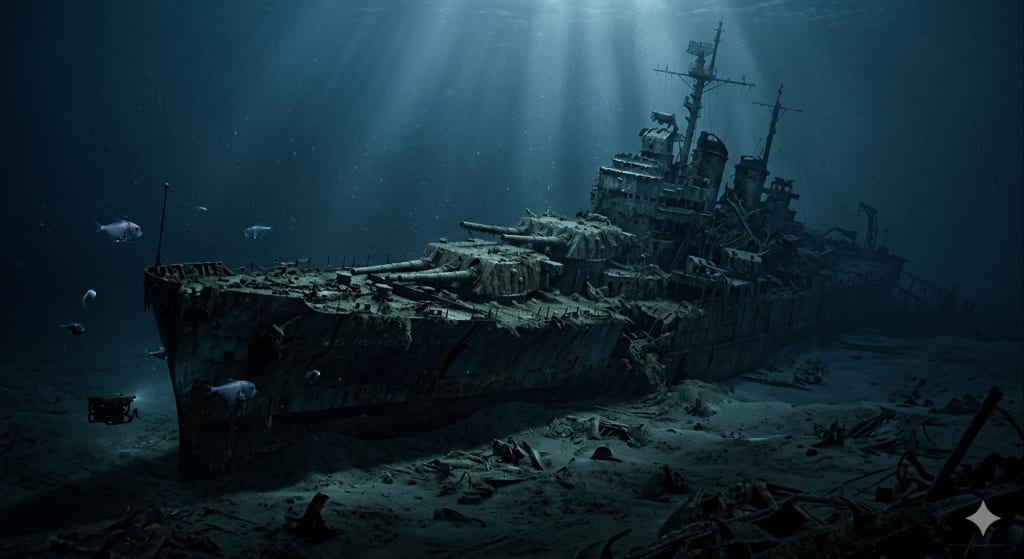
In a remarkable historical discovery, researchers have located the long-lost vessel that once transported key components of the atomic bomb dropped on the Japanese city of Hiroshima during the final days of World War II. The finding offers historians a deeper understanding of the secretive operations surrounding the development and deployment of the world’s first nuclear weapon.
The atomic bomb attack on Hiroshima on August 6, 1945, remains one of the most consequential moments in modern history. The bomb, known as “Little Boy,” was dropped by the American bomber B-29 Superfortress Enola Gay, instantly devastating the city and leading to the deaths of tens of thousands of people. Within months, Japan surrendered, effectively bringing World War II to an end.
Before the bomb could be deployed, however, crucial components of the weapon had to be secretly transported across the Pacific Ocean. That task fell to a U.S. Navy vessel known as USS Indianapolis (CA-35), a heavy cruiser that played an essential yet often overlooked role in the mission.
The ship carried highly classified cargo, including enriched uranium and other components that would later become part of the Hiroshima bomb. In July 1945, the vessel left San Francisco on a top-secret mission and delivered its cargo to the American air base on the island of Tinian Island, where the atomic bomb was assembled.
After completing the mission, the cruiser set sail toward the Philippines. Tragically, on July 30, 1945, it was torpedoed by the Japanese submarine Japanese submarine I-58 in the Philippine Sea. The ship sank in just 12 minutes, leading to one of the worst naval disasters in U.S. history.
Approximately 300 sailors went down with the ship, while around 900 others survived the initial sinking but were left stranded in the open ocean for days. Without adequate lifeboats, food, or fresh water, the survivors faced extreme dehydration, exposure to the sun, and repeated shark attacks. By the time rescuers arrived four days later, only 316 men remained alive.
For decades, the exact resting place of the ship remained unknown. Historians, naval researchers, and underwater explorers searched for the wreck across vast areas of the ocean floor. The challenge was enormous because the sinking location had been poorly recorded during wartime operations.
After years of investigation and technological advances in deep-sea exploration, a research team finally located the wreckage thousands of meters below the ocean surface. The discovery was made using advanced sonar mapping and remotely operated underwater vehicles capable of exploring the deep sea.
The wreck lies largely intact on the ocean floor, a silent reminder of both the secret mission it carried out and the tragedy that followed. Images captured by underwater cameras reveal the cruiser’s recognizable structure, including its hull, gun turrets, and other equipment still resting where they fell more than seven decades ago.
Historians believe the discovery is important not only for military history but also for understanding the broader context of the atomic age. The transport mission undertaken by the cruiser was part of the highly classified Manhattan Project, the U.S. government’s secret effort to develop nuclear weapons before Nazi Germany or Japan could do the same.
The atomic bombings of Hiroshima and later Nagasaki remain deeply controversial events. Supporters at the time argued that the bombings forced Japan’s surrender and prevented a prolonged invasion that could have cost millions of lives. Critics, however, view them as a devastating humanitarian tragedy due to the immense civilian casualties and the long-term effects of radiation.
Today, the rediscovery of the ship serves as both a historical milestone and a memorial. The wreck site is considered a war grave, honoring the sailors who lost their lives during the disaster. Many historians and veterans’ families see the discovery as a form of closure after decades of uncertainty about where the ship finally came to rest.
Beyond its historical significance, the find also highlights how modern technology continues to reshape our understanding of the past. With deep-sea exploration tools becoming increasingly sophisticated, researchers are now able to locate and study shipwrecks that were once thought impossible to find.
More than 75 years after the atomic bomb changed the course of history, the ship that helped deliver its components has finally been located. The discovery offers a powerful reminder of the complex and often tragic stories behind the events that shaped the modern world.
About the Creator
Irshad Abbasi
Ali ibn Abi Talib (RA) said 📚
“Knowledge is better than wealth, because knowledge protects you, while you have to protect wealth.
Keep reading
More stories from Irshad Abbasi and writers in History and other communities.
The Mystery of the “Damaged” Ship Finally Solved
For decades, a mysterious shipwreck discovered deep beneath the sea puzzled historians, archaeologists, and maritime experts. The vessel, often described as a “damaged” or “cursed” ship due to the strange condition in which it was found, seemed to carry secrets that no one could fully explain. Now, after years of research and technological investigation, scientists believe they have finally solved the mystery behind the ship’s unusual damage and tragic fate.
By Irshad Abbasi about 7 hours ago in History


Comments
There are no comments for this story
Be the first to respond and start the conversation.