
The Story of Japan's Rise: From Isolation to a Global Power
a

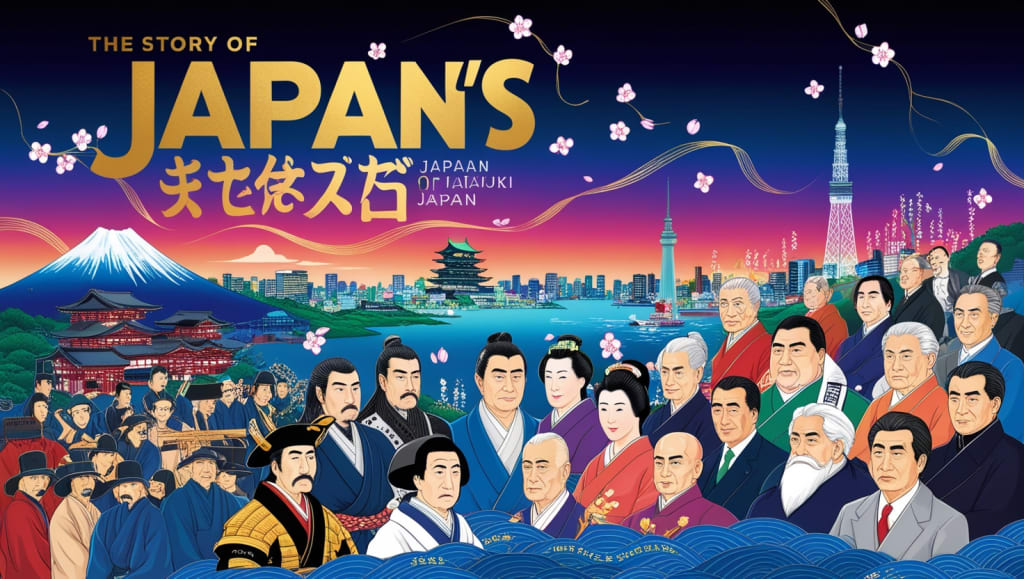
The Story of Japan's Rise: From Isolation to a Global Power
Introduction
Japan's transformation from a secluded island nation to one of the world’s leading economic and technological powers is nothing short of remarkable. This journey, often referred to as the "Japanese Miracle," showcases a blend of resilience, strategic vision, and cultural dedication. But how did Japan achieve such a profound transformation? This article dives deep into the story of Japan's rise, tracing its roots, pivotal moments, and the lessons the world can learn from its success.
1. The Era of Isolation: Japan Before the Meiji Restoration
For over two centuries, Japan remained isolated from the outside world during the Edo Period (1603–1868) under the Tokugawa shogunate. Known as sakoku (closed country), this policy limited foreign influence and preserved traditional Japanese culture.
Economic Self-Sufficiency: Despite isolation, Japan developed a robust agricultural economy and thriving internal trade networks.
Cultural Flourishing: Arts like kabuki, ukiyo-e (woodblock prints), and tea ceremonies reached their peak during this era.
However, the arrival of Commodore Matthew Perry and his "Black Ships" in 1853 forced Japan to reconsider its isolationist stance.
2. The Meiji Restoration: Opening the Gates
The Meiji Restoration of 1868 marked a turning point in Japanese history. This period saw the abolition of the shogunate and the restoration of imperial rule under Emperor Meiji. Key reforms included:
Modernization: Rapid industrialization and modernization of infrastructure, such as railways and telegraphs.
Western Influence: Adoption of Western technologies, education systems, and military tactics.
Abolition of Feudalism: The dismantling of the feudal system allowed for a more unified and centralized government.
3. The Industrial Revolution in Japan
Japan's industrial revolution during the late 19th and early 20th centuries set the stage for its global emergence. Key industries included textiles, shipbuilding, and steel.
Zaibatsu Influence: Large family-owned conglomerates, such as Mitsubishi and Mitsui, played a significant role in driving economic growth.
Education and Innovation: A strong emphasis on education produced skilled workers and innovators who contributed to industrial advancements.
4. Military Expansion and World War II
By the early 20th century, Japan had established itself as a regional power. Victories in the Russo-Japanese War (1904–1905) and annexation of Korea demonstrated its growing strength.
However, its ambitions led to devastating consequences during World War II. The attack on Pearl Harbor in 1941 drew the United States into the war, ultimately resulting in Japan’s defeat in 1945. The atomic bombings of Hiroshima and Nagasaki marked a tragic chapter in Japanese history.
5. Post-War Recovery: The Foundations of a Miracle
After its defeat, Japan’s recovery seemed unlikely. Yet, under the guidance of the Allied occupation (1945–1952), Japan underwent dramatic reforms:
Constitutional Changes: The 1947 constitution, known as the "Post-War Constitution," enshrined democratic principles and renounced war.
Land Reforms: Redistribution of land reduced disparities and empowered farmers.
Economic Aid: U.S. financial aid, particularly through the Marshall Plan, helped rebuild industries.
6. The Economic Boom: Japan’s Golden Era
From the 1950s to the 1980s, Japan experienced unprecedented economic growth, often referred to as the "Japanese Miracle."
Export-Oriented Economy: Japan became a global leader in manufacturing, exporting cars, electronics, and machinery.
Keiretsu System: Networks of interlinked businesses fostered stability and innovation.
Technological Leadership: Companies like Sony, Toyota, and Panasonic emerged as global icons of quality and innovation.
7. Cultural and Social Evolution
Japan’s rise was not solely economic. Its culture also gained global recognition:
Traditional Arts: Continued reverence for traditions like tea ceremonies and martial arts.
Pop Culture: Anime, manga, and J-pop captured global audiences.
Cuisine: Japanese food, especially sushi, became a worldwide phenomenon.
8. Challenges Along the Way
Despite its success, Japan faced significant hurdles:
The Asset Bubble Burst: The early 1990s saw a collapse in real estate and stock markets, leading to the "Lost Decade."
Aging Population: With one of the oldest populations globally, Japan struggles with workforce shortages and healthcare demands.
Natural Disasters: Events like the 2011 Tōhoku earthquake and tsunami tested the nation’s resilience.
9. Japan in the 21st Century
Today, Japan remains a global powerhouse. Its economy ranks third worldwide, and it leads in innovation, particularly in robotics and renewable energy. Key modern initiatives include:
Sustainability: Investments in green technologies and renewable energy.
Global Diplomacy: Active participation in international organizations like the United Nations and G7.
Cultural Diplomacy: Leveraging soft power through cultural exports and international collaborations.
10. Lessons from Japan’s Rise
Japan’s story offers valuable insights:
Adaptability: Embracing change while preserving cultural identity.
Education: A strong focus on education can drive long-term growth.
Resilience: Overcoming adversity through unity and strategic planning.
Conclusion
Japan’s journey from isolation to a global power is a testament to human ingenuity and perseverance. Its ability to balance modernization with tradition, embrace challenges, and maintain a forward-looking vision has cemented its place on the world stage. As we navigate the complexities of a rapidly changing world, Japan’s story serves as both inspiration and a blueprint for sustainable progress.
About the Creator
💓 Pulse of Stories 💓
The world of short and inspiring stories! Here you will find stories that touch hearts, ignite the imagination, and take you on quick yet deep journeys.
Keep reading
More stories from 💓 Pulse of Stories 💓 and writers in History and other communities.
The Story of the French Revolution: The Fall of Monarchy and the Rise of Democracy
The Story of the French Revolution: The Fall of Monarchy and the Rise of Democracy Introduction The French Revolution (1789–1899) stands as one of the most transformative events in modern history. It marked the end of absolute monarchy in France and heralded the rise of democracy and modern political ideologies. But how did a nation steeped in centuries of royal rule come to overthrow its monarchy? What were the underlying causes, key moments, and long-term effects of this monumental upheaval? In this article, we will explore the intricate details of the French Revolution, diving into its origins, key figures, pivotal events, and lasting legacy.
By 💓 Pulse of Stories 💓about a year ago in History
The Light of Islam: The Journey of the Prophet
Over 1,400 years ago, in the city of Mecca, a child was born who would change the world forever. His name was Muhammad ﷺ, and he belonged to the noble tribe of Quraysh. From the beginning, his life was marked by trials and simplicity. Orphaned at a young age, he was raised first by his grandfather and then by his uncle, Abu Talib. Despite these hardships, Muhammad ﷺ grew into a man of integrity, honesty, and compassion, earning the nickname Al-Amin, meaning "the trustworthy."
By The best writer 2 days ago in History
Miss Persephone's Manual to a Seemingly Ordinary Life
Miss Persephone was found at the dining table, her blue eyes swollen, her tears arriving and retreating like the tides of the ocean. Earlier that day, her family had visited her in the retirement home where she had lived for eight years. It was her eightieth birthday.
By Imola Tóth4 days ago in Fiction




Comments
There are no comments for this story
Be the first to respond and start the conversation.