
The Story of the French Revolution: The Fall of Monarchy and the Rise of Democracy
Introduction

The Story of the French Revolution: The Fall of Monarchy and the Rise of Democracy
Introduction
The French Revolution (1789–1899) stands as one of the most transformative events in modern history. It marked the end of absolute monarchy in France and heralded the rise of democracy and modern political ideologies. But how did a nation steeped in centuries of royal rule come to overthrow its monarchy? What were the underlying causes, key moments, and long-term effects of this monumental upheaval? In this article, we will explore the intricate details of the French Revolution, diving into its origins, key figures, pivotal events, and lasting legacy.
1. The Root Causes of the Revolution
The French Revolution did not emerge in isolation; it was the result of deep-seated economic, social, and political factors:
Economic Struggles: By the late 18th century, France faced a dire financial crisis due to its involvement in costly wars (like the American Revolutionary War) and extravagant spending by the monarchy.
Social Inequalities: French society was divided into three estates: the clergy, the nobility, and the commoners. The Third Estate, comprising the majority, bore the brunt of heavy taxes and had little political representation.
Enlightenment Ideas: Philosophers like Voltaire, Rousseau, and Montesquieu challenged the divine right of kings and advocated for equality, liberty, and democracy. Their ideas inspired the people to question the status quo.
2. The Estates-General and the National Assembly
In 1789, King Louis XVI called the Estates-General, a gathering of representatives from all three estates, to address France’s financial crisis. However, the Third Estate demanded more representation and refused to be sidelined. They broke away to form the National Assembly, declaring themselves the true voice of the French people.
3. The Storming of the Bastille
On July 14, 1789, Parisian citizens stormed the Bastille, a symbol of royal tyranny and oppression. This event marked the Revolution's turning point and galvanized support for the revolutionary cause. Bastille Day is now celebrated as a symbol of French freedom and unity.
4. The Abolition of Feudalism
In August 1789, the National Assembly passed decrees abolishing feudal privileges. This historic move ended centuries of aristocratic dominance and paved the way for a more equitable society. Shortly after, the Declaration of the Rights of Man and of the Citizen was adopted, emphasizing the principles of liberty, equality, and fraternity.
5. The Role of Key Figures
Several influential figures shaped the course of the Revolution:
Maximilien Robespierre: A leading revolutionary who spearheaded the Reign of Terror.
Marie Antoinette: The queen’s lavish lifestyle made her a symbol of royal excess.
Napoleon Bonaparte: A military leader who rose to power during the Revolution’s aftermath.
6. The Fall of the Monarchy
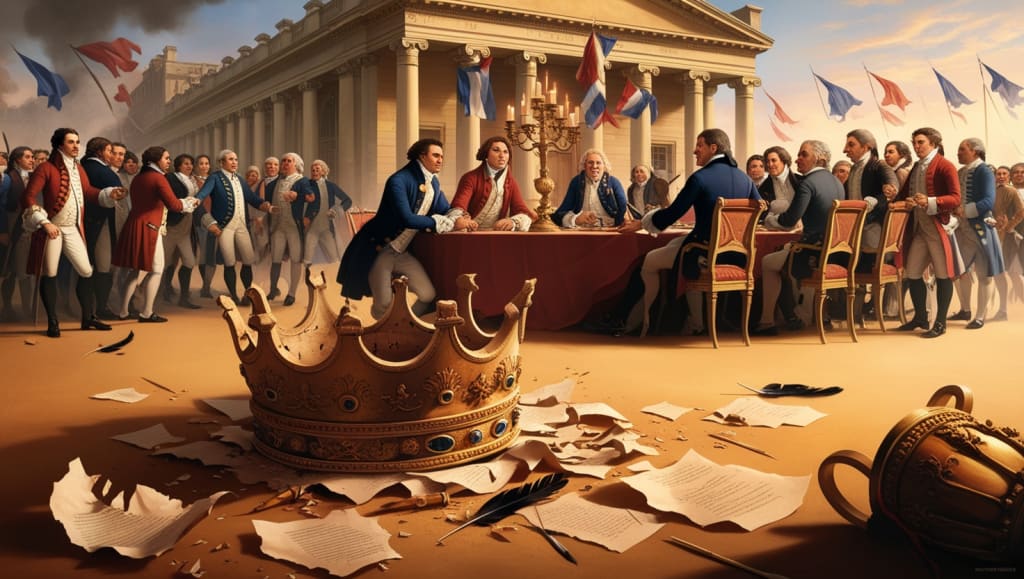
By 1792, the monarchy’s days were numbered. The royal family attempted to flee but were captured and returned to Paris. On September 21, 1792, the National Convention abolished the monarchy and declared France a republic. King Louis XVI was tried for treason and executed by guillotine in January 1793, followed by Queen Marie Antoinette later that year.
7. The Reign of Terror
The Revolution’s radical phase, known as the Reign of Terror (1793–1794), saw thousands of perceived enemies of the Revolution executed. Robespierre and the Committee of Public Safety justified these actions as necessary to protect the Republic. However, this period of extreme violence eventually led to Robespierre’s downfall.
8. The Rise of Napoleon Bonaparte
The Revolution’s chaos paved the way for Napoleon Bonaparte to seize power. In 1799, he staged a coup and became the First Consul of France, effectively ending the Revolution. While Napoleon's rule is often debated, his legal and administrative reforms, such as the Napoleonic Code, solidified many revolutionary principles.
9. The Global Impact of the Revolution
The French Revolution’s ideals transcended national borders. It inspired revolutionary movements across Europe and Latin America and contributed to the abolition of feudal systems worldwide. Concepts like universal suffrage, secular governance, and the separation of church and state found their roots in this transformative period.
10. Lessons from the Revolution
The French Revolution offers valuable lessons for understanding social change:
The Power of Ideas: Enlightenment principles demonstrated the enduring influence of intellectual movements.
The Dangers of Extremism: The Reign of Terror highlights how revolutions can deviate into chaos.
The Pursuit of Equality: The Revolution’s emphasis on egalitarianism remains a cornerstone of modern democracies.
Conclusion
The French Revolution was a profound moment in history, representing the triumph of human resilience and the quest for freedom. It dismantled entrenched systems of oppression and laid the foundation for modern democratic governance. As we reflect on this extraordinary period, we are reminded of the importance of courage, unity, and the enduring pursuit of justice. The French Revolution’s story is not merely about the past; it is a beacon for the future.
About the Creator
💓 Pulse of Stories 💓
The world of short and inspiring stories! Here you will find stories that touch hearts, ignite the imagination, and take you on quick yet deep journeys.
Keep reading
More stories from 💓 Pulse of Stories 💓 and writers in History and other communities.
The Story of the Discovery of America:
The Story of the Discovery of America: The Journey That Changed the World Introduction The discovery of America in 1492 was a pivotal event in human history. The world map changed, and new dimensions of trade, culture, and politics emerged. But how did it all begin? What are the intricate details behind this historic journey? In this article, we will take you on an exploratory journey to uncover the challenges faced by Christopher Columbus and analyze the outcomes of discovering the New World.
By 💓 Pulse of Stories 💓about a year ago in History
Savoy Hotel – Mussoorie: The Colonial Luxury Hotel Where an Unsolved Murder Still Walks the Corridors
The First Night: Beauty Wrapped in Silence Mussoorie looks peaceful from a distance. Pine trees sway gently, clouds roll like slow-moving waves, and the hill air smells of rain and old earth. But as evening falls, the silence becomes heavier—almost watchful.
By Gaurav Gupta4 days ago in History
Nobel Peace Prize
The Nobel Peace Prize has stood as one of the world’s most recognized honors. Awarded annually in Oslo, it is meant to celebrate individuals or organizations that have made significant contributions toward peace, diplomacy, and humanitarian progress. While its mission appears straightforward, the Nobel Peace Prize has never been free from debate. In recent years, conversations surrounding global politics—particularly discussions about the Trump Nobel Peace Prize—have brought renewed attention to how peace is defined, measured, and rewarded in the modern era. The Origins and Meaning of the Nobel Peace Prize The Nobel Peace Prize was established by Alfred Nobel, the Swedish inventor best known for creating dynamite. In his final will, Nobel directed that a portion of his wealth be used to recognize efforts that foster peace among nations, reduce standing armies, or promote diplomacy and cooperation. Since its first award in 1901, the prize has honored activists, diplomats, organizations, and world leaders whose actions shaped international dialogue. Unlike other Nobel categories, the peace prize is awarded by a Norwegian committee rather than a Swedish institution. This distinction reflects Nobel’s desire to separate the prize from national interests and focus instead on global responsibility. Over time, the definition of “peace” has expanded. Early recipients were often disarmament advocates or mediators. More recent laureates have included human rights defenders, climate activists, and international organizations working in conflict zones. Politics and the Nobel Peace Prize Despite its humanitarian ideals, the Nobel Peace Prize has always intersected with politics. Recognizing peace efforts often means evaluating political leadership, international negotiations, and long-term consequences—none of which are easy to measure in real time. Some awards have been widely celebrated, while others sparked controversy. Critics often argue that certain laureates were honored prematurely, before the lasting results of their actions became clear. Supporters counter that the prize is meant to encourage peace efforts, not merely reward completed achievements. This tension has made the Nobel Peace Prize a reflection of global priorities at any given moment, rather than a simple historical judgment. Donald Trump and Nobel Peace Prize Discussions Few modern political figures have generated as much debate in connection with the Nobel Peace Prize as Donald Trump. During and after his presidency, conversations about a potential Trump Nobel Prize emerged repeatedly, particularly among supporters who pointed to his role in diplomatic initiatives. The phrase Trump Nobel Peace Prize gained traction following agreements and negotiations in regions long marked by conflict. Advocates argued that these diplomatic efforts aligned with Alfred Nobel’s vision of reducing international tension through dialogue rather than force. At the same time, critics questioned whether these actions met the broader ethical and humanitarian standards traditionally associated with the award. They pointed to domestic divisions, foreign policy controversies, and unresolved global conflicts as reasons for skepticism. This divide highlights a core challenge of the Nobel Peace Prize: peace is rarely absolute, and political leadership is often complex and contradictory. Trump Nobel Peace Prize 2026: Speculation and Context As global politics continue to evolve, speculation around a Trump Nobel Peace Prize 2026 has appeared in media discussions and public commentary. It is important to note that nominations for the Nobel Peace Prize are confidential for decades, and speculation does not confirm consideration or selection. However, the mere discussion of Trump Nobel Peace Prize 2026 reflects how the award has become part of broader cultural and political conversations. Supporters view such recognition as validation of diplomatic achievements, while critics see the speculation as politicizing an institution meant to rise above partisan debate. This dynamic is not unique to Trump. Many past leaders, from various ideological backgrounds, were debated heavily before or after receiving the prize. The Nobel Peace Prize often mirrors global disagreements rather than resolving them. How the Nobel Committee Makes Its Decision Each year, hundreds of nominations are submitted by qualified individuals, including academics, lawmakers, and previous laureates. The Nobel Committee evaluates these nominations through research, expert consultation, and internal debate. The process considers intent, impact, and long-term significance. However, because peace efforts often unfold over years or decades, the committee must make decisions without full historical clarity. This reality explains why some awards age gracefully while others remain controversial. The committee rarely responds directly to public pressure or online campaigns. Media attention, including discussions around a Trump Nobel, does not guarantee influence over the final decision. The Broader Impact of the Nobel Peace Prize Beyond individual recipients, the Nobel Peace Prize plays a symbolic role. It brings global attention to issues that might otherwise be ignored, from humanitarian crises to fragile peace processes. Even controversial nominations can spark meaningful debate about what peace truly means in the modern world. The prize also raises questions about accountability. When leaders are considered for such recognition, the public is encouraged to examine policies, outcomes, and moral responsibility more closely. In this sense, discussions surrounding the Trump Nobel Peace Prize are not just about one individual. They reflect deeper conversations about diplomacy, leadership, and the evolving standards by which peace is judged. Conclusion: A Prize That Reflects the World The Nobel Peace Prize remains one of the most influential and debated honors in global society. Its power lies not only in recognizing peace efforts but also in challenging the world to think critically about conflict, cooperation, and responsibility. Whether discussions involve historic activists or modern political figures like those associated with Trump Nobel Peace Prize 2026 speculation, the award continues to reflect the complexities of international relations. Peace is rarely simple, and neither is the process of honoring it. Ultimately, the Nobel Peace Prize serves as a reminder that striving for peace is an ongoing journey—one shaped by ideals, actions, and the difficult choices that define human history.
By Saboor Brohi 4 days ago in History
Silver Screen Magic with Mae West
American actress and singer Mae West became a popular film actress during the Great Depression. She started entertaining in vaudeville, then performed on Broadway, and finally went to Hollywood. She signed up with Paramount Pictures and made her debut in the 1932 film “Night After Night.” She also starred in musicals, comedies, and crime dramas. The American Film Institute named her one of the best classic Hollywood actresses.
By Rasma Raisters6 days ago in Geeks


Comments
There are no comments for this story
Be the first to respond and start the conversation.