
The Shocking History of Assassins
The Order of Assassins: A Historical Deep Dive into the Shadows

If you've spent any time in the cinema recently, you might have noticed that Hollywood has a knack for glamorizing virtually every profession it touches. For instance, how many archaeologists do you know who are genuinely out there raiding tombs for priceless treasures? I mean, unless your LinkedIn is on point, finding a Harvard professor who spends their time thwarting ancient secret societies is about as likely as discovering a unicorn in your backyard. And let’s not forget your typical hacker—more likely to be living in their parents' basement, hunting for Call of Duty exploits than masterminding a heist from a swanky penthouse.
Among these exaggerated portrayals, one profession stands out: the assassin. These shadowy figures populate our screens so often that you'd be forgiven for thinking assassination is a booming industry—a fantastic career choice, even! From Jason Bourne to John Wick, the cinematic world is awash with suave killers, yet the reality is far less glamorous.
A Misunderstood Profession
A quick glance at your favorite job board will reveal that actual assassination gigs are pretty scarce. Yet, humanity remains morbidly fascinated by the idea of a deadly assassin emerging from the shadows to eliminate unsuspecting VIPs with extreme prejudice. But what does it mean to be an assassin, and where did this concept even come from?
Assassination, in one form or another, has been a part of human history for centuries. However, the modern interpretation of a master assassin—one who skillfully and stealthily eliminates high-profile targets for political or religious reasons—can be traced back nearly a thousand years to a historical faction known as the Order of Assassins.
The Birth of the Assassins
Led by a mysterious figure known to outsiders as the Old Man of the Mountain, the Order of Assassins made headlines for eliminating some of the most powerful individuals on the planet with apparent ease. Operating in the Middle East between the 11th and 13th centuries, they were responsible for countless high-profile assassinations. They became so synonymous with political killings that they are the reason we even call it "assassination" in the first place.
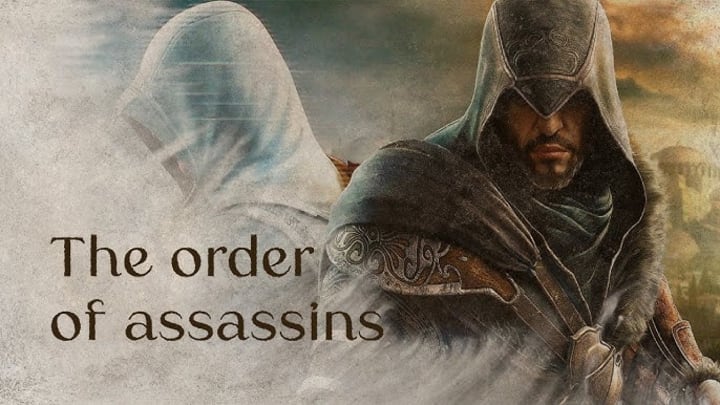
If you're a gamer, you might recognize the Assassins Creed franchise, which borrows heavily from the Order of Assassins. However, the real-life organization was quite different from its fictional counterpart. The original Assassins weren't a noble band of peacekeepers aiming to improve humanity through selective murders; they were simply a group of like-minded individuals trying to survive in a hostile world. Ironically, that often meant murdering a lot of very important people!
From Believers to Killers
In their early days, the group we now call the Order of Assassins were not killers at all. They were deeply religious members of a newly formed branch of Islam emerging in the late 11th century during a succession crisis in the Fatimid Caliphate. After a power struggle led to the execution of Prince Nizar, his followers were forced to flee east into Persia (modern-day Iran).
Here, they founded a new sect of Shia Islam known as Nizari Ismailism, under the leadership of a charismatic missionary named Hassan-I Sabbah. However, life was not easy for the followers of this new doctrine. The powerful Seljuk Empire occupied Persia, and as Sunni Muslims, they deemed Nizari beliefs heretical—a sentiment echoed by the Shia minority in the region.
Hassan was an incredibly devoted and skilled missionary. He spent years discreetly spreading Nizari Ismailism and attracting new followers, but his efforts drew the attention of the ruling Seljuks, who issued a warrant for his arrest. With a target on his back, Hassan had to think creatively about how to grow his fledgling religious order.
A Castle in the Mountains
Hassan eventually found refuge in Alamut Castle, a towering mountain fortress in northern Persia, which was accessible only by a single narrow track. This fortress was considered nearly impregnable, having never been captured in over 200 years since its construction.
But here’s the kicker: Alamut was already occupied by the Seljuk Lord and his soldiers! Despite the odds, Hassan came up with a plan that would make any plot twist in a heist movie look lame. He approached the castle's Seljuk Lord and, quite calmly, claimed that he was now in charge.
And unbelievably, it worked.
Before making his bold move, Hassan sent several of his men to infiltrate nearby villages, where they quietly converted as many people as they could to the Nizari cause. Over time, some of these individuals secured jobs within the castle itself, allowing Hassan to sneak inside disguised as a schoolteacher. Slowly, but surely, he began to sway the minds of those within the fortress walls.
After two years of careful planning, Hassan revealed his true identity and—without spilling a single drop of blood—took control of the fortress from the astonished Seljuk Lord. Not only did Hassan spare the man’s life, but he also sent him on his way with a handsome payout for the loss of his castle. Talk about a generous landlord!
The Fight for Survival
Despite their initial victory, the Seljuks quickly retaliated, sending an army to reclaim the fortress. However, Hassan had foreseen this and used the castle's natural defenses to hold off the vastly superior force. Over the following years, the Nizaris captured other strategic strongholds across Northern Persia, creating peculiar exclaves within the Seljuk Empire.
But as the Nizaris grew stronger, so did the attention they attracted—not just from the Seljuks, but also from the Abbasid and Fatimid caliphates, the Ayyubid empire, and even the Christian Crusaders, who were making regular forays into the Holy Land. With so many formidable enemies at their doorstep, Hassan faced yet another seemingly impossible challenge: how to defend his tiny empire against a growing list of adversaries.
Enter the Fida'i
The solution? A group of dedicated followers trained in a new style of warfare. Known as the Fida'i, these assassins used stealth, disguise, and infiltration to directly target military, political, and religious leaders. It was a brilliant tactic—attacking the Nizari stronghold could mean painting a giant target on your own back!
The Fida'i had a variety of methods for eliminating their targets. Many attacks were carried out in public, ensuring maximum impact. They typically used daggers to deliver a bloody spectacle that left onlookers gasping. For high-profile targets, a Fida'i might spend months or even years getting close, sometimes infiltrating the enemy’s household or guard detail.
On the flip side, less prominent targets found themselves ambushed by Fida'i disguised as beggars or mystics, only to have the assassins strike at the last possible moment.
Bravery and Intimidation
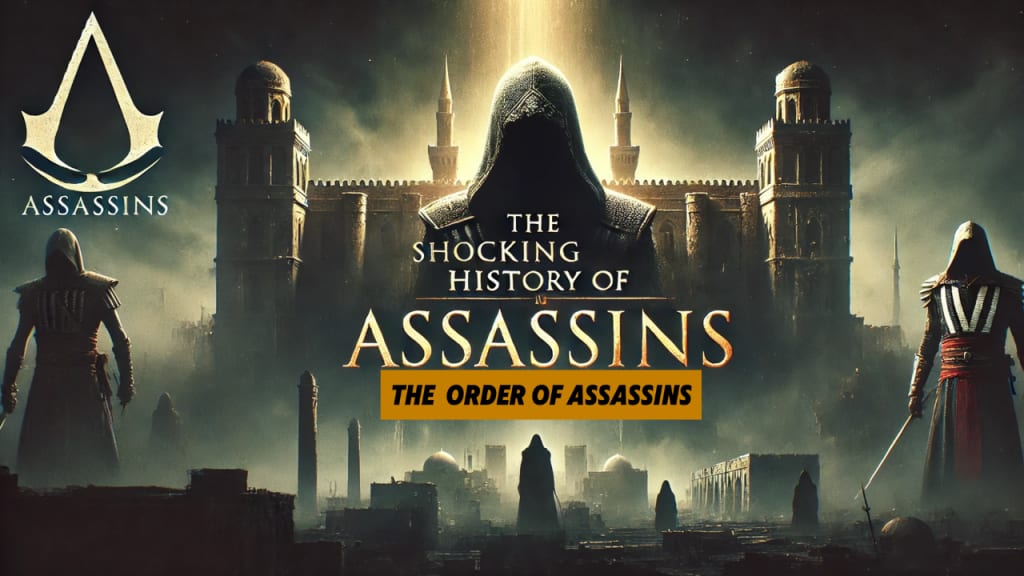
The Shocking History of Assassins. You'll definitely enjoy this!
One of the most famous tales involves Saladin, a legendary Kurdish general. When he besieged an Assassin stronghold in 1176, he awoke one night to find a shadowy figure disappearing from his tent. Initially, he thought it was one of his guards until he discovered a poisoned dagger left beneath his pillow. The message was clear: leave now or face dire consequences. Not surprisingly, the siege was lifted the very next day, and the Assassins formed a loose alliance with Saladin against the Christian crusaders in the region.
What set the Assassins apart was their incredible bravery. Many of their missions were, without a doubt, suicide missions, yet the Fida'i never flinched. Some reports suggest that after completing their tasks, they wouldn’t even attempt to defend themselves; they would simply wait to be cut down by enemy guards.
The Legend of Hashishin
According to some accounts, the Assassins’ fearlessness stemmed from their use of hashish, a drug taken to achieve a trance-like focus during missions. Oddly enough, this is where the term "assassin" comes from—it’s an anglicized version of the Arabic word Hashishin, meaning "hashish user." Their enemies used the term as an insult, likening them to drug addicts.
Furthering this narrative, historical sources—including the Venetian explorer Marco Polo—suggested that opium played a significant role in a brainwashing initiation ritual designed to inspire absolute obedience among new recruits. Picture this: wannabe assassins, doped up on opium, taken to a luxurious garden in Alamut. It was a paradise of flowing milk, honey, and wine, complete with scantily clad women singing and dancing.
When these recruits woke up the next day, they were convinced they had glimpsed paradise and believed that if they died in battle, they would end up back in that garden. They were more than willing to lay down their lives at a moment's notice.
In a wild twist of fate, some even jumped to their deaths upon command from their superiors, leading to the famous "leap of faith" found in the Assassin's Creed video games!
The Truth Behind the Myths
However, it’s essential to note that there's little real evidence to support the claims that the Assassins used hashish or any other drugs for bravery or mind control. These stories may hold a grain of truth, but they also likely served as propaganda aimed at damaging the reputation of the Nizari.
Most of what we know about the Assassins comes from contemporary sources that viewed them as enemies or, in the case of Marco Polo, as mysterious and strange figures. The tales surrounding Hassan-I Sabbah and the Fida'i were often steeped in myth, legend, and hyperbole, often muddying the lines between history and fiction.
The Downfall of the Order
Despite their impressive tactics and incredible bravery, the Order of Assassins couldn’t survive the tide of history. In 1256, the Mongol Empire under Kublai Khan swept into Persia and launched a campaign to wipe out the Nizari strongholds. Alamut was besieged, and the once-mighty fortress fell.
As the Mongol armies advanced, they found the assassins surprisingly unprepared. With their forces decimated, the Order was dismantled, and Hassan's ambitious dream of a religious empire was crushed.
Legacy of the Assassins
While the Order of Assassins faded into history, their legacy remains. Their unique methods of guerrilla warfare, infiltration, and assassination continue to inspire countless stories in literature and entertainment. Whether in movies, books, or video games, the fascination with these shadowy figures persists, creating an enduring mythos around the Assassins and their mystique.
So, the next time you sit down to enjoy a movie featuring a suave assassin or a masterful assassin who can pull off the impossible, take a moment to appreciate the real story behind the legend of the Order of Assassins. Because, at the end of the day, they were simply a group of people trying to navigate the chaotic world of medieval politics, armed with nothing but their cunning and a few well-placed daggers.
And, let's be real—if they were alive today, they’d probably be rebranding themselves as stealthy entrepreneurs in the gig economy. After all, who doesn’t love a good side hustle?
About the Creator
Reader insights
Good effort
You have potential. Keep practicing and don’t give up!
Top insight
Excellent storytelling
Original narrative & well developed characters
Keep reading
More stories from Marveline Merab and writers in History and other communities.
Nobody Who Entered This Ship Survived: The Wilhelm Gustloff
Imagine, if you will, being the captain of a grand cruise ship slicing through the cold, dark waters of the North Atlantic Ocean. The stars twinkle above, but your stomach churns—not just from one too many glasses of sherry at dinner. It’s a cold night, and as you gaze into the endless black, you can’t shake the feeling that danger lurks just beneath the surface.
By Marveline Merababout a year ago in History
3 Everyday Rules That Exist Because Someone Once Did Something Very Stupid
Everywhere you go, you are surrounded by rules that feel oddly specific. Do not touch. No running. Contents hot. Do not insert body parts. These warnings aren’t theoretical. They weren’t written by pessimists or lawyers with too much free time. They exist because at some point in history, a real human being looked at a situation and thought, “This will probably be fine.”
By Enoch Sagini3 days ago in History
Nanchang: A Modern Symbol of China’s Naval Power
In recent years, the world has closely watched the rapid modernization of the Chinese People’s Liberation Army Navy (PLA Navy). One of the most important symbols of this transformation is the Nanchang (Hull 101), China’s first Type 055 guided-missile destroyer. Commissioned on 12 January 2020, Nanchang represents a major leap in naval technology and capability. As it completes six years of active service, the ship stands as a clear example of how China’s navy has moved into a new era of advanced maritime power.
By sehzeen fatima5 days ago in History




Comments
There are no comments for this story
Be the first to respond and start the conversation.