
Nobody Who Entered This Ship Survived: The Wilhelm Gustloff
The Titanic of the Baltic

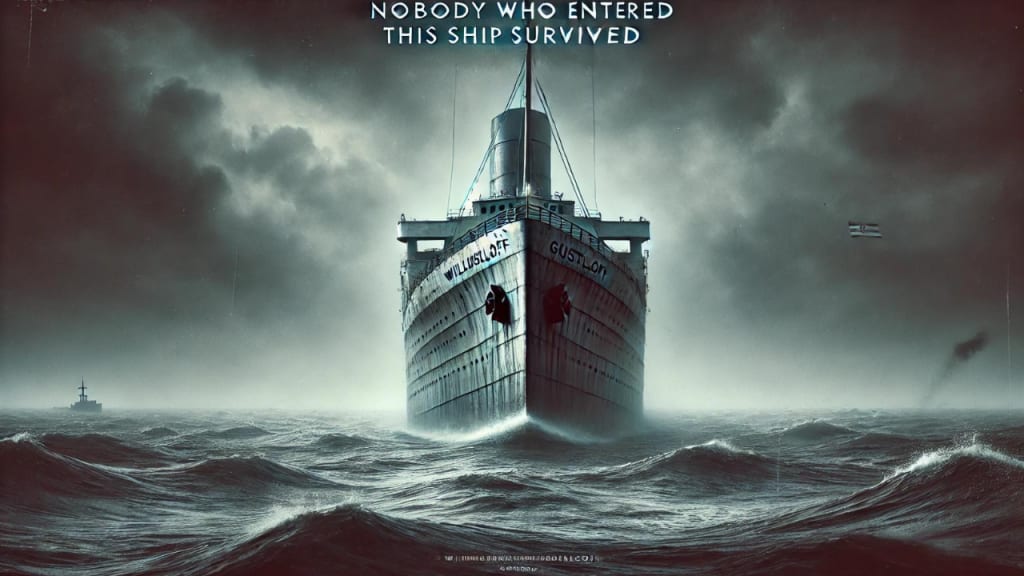
Imagine, if you will, being the captain of a grand cruise ship slicing through the cold, dark waters of the North Atlantic Ocean. The stars twinkle above, but your stomach churns—not just from one too many glasses of sherry at dinner. It’s a cold night, and as you gaze into the endless black, you can’t shake the feeling that danger lurks just beneath the surface.
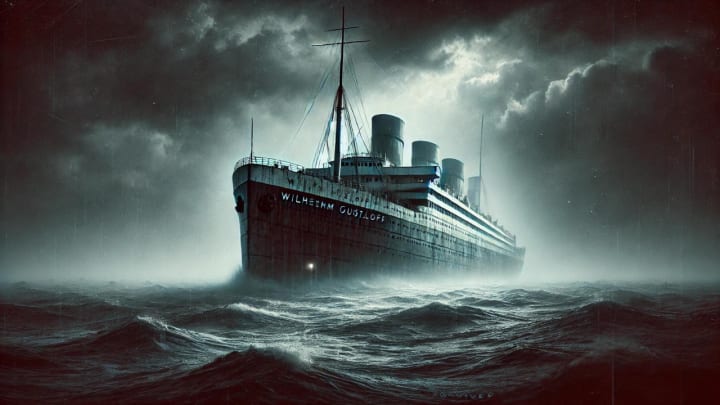
You might think the greatest threat is an iceberg, like the infamous ones that sent the Titanic to the ocean floor. However, in reality, the most common reason ships sink is much more mundane: flooding. Yes, water filling the hull is a ship’s worst enemy. But tonight, our focus is not on icebergs or flooding. Instead, we turn our attention to a tragedy that surpasses them all: the sinking of the Wilhelm Gustloff.
A Voyage to Remember
January 30, 1945, marked the fateful day when the Wilhelm Gustloff met its end. As the Second World War drew to a close, the Russian army was advancing across Europe, sparking one of the largest evacuations in history known as Operation Hannibal. Thousands of desperate civilians, soldiers, and government officials were scrambling for safety, trying to escape the rapidly encroaching Soviet forces.
The Gustloff, a massive ship originally commissioned by the Nazi Party, was intended as a cruise liner, but now it was repurposed as an escape vessel. Launched in 1937, it had a grand past, serving pleasure cruises for loyal Nazi Party members. However, on this wintry day in 1945, its role had drastically changed. It was about to become the site of one of the deadliest maritime disasters ever, and the world was largely unaware.
A Ship Built for Pleasure, Not Survival
This floating behemoth, measuring over 200 meters in length and weighing more than 25,000 tons, had been designed to carry around 1,900 passengers and crew comfortably. However, as desperate souls sought refuge, the Gustloff set sail with over 10,000 people on board—an overcrowding issue that would have dire consequences.
Can you imagine cramming 10,000 people onto a ship meant for 1,900? It was like trying to fit a dozen clowns into a Volkswagen Beetle—chaotic and utterly ridiculous! With passengers packed like sardines in every available space, including the long-empty swimming pool (which was probably not the ideal place to lounge, given that it was snowing outside), the Gustloff was a hot, humid mess. Some passengers even took off their life jackets to cool down, blissfully unaware that they might need those life jackets sooner than they thought.
The Calm Before the Storm
As the ship set sail, the four captains aboard found themselves embroiled in a debate over the safest route. Some suggested hugging the coastline to avoid submarine threats, while others argued for a deeper route, where mines were plentiful but less likely to encounter enemy ships. In a stunning display of naval wisdom, they chose the latter.
As the sun dipped below the horizon, a Soviet submarine, the S-13, spotted the Gustloff and began to pursue it. Unbeknownst to the ship's crew, they were sailing into a deadly game of cat and mouse. Despite being escorted by a torpedo boat, the Gustloff was utterly unprepared for what awaited them. With frozen anti-aircraft guns and a submarine detector that had long since succumbed to the frigid temperatures, they were sitting ducks in a minefield of ice-cold danger.
The Fatal Blow
Nobody Who Entered This Ship Survived. You'll definitely enjoy this!
At approximately 6 PM, as the Gustloff glided through the icy waters, the crew decided to illuminate the ship with bright red and green navigation lights to avoid collision with a nearby mine-sweeping convoy. Unfortunately, this move lit them up like a Christmas tree for the prowling S-13. Just after 7 PM, the submarine launched four torpedoes, each one carrying a grim message of doom.
In a scene reminiscent of a horror film, the Gustloff was struck. Explosions rocked the ship, and chaos erupted as passengers were thrown into a panic. Instantaneous deaths occurred, but many more were trapped below decks, helpless against the icy grip of fate. As the ship listed violently, people scrambled for lifeboats, only to find most of them frozen in place, or worse, unavailable as the crew members who could operate them had perished in the initial blast.
A Night of Horror
The ensuing stampede for safety was nothing short of nightmarish. Passengers were crushed in the chaos, and the few lifeboats that managed to be lowered faced a new threat: desperate swimmers attempting to board. Eyewitness accounts describe the harrowing scene as terrified individuals fought for their lives, using oars and fists to fend off those desperately seeking refuge.
By the time rescue boats arrived, only a fraction of the ship’s occupants could be saved. Estimates suggest around 9,400 people perished that night—more than six Titanic disasters crammed into one tragic evening.
A Flicker of Hope
In the darkness, amidst the swirling chaos, there emerged a glimmer of hope. A German naval officer, while searching the lifeboats at dawn, discovered a baby, miraculously alive among the bodies. This small child became a beacon of survival, a testament to the resilience of the human spirit even in the face of unimaginable tragedy. The officer took the baby in and raised it as his own, offering a faint light in the dark shadow of that night.
Remembering the Forgotten
The sinking of the Wilhelm Gustloff remains one of history's most profound tragedies, overshadowed by the larger-than-life stories of battles and well-known disasters. Yet, it’s crucial we remember this event, not just for its staggering loss of life but for the complex narrative that surrounds it—a tale of desperation, survival, and the moral ambiguities of war.
In a world where history often forgets those who suffered, the story of the Wilhelm Gustloff stands as a reminder that the sea is as unforgiving as the wars fought upon it. It’s a story that invites us to reflect on the past, and perhaps raise a glass (or two) of sherry in honor of those lost at sea.
So the next time you find yourself aboard a ship, gazing into the vast expanse of water, remember: while icebergs may be a concern, the human element—fear, desperation, and the drive for survival—can create tragedies far more significant than any frozen giant lurking in the deep.
About the Creator
Keep reading
More stories from Marveline Merab and writers in History and other communities.
Why Alan Turing Remains the Unsung Hero of WW2
During the tumultuous years of the Second World War, an unassuming yet stately home nestled in southern England, known as Bletchley Park, became the unlikely headquarters for a team of elite codebreakers. Their mission was monumental: to decipher the vast network of encoded communications being dispatched across the globe by the Nazis. Among this group of extraordinary minds, a singular figure emerged, a man who would become not just a pivotal player in the war but also a legendary icon of intellect and innovation.
By Marveline Merababout a year ago in History
Julius Caesar: The Rise and Fall of a Legend
The Rise and Fall of Julius Caesar In the first century BCE, the Roman Republic stood as one of the most powerful states in the ancient world. Its armies conquered vast territories, its laws shaped civilizations, and its Senate governed through a delicate balance of tradition and authority. Into this complex political world was born Gaius Julius Caesar in 100 BCE—a man whose ambition, brilliance, and fate would forever change Roman history.
By The best writer 6 days ago in History
A secret staircase found beneath a 1,500-year-old French church
A subterranean staircase and burial strata dating back approximately 1,500 years were discovered during a project inside the Church of Saint Philibert in Dijon, France. The stairs were discovered by restoration workers inside the church when repairs were being made, and the excavation soon ensued.
By Francis Dami2 days ago in History



Comments
There are no comments for this story
Be the first to respond and start the conversation.