
The Ship That Defined an Era
A Journey Through the Rise, Fall, and Enduring Legacy of the World’s Most Iconic Ocean Liner

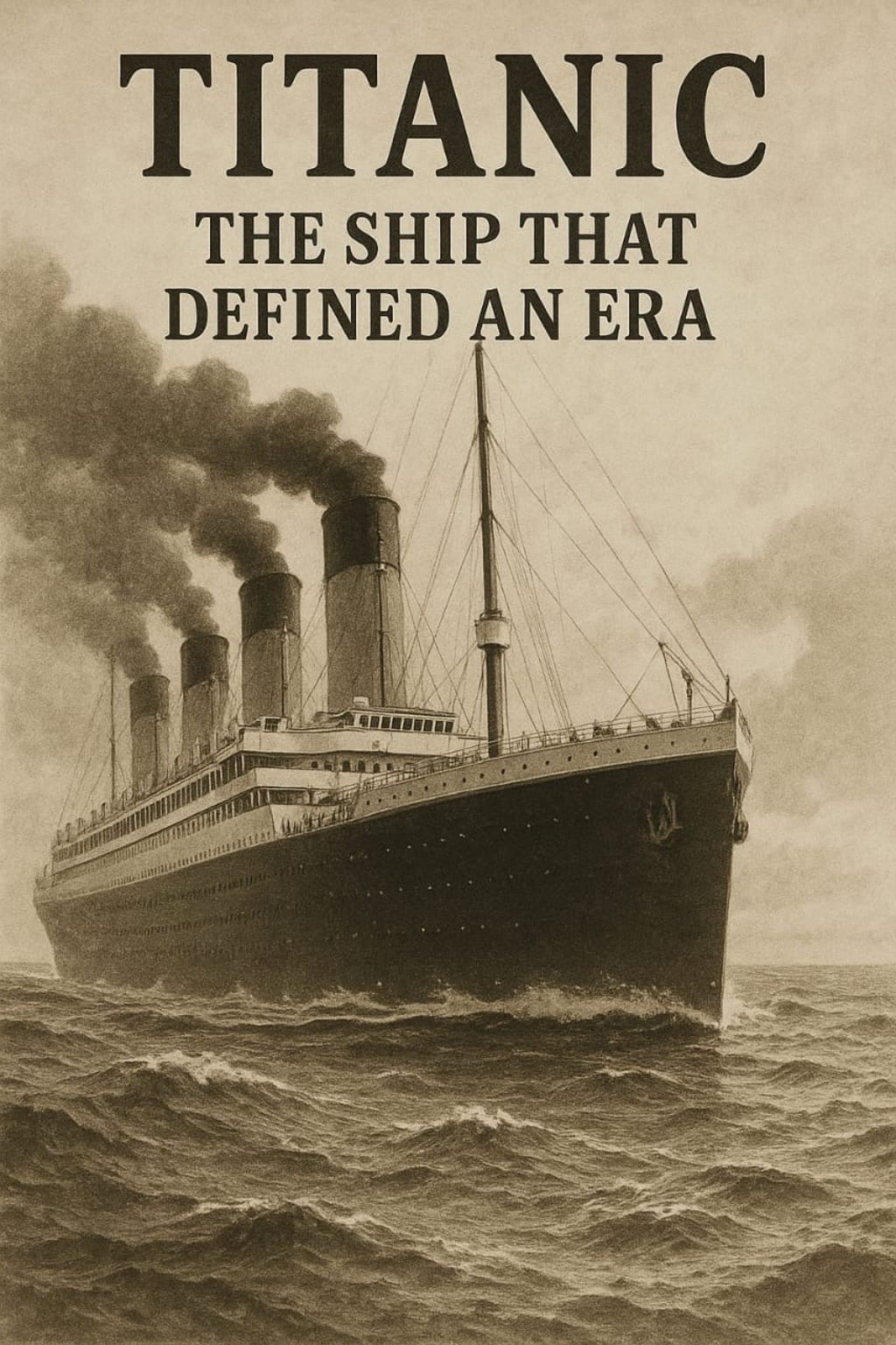
In the early 20th century, the world stood on the brink of a new age — one shaped by industry, ambition, and innovation. Amid this backdrop of progress, a ship emerged that would come to symbolize both the height of human achievement and the depths of human tragedy: the RMS Titanic. Designed as the largest and most luxurious ship of its time, Titanic represented the pride of an empire and the aspirations of a generation. But its maiden voyage ended in catastrophe, forever etching its name into the annals of history.
The Birth of a Legend
The RMS Titanic was born from fierce competition in the transatlantic passenger trade. In an era where speed, luxury, and size were prized, British shipping company White Star Line sought to surpass its rivals by constructing a fleet of grand ocean liners. Titanic, alongside her sister ships Olympic and Britannic, was part of this ambitious project. Designed by naval architect Thomas Andrews and constructed at the Harland and Wolff shipyard in Belfast, construction of the Titanic began on March 31, 1909.
With a length of 882 feet and a gross tonnage of over 46,000, Titanic was a marvel of engineering. The ship boasted unprecedented luxury, with first-class accommodations rivaling the finest hotels of Europe. It featured ornate woodwork, elegant dining rooms, Turkish baths, a swimming pool, and a grand staircase that has since become iconic. More than just a vessel, Titanic was a floating symbol of Edwardian opulence and industrial progress.
The Voyage of Dreams
On April 10, 1912, Titanic departed Southampton, England, on her maiden voyage to New York City. On board were over 2,200 people: wealthy elites, immigrants seeking a new life in America, and a dedicated crew. Among the notable passengers were business magnate John Jacob Astor IV, fashion designer Lucy Duff-Gordon, and unsinkable socialite Margaret “Molly” Brown.
From the start, the voyage was seen as momentous. Titanic was celebrated as “practically unsinkable” due to her innovative safety features, including watertight compartments and remotely operated watertight doors. Yet the ship carried only 20 lifeboats — enough for just over half of those on board — a decision based on outdated maritime regulations and aesthetic concerns.
For four days, the journey progressed smoothly, with the ship receiving iceberg warnings from other vessels as it traveled through the icy waters of the North Atlantic. But fate was waiting just over the horizon.
The Night of the Tragedy
At 11:40 p.m. on April 14, 1912, Titanic struck an iceberg about 370 miles south of Newfoundland. The collision tore a gash along the starboard side below the waterline, breaching several compartments. Despite the crew’s best efforts, it quickly became apparent that the ship would sink.
Panic and confusion set in as the crew began evacuating passengers into lifeboats. The “women and children first” policy was inconsistently enforced, and the limited number of lifeboats led to heartbreaking choices. Some boats were launched only partially full. The ship’s bow dipped lower into the sea, and by 2:20 a.m. on April 15, the Titanic broke in two and sank beneath the waves.
More than 1,500 people lost their lives in the icy Atlantic, making it one of the deadliest peacetime maritime disasters in history. Only 705 survivors were rescued by the RMS Carpathia hours later, left traumatized and forever changed by the events they had endured.
The Aftermath and Investigation
The world reacted with shock and mourning. News of the disaster spread rapidly, prompting inquiries in both the United Kingdom and the United States. Investigations revealed significant failures in safety procedures, ship design, and communication. In response, international maritime laws were overhauled. The tragedy led to the establishment of the International Convention for the Safety of Life at Sea (SOLAS) in 1914, which mandated sufficient lifeboats for all passengers and improved iceberg monitoring through the formation of the International Ice Patrol.
Titanic’s legacy was not just a story of engineering failure, but a reflection of the social inequalities of the time. The survival rates were starkly divided by class: about 60% of first-class passengers survived, compared to only 25% of third-class passengers. The disaster laid bare the rigid structures of Edwardian society, prompting broader discussions about class, privilege, and human dignity.
Rediscovery and Cultural Impact
For decades, Titanic lay undiscovered on the ocean floor, shrouded in myth and mystery. That changed in 1985, when oceanographer Dr. Robert Ballard located the wreck nearly 2.5 miles beneath the surface. The discovery brought renewed interest in the ship and its story, as haunting images of rusting iron and decaying relics captivated the world.
Titanic’s story has since been immortalized in countless books, documentaries, exhibitions, and films — most notably James Cameron’s 1997 epic Titanic, which became one of the highest-grossing films of all time. The film introduced a new generation to the tragedy and reignited interest in the real people behind the story.
Exhibitions featuring recovered artifacts have toured globally, allowing millions to connect with the lives lost and the ship’s grandeur. Museums in Belfast, Halifax, and elsewhere preserve the Titanic’s memory, ensuring that her story endures.
A Symbol Beyond Time
Titanic remains more than a shipwreck or a cautionary tale — it is a mirror to humanity. It reflects our greatest ambitions and our gravest oversights. The pride that built her was matched only by the sorrow that followed her fall. She has become a symbol of hubris, hope, and the fragile line between triumph and tragedy.
More than a century later, the Titanic continues to fascinate and educate. Her story is not just about sinking — it is about the lives she carried, the lessons she left behind, and the enduring impact of a single moment in history.
In the end, Titanic was not merely a ship; she was a legend — a vessel that, in both life and death, truly defined an era.
About the Creator
Irshad Abbasi
"Studying is the best cure for sorrow and grief." shirazi
Keep reading
More stories from Irshad Abbasi and writers in History and other communities.
The Man Behind the Manifesto
Karl Marx, one of the most influential thinkers of the 19th century, fundamentally reshaped how people understood class, labor, and the structures of society. His revolutionary ideas laid the foundation for modern socialism and communism, sparking movements and revolutions that continue to echo into the present day. But Marx’s life was not one of luxury or detached theorizing—it was marked by poverty, exile, and relentless intellectual struggle.
By Irshad Abbasi 7 months ago in History
3 Harmless Habits That Once Caused Absolute Chaos
Most habits are comfortingly dull. You chew gum. You clap at events. You check your phone. You assume—reasonably—that these actions will not destabilize governments, bankrupt industries, or end lives. Society depends on this assumption. If every small habit carried catastrophic potential, we would never leave the house.
By Enoch Saginiabout 2 hours ago in History
Venezuela’s President Under Pressure: Arrest Calls, Indictments, and a Nation at a Crossroads
How the Arrest Narrative Began The idea of arresting Venezuela’s president did not appear out of nowhere. It stems from years of accusations that range from human-rights abuses to corruption and drug-related activities. U.S. authorities have filed formal charges against Nicolás Maduro, linking him to cocaine trafficking networks and large-scale financial misconduct. These cases place him among the few sitting leaders facing active international legal pressure.
By Muhammad Islam khan swati4 days ago in History



Comments
There are no comments for this story
Be the first to respond and start the conversation.