
The Roman Empire: The Rise, Glory, and Fall of an Ancient Civilization
History

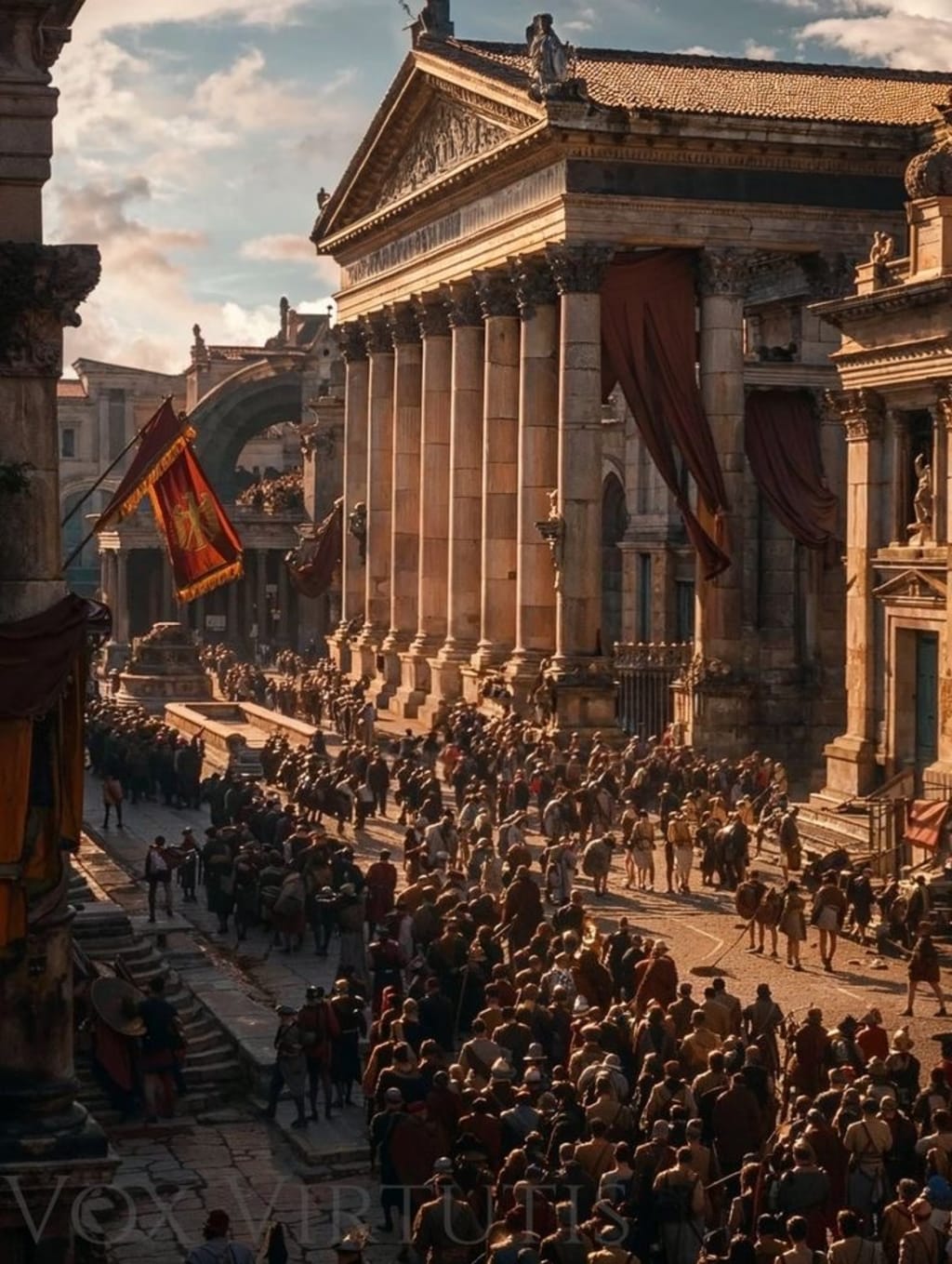
The Roman Empire, one of the most influential and enduring civilizations in history, left a lasting legacy that continues to shape the world today. Spanning from the legendary founding of Rome in 753 BCE to its eventual collapse in the West in 476 CE, the empire’s rise, achievements, and eventual decline have fascinated historians, scholars, and enthusiasts for centuries.
The Origins of Rome
According to Roman mythology, the city of Rome was founded in 753 BCE by Romulus, its first king. The city’s name was derived from its legendary founder, and early Roman society was marked by a mix of myth, legend, and historical truth. Archaeological evidence suggests that the city began as a small settlement along the Tiber River, inhabited by Latin-speaking people who eventually developed into a powerful urban center.
Rome’s early history was dominated by a monarchy. However, around 509 BCE, the Romans overthrew their last king, Tarquin the Proud, and established the Roman Republic. The Republic marked the beginning of Roman expansion, as Rome gradually extended its influence over the Italian peninsula and beyond.
The Roman Republic: Expansion and Conflict
During the Republic (509 BCE - 27 BCE), Rome transformed from a small city-state into one of the most powerful political entities in the ancient world. Its military prowess, efficient political system, and ability to integrate conquered peoples played a crucial role in this rapid expansion.
At the heart of Roman success was its military, the Roman legions. The legions, highly trained and disciplined, were capable of adapting to new warfare tactics and engineering feats, such as the construction of roads and forts across conquered territories. This infrastructure allowed the Romans to maintain control over their vast empire.
However, Rome’s rapid expansion brought internal conflicts. Tensions between the aristocratic patricians and the common plebeians often led to social strife. At the same time, the Senate, the ruling body of the Republic, struggled to manage the increasing demands of governing a sprawling empire. The Republic’s democratic institutions began to show signs of strain, and political corruption, along with military overreach, contributed to a growing sense of instability.
The Transition to Empire
The transition from Republic to Empire is often associated with Julius Caesar, a general whose military conquests in Gaul (modern-day France) made him immensely popular. In 49 BCE, Caesar famously crossed the Rubicon River, defying the Senate’s orders and leading his army into Rome. This act initiated a series of civil wars, ultimately resulting in Caesar’s victory. In 44 BCE, Caesar declared himself dictator for life, a move that alarmed many of his contemporaries.
Caesar’s assassination in 44 BCE by a group of senators did not restore the Republic but instead paved the way for further civil wars. Eventually, his grandnephew and adopted heir, Octavian (later Augustus), emerged victorious. In 27 BCE, Augustus became the first Roman Emperor, marking the beginning of the Roman Empire.
The Roman Empire: Pax Romana and Cultural Flourishing
Under Augustus and his successors, the Roman Empire reached the height of its power. This period, known as the Pax Romana (Roman Peace), lasted from 27 BCE to 180 CE and was characterized by relative stability, economic prosperity, and the flourishing of Roman culture. Augustus implemented reforms that strengthened the empire, from creating a standing army to developing an extensive network of roads and public buildings.
The Roman Empire during this time was vast, stretching from Britain in the west to Mesopotamia in the east, and from North Africa to the Rhine and Danube rivers in the north. Roman law, which emphasized concepts like justice, citizenship, and property rights, became the foundation of legal systems in many parts of the world.
Culturally, Rome was a melting pot. It absorbed influences from the Greeks, Egyptians, and many other cultures, leading to advancements in art, architecture, and philosophy. The construction of iconic buildings like the Colosseum, the Pantheon, and the Roman Forum during this time attests to the empire’s architectural and engineering brilliance.
The Challenges of an Expanding Empire
As the Roman Empire grew, so did its challenges. The sheer size of the empire made it difficult to govern efficiently. Communication and transportation between distant provinces were slow, and local uprisings and external threats became increasingly difficult to manage.
The empire’s vast borders were constantly under threat from barbarian tribes such as the Visigoths, Vandals, and Huns. Additionally, internal conflicts, including political corruption, economic instability, and the weakening of the Roman legions, began to erode the empire’s strength. The division of the empire into the Western Roman Empire and Eastern Roman Empire (later known as the Byzantine Empire) in 395 CE under Emperor Theodosius I was an attempt to address these issues, but it also further fragmented the empire.
The Fall of the Western Roman Empire
The Western Roman Empire faced a slow decline throughout the 4th and 5th centuries CE. In 476 CE, the last Roman emperor of the West, Romulus Augustulus, was deposed by the Germanic chieftain Odoacer, marking the official fall of the Western Roman Empire.
While the causes of the empire’s fall are complex and multifaceted—ranging from military defeats to economic decay to political instability—the collapse of the Western Roman Empire was not the end of Roman influence. The Eastern Roman Empire, or Byzantine Empire, continued to thrive for nearly another thousand years, preserving Roman law, culture, and institutions.
The Legacy of Rome
Even after the fall of the Western Roman Empire, Rome’s legacy lived on. Roman ideas about governance, law, and citizenship were incorporated into the foundations of modern Western civilization. The Latin language, Roman engineering techniques, and Roman architecture influenced the development of the medieval world and the Renaissance.
The Roman Catholic Church, which had become a dominant religious and political force within the empire, continued to play a significant role in European affairs throughout the Middle Ages and beyond. Additionally, many modern countries, especially in Europe, trace their legal systems, governance structures, and even national identities to the influence of ancient Rome.
Conclusion
The Roman Empire’s history is one of remarkable achievement and profound influence. From its humble beginnings as a small city-state to its rise as one of the largest empires the world has ever known, Rome’s legacy is woven into the fabric of modern civilization. Its military conquests, cultural innovations, and legal systems continue to inspire and inform the world we live in today, proving that the echoes of the Roman Empire can still be heard across time.
About the Creator
Keep reading
More stories from Matilda Otu and writers in History and other communities.
How Cleopatra Came to Power in Egypt and What She Accomplished During Her Reign
Cleopatra VII, the last active ruler of the Ptolemaic Kingdom of Egypt, is one of history’s most famous monarchs, celebrated for her intelligence, political savvy, and complex relationships with powerful Roman figures. Her rise to power, her reign, and her legacy remain subjects of fascination. From her dramatic ascent to the throne to her pivotal role in shaping the course of ancient history, Cleopatra’s life was marked by intrigue, diplomacy, and bold leadership.
By Matilda Otuabout a year ago in History
The Quiet Rise of Global Militarization
The Quiet Rise of Global Militarization Across the world, governments are increasing military spending, expanding defense industries, and modernizing weapons systems—often without openly acknowledging why. There are no formal declarations of war, no mass troop mobilizations, and no clear enemy named in many cases. Yet behind the scenes, a quiet shift is taking place. Global militarization is rising, not loudly, but steadily, reshaping international relations in ways that may define the coming decades.
By Wings of Time 2 days ago in History
3 Completely Innocent Decisions That Ended Very Badly
Most disasters don’t begin with villainous laughter or ominous music. They begin with someone making a perfectly reasonable decision. Sensible, even. The kind of choice you’d defend confidently if questioned later.
By Enoch Sagini2 days ago in History



Comments
There are no comments for this story
Be the first to respond and start the conversation.