
How Cleopatra Came to Power in Egypt and What She Accomplished During Her Reign
Egypt

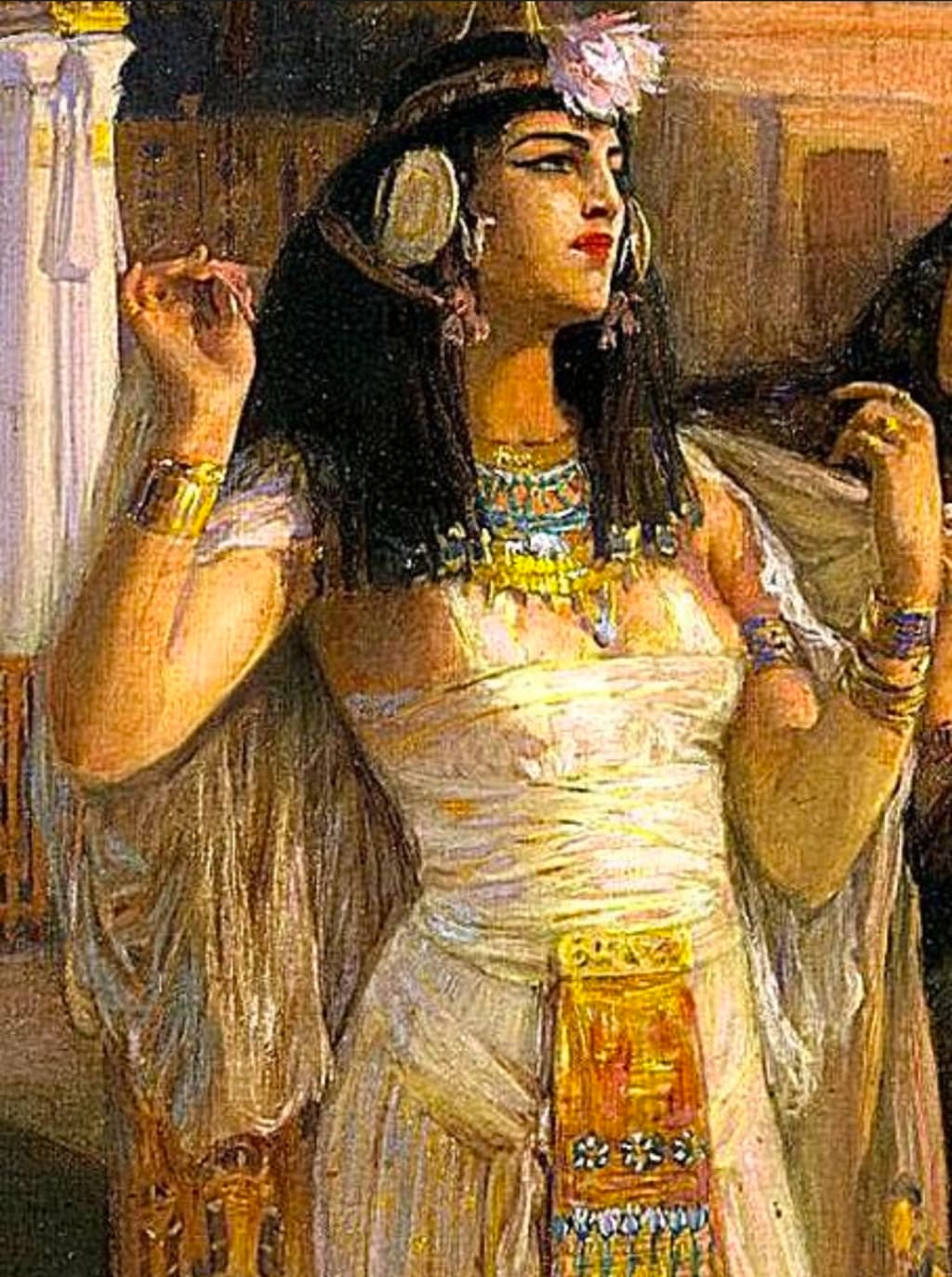
Cleopatra VII, the last active ruler of the Ptolemaic Kingdom of Egypt, is one of history’s most famous monarchs, celebrated for her intelligence, political savvy, and complex relationships with powerful Roman figures. Her rise to power, her reign, and her legacy remain subjects of fascination. From her dramatic ascent to the throne to her pivotal role in shaping the course of ancient history, Cleopatra’s life was marked by intrigue, diplomacy, and bold leadership.
The Path to Power
Cleopatra’s path to the throne was anything but straightforward. Born in 69 BCE, she was part of the Ptolemaic dynasty, which had ruled Egypt since Alexander the Great’s general, Ptolemy I Soter, established it in 305 BCE. However, the Ptolemaic family was far from united, with a long history of internal strife and power struggles.
Cleopatra’s father, Ptolemy XII Auletes, was a relatively weak ruler who had faced opposition from the Egyptian court and was forced into exile in Rome for a time. Upon his death in 51 BCE, Cleopatra and her younger brother Ptolemy XIII were declared co-rulers, as was the custom in the Ptolemaic dynasty, with Cleopatra assumed to be the dominant figure due to her age and capabilities. However, the young king and his advisers soon challenged Cleopatra’s authority.
The conflict between Cleopatra and Ptolemy XIII quickly escalated. Cleopatra, who was intelligent, ambitious, and politically astute, wanted to strengthen her power and ensure her control over Egypt. A power struggle ensued, culminating in Cleopatra’s exile from the palace. She was forced to flee Alexandria, but she was far from defeated.
Cleopatra’s Alliance with Julius Caesar
Cleopatra’s remarkable comeback began when she famously forged an alliance with Julius Caesar, one of the most powerful men in Rome. In 48 BCE, Caesar arrived in Egypt while pursuing Pompey during the Roman civil war. Cleopatra saw an opportunity to regain her throne and smuggled herself into the royal palace in a carpet, which was presented to Caesar as a gift. This bold and dramatic entrance is one of the most enduring stories of Cleopatra’s life.
Cleopatra and Caesar quickly formed both a political and romantic alliance. With Caesar’s military support, Cleopatra defeated her brother Ptolemy XIII in the ensuing conflict, and he drowned while trying to escape. Cleopatra was reinstated as queen, but this time, she ruled alone, with her younger brother Ptolemy XIV serving as a figurehead co-ruler.
Cleopatra and Caesar also had a son, Caesarion (Ptolemy XV), who was claimed by Cleopatra to be Caesar’s child, though Caesar never publicly acknowledged him as his heir. Their alliance solidified Cleopatra’s power and marked a new phase in her reign.
Cleopatra’s Role During Her Reign
After securing her throne, Cleopatra worked to stabilize Egypt, restore its prosperity, and increase its influence on the world stage. Her reign was marked by several key accomplishments and initiatives:
1. Restoration of Egypt’s Economy and Administration
Cleopatra worked hard to restore Egypt’s economy, which had suffered under her father’s mismanagement. She reformed the administration, improved agriculture, and enhanced the collection of taxes. This economic stabilization allowed Cleopatra to fund her lavish court, support military campaigns, and solidify her position as a ruler.
2. Cultural and Scientific Patronage
Cleopatra was known for her intelligence and love of learning. Fluent in several languages, she was the first Ptolemaic ruler to speak Egyptian, which endeared her to her people. She also patronized scholars, artists, and architects, contributing to Egypt’s cultural and scientific development. Cleopatra worked to position Alexandria as a leading center of intellectual activity, home to the famous Library of Alexandria and the Museum, institutions that attracted scholars from all over the ancient world.
3. Political Maneuvering and Foreign Alliances
Cleopatra’s reign was marked by shrewd political maneuvering. She recognized that Egypt’s survival depended on its relationship with Rome, the rising superpower of the Mediterranean. After Julius Caesar’s assassination in 44 BCE, Cleopatra forged an alliance with Mark Antony, one of Caesar’s most trusted generals and a leading figure in the Roman world.
Her relationship with Mark Antony was both political and personal, and they had three children together. Cleopatra and Antony’s alliance posed a direct challenge to Caesar’s heir, Octavian (the future Emperor Augustus). This rivalry ultimately led to the famous conflict between Antony and Octavian, which culminated in the Battle of Actium in 31 BCE.
4. The Battle of Actium and Defeat
Cleopatra and Antony’s forces were decisively defeated by Octavian’s fleet at the Battle of Actium in 31 BCE. Following the defeat, Cleopatra and Antony retreated to Egypt, where they both faced the inevitable consequences of Octavian’s conquest. In 30 BCE, Octavian’s forces marched on Alexandria, and both Antony and Cleopatra committed suicide — Antony by falling on his own sword, and Cleopatra, according to legend, by allowing a poisonous asp (a type of snake) to bite her.
Cleopatra’s Legacy
Cleopatra’s death marked the end of the Ptolemaic rule in Egypt, as the country was annexed into the Roman Empire. Octavian (soon to be Augustus) became the first Roman emperor, and Egypt became a Roman province.
Despite her tragic end, Cleopatra’s legacy endures in history, literature, and popular culture. She is remembered not only as a powerful queen but also as a shrewd politician who navigated the turbulent waters of Roman politics with intelligence, charm, and audacity. Her romantic relationships with Julius Caesar and Mark Antony have been immortalized in art, plays, and films, and she continues to be an enduring symbol of female power, intelligence, and resilience.
Cleopatra’s reign was a complex blend of political genius, cultural revival, and strategic alliances. She was a monarch who fought to keep Egypt independent and strong during a time when the world around her was being transformed by the rise of Rome. Though her reign ended in tragedy, her name and her story continue to captivate the imaginations of people around the world, making her one of history’s most iconic figures.
About the Creator
Keep reading
More stories from Matilda Otu and writers in History and other communities.
Olympic Events in Ancient Greece: A Glimpse into the Origins of the Games
The Olympic Games, one of the most prestigious sporting events in the modern world, trace their roots back to ancient Greece, where they were originally held to honor the Greek god Zeus. These early Olympic Games, known as the Olympia and held in the sanctuary of Olympia, were much different from the multi-sport spectacle we know today. The events in ancient Greece were focused primarily on physical contests that emphasized strength, speed, and athletic prowess, reflecting the Greek ideals of physical perfection and competition.
By Matilda Otuabout a year ago in History
Why Early Aircraft Designs Failed Before They Ever Flew
Long before airplanes became symbols of speed and global connection, flight was an idea filled with uncertainty, ambition, and repeated disappointment. Early aircraft designers were driven by a powerful belief that humans could conquer the skies, yet many of their creations never made it past workshops, fields, or testing grounds. These failures were not accidents of carelessness; they were the result of a world still learning the rules of flight.
By Beckett Dowhan6 days ago in History
3 Times Ordinary Objects Did Something Deeply Unsettling
Objects surround us every day. They make life easier, more comfortable, or more entertaining. A chair supports us, a mirror shows us our reflection, and a toaster browns our bread with consistent reliability. Most of the time, they behave exactly as expected.
By Enoch Sagini5 days ago in History
So You Decided To Become a Nurse Practitioner:
So you decided to become an "Advanced Practice" nurse. Congratulations!... is what I would say if this was a good idea. Grad school? In this economy? What were you thinking? Likely it was something along the lines of either 1) “I've seen these other chucklefucks do it— Why can't I?” or even 2) “I've got a nice career, I should shake it up. I miss feeling like I have no clue what I'm doing.”
By Sandor Szabo2 days ago in Fiction




Comments
There are no comments for this story
Be the first to respond and start the conversation.