
The Timeless Doors of the Pantheon: Rome’s Bronze Marvels
Oldest Roman Door

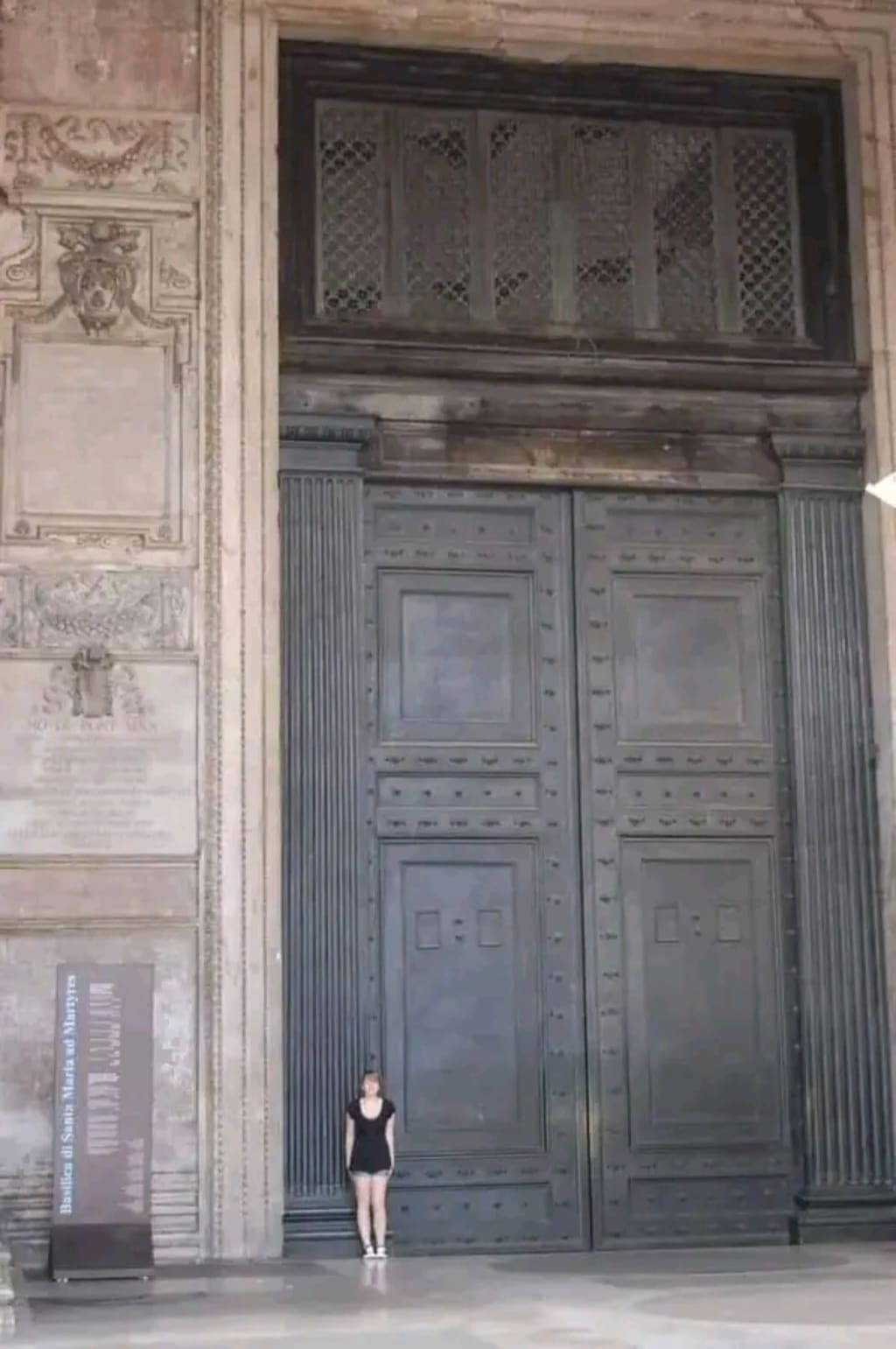
Rome, a city rich with history, is home to countless architectural wonders. Among them, the Pantheon stands tall as a testament to the grandeur of ancient Roman engineering and design. Known for its majestic dome and awe-inspiring rotunda, the Pantheon has been a subject of fascination for centuries. However, one of its lesser-discussed yet equally remarkable features is its ancient doors—massive bronze portals that have stood the test of time. These doors, dating back to 115 AD, are not only some of the oldest in the world but are still functional today, bearing a unique legacy from the reign of Emperor Hadrian.
A Doorway to Ancient History
The Pantheon, originally built by Marcus Agrippa in 27 BC, was rebuilt by Emperor Hadrian around 125 AD following a fire that destroyed the original structure. As part of this restoration, the iconic bronze doors were cast, and they have remained in place ever since, enduring the centuries while most other ancient doors have long since crumbled or been replaced.
At a glance, these doors may seem like just another feature of Rome’s architectural grandeur, but their history is much more profound. Measuring an astounding twenty-five feet in height and seven and a half feet wide, each door is crafted entirely of bronze—a material that was expensive and difficult to work with in the ancient world. Yet, even after nearly two millennia, the doors retain their structural integrity and elegance, standing as a reminder of the remarkable craftsmanship of the Romans.
Engineering Marvels of the Ancient World
What makes the Pantheon doors particularly astonishing is not just their size or their material, but the way they function. Each door weighs several tons, yet they can be easily opened and closed by a single person. This feat of engineering is a testament to the ingenuity of Roman architects and builders, who designed the hinges and mechanisms with such precision that the doors remain perfectly balanced to this day. Their smooth operation stands in contrast to the cumbersome doors of other ancient structures, demonstrating the superior level of engineering prowess that characterized Roman construction.
These doors also hold another rare distinction—they are one of only two doors in the world with a nearly 2,000-year-old lock that still works. While the exact mechanics of the lock remain something of a mystery, it is clear that the Romans had a deep understanding of metallurgy and mechanical design, enabling them to create mechanisms that could endure for millennia.
Symbols of Rome’s Durability and Strength
More than just functional elements of the Pantheon, these bronze doors symbolize the durability and strength of Rome itself. The Pantheon has survived countless invasions, regime changes, and natural disasters, yet its doors have never faltered. They have withstood the rise and fall of empires, seen the transformation of Rome from a pagan city to the heart of Christianity, and endured through periods of neglect and restoration. Through it all, the doors have remained a gateway to one of Rome’s most iconic structures.
The symbolism of the doors is further enhanced by the fact that the Pantheon was consecrated as a Christian church in the 7th century, becoming the Basilica of St. Mary and the Martyrs. In this context, the doors represent the transition from the ancient pagan world to the Christian era, and their continued use today highlights the seamless continuity of Rome’s long history.
The Mystery of the Bronze Doors
Despite their fame, much about the Pantheon’s doors remains shrouded in mystery. For centuries, scholars have debated whether the doors we see today are the originals from Hadrian’s time or replacements from a later period. However, recent studies suggest that they are indeed the original doors, albeit with some modifications made over the centuries. For example, the door panels were once adorned with elaborate decorations, likely lost or melted down during the early medieval period when bronze was frequently recycled for other uses.
One of the most intriguing aspects of the doors is the casting technique used to create them. Bronze casting on such a large scale was incredibly challenging, and it remains unclear exactly how the Romans managed to produce such massive structures with the limited technology of the time. Some theories suggest that the doors were cast in sections and then assembled, while others propose that they were made in one continuous piece. Whatever the method, it is clear that the Romans had mastered the art of metalworking in ways that continue to astound modern engineers.
An Enduring Legacy
Today, the bronze doors of the Pantheon continue to be a source of wonder for visitors from around the world. As one of the most well-preserved pieces of ancient Roman architecture, they offer a tangible connection to the past, inviting us to imagine the many generations of Romans who passed through them. Their timeless design and functionality serve as a reminder of the brilliance of ancient engineering, while their enduring presence stands as a symbol of Rome’s lasting influence on the world.
In a city filled with iconic landmarks, the Pantheon’s bronze doors are a quieter but no less powerful testament to the skill, artistry, and ambition of the Roman Empire. As they continue to open and close each day—just as they have for nearly 2,000 years—they remind us that, while empires rise and fall, great works of art and engineering can stand the test of time.
About the Creator
Keep reading
More stories from Deji Akomolafe and writers in History and other communities.
The Living History of Istanbul: A Building on Alaykoskü Street
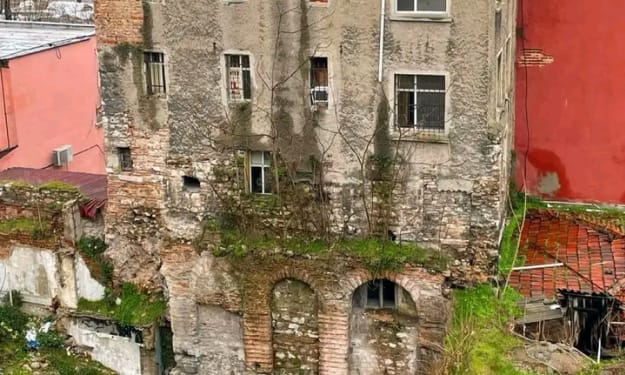
In the heart of Istanbul, Turkey, a seemingly unassuming building on Alaykoskü Street in the Cagaloglu district offers a tangible snapshot of the city's 1,800-year-long history. While Istanbul is renowned for its grand mosques, palaces, and bustling bazaars, this unique structure stands as a testament to the complex and layered past that has shaped the city. From its Roman foundations to its Ottoman walls and modern touches, the building is a perfect microcosm of the diverse cultures and empires that have called this city home.
By Deji Akomolafeabout a year ago in History
The Year 1972 in Review: Fun Facts, Trivia, and Historic Highlights
This quick read is a collection of fun facts, trivia, and historic events from the year 1972. Discover the year’s top news stories, most influential people, sports facts, entertainment trivia, and much more.
By Gregory DeVictor4 days ago in History
The First Rainbow Baby
Pitter-patter, pitter-patter. The rain fell in rhythmic splatters, slowly slowing, but still constant. Mira rolled onto her side pulling the blanket tight against her ears, but still she could hear chitter-chatter and scurrying feet of the creatures that refused to sleep in the lower decks.
By A. J. Schoenfelda day ago in Fiction


Comments
There are no comments for this story
Be the first to respond and start the conversation.