
The Rise and Fall of Ancient Egypt: A Journey Through Time
From the Pyramids of Giza to the Secrets of Mummification—Unveiling the Glory and Decline of a Legendary Civilization

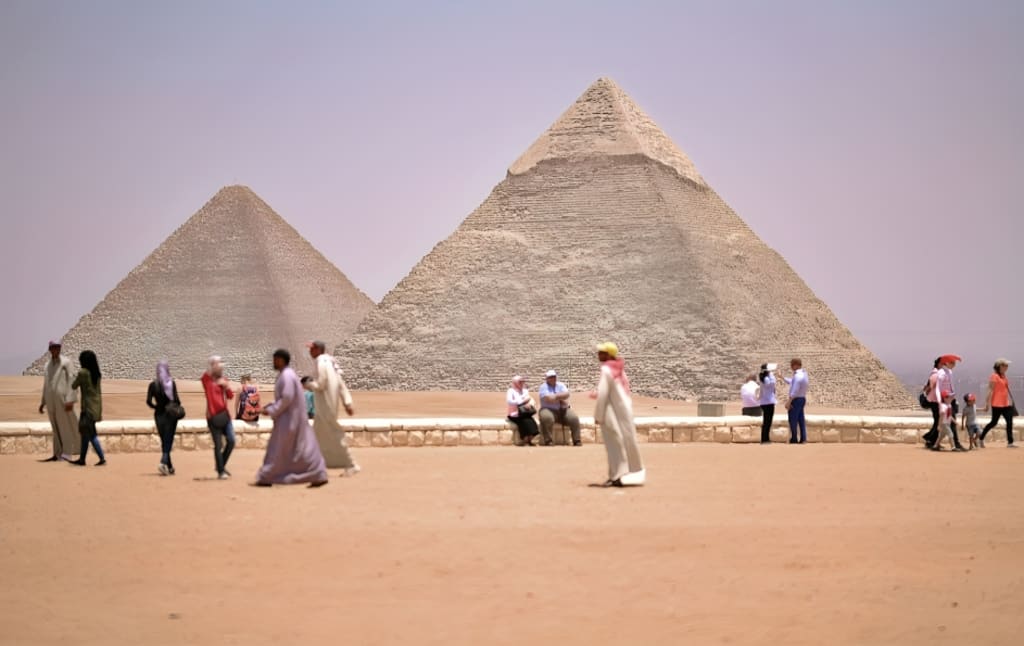
It was Egypt, one of the world's oldest and most fabulous civilizations, along the banks of the Nile River that shone for thousands of years through the great pyramids to the very intricate mummification process. Ancient Egypt's history is rich and mysterious as a succession of mighty rulers shaped the culture, religion, and architectural wonders that remain famous even today. But like all great empires, Egypt's glory was eventually brought to an end. Here, we are going to tell you the story of Ancient Egypt, how they made mummies, the building of the pyramids, and the eventual collapse of the mighty kingdom that once was.
The Early Beginnings: The Rise of Egypt
Egyptian history goes way back to about 3100 BCE by King Narmer, also known as Menes, who joined Upper and Lower Egypt, establishing the onset of the Egyptian Early Dynastic Period. Narmer's reign founded the Egyptian state, and he is credited with establishing the first of many dynasties.
In the centuries that ensued, Egypt constructed a strong central government and was under the rule of pharaohs-people who were considered gods on earth. The pharaoh held a vital position in sustaining order and harmony, ma'at, in Egyptian society.
The Old Kingdom (c. 2686 – 2181 BCE)
This period is also known as the "Age of the Pyramids" because during this period the most famous pyramids in Egypt were constructed. The greatest of all is the Great Pyramid of Giza, commissioned under the rule of the pharaoh Khufu, also known as Cheops, sometime around 2580 BCE. The construction of the pyramid necessitated great resources, skilled labor, and cutting-edge engineering skills. The largest and most magnificent among them was Khufu's pyramid; even nowadays, the whole remaining giant structure stands as one of the Seven Wonders of the Ancient World.
During the Old Kingdom, the Egyptians perfected the art of erecting large stone structures. The pyramid was not just a tomb for the pharaoh; it symbolized his journey to the afterlife, ensuring his immortality. The Egyptians believed that life after death was just as important as life on Earth, and elaborate tombs were built to honor their rulers in the afterlife.

Mummification: Preserving the Dead
Mummification, an essential process of Egyptian funeral practices, was eventually developed over the course of centuries. It was meant to prepare the body so that, in the afterlife, its soul, also known as the ka, would recognize it. The whole process involved several stages.
1. Removal of the organs: The brains were taken out from the nostrils using special tools, and the organs were taken out carefully. However, in most cases, the heart was left inside because the general opinion was that the heart was where rationality and emotion would reside.
2. Drying of the body: The natron - a type of natural salt found in Egypt - was used to dehydrate the body. The dehydration process took 40 days and helped preserve the body for centuries.
3. Wrapping the body: Following desiccation, the body was covered in linen bandages. Between layers, amulets were inserted to safeguard the deceased
4. during the afterlife. Final rituals: The mummy was placed in a tomb with lots of things that the deceased might need in his journey to the afterlife, like food, clothes, and treasures for a comfortable time.
All pharaohs, nobles, and wealthy members of society receive complex mummification. In contrast, simple burial rites are for ordinary folk. Mummification has also developed over time, and has thus become more refined and specialized.
The Middle Kingdom (c. 2055 – 1650 BCE)
The Middle Kingdom is considered a time of renaissance for Egypt. After a period of political instability, the pharaohs of the 11th Dynasty restored order and prosperity to the land. This was the time when some of Egypt's most notable rulers began to emerge, including Pharaoh Amenemhat II, who expanded Egypt's influence through military campaigns and trade.
This also saw the increase of art, literature, and culture. The Egyptians started making more elaborate tombs, and the practice of mummification gained increasing notoriety among the upper classes.
The New Kingdom (c. 1550 – 1070 BCE)
This was Egypt's most flourishing and potent period during the New Kingdom, with such pharaohs as Hatshepsut, Thutmose III, Akhenaten, Tutankhamun, and Ramses II.
Hatshepsut (c. 1479 – 1458 BCE): One of the very few female pharaohs of Egypt, Hatshepsut oversaw trade expeditions, extensive building projects, and a long period of peace. She is remembered for her impressive mortuary temple at Deir el-Bahari.
Thutmose III (c. 1479 – 1425 BCE): Known as the "Napoleon of Egypt," Thutmose III expanded Egypt's empire through military conquests, reaching as far as the Euphrates River.

Akhenaten (c. 1353 – 1336 BCE): Akhenaten is known for his radical religious reforms. He introduced monotheism, worshiping the sun disk Aten, and moved the capital to a new city, Amarna. The old gods, however, resumed their reverence, with hardly anything being remembered of his reforms.
Tutankhamun (c. 1332 – 1323 BCE): The most famous pharaoh of all, perhaps, in view of the discovery of his tomb in 1922, Tutankhamun was a young king who restored the traditional religious practices after Akhenaten's short, unorthodox reign.
Ramses II (c. 1279 – 1213 BCE): Known as "Ramses the Great," he ruled for 66 years and waged several military campaigns, most famously the Battle of Kadesh. He constructed several temples and monuments, such as the colossal temple at Abu Simbel.
The Decline and Fall of Egypt
Despite its glory, Egypt gradually began to weaken. The New Kingdom came to an end in 1070 BCE, and Egypt entered a period of decline. Different foreign powers from Libyans, Nubians, Persians to the eventual Greeks invaded Egypt. As Egypt's power declined, internal conflicts, invasion, and economic turmoil marked the instability.
332 BCE: Alexander the Great defeated Egypt, and it became part of his empire. However, in 30 BCE, after the defeat of Cleopatra by the Roman Empire, Egypt was absorbed into the Roman Empire, ending Egypt's ancient civilization.
Conclusion
The history of Egypt has proven to be one of the achievements of a civilization that molded most of the world as we know it today. From gigantic pyramids to mysterious mummies, the old Egyptian legacy lives through their arts, culture, and monumental structures. The fall of Egypt was an internal and external process which occurred gradually. Although Egypt lost its political influence, its contributions to the world of civilization still shape the course of things into the present.
About the Creator
Muhammad Naeem
Muhammad Naeem is an experienced content creator with 4 years of expertise in writing articles for websites, blogs, and print media. His work spans diverse industries, crafting research-based, informative content.
Keep reading
More stories from Muhammad Naeem and writers in History and other communities.
10 Essential Tips for a Healthier, Happier You: A Guide to Transform Your Life
10 Tips for a Healthy Lifestyle: A Journey to a Happier You Good health is more than just appearing well. It is about health, both physical and mental. It is taking good care of your body and your mind, so you can face life with enthusiasm, warmth and hope. Self-care allows us to live actively and enjoy all the wonderful things that life offers. If you want to improve your overall health and quality of life, these 10 tips will help you achieve your goal of feeling better and relishing everyday life.
By Muhammad Naeemabout a year ago in Humans
Why August Wilson’s Joe Turner’s Come and Gone Feels Urgent on Today’s Broadway Stage by NWO Sparrow
Why August Wilson’s vision of identity and movement resonates in today’s political climate by NWO Sparrow Joe Turner’s Come and Gone returns with urgency, reflection, and cultural weight
By NWO SPARROW6 days ago in History
The Koh-i-Noor Diamond
The Koh-i-Noor, meaning “Mountain of Light” in Persian, is one of the most famous and controversial diamonds in the world. More than just a gemstone, it is a symbol of power, conquest, imperial ambition, and historical dispute. For centuries, the Koh-i-Noor passed from one ruler to another, almost always through war, betrayal, or political domination. Its story is deeply intertwined with the history of South Asia, Persia, Afghanistan, and the British Empire. Origins in Ancient India The exact origins of the Koh-i-Noor are surrounded by legend and uncertainty. Most historians agree that the diamond was discovered in India, likely in the Golconda region (modern-day Telangana), which was once the world’s richest source of diamonds. Golconda diamonds were renowned for their exceptional clarity and brilliance, and many legendary gems came from this area. Ancient Indian texts and folklore suggest that the Koh-i-Noor may have been known thousands of years ago. Some legends associate it with the Syamantaka Mani, a mythical jewel mentioned in Hindu scriptures. While this link cannot be proven, it reflects how deeply the diamond is embedded in Indian cultural imagination. What is more certain is that for centuries, India was the only known source of diamonds in the world, making gems like the Koh-i-Noor extraordinarily rare and valuable. The Delhi Sultanate and Early Rulers By the medieval period, the Koh-i-Noor had become part of royal treasuries in northern India. It is believed to have been owned by rulers of the Delhi Sultanate, a series of Muslim dynasties that ruled large parts of India from the 13th to the 16th centuries. During this time, the diamond was not merely an ornament. It symbolized divine favor, royal authority, and military dominance. Possessing such a gem enhanced a ruler’s prestige and legitimacy. However, the diamond’s history already showed a pattern: it rarely stayed with one dynasty for long. The Mughal Empire and the Peacock Throne The Koh-i-Noor reached new heights of fame under the Mughal Empire, one of the greatest empires in South Asian history. In 1526, Babur, the founder of the Mughal dynasty, defeated Ibrahim Lodi at the Battle of Panipat. The diamond came into Mughal possession shortly after. Babur himself mentioned a famous diamond in his memoirs, the Baburnama, describing its immense value. Later Mughal emperors treasured the Koh-i-Noor, but it was under Shah Jahan—the builder of the Taj Mahal—that the diamond achieved legendary status. Shah Jahan placed the Koh-i-Noor in the magnificent Peacock Throne, a jewel-encrusted seat symbolizing Mughal wealth and glory. At this point, the diamond was not just a treasure; it was the heart of imperial power. Nadir Shah and the Name “Koh-i-Noor” In 1739, disaster struck the Mughal Empire. Nadir Shah, the ruler of Persia (modern Iran), invaded India and sacked Delhi. The Mughal capital was looted, and unimaginable wealth was carried away. According to legend, when Nadir Shah first saw the diamond, he exclaimed “Koh-i-Noor!”—Mountain of Light. From that moment, the diamond became known by this name. Nadir Shah took the Koh-i-Noor back to Persia, but his reign was short-lived. He was assassinated in 1747, and once again, the diamond changed hands amid chaos. Afghanistan and the Durrani Empire After Nadir Shah’s death, the Koh-i-Noor came into the possession of Ahmad Shah Durrani, the founder of the Durrani Empire in Afghanistan. For a time, the diamond remained in Afghan royal custody. However, internal conflicts weakened Afghan rulers. One of Ahmad Shah’s descendants, Shah Shuja Durrani, was eventually overthrown and imprisoned. Desperate to regain his throne, Shah Shuja sought help from the Sikh Empire in India—and brought the Koh-i-Noor with him as a bargaining tool. Maharaja Ranjit Singh and the Sikh Empire In the early 19th century, the Koh-i-Noor entered the treasury of Maharaja Ranjit Singh, the powerful founder of the Sikh Empire. Shah Shuja gave the diamond to Ranjit Singh in exchange for military assistance. Ranjit Singh valued the Koh-i-Noor deeply, but unlike many rulers before him, he reportedly wished for the diamond to be donated to a Hindu temple after his death. However, this wish was never fulfilled. After Ranjit Singh’s death in 1839, the Sikh Empire rapidly declined due to internal struggles and British interference. This set the stage for the final and most controversial chapter of the Koh-i-Noor’s journey. British Conquest and Transfer to Britain Following the Anglo-Sikh Wars, the British East India Company annexed Punjab in 1849. As part of the Treaty of Lahore, the Koh-i-Noor was handed over to the British. The diamond was presented to Queen Victoria and transported to Britain. This transfer remains one of the most disputed moments in the diamond’s history, as it occurred under colonial domination, not free consent. In 1851, the Koh-i-Noor was displayed at the Great Exhibition in London. However, many viewers found it disappointing, as its original cut did not reflect light well by European standards. Recutting and the British Crown Jewels To enhance its brilliance, Prince Albert ordered the diamond to be re-cut in 1852. While this made the Koh-i-Noor smaller, it significantly increased its sparkle. The diamond was later set into various pieces of British royal jewelry. Today, it is mounted in the crown of Queen Elizabeth The Queen Mother, part of the British Crown Jewels, and kept in the Tower of London. Traditionally, the Koh-i-Noor is worn only by female members of the royal family, due to a long-standing belief that the diamond brings misfortune to men who possess it. Modern Controversies and Claims In the modern era, the Koh-i-Noor has become a symbol of colonial injustice. India, Pakistan, Iran, and Afghanistan have all, at different times, claimed rightful ownership of the diamond. India argues that the Koh-i-Noor was taken during British colonial rule and should be returned. Pakistan claims it as part of the Sikh Empire’s legacy, which was based in Lahore. Afghanistan cites its period under Durrani rulers, while Iran references Nadir Shah. Britain, however, maintains that the diamond was acquired legally under the Treaty of Lahore. Conclusion: A Symbol Beyond a Gem The Koh-i-Noor is far more than a diamond. It represents centuries of empire-building, conquest, ambition, and loss. Its journey mirrors the violent and complex history of South Asia and imperial expansion. Whether it will ever be returned remains uncertain. But one thing is clear: the Koh-i-Noor is not just a Mountain of Light—it is a mountain of history, carrying within it the stories of rulers, empires, and nations.
By The best writer 3 days ago in History




Comments
There are no comments for this story
Be the first to respond and start the conversation.