
Why August Wilson’s Joe Turner’s Come and Gone Feels Urgent on Today’s Broadway Stage by NWO Sparrow
How Joe Turner’s Come and Gone connects early Black migration to today’s cultural crossroads


Why August Wilson’s vision of identity and movement resonates in today’s political climate by NWO Sparrow
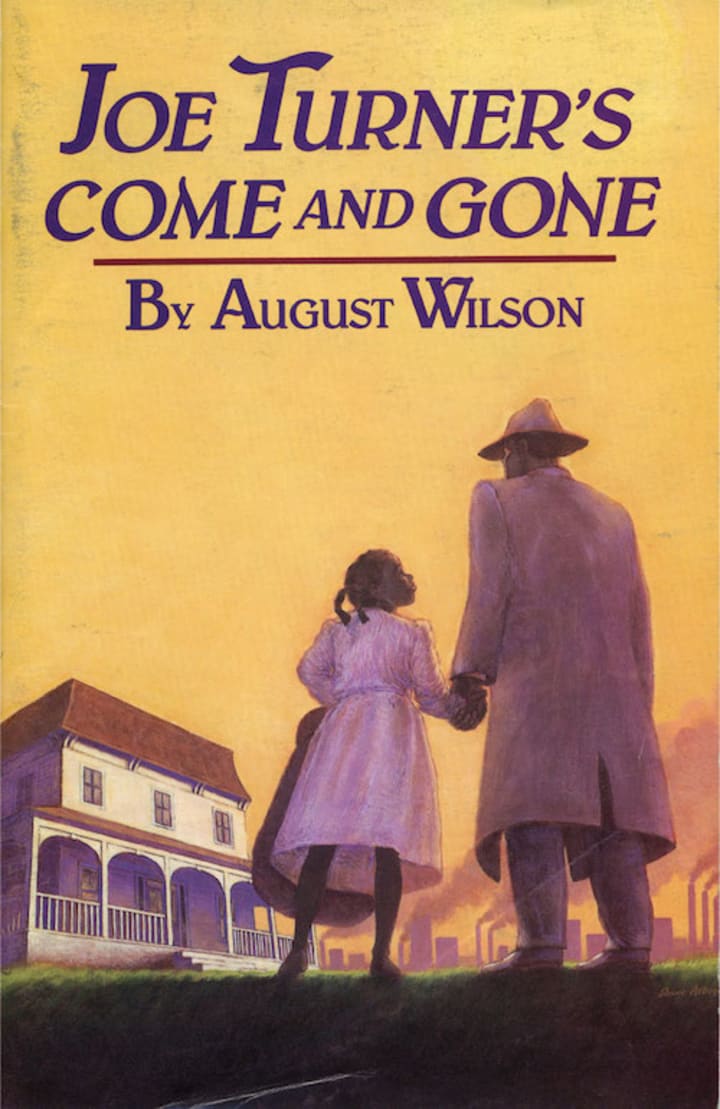
When Joe Turner’s Come and Gone opens on Broadway March 30, it will arrive at a moment that feels uncannily familiar. August Wilson wrote this play as a meditation on freedom after bondage, on Black people searching for themselves in a country that promised opportunity while withholding dignity. More than a century after the era Wilson portrays, many of those tensions remain unresolved.
Set in 1911 Pittsburgh, the story unfolds inside a boardinghouse where Black men and women gather while moving north after the collapse of Reconstruction. Some are newly released from forced labor. Others are chasing jobs, safety, or a sense of self that was stolen long before they could define it. The Great Migration was not only a movement of bodies. It was a collective attempt to reclaim identity in a nation that continued to profit from Black deletion.
Today’s political climate makes Wilson’s vision feel especially present. Across corporate America and public institutions, diversity initiatives are being quietly dismantled. Programs once framed as progress are now described as excess. Opportunities meant to correct historical imbalance are recast as unnecessary. For many Black professionals, the language has changed but the message feels familiar. Prove your worth again. Justify your presence again. Wait your turn again.
Wilson understood this cycle deeply. In Joe Turner’s Come and Gone, freedom is not portrayed as a finish line. It is fragile. Characters who have escaped legal bondage still struggle with invisibility, exploitation, and internal displacement. They are technically free but spiritually unsettled. That tension mirrors the reality many Black Americans experience today. Access exists, yet belonging remains conditional.
This Broadway revival brings together a creative team uniquely positioned to honor that complexity. Cedric the Entertainer takes on a role that asks for restraint and interiority rather than volume. His casting speaks to a larger truth about Black performers whose depth is often underestimated by industry labels. Taraji P. Henson returns to the stage carrying the emotional precision that has defined her screen work, now sharpened by the immediacy of live theatre. Under the direction of Debbie Allen, the production is guided by someone who understands Black performance as lineage rather than trend. Allen’s approach matters because Wilson’s work does not benefit from spectacle. His plays breathe through silence, ritual, and communal listening. In a time when Broadway often prioritizes scale and speed, Joe Turner’s Come and Gone asks audiences to slow down and witness. That invitation alone feels radical.
The play’s boardinghouse becomes a metaphor for transition. It is not a destination. It is a holding space where people confront loss, memory, and hope before stepping into whatever comes next. That setting resonates in 2026 as Black communities navigate shifting political ground. Many are reassessing careers, institutions, and long held assumptions about progress. The question is no longer only how far we have come. It is how much ground can be lost when protections are treated as optional.
What makes Wilson’s writing endure is his refusal to flatten struggle into despair. Even in moments of pain, his characters seek restoration. They search for names, songs, and stories that reconnect them to something larger than survival. That search mirrors contemporary efforts to protect Black history in schools, preserve cultural institutions, and amplify voices that challenge revisionist narratives.
The rollback of diversity commitments is not simply about policy. It is about memory. Wilson spent his career insisting that Black lives were worthy of epic treatment. He rejected the idea that our stories required permission to be centered. Bringing Joe Turner’s Come and Gone to Broadway now reasserts that belief at a moment when cultural memory is being contested.
For younger audiences, the production offers education without instruction. It demonstrates how systemic harm travels across generations without relying on modern vocabulary. For longtime theatre goers, it serves as a reminder that progress is not linear. For Black viewers, it affirms a truth many already know. Visibility does not guarantee safety, and representation does not equal liberation. Yet the play also offers grounding. Wilson believed that knowing where you come from strengthens where you stand. His characters heal through recognition, through community, through the courage to claim space even when the world resists. That lesson feels essential as Black Americans navigate a climate of uncertainty wrapped in familiar language.
Broadway is often described as a mirror of society. If that is true, then Joe Turner’s Come and Gone reflects both where the country has been and where it risks returning. Its presence on a major stage asserts that Black stories are not seasonal. They are foundational.
As audiences gather this spring, they will not only witness a revival. They will participate in a conversation that has never stopped. Who gets to feel whole. Who gets to move freely. Who gets to be remembered accurately. August Wilson asked those questions decades ago. In 2026, they still demand answers.
About the Creator
NWO SPARROW
NWO Sparrow — The New Voice of NYC
I cover hip-hop, WWE & entertainment with an edge. Urban journalist repping the culture. Writing for Medium.com & Vocal, bringing raw stories, real voices & NYC energy to every headline.
Keep reading
More stories from NWO SPARROW and writers in History and other communities.
Seven Dials
Introduction Seven Dials is a famous and historic area located in London, England. It is found near Covent Garden, one of the busiest and most popular parts of the city. Seven Dials is known for its unique road design, rich history, old buildings, shops, cafés, and lively atmosphere. Today, it is a popular place for tourists and local people who enjoy culture, shopping, and history.
By Farhan Sayed4 days ago in History
A secret staircase found beneath a 1,500-year-old French church
A subterranean staircase and burial strata dating back approximately 1,500 years were discovered during a project inside the Church of Saint Philibert in Dijon, France. The stairs were discovered by restoration workers inside the church when repairs were being made, and the excavation soon ensued.
By Francis Dami5 days ago in History




Comments
There are no comments for this story
Be the first to respond and start the conversation.