
The Rise and Fall of Adolf Hitler: From Struggling Artist to Tyrant's Demise
The story of how a failed artist became one of history's most infamous dictators, and how his reign of terror came to an end.

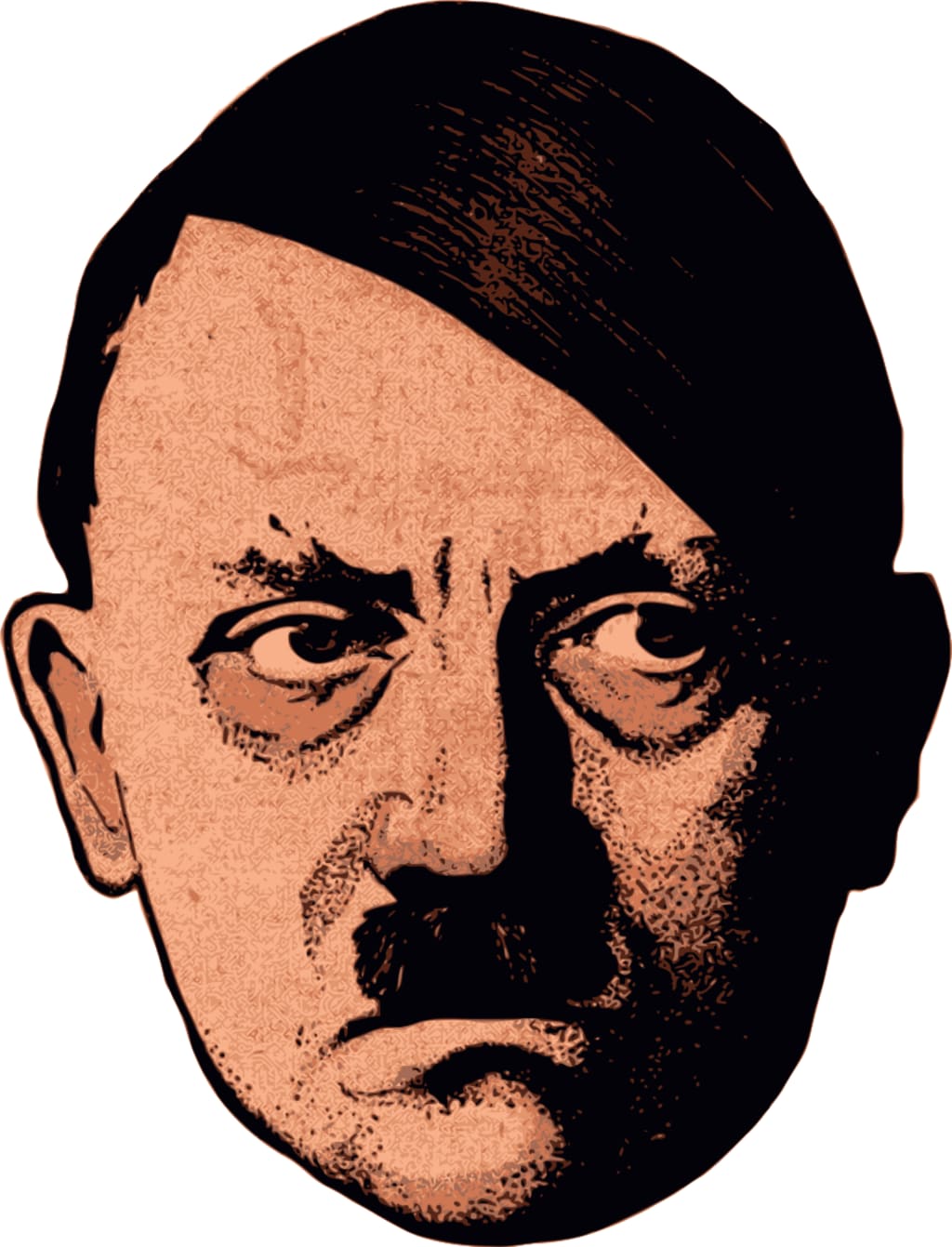
The Rise and Fall of Adolf Hitler
Adolf Hitler’s journey from a high school dropout and struggling artist to becoming a warlord who ruled Germany and much of Europe is a remarkable and dark story. His early life was marked by hardship, but he eventually seized power and led the Nazi regime into World War II. How did someone who seemed invincible at the height of his power ultimately fall, and how did good conquer evil? This is the story of Adolf Hitler's rise and fall.
Hitler was born on April 20, 1889, in Braunau am Inn, Austria, as one of six children to Alois Hitler and Klara Hitler, who were second cousins. His early life was shaped by personal tragedy, including the deaths of three of his siblings, which had a profound impact on him.
The most difficult aspect of Hitler’s early years, however, was his strained relationship with his father. Alois Hitler was a low-ranking civil servant in the Austro-Hungarian customs service and wanted Adolf to follow in his footsteps. Growing up in rural Austria, there were few options beyond farming or military service for a stable career, but Hitler was determined to pursue art. He despised school and was rebellious, especially toward his father’s wishes. While he excelled in drawing, his academic performance suffered. Hitler’s disdain for formal education was, according to him, a form of rebellion against his father. He later claimed that his poor performance in school was intentional, but teachers who knew him described him as bright but unmotivated, with anger and narcissistic tendencies that hindered his studies. The only subject that truly captivated him was history, largely due to his history teacher, Dr. Leopold Poetsch. Poetsch, a German nationalist and anti-Semite, influenced young Hitler’s worldview, instilling in him a fascination with German history. Hitler later credited Poetsch with shaping his passion for German nationalism, and even visited him when he annexed Austria years later. When Hitler’s father died in 1903, his mother Klara hoped he would continue his education, but his academic performance only worsened. He transferred to a new high school in Steyr but showed little interest in his studies. At 15, he fell seriously ill and took a year off to recover. Upon returning, he resumed his disinterest in school and dropped out at 16. Around this time, he had his first and only experience with alcohol, drinking so heavily with friends to celebrate leaving school that he passed out on a road, swearing off alcohol for the rest of his life. After dropping out of school, Hitler lived at home, supported by his mother and relatives. He devoted his time to pursuing his dream of becoming an artist. In 1906, his family funded a two-month trip to Vienna, hoping it would help him develop his artistic career. Hitler fell in love with the city. With it being the capital of the Austro-Hungarian Empire, the city was full of fine art, architecture, opera houses, and libraries. It was also home to the German nationalist movement in the Empire. Hitler fell in love with Vienna and dreamed of becoming a fine artist there. In 1907, he took the Vienna Academy of Fine Arts entrance exam. However, his test drawing was unsatisfactory, and he was not admitted. Undeterred, he tried to take the test again the following year. However, the sample drawings he presented to the instructors were so poor that he was not even allowed to sit for the sample drawing again. Hitler was incensed. On their second refusal, he demanded an explanation from the professors. Hitler claimed they admitted he did not have the talent to be an artist but that he could probably be a great architect. Being an architect was one of Hitler's secondary dreams, but without a high school diploma, he was unlikely to gain entrance to one of Vienna's numerous architecture programs. Defeated, he returned to his hometown to live with his mother. Upon her death from breast cancer just before Christmas in 1907, Hitler was devastated. He admitted that he had honored his father despite their disagreements, but he absolutely loved his mother. Decades later, when he was Chancellor of Germany, he would grant the Jewish doctor who had treated his mother's breast cancer and his wife special protection from the Gestapo. Hitler later granted them visas to leave Austria for America in 1940, as the Holocaust was already ongoing, as a measure of gratitude for trying to save his mother's life. After Klara’s death, Hitler decided it was time to pack up his things and try to make a new life in Vienna. Shortly after arriving, he found several roommates. Instead of working or studying in school, Hitler occupied his time by voraciously reading books, attending the opera, writing, and trying to ply his craft as a painter. Hitler refused to get a steady job because he believed that society at large wanted this, and it would stifle his free thinking. However, he was forced to work at times to feed himself. Hitler often did odd jobs such as shoveling snow, carrying bags at the train stations, cleaning carpets, and construction. He also resorted to begging and was homeless since he often moved from boarding house to hostel to different roommates trying to survive. He frequently did not have enough money to eat and relied upon charity from several soup kitchens for hot meals. Even with such a hard lifestyle, Hitler refused to get a job despite having no mental or physical disabilities. Instead, he wanted to pursue his passion as an artist. Though political opponents later claimed that he was a house painter, there is evidence to support Hitler's claim he was a quote-unquote "small artist." Hitler could not draw and instead copied postcards of famous landmarks in Vienna. He would then sell these crude copies to shops, furniture stores, and restaurants to take up space on otherwise blank walls. Hitler also apparently did drawings for small businesses that wanted to advertise products but wanted to avoid paying high prices for professionally painted ads. With this meager income, Hitler managed to survive on the streets of Vienna for the next five years. When he was not trying to hawk his paintings, he became even more intently interested in politics. Due to Vienna's strong German nationalist movement, several political parties emerged. Among these were the Christian Social Party and the Pan-German Party. Of course, Hitler was a fan of the Pan-German party, but the organization lacked popular support because, in his eyes, they were not adept at propaganda, public speaking, and knowledge of social issues. On the other hand, the Christian Social Party had all these things because of the leadership of Vienna Mayor Karl Lueger. Lueger founded the Christian Social Party in the late 1800s to counter what many in the Empire at the time saw as the disintegration of German rule. Though the party favored a multicultural empire, party members were clear that Germans should be the ruling class, that the German language and way of life were superior, and that there would be autonomy for the various ethnicities in the Empire. Hitler, of course, did not agree with these principles. He claimed he hated the Austro-Hungarians because they allowed so many "inferior peoples" equal status in the Empire. During this time, the Austro-Hungarian Empire was composed of Austrians, Hungarians, Czechs, Slovenes, Slovaks, Croatians, Serbians, Bosnians, Romanians, Ukrainians, and many other Slavic peoples. Hitler absolutely detested that these people were even part of the Empire, much less having an equal political voice to German-speaking Austrians. Additionally, Hitler did not agree with the Christian Social Party’s so-called “lenient” view towards Jews. During his time in Vienna, if Hitler had not been an anti-Semite before, his anti-Semitism really took root. Frequently, throughout his writings, Hitler wrote many disparaging remarks about Jews. He concocted this hidden fear that hordes of Jewish men might impregnate Austrian women and somehow taint the gene pool. However, his hatred of Jews during this time, ironically enough, is probably to compensate for his lack of luck with the ladies. Hitler was not known to have had any sexual relations with any woman by this time in his life but was interested in at least one. He never had the courage to even speak to her despite writing long verses of love poetry to her. Even these secret feelings he kept to himself since he never mailed the writings to her, and the woman likely never even knew Hitler was infatuated with her. But she probably would not be interested in a homeless, starving artist who was full of himself anyway. Getting back to the Christian Social Party, Hitler did not agree with most of their beliefs but did take notes about the way they carried themselves. Karl Lueger was a great public orator. Combined with effective propaganda campaigns and an effective information system that allowed them to gain the upper hand quickly in the information space, it proved that this was the way to lead a party. In his attempt to improve his public speaking, Hitler often gave long-standing diatribes in the homeless shelters, boarding houses, and street corners he often called home. Of course, no one probably took him seriously, but Hitler was undeterred. With undying confidence in himself, he used those years to shed his anxiety about public speaking and try different methods to anyone who listened to him for more than a moment. Despite how important his time in Vienna was for forging him into the mad dictator he would later become, he left his beloved city in 1913. He settled in Munich and continued the same vagabond lifestyle as before. However, his reasons for leaving Vienna behind are still debated. Hitler would later claim he left because the prospect of being drafted into the multicultural army of the Austro-Hungarian Empire was something he could not stomach. This was because the Empire had a mandatory draft of all males, and military authorities had been looking for Hitler for several years to report to a recruiting station for his entrance physical to see if he was qualified to serve. Because he was homeless, military authorities could not track him down until they finally sent a notice to him in Munich in 1913. The correspondence Hitler sent back contradicts his claims that he left purely because he did not want to serve in the imperial army. Due to a lack of funds, he asked to complete the entrance physical in Munich since Germany also had universal military service and if the Austrians would accept the exam. They agreed to this. After reporting in Munich, Hitler was found not physically fit for military service, and so the Austrians left him alone. Over the next year, Hitler did not do too much other than continue practicing his oration skills and painting until news of World War One broke out. Two days after war had been declared, he petitioned the Bavarian government to enlist in the German army since he normally would be ineligible due to being an Austrian citizen. Bavarian authorities granted the request. Why he had not been deported after failing his first military physical or allowed as a foreign citizen to enlist in the army were two questions raised in a report from 1924 after Hitler’s entrance into politics. The report concluded that there was no known reason other than recruiting officials turning a blind eye to anyone who would volunteer at the time. Hitler was posted to the Bavarian Reserve Infantry Regiment 16, part of the 6th Bavarian Reserve Division. His regiment first saw combat during the disastrous First Battle of the Ypres. His regiment entered the battle with 3,600 men and, after twenty days of slaughter, had been reduced to just 611 combat-effective men, including Hitler. For unknown reasons, after this battle, Hitler was promoted from Private to Lance Corporal and assigned duties as a regimental runner. Veterans remarked that Hitler chided his comrades for having sex with French prostitutes and would continually make long orations about how Germany was being stabbed in the back while they suffered at the front. The only problem was Hitler did not really suffer at the front. Hitler’s job was as a regimental runner. This meant he had to carry messages from regimental headquarters situated far behind the front lines to battalion headquarters. Runners from those units would bring messages to companies in the trenches. Because of this, the few times Hitler did show up in front-line trenches, he was harassed and detested because of his relative comfort in the rear. In fact, it is highly likely that because of his reputation as a lone weirdo, and since Hitler wanted to do nothing but talk about politics, is why, in the aftermath of the Ypres battle, he was sent to regimental headquarters as a way to rid his company of him. But even though Hitler served most of the war in relative safety, he was wounded in combat and decorated for bravery twice. His first award for bravery was the Iron Cross Second Class in December 1914. This award was very common in the German army and it is not known for what action in particular it was awarded for. During the battle of the Somme, he was wounded in the thigh by shrapnel from a British artillery shell as he was running into a trench to deliver a message. Allegedly, Hitler begged to remain at the front but was evacuated to the rear and sent to Munich to recover. Hitler allegedly begged his company commander to allow him to return early to the unit, which is likely considering how he wanted nothing more than to be part of the war. After returning to the front in spring 1917, Hitler’s next award came in August 1918 with the awarding of the Iron Cross First Class. This award, the next highest from before, was very unusual for a Lance Corporal to be awarded. After all, this decoration was for extreme acts of bravery and was typically reserved for more senior enlisted men and officers. Figuring out exactly what he was awarded it for remained a mystery for decades until historians uncovered papers in the German archives. It appears the real reason why Hitler was awarded the medal was because his regiment was suffering atrocious losses during assaults by American and French troops. During this battle, the understrength regiment lost hundreds of soldiers killed and wounded, including most of the company runners. Regimental HQ sent Hitler as a replacement runner to carry messages for the front-line units. Though Hitler’s actions that day were no more spectacular than anyone else but because he worked for regimental headquarters and had facetime with more senior officers, he was recognized for his actions that day. Ironically, it was a Jewish man, the regimental adjutant, who wrote the recommendation for Hitler's award. Decades later, he was persecuted by Hitler's regime and was able to survive only because of the help he received from fellow veterans in Hitler’s unit. After being awarded the Iron Cross First Class, Hitler continued serving until being wounded in a gas attack in October 1918. A month later, he was still recovering from his wounds in hospital when he received word that Germany had surrendered. According to him, he suffered a second bout of blindness upon hearing the news, though this, too, is surely exaggerated. However, this moment, lying in a hospital bed in a shattered empire, was the moment that Hitler decided to enter politics. It was a decision that would eventually alter the course of human history. Birth of the Nazi Party The world that Hitler found himself in at the end of World War One in Germany was chaotic. The economy was in shambles, people were starving, thousands were still dying from Spanish influenza, and the weak Weimar Republic was in negotiations with the Entente on the Versailles peace agreement. Among all of this chaos, the country was ripped apart by extreme political violence from 1918 to 1923. During this time, numerous socialist and communist revolutions broke out. These revolts were violently stamped out by the new German army, the Reichswehr, and the numerous right-wing paramilitary organizations that sprung up with the tacit approval of the German army. These groups carried out a tit-for-tat campaign of assassinations, rebellions, and full-scale wars both inside and outside of German borders. But where did Hitler fall into all of this? After recovering from his gas injuries, Hitler returned to duty at the end of November 1918. Not wanting to demobilize to try and fight for a job that probably did not exist, not that he wanted to work anyway, Hitler decided to stay in the army. During the first few months after World War One, he spent guarding soon-to-be repatriated prisoners of war, and he returned to Munich in the spring of 1919. During this time, socialist and communist revolutionaries had been staging revolts across Germany, including Munich. Once government troops had retaken Munich from the revolutionaries, Hitler's unit was posted to the area. Unlike before, when the German army was very apolitical, in this new landscape the country found itself in, the Reichswehr was extremely politically motivated. One of the main functions of the army at that time was to root out insurrectionists before they could become a problem, as well as indoctrinate soldiers and civilians alike in right-wing politics. It was here that Hitler found his first public audience. During one of the political lectures German soldiers had to attend, he caught the ire of his instructor with his ardent nationalist remarks and virulent anti-Semitism. Many German soldiers believed in the stabbed-in-the-back theory, where socialist, Jewish, and communist elements had sold out the country while the German army was still holding the line against Germany's enemies. While this was fake news, as the German army had been resoundingly defeated on the battlefield, many soldiers refused to acknowledge this fact and wanted to blame others. Hitler fit this bill perfectly. Because of his ardent belief in the cause, Hitler was assigned to work as a political officer for his unit. His primary duties consisted of visiting small units of soldiers to give speeches and lectures that were favorable to the government to prevent revolutionary ideas from infecting the army. Hitler loved this job and was doing so well at it that he was selected for another, more important task. Apparently, there were grumblings of another socialist revolution in Munich. Hitler’s commanding officer sent him to spy on these revolutionaries and report back his findings. His first mission was allegedly so successful that his full-time employment then became investigating budding political groups in Munich and reporting back his findings. It was this task that set in motion his first meeting with the German Workers' Party on a balmy evening in September 1919. Prior to this night, neither Hitler nor his superiors had ever heard of the German Workers' Party. However, many left-wing groups were centered around workers' rights and had communist leanings, so when Hitler's superiors learned of the group's existence, they sent him to attend one of their meetings to learn more about them. Upon entering that dimly lit beer hall, Hitler found a small group of men arguing about their grievances. According to Hitler, these small start-up political parties were quite common, and most would eventually fade away with time. He was going to leave when one member suggested that Bavaria break away from Germany and form an independent republic with Austria. This comment caused Hitler to become irate. Hitler had always believed in uniting all the German peoples under one banner, not creating breakaway states that more powerful enemies could easily gobble up. After chastising the man, the room went silent. The founder of the small party, Anton Drexler, was so moved by Hitler’s argument with the man that he pressed a small pamphlet into his hand and told Hitler to consider joining them. Hitler rejected him and went back to his barracks room. Later the next morning, according to Hitler, he read the pamphlet Drexler had given him and was moved by it. The German masses would lead the party that Drexler imagined, but instead of being communist, it would have a strong nationalist undertone that supported a strong, central government. Later that day, Hitler received a postcard asking him to join the party formally. He then spent the next two days contemplating whether or not to join. Hitler called it the most difficult decision of his life. Hitler said it was so difficult because he had always wanted to form his own political party and not be subject to others. However, being virtually nameless, penniless, and unknown in a harsh, new world, Hitler took a leap of faith and joined this burgeoning new party. He figured that with it being so new, he could easily intimidate the other members and eventually gain control of it. Hitler returned to the beer cellar and formally accepted the invitation to the party. He became party member number seven and was instantly well-received by two of the party’s earliest members. The first of these was Ernst Roehm. Roehm had been a career army officer and continued his service in the Reichswehr after the war. At the time, he was just a Captain, but he had friends in many places throughout the army who were sympathetic to right-wing paramilitary groups and political parties. Having Roehm’s support was crucial because he was able to ensure army support for his activities so his speeches and rallies would not be seen as a threat. The other important individual was Dietrich Eckart. Eckart was about twenty years older than Hitler and had lived a similar vagabond lifestyle, except he had been in Berlin. Eckart similarly had been struggling to achieve his dreams, except instead of painting, Eckart had always wanted to be a great playwright. Though the plays he wrote often only saw the inside of several jails and asylums he spent time in, he nonetheless was a much more masterful writer than Hitler. As a result, Eckart took Hitler under his wing to improve his spoken and written German and taught him what he knew about theater. But why would these two men back Hitler? According to a friend of Eckart, he would later testify that the German Workers’ Party needed a particular type of leader. Whoever led the party needed to, in their words, stand the sound of a machine gun, a soldier who was not an officer, someone who came from a working-class or lower middle-class background, a person who could speak, and, lastly, a bachelor. This part was important so women could think he was available and swoon over him. When Eckart and Roehm looked at Hitler, he checked all the boxes they were looking for. Now, with the backing of these two early party figures behind him, Hitler began to pursue party politics with a passion. After mailing out a bunch of fliers, he was discouraged when the next meeting they had numbered still just seven people. Not to be discouraged, Hitler made better fliers, took out several ads in local newspapers, and waited. At the next meeting, one hundred and eleven people showed up. Hitler was not supposed to speak during that meeting, but when the regularly scheduled speaker was met with silence, party members decided to give Hitler a try. According to him, the audience was "electrified," and in just 30 minutes, he had turned an uninterested and uninteresting crowd into a ruckus of support that ended up donating 300 marks towards party coffers. Soon after this first public meeting, the party began planning the next, larger meeting. This time, the capacity could fit 2,000 people. Hitler made a big deal in Mein Kampf about how he was the one who set everything up. Of course, this is another one of Hitler's boasts and half-truths, but what is true is that he once again stole the show. Part of the reason why he stole the show was because of the 25-point plan that he, Drexler, and several others wrote. The 25-point plan became the basis of Nazism's strategy from this point forward. The plan was a mixture of ultra-nationalist and socialist points meant to entice working-class people who were fed up with being taken advantage of by people with more money. For example, the first point of the plan called for the reunification of all German peoples under one Greater Germany. In the aftermath of World War One, the German Empire had been carved up with different pieces going to Poland, Czechoslovakia, France, Denmark, and several other countries. This infuriated people like Hitler since people during his grandfather’s era had seen the reunification of Germany only to see it split apart again. The second point of the plan called for the repudiation of the Versailles peace treaty. Many Germans blamed the peace treaty for causing much of their woes due to the huge indemnities the country had to pay the allied powers, as well as the war guilt clause that stated Germany was responsible for all the destruction that occurred. The German people hated the weak Weimar Government for accepting these terms, and many saw the government as having just laid down and taken these terms without negotiating. These feelings partly stirred the wave of political violence that gripped Germany at the time. Besides these nationalistic goals, there were several socialist ones that Hitler became embarrassed of later during his rise to power. Point 11 called for banning income earned from any source besides a person’s labor. Point 14 called for profit sharing amongst workers of German companies. Point 16 demanded that large department stores and warehouses lease space at dirt-cheap prices to small businesses to have storefronts. Early party members like Drexler added these points and others. However, Hitler would pick and choose what points he wanted later in his political career. Reunification of the German people? Definitely carried out. Banning all non-labor income? Definitely not. After creating the 25-point plan, the next big step came when Hitler wanted to change the name. The party's name before was the German Workers' Party, but he had now changed it to the National Socialist German Workers' Party. The reason for the change was to have a name that fit the 25-point plan. On the same day he changed the party's name, Hitler resigned from the army to work on his political career full-time. The next item on his list was he started reimagining the party symbols, insignia, flags, and other memorabilia. During his time in Vienna, Hitler loved reading history books. Among these books, he loved to read about mythology, symbolism, and racist theories about Aryanism. During his readings, he stumbled upon the swastika. The swastika before Hitler had actually been a popular motif throughout Asian, African, European, and North American cultures. Spanning thousands of years of history, the symbol had various political, social, ethnic, and religious meanings. However, Hitler found that Aryan groups in Europe had already been associating the swastika with Templar groups and other white supremacist organizations. He decided to use the same colors as the old imperial German flag, red, white, and black, to make a new flag. And it appears that Hitler's work on creating propaganda paid off. Over the next year, the Nazi party began to grow and grow among its little corner of Germany in Bavaria. Hitler continued to do public speaking engagements, bringing in tons of new donors and making the party flush with cash. Perhaps one of the things that really accelerated their message of hate was the purchase of a failing local newspaper, the Völkischer Beobachter. Where Hitler obtained the funds is still exactly unclear to this day, but modern research has shown that Roehm’s connection with high-ranking German army officers allowed him access to military funds that were used to purchase the newspaper for the Nazi party. After obtaining the paper, the party changed it from a twice-a-week publication to a daily publication. Now, armed with a newspaper, cash, and a reputation in southern Germany, Hitler began negotiations with other political parties across Germany to try and absorb them into his National Socialist movement. But there was just one problem. In the summer of 1921, Hitler had left Bavaria for northern Germany for meetings with other political parties. During Hitler’s absence, the party committee staged a coup. In a pamphlet published in the newspaper, the committee members charged Hitler with being a demagogue who wanted nothing more than power for himself. They charged him with cutting out committee members from important decisions, and Hitler instead used patronage for a group of shadowy backers to get what he wanted. Ironically enough, the charges were all true, but when Hitler found out, he was furious. Hitler immediately rushed back to Munich and told the committee that he would quit the party and go somewhere else if they did not agree to his terms. By this time, Hitler had become the face and voice of the party. He was the one bringing in all the donations, and without him, the Nazi party was nothing. Faced with the prospect of the party breaking up over Hitler's resignation, the committee agreed to his demands. It would be another fateful decision in the course of human history. Hitler demanded that the party rules be rewritten and the committee be abolished. He alone would control the party as the leader, or Fuhrer, who would have absolute control over all party decisions. Seeing no other option, the committee agreed to his terms and voluntarily handed over all power to Hitler. The office of the Fuhrer was now born. No longer worrying about who controlled the party, Hitler set about continuing his speaking tour. Throughout the next two years, he became the dominant political force in Bavaria. As his party grew, he realized he needed some muscle on the ground to help protect the party. As Hitler absorbed former left-wing members attracted to the socialist overtones of his party, he used these men and others as thugs to silence hecklers at his rallies, shut down rival political parties, and intimidate dissenters on the streets of Munich. Hitler called these men stormtroopers, and their iconic brown uniforms were an early sign of party strength. As the numbers continued to grow, he assigned Roehm to lead this group of thugs that later became known as the S.A. By the time the S.A. had been formed, virtually all the people who would rise to high offices of power within the Third Reich were party members. Herman Goering, Rudolf Hess, Heinrich Himmler, and other famous Nazis were all there at this time. Because Hitler valued loyalty above competency, these early figures were the people he entrusted to help run his empire. But those days were still about two decades in the future. At this time, Hitler was a political powerhouse in Bavaria but still struggled to reach a national audience. That would all change with the infamous Beer Hall Putsch of November 1923. Beer Hall Putsch By 1923, the German economy was in ruins. The Kaiser had refused to fund the war with taxation dollars and had instead borrowed money up to his eyeballs and then some. These debts, combined with crushing reparations payments and the refusal of the Allies to accept payments in German Marks, meant that the stage was set for economic disaster. As the German government tried its best to make reparations payments in foreign currency like pounds and dollars, the value of the German mark continued to plummet. The mark's decreasing value was only exacerbated by the fact that valuable raw materials like timber, coal, and iron were being sent to France and Belgium as payment in kind since Germany did not have enough cash to make its payments. With Germany's creditors all demanding payment at once, the bottom soon fell out of the economy, and the German mark became worth less than the paper it was printed on. As Germany's hyperinflation skyrocketed to new levels, the economy came to a standstill. Savings accounts were wiped out, loans and mortgages could not be repaid, prices at grocery stores were going up every hour, and the German economy was rapidly declining into disaster. Despite all of this, the French and Belgian governments refused to give Germany a break. They were both banking on receiving large sums of cash and goods to repair their own war-torn economies. However, as Germany continued to default on payments, the two countries took an unprecedented step and reoccupied part of Germany to force them to pay. The area that the joint French-Belgian army occupied in Germany was the Ruhr. The Ruhr is one of the most industrialized parts of Germany and was responsible for most of its economic output. The military figured that if Germany was not going to pay voluntarily, France and Belgium would collect payment at the end of the bayonet at the expense of German workers. However, that is not what happened. Immediately after occupying the Ruhr, the German population united in disgust. In fact, the Reichswehr even considered armed resistance against the move but feared they could not hold out if attacked from the east. Though Germany did not provide armed resistance, the German workers stopped showing up to their jobs. In a move of solidarity with the Ruhr, the Weimar government helped fund the salaries of the region, which further increased inflation. After about seven months of doing this, Germany caved in to international pressure, stopped the passive resistance, and resumed reparations payments. Many parts of German society would have nothing of it. As a result of this apparent betrayal once again by the Weimar Republic, scores of extreme right and extreme left rebellions broke out across the country. The most serious of these included an attack on Berlin by far-right extremists, one of the many so-called Frei Korps groups that tried to take over the capitol. The Weimar government declared a state of emergency in September 1923, sensing it was losing control. With the government now controlled by the military, the Reichswehr began trying to reel in both the Communists and the various Frei Korps legions that threatened Germany's sovereignty. But some in Germany refused to listen to Berlin. Among those people was Gustav von Kahr. During this period of upheaval, Kahr used his influence in Bavaria to remain defiant of the emergency military government in Berlin. He wanted to create his own Bavarian republic that might one day unite with Austria, a popular belief in the area. Kahr refused orders from Berlin to arrest Nazi officials, shut down Hitler’s newspaper, and quell the open-air rebellion in Bavaria. However, despite Kahr’s defiance of Berlin and his desire for a new government, he envisioned a new Germany without Hitler in it. Of course, he would use Hitler as a tool to get what he wanted, but this was in direct contradiction to what Hitler had in mind for his emerging Nazi party. In Hitler’s mind, it was Kahr and his cronies that would be the stepping stones to power. With such differing views on the future of Germany, there was bound to be conflict. And that conflict boiled over on the evening of November 8, 1923. That night, Kahr was giving a speech to several thousand supporters at one of Munich's largest beer halls. At that time, just as when Hitler first joined the German Workers Party, beer halls continued to remain a political venue, and tonight was no different. Except this was the night Hitler decided to enact his own uprising. As thousands of thirsty men drank beer in the hall, Hitler entered it with several hundred of his armed followers. At first, they could not get the attention of the crowd. At this moment, Hitler himself leaped onto a table and shot a round from his revolver into the ceiling. He announced that the revolution had begun and that the Bavarian government had been dissolved. Hitler and his cronies took Kahr and his two henchmen by force into a private room to “negotiate” for their cooperation. But it did not pan out that way. Once inside the room, Hitler demanded the support of Kahr, along with the military and police. However, the men would not budge and instead goaded Hitler to shoot them. Sensing he was getting nowhere, he went back into the beer hall and proclaimed that Khar and his people had sided with the Nazis. Munich was now under Nazi control, and they would continue the revolution. Only, that was not true. On the other side of Munich, Roehm and his stormtroopers seized the War Ministry and the army barracks. However, the military and police had not sided with them as they thought. Instead, Roehm was now barricaded inside with his men, and a tense standoff ensued. Hitler became worried about Roehm and left the beer hall to organize resistance throughout the city. During the confusion, Kahr and his subordinates escaped. They immediately made public statements renouncing Hitler and made pleas with Berlin to send as many troops and police as possible. The putsch was beginning to fall apart. Sensing that the revolution was going nowhere, Hitler became frantic. He had banked on the military and police coming to his side in droves. Though there were some defections, these two organizations as a whole defied Hitler and wanted to enforce the rule of law. Unsure what to do next by the morning of November 9th, Hitler took the lead from General Ludendorff when he proclaimed, “We will march!” to the growing mass of Nazis. The plan that Ludendorff created was simple. The Nazi mob was to march to the War Ministry to relieve the siege of Roehm and his men. The retired general banked on his World War fame that no soldier or policeman would dare fire on him. Hitler agreed to this since he had been using Ludendorff to lend an air of credibility to the paramilitary organization, and with that, the now 2,000-strong mob started walking to the War Ministry. Along the way, the Nazis encountered their first barricade of police officers. Herman Goering came to the front and threatened that they would shoot hostages they had taken if the Nazis were not allowed through. This was a lie, but not wanting bloodshed, the police agreed and let the crowd through. Emboldened by this passive resistance, the group encountered a second roadblock by several hundred policemen. But this time, it was different. The Nazis tried to push their way through again, but the police did not budge. There remains debate about who exactly fired the first shot, but what is known is that gunfire erupted between the two groups. In about 60 seconds, the fight was over. Sixteen Nazis, four police officers, and a bystander all lay dead. For his part, witnesses later recounted that in the initial volley of bullets, Hitler was the first person to run away from the group who had been holding the Nazi flag in front of the mob. This flag, henceforth known as the Blutfahne or Blood Flag, would become an iconic symbol in Nazi mythology since the blood of several wounded party members stained it. With the mob now scattered, Roehm surrendered without firing a shot, and Kahr arrested most of the Nazi leadership. They found Hitler hiding at a safe house two days later. Though the Beer Hall Putsch had itself been a failure, the subsequent trial did what Hitler had been trying to do for the past four years. During the trial, Hitler and his fellow Nazis were charged with various crimes, including treason, murder, destruction of property, and other related charges. Despite the seriousness of the charges, Hitler was quite lucky in that the courts in Munich were filled with judges and staff that were Nazi sympathizers. As a result, Hitler was allowed long-winded diatribes to profess his hate speech. The show trial allowed Hitler an international audience, something that had eluded him for the past several years. Though Hitler and his compatriots were ultimately convicted of a slew of crimes, they all got off easy. For Hitler, he was sentenced to just five years in a notoriously cushy prison. Now with everyone in Germany at least speaking the name Hitler on their lips, he set about crafting a new strategy for the Nazi empire that would eventually make him dictator of the dying republic. Road to Power During Hitler’s time in Landsberg prison, he utilized his time to begin writing his magnum opus of hate. Despite the Nazi party now being banned, Hitler decided that he should write his rambling theories and virulent hate speech into a book that could be sold to the masses and take advantage of the wave of support following his show trial. With the help of Rudolf Hess and other imprisoned Nazi inmates, Hitler began dictating what became one of the most famous books of the 20th century, Mein Kampf or My Struggle. After spending just nine months in prison, Hitler was released as part of an amnesty deal. Now out of prison, Hitler decided that from now on, he would attempt to seize power legally and not resort to violence anymore. But the Nazi party that he left before his sentence was in shambles. With only around 27,000 dues-paying members, the party was still tiny. Additionally, he had to petition the Bavarian government to allow the Nazis to assemble freely in public after he promised them they would behave. In a bit of irony, during Hitler’s first speech after the Bavarian government allowed Nazis to speak again, he espoused rhetoric about overthrowing Bavaria once more. Not too keen on this behavior, Bavaria banned Hitler from public speaking. But Hitler was not through yet. He still organized Nazi party rallies and speeches. From 1925 to 1929, these were very lean years for the Nazis. Growing to around 100,000 members by 1929, the Nazis were still one of the smallest political parties in Germany. During this time, Hitler also became increasingly paranoid. Shortly after his release, he renounced his Austrian citizenship to prevent him from being deported there. Now a man without a state, he chose to live on the extreme southern border of Bavaria with Austria. That way, if German authorities ever came to arrest him, he could climb up a hill outside his home to slip into Austria. But even with the constant threat of arrest looming over his head, Hitler continued to build his party one member at a time. By the time the 1928 elections came around, the Nazis won nearly a million votes and secured twelve seats in the Reichstag, a German equivalent similar to the US House of Representatives. But these numbers were not good enough and only placed them as the ninth place political party in the Reichstag. But world events would soon see them catapult to the top. When the US stock market crashed in 1929, it triggered economic collapse not just in the United States but worldwide. Perhaps no other country felt this more than Germany, which had just begun to claw its way out of the hyperinflation it had suffered just six years before. The coalition government likewise fell apart as the bottom dropped out of the German economy. With the Reichstag unable to pass emergency measures to keep the German economy afloat, the Chancellor at the time, Heinrich Bruening, was forced to call new federal elections to break the stalemate in the Reichstag. During those emergency elections in the fall of 1930, the Nazis took advantage of a desperate population. They promised every man a job. They stated they would stop reparations payments immediately and use that money to reinvest into the economy. They also said they would rearm Germany to its former glory. These claims appealed across German society among the working class, business leaders, and army officials. And the numbers clearly showed at the polls. The election results for the 1930 elections had the Nazis go from 12 seats and the smallest party in the Reichstag to become the second largest party in power. With almost 6.5 million votes won, the 1930 elections were a landmark year for the Nazi party. Hitler built upon this tidal wave of support and ran in 1932 for President of Germany against the incumbent war hero Paul von Hindenburg. But there was a problem. Hitler was not yet a German citizen. However, a sympathetic Nazi official in the state of Brunswick appointed Hitler, the current leader of the Nazi party, as an administrative assistant to the Brunswick delegation in the Reichsrat, the upper house of Germany's parliament. This appointment carried with it automatic German citizenship. Now a citizen of Germany, he could run against Hindenburg and, as President, appoint a Chancellor and cabinet officials to help the Nazis control Germany. But there was yet another problem. Over half the German population still did not agree with the Nazis. Though the Nazis won about 13 million votes that came out to 37 percent of the population, Hindenburg still won the election with a fifty-three percent majority. Frustrated that they had not won the Presidency, the Nazis would continue to campaign for the federal election of 1932. During this election cycle, the Nazis won 230 seats in the Reichstag, making them the number one party in Germany, but they still did not have a simple majority. Without a majority in the Reichstag, the Nazis would either have to create a coalition government that would water down their proposals or continue to deadlock proceedings to force the Chancellor to call for further elections. Hitler, sensing that the Nazi party would never be in a better position, decided to do some back-door political dealings to ensure the Nazis could take control of the government once and for all. Final Days of the Weimar Republic In the aftermath of the November 1932 German federal elections, the Nazi party again failed to obtain a majority in the Reichstag. Securing only about 40 percent of the body, with a slight decrease from the previous election results, Hitler knew that the likelihood of the Nazis winning a majority in a democratic election was low. But what was he supposed to do? Around this time, there were more than a dozen political parties, but they could be divided into four main camps. The Nazis, the Communists, those who wanted to restore the German monarchy, and those who wanted to continue as a legitimate democratic republic. Both the Nazis and those who wanted a German monarchy despised the Communists and Democrats. With neither side unable to obtain a victory at the polls, it was time for a deal. After the November elections, the current Chancellor of Germany, Franz von Papen, was forced to resign by an army-favored candidate, Kurt von Schleicher. President Hindenburg, who needed some semblance of order in the government, effectively let the army force Papen to resign since he had been unable to create a majority coalition in the Reichstag. Von Papen was infuriated with this development. Hitler now saw the opportunity he was looking for. Hitler approached Papen with this proposal: If he supported his candidacy as the Chancellor, Papen would serve as Hitler's Vice-Chancellor. In exchange, Von Papen could stack the Presidential cabinet with pro-Army candidates. Papen liked the idea, and they brought their proposal to President Hindenburg. At first, Hindenburg was apprehensive. He did not trust the Nazis as much as anyone else in government. In December, he had requested Papen’s resignation when he had requested emergency powers to help create a military dictatorship to regain control over Germany. With Schleicher also unable to form a working government, he considered this as the only way to have a functioning government without calling an election every few months. But he had to try one last time. When Schleicher approached Hindenburg about granting him emergency powers, he reminded the new Chancellor that this had been the very reason for Papen's dismissal less than two months before. He ordered Schleicher to form a coalition government, but with the Reichstag in such a gridlock, he knew it was impossible. With that, Schleicher tendered his resignation on January 28, 1933. But who would President Hindenburg pick as the new Chancellor? The next 48 hours were the most crucial moments of the Nazi party ever since the Beer Hall putsch. President Hindenburg did not want the Nazis in control. Still, with the proposed balance in the deal with the devil Papen had made, he assumed this would finally be what was needed to maintain a functioning government. After many more closed-door conversations, history was made on the morning of January 30, 1933. As his entourage watched from across the street with binoculars, looking for any sign of how the meeting was going, they finally saw Hitler emerge. As he walked out of the Reich Chancellery, they could see tears of joy streaming down his face. After 12 long years of struggle, Adolf Hitler was now the second most powerful man in Germany. But his power was still not yet secure. Hitler would have a few loose ends to tie up to ensure his hold as Chancellor remained forever. Nazification of Germany Though Hitler was now Chancellor of Germany, the Nazis were no closer to obtaining a majority in the Reichstag. Hitler knew that the Communists were the main enemy and would have the support of the army if he decided to take them out. Despite his gangs of SA thugs brutally beating and terrorizing Communists in the streets, Hitler knew that he had to ban their parties to ensure victory in the next bogus election. His cronies soon found their solution in a low-level Communist sympathizer named Marinus van der Lubbe. Van der Lubbe was a Dutch communist with a history of setting fires. By February 1933, he had relocated to Germany to further communism there. Van der Lubbe had a history of boasting about things he had not done, such as leading labor strikes or some of the fires he claimed to set. One evening in a Berlin bar, he was overheard by several SA men that he would set fire to the Reichstag next. Van der Lubbe was soon arrested, and the secret police were informed. For Hitler and his cronies, this was a godsend. While the historical debate about what happened next is still a mystery, the basic facts are known as follows. On the evening of February 27, 1933, the Reichstag, the heart of the German government, went up in flames. Within a matter of minutes, the building went from its quiet, stoic look to being fully engulfed in a raging inferno. Firefighters, police, and Nazi officials were soon on the scene decrying the communist conspiracy to take over the government. With that, Hitler soon began setting into motion his plan to take out all his political opponents. Though the real truth will never likely be known, it is argued by most that the Nazis set the Reichstag on fire with a party of stormtroopers who used an underground passage. The physical evidence shows that it is doubtful one man could have set as large a fire as what consumed the Reichstag that night by himself with only a spare t-shirt that van der Lubbe had on him when arrested. Despite the full truth not being known, it was the final thing Hitler needed to begin his transition to full control over Germany. The very next day, Hitler approached President Hindenburg with a decree granting the Chancellorship numerous emergency powers and suspending seven sections of the German constitution, including freedom of the press, speech, assembly, and other basic human rights. Hindenburg signed it, and Hitler soon quashed his political rivals before the upcoming March 5th federal elections. Despite the waves of mass arrests, intimidation, murder, and suppression against Communists, Catholics, Social Democrats, and anyone else who opposed him, it was still not enough to win a majority in the March elections. Overall, the Nazis won 44% of the seats in the Reichstag. Combined with the 8% won by the army-focused Nationalists, the pair had a slim majority of 52% in the Reichstag. However, this was not the 66% Hitler needed as an absolute majority to rubber stamp the legislation he wanted to pass. He would have to fix that. Over the coming weeks, Hitler arrested or banned over 100 representatives. These included Communists, Catholics, Social Democrats, and others who would not agree to follow the party line. On March 23, 1933, he summoned the Reichstag to a temporary meeting place at the Kroll Opera House. Here, Hitler presented a five-paragraph piece of legislation known as the Enabling Act. The Enabling Act gave Hitler and his cabinet the authority to make all laws, deviate from the Constitution, and enter into treaties with foreign governments. By voting this law into existence, the Reichstag effectively voted for its own abolishment. Under the threat of punishment, arrest, banishment, or outright murder, the Reichstag voted in favor of the law. Armed with his emergency powers and the Enabling Act, Adolf Hitler had finally achieved the object of his dreams for the past twelve years. The Reichstag now existed merely as a ceremonial body. He no longer needed the President to do anything he wanted. His cronies comprised the cabinet. He banned all political opposition and abolished state governments. By the summer of 1933, Hitler was now the uncontested Lord of Germany. Of course, there were still a few obstacles left that he had to overcome to solidify his hold on power. The July 1934 mass assassination known as the Knight of Long Knives allowed Hitler to silence all his remaining enemies in the SA and pro-army Nationalists. When President Hindenburg died in August 1934, he quickly had the Reichstag pass a law abolishing the office of the President and combining it with the office of Chancellor. Because of these actions, Hitler’s grip on power was ensured by the end of 1934. With that, he began implementing his 25-point plan in earnest, free of all political or legal obstacles. But with a regime so evil and so committed to its radical ideals of a new world order led by the so-called master race, it was doomed to fail eventually. So, when did the fall of Hitler really start? The Plot to Kill Hitler Over the next decade, there were a number of critical missteps that Hitler made that would eventually lead to the downfall of the Third Reich. These miscalculations, defeats, and political woes then and today are debated amongst historians and commentators as to what exactly caused the downfall of Hitler’s Germany. However, much like the fall of the Roman Empire, there was not one incident in particular. Some argue that the virulent antisemitism used as justification for murdering the Jewish people of Europe was one major cause of his downfall. Because of his heavy-handedness of the "Jewish question," as he called it, there was a brain drain of top academics, scientists, engineers, and other professionals in Germany and Austria in the years leading up to the war. It is speculated what could have become of the German war machine if that brainpower had been put to the test, creating Hitler's inventory of wonder weapons. Another "what if" is if Hitler had stopped his bloodless campaigns to regain German territory after his successful bids to annex Austria and Czechoslovakia. These two sovereign countries had been created in the aftermath of the Versailles Treaty, and Hitler's legions were able to publicly, and without repercussions, violate their sovereignty. Of course, Hitler was too greedy and had promised to annex all former German empire lands, which included much of modern-day Poland plus parts of eastern France. Once World War Two started, two more scenarios could have definitely changed the course of the war. The first of these was the Wehrmacht's inability to destroy the British Expeditionary Forces on the beaches of Dunkirk. During the French campaign of 1940, the German military famously bypassed the Maginot Line by steamrolling Panzers through the thick Ardennes Forest of Northern France and southern Belgium. As a result, a massive pocket of British and French troops were trapped with their backs to the sea. Many historians speculate that if Hitler had directed his army to focus their effort on obliterating the B.E.F., as the Expeditionary Force was known, this would have significantly hurt Britain's ability to raise new armies as the veterans of the B.E.F were instrumental in leading and training a new generation of soldiers in the fight against Nazism. Another great failure that kept Britain in the war was the German Luftwaffe's failure to destroy the British Royal Air Force. Once the B.E.F. had been evacuated in the miracle at Dunkirk, the British government was focused on raising a new army to take the fight to Germany. However, Hitler was planning the invasion of Britain, known as Operation Sea Lion. But there was just one problem. Hitler needed to destroy the vaunted Royal Air Force first even to make an opposed landing on the British Isles possible. Goering assured Hitler the Luftwaffe could defeat the British. Instead, the German Luftwaffe was bled dry over the next several months. The Luftwaffe lost thousands of aircraft, but, more importantly, thousands of experienced and highly trained pilots and aircrew there were irreplaceable. As such, the Luftwaffe suffered not only a severe shortage of aircraft going into the Russian campaign the following year but also a brain drain on experienced pilots that put Hitler's air arm in a tight spot for the coming months. In addition to making these military blunders against the UK that could have knocked the country out of the war, Germany also picked a fight with America that it could not finish. In the immediate aftermath of the attack on Pearl Harbor, the German government actually declared war on the US first. However, Hitler was not required to do so. The Tripartite Pact between Germany, Japan, and Italy required a military response only if attacked first. However, for whatever reason, Hitler believed the US was going to declare war first, and he wanted to beat Roosevelt to it. However, Roosevelt was never planning on declaring war on Germany before Hitler did it, and the reasons that Hitler cited, namely US Navy operations protecting neutral shipping in the North Atlantic, had not caused serious damage to Germany's war effort. Hitler's naivety that the US was a weak country infiltrated by Jewish people, African-Americans, and Slavic immigrants, in his words, was a foolish move on his part. Of course, a discussion about Hitler's downfall cannot be complete without mentioning his ill-fated campaign against Russia. But what is little known is that it was not doomed before the Russian winter arrived. But how? During the planning stages of Operation Barbarossa, the German High Command knew the Russian winter would be a problem and wanted to avoid it at all costs. Because of this, the original start date of the invasion was planned for the beginning of May 1941. However, Hitler’s attempts to win pro-Fascist allies in eastern and southern Europe had won with every country except Yugoslavia. Despite Hungary, Romania, Bulgaria, and Slovakia all falling under the Nazi banner, Yugoslavia remained elusive. In March 1941, when a pro-German government was on the verge of signing an agreement with the German dictator, anti-Nazi government forces staged a coup and retook control of the country. Not needing a thorn in his side as he carried out his campaign in the east, Hitler ordered an immediate invasion of Yugoslavia. Though the campaign itself lasted just a few weeks, it delayed preparations for the invasion of Russia. Additionally, on the same day Hitler invaded Yugoslavia, he decided to come to the aid of his failing ally, Italy, as Greek forces were pushing them back into Albania. Though the war in Greece had been a purely Italian affair up until this point, with hundreds of thousands of soldiers nearby and in position to help, Hitler decided to quash the Greek resistance once and for all. Over the two months, his armies, along with Hungarian and Bulgarian allies, defeated Greek and British forces on the mainland. In another major folly, Hitler continued the campaign to secure Greece by conducting the largest airborne invasion in history at that time, the invasion of the Greek island of Crete. Though victorious, this destroyed the German paratrooper arm as an effective fighting force, and they would never again be able to conduct large, coordinated airborne operations for the rest of the war. These ancillary military campaigns, at least in Hitler's eyes, had not cost the German military much damage except for German paratroopers on Crete. However, it did cost them something they did not have: time. By the time German forces had secured the Balkans for the Third Reich, it was the beginning of June 1941. With the additional time lost regrouping and reequipping his troops for the invasion, Hitler's timetable for invading Russia had been thrown off by six weeks. Would this have been enough time to make up the distance to Moscow that fateful winter will never be known. But it was yet another nail in the coffin for Hitler. Another fateful error Hitler made regarding Russia was thinking that the Russians would capitulate like France did. Though Germany had inflicted horrible casualties on the French, about half of French territory remained free by the time of the armistice, which eventually became Vichy France. Hitler assumed if he did the same thing in the Soviet Union, the whole country would collapse with enough casualties. But he wildly underestimated Russian resolve. Though Hitler inflicted millions of casualties on the Red Army in the first six months of the war, he did not break it. In fact, the Soviet people’s resilience and fanatical resistance not only halted the German advance on Moscow but helped throw them back during their first counter-offensive that winter of 1941. Of course, numerous other factors like stretched supply lines, poor winter clothing, and not enough people also hurt the German cause. But Hitler's insistence that so-called inferior peoples would bend to his will was certainly misguided at best. Even after Hitler failed to capture Moscow in 1941, he still tried to win a propaganda victory by capturing Stalin's namesake city, Stalingrad. By capturing this city on the Volga, Hitler hoped not only to have unfettered access to Russian oil fields in the Caucasus but also to deal the Soviet Union a political death blow by capturing Stalin’s namesake city. During the bloodiest military campaign in modern history, Hitler made a variety of errors. The first of these errors was wanting to take the city more than the Russians wanted to hold it. At first, Russian resistance was swept aside in the suburbs outside Stalingrad while they prepared to fight for the city. However, after Black September and Red October, the Soviets realized that the Germans wanted the city at any cost and were throwing caution to the wind at Hitler's behest. Because of this, they just needed to hold on to the city while they built up forces for a counter-offensive. During those crucial winter months, the Soviets at one point held just several hundred yards of Stalingrad from the banks of the Volga. Hitler placed his unreliable allies, namely the Hungarians, Romanians, and Italians, on his flanks. Since these troops had been forced to be there, Hitler relegated protecting his flanks to these countries’ formations. Without adequate clothing, food, weapons, leadership, or desire to fight in a foreign war, when the Soviet Union launched its counter-offensive, the German Sixth Army soon became trapped inside the city with nowhere to go. The resulting loss at Stalingrad for the German military was a turning point in the war. Notwithstanding the massive losses in soldiers and material, the will of the German military and those of its allies was given a serious gut check. By this time, many in the German military who were much more experienced and savvy at leading armies than Hitler saw the writing was on the wall. At this point, the war was not winnable on the battlefield, at least not in its current state. Though Hitler had survived dozens of assassination plots during the past ten years as dictator of Germany, several groups of officers began seriously plotting his demise in the aftermath of the Stalingrad disaster. These officers, of whom several groups of plotters knew or assisted each other to varying degrees, were mainly the aristocratic class that Hitler detested but had made a deal with back in 1932 to seize power. The assassination plotters held many of the same beliefs in what they viewed as a Germany without Hitler. In their mind, killing Hitler was the only way to save Germany from being defeated in this disastrous war. Though their plan for a post-Hitler Germany was not entirely thought out, the general idea was that once Hitler was dead, a new military aristocracy would be installed, there would be a peace settlement with the West, and the war would continue against the Soviet Union to preserve German territorial gains in the East. How likely this scenario would have played out this way if Hitler had been killed is quite low. The Allies had made it clear that only the unconditional surrender of Germany and the return of all occupied territories would end the war. This was still unacceptable even to these ardent anti-Hitler conspirators who wanted to keep the so-called Germanic lands and restore a German Empire. Nevertheless, this is what motivated a group of several dozen active conspirators, along with hundreds of active and passive supporters, in their plot to kill Hitler. But unknown to Hitler, there were several assassination plots well before the infamous July 20th attempt. Though records and eyewitness testimony are sparse, considering most of the witnesses and documents were killed or destroyed following the July 20th plot, there is credible evidence that Hitler’s life was endangered numerous times before the infamous bombing attack. The first serious attempts on Hitler’s life came in March 1943, just one month after the fall of Stalingrad. In late March, Hitler was going to make an unusual visit to the front to observe how things were going after the Stalingrad debacle. A group of conspirators decided it was a good opportunity to take Hitler out with a bomb. The plan was to put explosives inside two bottles of wine and give them to one of Hitler’s aides as a gift for another officer back in Germany. The plotters hoped the bomb would go off in the cargo hold of his plane and end the Fuhrer’s life. Only that is not what happened. Once Hitler's plane took off, though the bombs were in the cargo hold, the frigid temperatures caused the detonators to fail. When the conspirators realized what had happened, they flew to Germany to intercept the package before anyone became the wiser. They were successful, and Hitler was none the wiser. Little did he know that less than a week later, his life would be in jeopardy again. Because the bomb had failed to explode, the conspirators realized they needed to get up close and personal with Hitler. One of them volunteered to sacrifice himself by placing two bombs inside his coat while Hitler came to tour a museum full of captured Soviet equipment. During Hitler's tour, the conspirator would set off the bombs with ten-minute time-delay fuses and embrace the mad dictator as they went off. But that is not what happened. Hitler had been scheduled to tour the museum for about an hour, but he raced through it in less than ten minutes. With his target now gone, the bomber had to rush to the bathroom and defuse the bombs before they went off. He succeeded in doing so and carried on his duties undetected. Realizing that bombing Hitler was still the best option, the next serious plot came in November 1943. During this time, one of the conspirators' ringleaders, Colonel Claus von Stauffenberg, convinced an army Major that he should be the next suicide bomber. The Major was over six feet tall, blonde, and blue-eyed. His physical characteristics were what the Nazis believed the "perfect" man should look like. As such, he was chosen to model a new winter uniform for the German army for Hitler. Only, that was not the only thing he would do. Inside the haversack that was part of the uniform would be a command-detonated mine. The Major would have the detonator in his pocket, and when Hitler would come close to inspect the uniform, he would hug him in a death embrace and explode. But as luck would have it, the uniform inspection never happened because an Allied air attack in Berlin destroyed the train carrying the new winter uniforms. After the uniform inspection plot failed, the conspirators tried the same plan several months later but failed because Hitler had canceled the inspection. The conspirators later tried to shoot Hitler in the face at his vacation home in the Berghoff, but, against standard protocol, Hitler's SS guards did not permit aides into the conference room where Hitler was meeting with high-level army officers. By July 1944, it was now or never for the conspirators. On the battlefield, the Red Army was utterly pummeling the German military. On June 22, 1944, three years to the day of Operation Barbarossa, the Soviets launched Operation Bagration. In the ensuing weeks, the German army in the east completely collapsed. Over 80% of Army Group Center was destroyed, hundreds of thousands of German troops were cut off in the Baltics, and the German army suffered its worst defeat in its entire history. The rest of Europe wasn’t going well either. In France, allied forces had penetrated Hitler's Atlantic Wall at Normandy. A breakout any day was inevitable, with the American and Commonwealth forces soon converging on Paris. In Italy, German forces controlled just half the country. At the same time, the remnants of Mussolini's military were just a fraction of the former Royal Italian Army he had commanded just the year prior. The Gestapo was also closing in on the conspirators as the Eastern, Western, and Italian Fronts were collapsing around the German military. With the German army's and their own days seemingly numbered, Colonel Stauffenberg and his co-conspirators decided it was now or never for one final attempt to kill Hitler. The plan was supposed to go something like this. On July 20, 1944, Hitler was to receive his midday military status briefing at his headquarters in East Prussia, known as the Wolf's Lair. At noon on that day, Hitler would begin the briefing by receiving a status update on the Eastern Front. About 45 minutes later, Colonel Stauffenberg would give his remarks on the status of new replacement divisions to plug the giant holes Soviet forces had made in German lines that summer. Only, he was never supposed to give that briefing. Instead, Stauffenberg was to bring a briefcase into the meeting full of documents about the new replacement divisions wrapped around a bomb. This bomb, the exact same model used in the earlier attempt at blowing up Hitler’s plane, was perfectly silent. Using a glass capsule containing acid, Stauffenberg would break right beforehand; the bomb would have approximately ten minutes before going off, allowing Stauffenberg time to escape back to Berlin. Once in Berlin, Stauffenberg and his co-conspirators would put into motion a German contingency plan known as Operation Valkyrie. This plan had initially been intended to put down a massive rebellion of slave laborers inside Germany, except this time, the conspirators would use these training and replacement divisions to install a new government. With Hitler dead, the new government could then make peace with the West while continuing its war against the Bolsheviks. But that is not how it happened. On the morning of July 20th, Stauffenberg flew out of Berlin with his briefcase bomb as intended. After arriving at the Wolf's Lair, he snuck away for a few minutes, ostensibly to use the restroom before the meeting. Instead, once inside the bathroom, Stauffenberg broke the glass capsule on the first bomb with a pair of sugar tongs. Due to losing his right hand, left eye, and several fingers on his left hand in Africa, this task was slow and cumbersome. Because it took so long, a guard began banging on the bathroom door, telling him that he needed to finish since he was briefing next. Without enough time to arm the second bomb, Stauffenberg hurried out of the bathroom and into the conference room. Once inside the room, Hitler greeted the Colonel with a curt response, only stating that once he had finished receiving his status report on the Russian front, he would get his briefing on the status of his new armies. While everyone was listening to the Russian front briefing, Stauffenberg placed the briefcase beside a sturdy oak table leg just six feet from Hitler. He then excused himself to make a phone call. After several minutes, with no sight of Stauffenberg, his superior general became frustrated since he was up next to speak to Hitler. However, unknown to him and everyone else in the room, Staufenberg had already left the Wolf's Lair and was watching the conference room from outside. At precisely 12:42 p.m., exactly ten minutes after arming the bomb, it exploded. Stauffenberg later told another co-conspirator that it looked as if a 155mm artillery shell had gone off in the room. Stauffenberg was sure Hitler and everyone else in the room was either dead or close to it. With that, he took off back to Berlin to begin the next stage of the coups. But there was a small problem. Hitler was not dead. In fact, besides some minor cuts, burns, a perforated eardrum, and some pink eye from all the dirt and dust caused by the explosion, Hitler was alive and well. In fact, just four hours after the assassination attempt, he received Mussolini at his headquarters for a previously scheduled visit. News of Hitler's miraculous survival stunned the conspirators. The conspirators had planned a simultaneous revolt in Berlin and Paris. Initially, the plan had gone perfectly during those first few hours of chaos. However, once word got out that Hitler was still alive, many of the conspirators began turning on each other to try and save their own skin. Hitler, for his part, was furious. When one of his confidants mentioned how this plot was similar to the 1934 plot that precipitated the Knight of Long Knives, Hitler flew into one of the worst rages of his life. With foam at his mouth and veins bulging in his temples, he promised that what he did to the conspirators in 1934 would be nothing to what he would do to them now. And he was right. Within days, thousands of conspirators, their supporters, and other political enemies Hitler wanted to settle accounts with were rounded up. Many were shot on sight, while others were put in front of kangaroo courts to be sentenced to death and immediately shot. All told, in the coming weeks and months, over 7,000 people were arrested, with thousands executed. Hitler never forgave anyone who dared try to take his life, and up until the final weeks of the war, Hitler was still ordering executions of those deemed complicit. While the plot to kill Hitler ultimately failed, it did have a profound impact on him going forward. From then on, Hitler became distrustful of even more people and increasingly limited his social circle to an ever-decreasing number of people. This isolation caused Hitler to become more delusional, irrational, and angry as the war continued dragging on. Because Hitler, who had always valued loyalty over competency, now threw caution to the wind, only those handful of people who had undying loyalty to him were allowed to get close to him. As a result, Hitler, who was already out of touch with reality both at the front and at home, accelerated his own delusions as he isolated himself. But unfortunately, though the end was near, it was not over yet. The Final Days of the Fuhrer After Hitler survived his assassination attempt, things went from bad to worse for the warlord of Europe. By the end of 1944, Soviet armies had steamrolled through Eastern Europe and were knocking at his doorstep in Poland. In the West, the Anglo-American forces had retaken France and made their first steps into Germany. Allied armies were slowly advancing in the south, and a major breakthrough in Italy was inevitable. Not to mention that American and British bombers were pounding Germany back into the Stone Age twenty-four hours a day in an immense bombing campaign. With mounting pressure all around him, Hitler began to make a series of moves that began to alienate even his most die-hard supporters from him. The first of these decisions was the creation of the Volkssturm. Translated into English as the "People's Storm," this ragtag militia force was envisioned by Hitler to be the savior of the German military. But it was anything but that. The Volkssturm militia mandated the conscription of every male aged 16 to 60 who was not already in the military. At this point in the war, it did not matter if a person was too young, too old, disabled, or had an important job in the war effort; the only thing that mattered to Hitler was having enough warm bodies on the front to absorb Allied bullets. Though some Volkssturm did perform well, most notably several battalions of World War One veterans in the battle for Berlin, most performed terribly due to shortages of clothing, food, ammunition, weapons, and training. In fact, by the end of 1944, it was quite common for civilians to receive just two weeks of training before being sent to the front. The actions of Hitler and his cronies regarding the Volkssturm greatly hurt the resolve and support of anyone inside Germany who still had any sympathies for the mad dictator. As the Nazis conscripted everyone they could get their hands on, the German population became even more bitter and disillusioned with the war. The writing was on the wall for the armed forces, too. As 1945 approached, German troops began surrendering en masse. With casualties and captured soldiers draining the Reich of manpower, this made Hitler even more devoted to conscripting more and more people into the war effort. However, this just made the average German even more cynical, wanting nothing more than for the war to end. But Hitler would not let them. In March 1945, against the advice of his inner circle, Hitler mandated that whenever the army retreated, anything that the enemy could use had to be destroyed. Whether it was roads, bridges, factories, vehicles, food, or gasoline, anything that could be used against them was to be obliterated. Hitler's close confidants, such as Albert Speer, minister of armaments, had told Hitler that even in the current state, the German economy could only support the war effort for another four to eight weeks before total collapse. Hitler did not care. As the final days of the Third Reich approached, Hitler seemed more focused on punishing the German people than winning the war. In his eyes, the Aryans, whom he had called the "master race," had failed because they weren't strong or determined enough. As a result, Hitler believed they deserved destruction rather than surrender. Many Germans no longer thought victory was possible, but they still hoped for peace with the Western Allies while continuing the fight against the Soviets in the East. The war dragged on until the Western Allies reached the Elbe River, and the Soviets began surrounding Berlin. By mid-April 1945, Hitler’s last line of defense was at the Seelow Heights. He believed his exhausted and poorly equipped army—made up of the elderly, the young, and the disabled—could somehow stop millions of Soviet troops who had far more supplies. Within a week, the Soviets broke through, cut off the German Ninth Army, and began advancing on Berlin. Hitler promised that the Battle of Berlin would be like Stalingrad, but this was impossible. The Soviets outnumbered the Germans nearly 20 to 1 in soldiers, and even more so in tanks, planes, and artillery. The battle was over before it began, but Hitler, in his delusion, thought the war could still be won. Despite heavy losses, the Soviets steadily gained ground in Berlin. By April 22, they were closing in on the city, threatening to fully surround it. Meanwhile, Hitler rarely left his bunker beneath the Reich Chancellery. As he looked at maps of his collapsing fronts, he believed there was still hope for a last counterattack. Hitler ordered SS General Felix Steiner to lead a counteroffensive. In Hitler's mind, Steiner's army had been resting and was ready for action. However, the reality was that Steiner had almost no functioning vehicles, few supplies, and his soldiers were exhausted. Rather than launch an attack, Steiner helped many Germans escape westward. When Hitler learned Steiner had not followed his orders, he had one of his worst outbursts. On the afternoon of April 22, Hitler finally admitted that the war was lost and claimed that everyone around him had lied to him. Later that evening, Hitler became furious again after hearing that Hermann Göring had left Berlin on his birthday. Göring had sent Hitler a message stating that if Hitler didn’t respond, he would assume control of the government in southern Germany. Hitler was enraged, stripped Göring of all titles, and ordered his arrest for suspected surrender talks, although this wasn’t true. However, Heinrich Himmler, leader of the SS, had been secretly negotiating with the Allies. Although these talks were unsuccessful and Himmler had no authority to make deals, Hitler was furious. He ordered Himmler's arrest, and within a day, his entire inner circle began falling apart. By April 29, as the Soviets closed in on his bunker, Hitler made his final decisions. In the early hours of the day, he ordered a civil marriage to Eva Braun. A councilor was found to perform the brief ceremony, and Hitler and Braun became husband and wife. After the wedding, the group in the bunker celebrated with champagne, and Hitler spent the morning reminiscing about happier times. After the odd celebration, Hitler dictated his last will and testament, continuing to blame the Jews and the German people for his defeat. Later that evening, Hitler learned that Mussolini and his mistress had been executed and publicly displayed. Not wanting the same fate, Hitler decided to end his life. Early on April 30, he bid farewell to his inner circle with watery eyes and a limp handshake. At noon, Hitler received his final military briefing, learning that Soviet forces had completely surrounded the Chancellery. The war was over. That afternoon, Hitler and Eva Braun retreated to their private study. A short time later, a gunshot was heard. When others entered the room, they found Hitler had shot himself, while Eva had taken cyanide. Their bodies were burned outside the bunker in a shallow crater.
About the Creator
THiNK
Think - Your go-to destination for exploring captivating mysteries, insightful psychology, intriguing facts, and the latest news. Our mission is to spark curiosity and inspire learning. Join us as we uncover the unknown!
Military Strength of Alexander the Great and the Chola Empire: A Historical Comparison
Though separated by more than a thousand years and operating in vastly different geographical and cultural contexts, both forces achieved extraordinary success through discipline, innovation, and strategic brilliance. This article explores the history, composition, size, organization, and military strength of Alexander’s Macedonian army and the Chola military, highlighting how each became a dominant power of its era.
By Say the truth 6 days ago in History


Comments
There are no comments for this story
Be the first to respond and start the conversation.