


The wind on St Kilda never rests. It claws at the stone, lifts the thatch from rooftops, and rattles the bones of anyone unlucky enough to be left here too long. For most, the sound is suffocation. For Mary MacLeod, it was company.
She had been sent here, not as a pilgrim, nor a guest, but as punishment. Her crime was not theft, nor treachery, nor bloodshed. It was sharper. More dangerous. Words.
Mary was born around 1615 on Harris, daughter of Alasdair Ruadh, kin to the MacLeods. From her earliest years she showed the gift of verse, that ancient bardic inheritance. The Gaelic poets were expected to praise chiefs, celebrate lineage, and sing the greatness of men. She could do this with brilliance. Her poems compared lairds to eagles, hunters, and storms, weaving genealogy with grandeur until their names gleamed brighter than any sword.
But Mary’s tongue did not always follow the safe path. She saw strength where it was, weakness where it hid, and she spoke as she found. That sharpness was her gift, and her curse.
At Dunvegan, the seat of Clan MacLeod, she praised the young heir as the hope of the clan. It was not flattery - it was truth. The boy carried the spirit his elders had lost. But to the reigning chief, the words rang like treason. Praise for one man is a shadow cast upon another. And in the brittle pride of power, shadows were unforgivable.
So the sentence came: exile. Not to Skye, not to the mainland, but to St Kilda, Hirta, the far edge of the world, where the Atlantic beats itself against the cliffs and life is a wrestle with wind and rock.
The laird may have thought to silence her there, to bury her voice in the cries of seabirds. Instead, St Kilda became her stage.
Mary composed verses to the sea, to the cliffs, to the loneliness of the isle. She praised the swell of the Atlantic, cursed the men who had banished her, and compared her enemies to hollow reeds that break in the first gale. She turned exile into poetry, and poetry into defiance. The islanders who lived beside her remembered a woman who would stand with her face to the wind, skirts snapping like sails, reciting lines no one dared record aloud. “They can cage the body,” she is said to have told them, “but not the tongue.”
In one surviving verse, she mocked weak leaders directly:
“He is but a rush on the moor,
bending whichever way the wind blows;
not fit to carry the banner,
nor to lead the hunting hounds.”
For years she endured, her words gathering force like a tide. She was not the meek exile her clan expected. She was the storm they had tried to flee.
In time, she was allowed to return. Perhaps age softened her banishers, or perhaps they realised a poet cannot be starved into silence. By then, Mary was already legend. She lived on Harris and Skye, still composing, still praising, still biting where she chose. She outlived the chiefs who had silenced her, outlasted the politics that had cast her aside.
When she died around 1707, she was well into her nineties, remarkable for a woman of her century. Her verses survived in the mouths of singers and the memory of clans. Even now, fragments remain. One of her laments for her homeland still carries the ache of exile:
“My heart is in Dunvegan,
though my body roams in sorrow.
The waves beat against me,
but my song flies home.”
Mary MacLeod, Màiri nighean Alasdair Ruaidh, is remembered as one of the last great Gaelic bards. She did what women of her age were not meant to do: speak truth to power, and pay the price without regret.
Four centuries later, her voice still carries. Not in the marble halls of chiefs, but in the echo of the Hebridean wind, as a reminder that not all of Scotland’s rebels have carried swords. Some carried only words. And words, in the end, endure longer.
About the Creator
Laura
I write what I’ve lived. The quiet wins, the sharp turns, the things we don’t say out loud. Honest stories, harsh truths, and thoughts that might help someone else get through the brutality of it all.
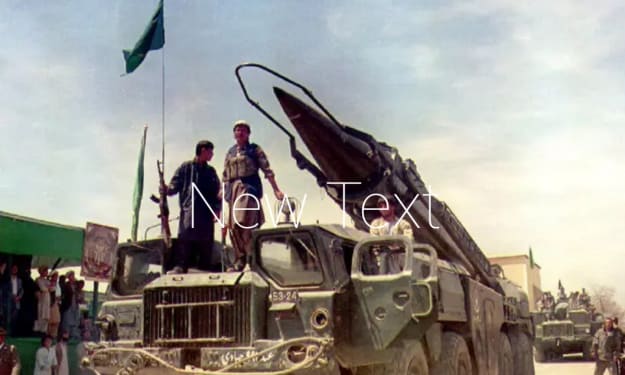
Scud Missile Attacks on Pakistan (1989–1990): Soviet Withdrawal, Najibullah Government, and the Afghan War Fallout
On the morning of April 7, 1989, a Soviet-made Scud missile destroyed a post office in the Pakistani border town of Torkham after being launched from Kabul.
By Real content5 days ago in History



Comments
There are no comments for this story
Be the first to respond and start the conversation.