
The REAL Story of Atlantis and How It CHANGED The World
Atlantis and the World

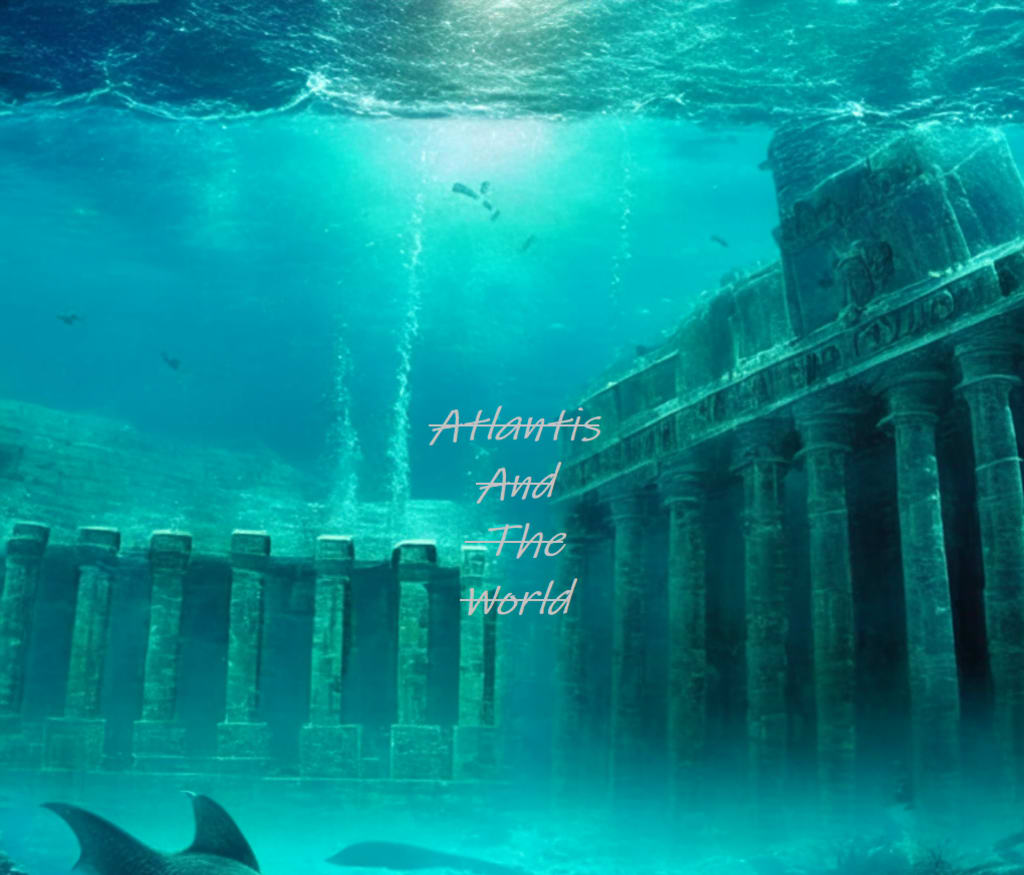
The REAL Story of Atlantis and How It CHANGED The World
Despite our ever-increasing knowledge of the past, there remains a wealth of ancient civilizations waiting to be discovered. From the enigmatic Mayans with their unexplained knowledge to the awe-inspiring structures of the Egyptians, the history of our world is brimming with untold stories. One of the greatest mysteries that continues to intrigue and captivate us is the legend of Atlantis. For over 2,000 years, stories have circulated about this sunken city, but is it merely a myth or does it hold fragments of truth about an advanced civilization lost to the waves? In this exploration of Atlantis, we delve into its origins and attempt to uncover the real story behind this elusive legend.
The first records mentioning Atlantis can be found in the Socratic dialogues of Plato, the renowned Greek philosopher, dating back to around 360 BC. These dialogues, "Timaeus" and "Critias," were intended for a speech during festivities honoring the goddess Athena. Within these tales, Plato recounts stories he supposedly heard from guests, one of whom was Critias. Critias shares the account of his grandfather's encounter with the Athenian poet Solon, who, during his visit to Egypt, conversed with local priests. These priests described a powerful ancient civilization that thrived on an island in the Atlantic Ocean. Atlantis ruled over other islands and territories across Africa and Europe, boasting impressive concentric rings of land and water, grand baths, a vast harbor, and well-equipped barracks.
The Atlanteans were renowned for their unmatched engineering prowess, creating an intricate canal network and irrigation system that transformed barren lands into fertile, abundant landscapes. Their society mirrored those of their time, with kings, a civil administration, and a formidable military. However, their thirst for power drove them to wage wars across Asia and Europe. Athens, the only state capable of resisting their aggression, successfully repelled their attacks. Unfortunately, Atlantis met its ultimate fate when earthquakes and floods caused the city to sink beneath the waves, forever lost to history.
The question remains: is the story of Atlantis fact or fiction? Many historians believe that Plato used Atlantis as a metaphorical tool to convey a moral lesson. The tale of a dominant aggressor defeated by a weaker force serves as a classic narrative of hope in the face of adversity. Some scholars suggest that the barbaric behavior attributed to the Atlanteans was a veiled reference to the acts of Persians or Carthaginians during that era. The catastrophic destruction of Minoan Santorini, a volcanic eruption that occurred around 1600 BC and devastated the island of Thera and neighboring Crete, could have inspired the idea of a violent island disappearing beneath the waves.
Nevertheless, there are those who believe that Plato's writings hold more historical accuracy than initially perceived. Plato himself asserted that the story was true and even provided a precise date for the sinking of Atlantis. He claimed that Solon, who lived 200 years prior, learned from Egyptian priests in the city of Saïs that Atlantis had vanished 9,000 years before his time, placing the event around 9,600 BC. This date coincides with a global geological event known as "Meltwater Pulse 1b," triggered by the release of water from polar ice sheets and resulting in a rise in sea levels by approximately 14 meters. Evidence of this event has been found worldwide and could have easily submerged low-lying island communities.
Interestingly, mentions of Atlantis can be found in the mythologies and texts of various ancient cultures. The Berber tribes of North Africa speak of a powerful ancient city called "Attala," while the Vikings refer to it as "Atli." Babylonian texts mention "Arallu," and Indian texts written in Sanskrit describe a lost city during a war between gods and titans, known as "Saka-dvipa," "Sveta-dvipa," "Ruta," and "Daitya."
Although physical evidence of Atlantis remains elusive, numerous underwater remains have been discovered around the world, testifying to the existence of lost civilizations submerged beneath the waves. Off the coast of Africa near the Canary Islands, large underwater structures hint at the possibility that Atlantis lies in this region. However, it is also plausible that Atlantis awaits discovery in an entirely different location, hidden within the uncharted depths of our vast oceans.
In conclusion, Atlantis has become a symbol encompassing the quest for the origins of civilization itself. The writings of Plato and the various accounts from different cultures lend an air of mystery and intrigue to this legendary city. Whether Atlantis is an actual submerged city or a concept representing a mother civilization from which all ancient civilizations sprung, the truth remains elusive. However, with the vast unexplored expanses of our oceans, there is always the possibility that Atlantis, with its advanced society and untold secrets, awaits its rediscovery, adding yet another extraordinary chapter to the annals of human history.
About the Creator
Çørîñ Hâwk
Corin Hawk, an aspiring writer on a thrilling journey to craft captivating tales that ignite imaginations and stir emotions. Join me in this adventure! 📚✨
Keep reading
More stories from writers in History and other communities.
Israel: A Land of Struggle, Faith, and Transformation
The land that is today Israel has been at the crossroads of civilizations for thousands of years. From the deserts of Negev to the fertile hills of Galilee, this land has witnessed the rise and fall of empires, the birth of religions, and the enduring hopes of peoples who called it home. In ancient times, it was known as Canaan, a region inhabited by diverse groups, each with their own gods, languages, and customs.
By The best writer 2 days ago in History
Why Early Aircraft Designers Had No Second Chances
When I read about the earliest days of aviation, I’m always struck by how unforgiving that era truly was. Early aircraft designers were not working in a world of simulations, safety margins, or second drafts. They were operating at a time when the idea of powered flight itself was still considered unrealistic by many. Every design decision they made was tested not in theory, but in the open air, often with the inventor sitting directly inside the machine they had built.
By Beckett Dowhan6 days ago in History
So You Decided To Become a Nurse Practitioner:
So you decided to become an "Advanced Practice" nurse. Congratulations!... is what I would say if this was a good idea. Grad school? In this economy? What were you thinking? Likely it was something along the lines of either 1) “I've seen these other chucklefucks do it— Why can't I?” or even 2) “I've got a nice career, I should shake it up. I miss feeling like I have no clue what I'm doing.”
By Sandor Szabo3 days ago in Fiction




Comments
There are no comments for this story
Be the first to respond and start the conversation.