
The Queen of Sheba: A Legendary Figure of Antiquity
She is renowned for her wisdom, beauty, and her legendary visit to King Solomon

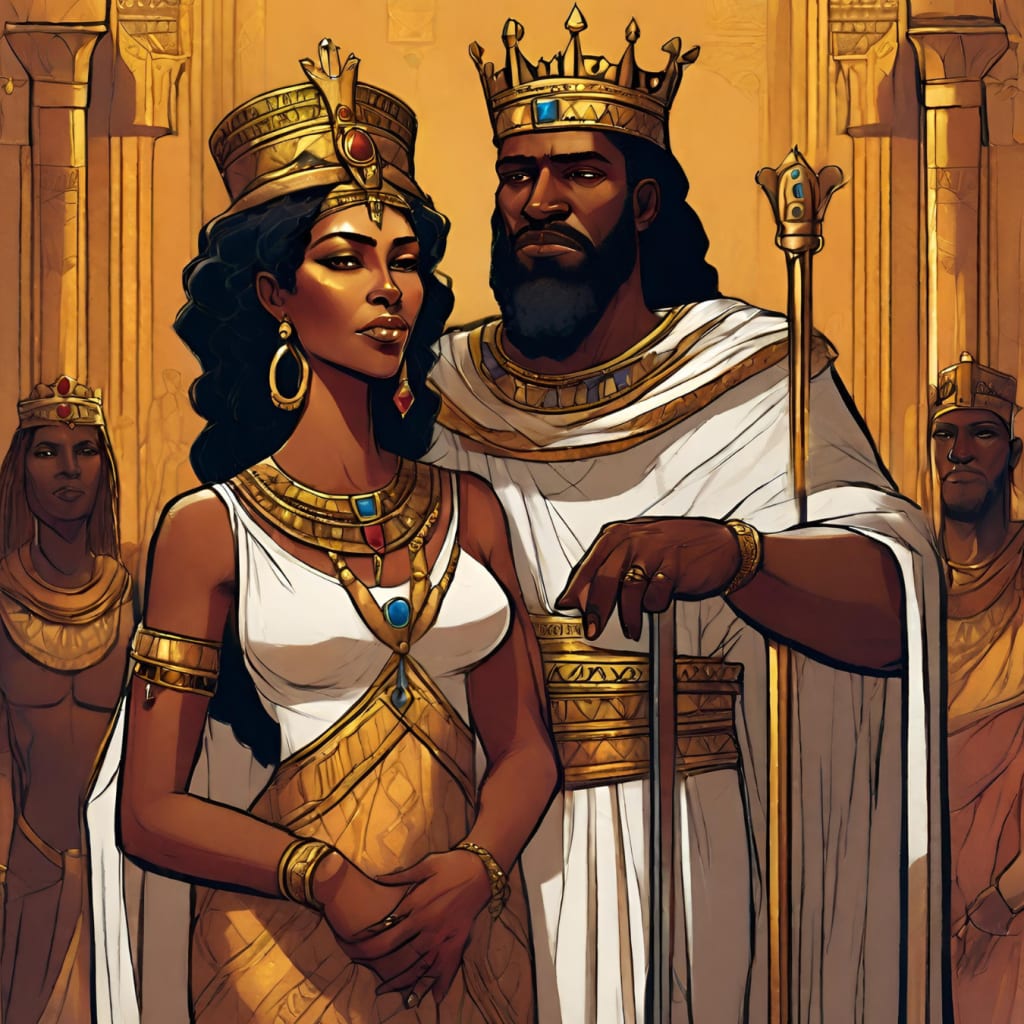
The Queen of Sheba, also known as Bilqis or Makeda, is a legendary figure in history and mythology. She is renowned for her wisdom, beauty, and her legendary visit to King Solomon, the wise and wealthy ruler of ancient Israel. The story of the Queen of Sheba has been passed down through various religious and cultural traditions and continues to capture the imagination of people worldwide.
Historical and Mythological Origins
The Queen of Sheba is a figure who appears in multiple historical and religious texts, including the Bible, the Quran, and Ethiopian folklore. She is believed to have ruled an ancient kingdom in the southern Arabian Peninsula, often associated with the region of present-day Yemen. While the historical accuracy of her existence is debated, her story is deeply ingrained in the cultural and religious narratives of the region.
The Visit to King Solomon
The most famous account of the Queen of Sheba's story comes from the Hebrew Bible and the Christian Old Testament. In the First Book of Kings and the Second Chronicles, it is written that the Queen of Sheba traveled to Jerusalem to test the wisdom of King Solomon. She brought with her a caravan of valuable gifts, including spices, gold, and precious stones. In response to her riddles and questions, Solomon demonstrated his wisdom, which deeply impressed the queen.
Romantic and Cultural Significance
The story of the Queen of Sheba's visit to King Solomon has taken on romantic and legendary dimensions. In some versions of the tale, a romantic relationship develops between the two rulers, leading to the birth of a son named Menelik, who is believed to be the founder of the Ethiopian royal dynasty.
The Queen of Sheba in Ethiopian Tradition
In Ethiopian tradition in the "Kebra Nagast" (Glory of Kings), the Queen of Sheba is known as Makeda. According to Ethiopian legend, Makeda was the queen of the Ethiopian kingdom of Aksum. She traveled to Jerusalem to meet King Solomon, and their encounter resulted in a son named Menelik, who would become the first emperor of Ethiopia.
Cultural Influence
The story of the Queen of Sheba has had a profound impact on art, literature, and culture throughout history. It has been the subject of numerous paintings, sculptures, and literary works. Additionally, it has been featured in operas, films, and other artistic expressions.
Religious Significance
In addition to her role in the Bible, the Queen of Sheba is mentioned in Islamic tradition, where she is believed to have converted to the monotheistic faith of King Solomon. Her visit to Solomon is also mentioned in the Quran.
Kingdom of Sheba in Archeology
Archaeological evidence related to the Queen of Sheba is also limited. However, the ancient city of Aksum in Ethiopia, believed to be associated with the kingdom of Sheba, is an important archaeological site with ancient inscriptions and ruins. Aksum was the capital of the Aksumite Kingdom, a powerful civilization that thrived from the 1st century CE to the 7th century CE. While there is no direct archaeological evidence that conclusively proves the existence of the Queen of Sheba, Aksum and its archaeological remains play a crucial role in the understanding of the historical context and the rich cultural heritage of the region.
Legacy
The Queen of Sheba is celebrated as a symbol of wisdom, beauty, and the power of knowledge. Her story exemplifies the idea that seeking wisdom and knowledge is a noble pursuit, and her legendary visit to King Solomon continues to be a source of fascination and inspiration.
The Queen of Sheba remains a legendary and iconic figure, celebrated for her wisdom, beauty, and her role in the tales of King Solomon. Her story transcends historical and cultural boundaries, leaving an enduring legacy in art, literature, and religious traditions.
About the Creator
Noata Anavi
Reading is my way of time traveling! 🕰️ My heart is firmly anchored in ancient history, when I am not at the museum you'll find me cozied up with my beloved books 📚 each a doorway to another world. Join me on a journey through the ages!
Keep reading
More stories from Noata Anavi and writers in History and other communities.
Nefertiti: The Radiant Queen of Ancient Egypt
Nefertiti, also called Neferneferuaten-Nefertiti, whose name means "the beautiful one has come", is one of the most celebrated and enigmatic figures in the history of ancient Egypt. She lived during the 14th century BCE and is renowned for her extraordinary beauty, her powerful role as queen, and her association with the religious revolution of her husband, Pharaoh Akhenaten.
By Noata Anavi2 years ago in History
Rajendra Chola I and the Conquest of the Ganga: A Monumental Feat in Indian History
Known as the “Gangaikonda Chola” (the Chola who conquered the Ganga), Rajendra transformed a South Indian maritime empire into a pan-Indian power whose influence stretched from the Indian Ocean to the heart of the subcontinent. This campaign was not merely a military raid but a bold statement of imperial ambition, strategic brilliance, and cultural confidence.
By Say the truth 7 days ago in History



Comments
There are no comments for this story
Be the first to respond and start the conversation.