
The Pyramids of Giza (Part 1)
Uncovering the Secrets, Symbolism, and Engineering Marvels of Ancient Egypt’s Greatest Legacy

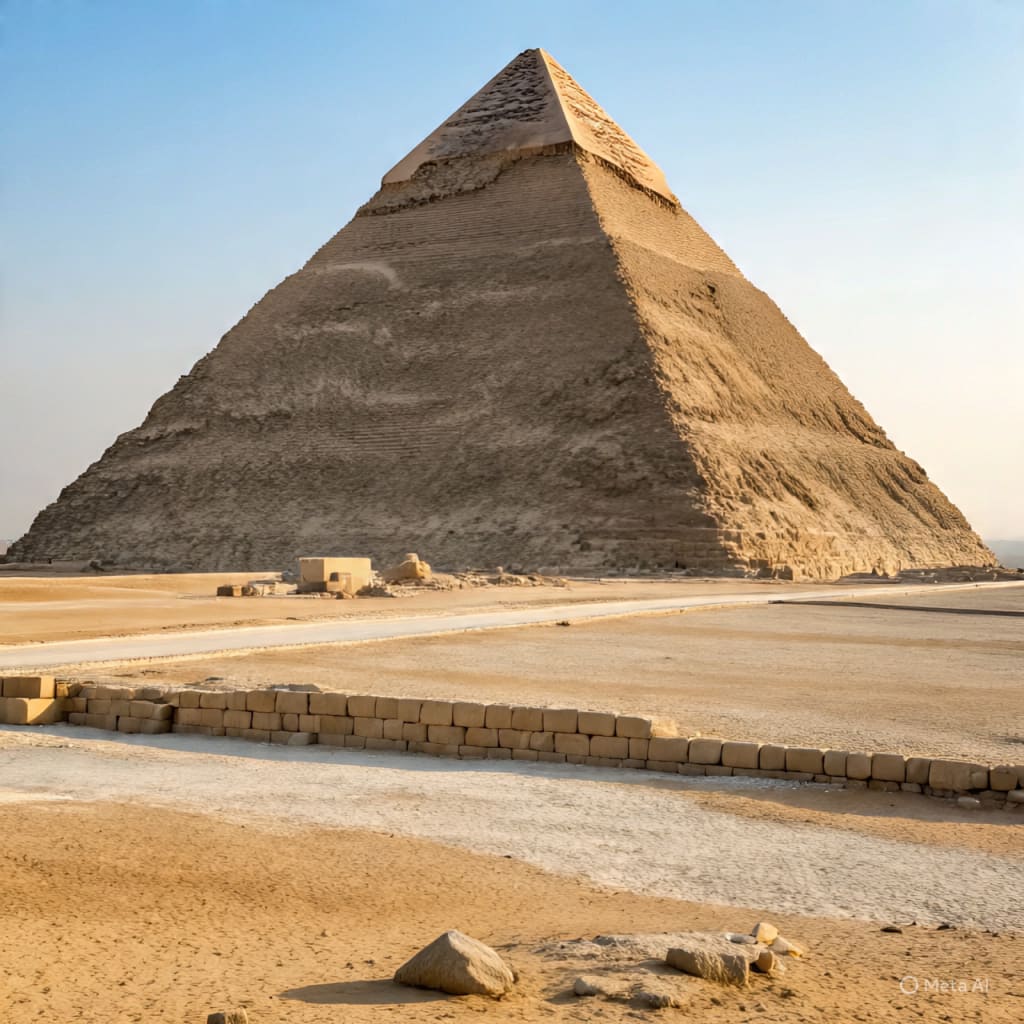
The Timeless Majesty of the Pyramids of Giza
The Pyramids of Giza, rising from the desert near the Nile’s western bank, stand as eternal symbols of ancient Egypt’s grandeur. These magnificent monuments—built during the 4th Dynasty (c. 2575–c. 2465 BCE)—are among the most celebrated wonders in human history. Designated a UNESCO World Heritage Site in 1979, they continue to capture imaginations around the world.
At the heart of this complex are three pyramids, each named after the kings for whom they were built:
The Great Pyramid of Khufu (Cheops) is the oldest and largest. Originally standing at 481.4 feet (147 meters), it remains the most colossal single structure ever constructed.
The Pyramid of Khafre (Chephren), the second-largest, is distinctive for the remaining outer limestone casing at its peak.
The Pyramid of Menkaure (Mykerinus) is the smallest of the trio, yet equally symbolic of Egypt’s architectural ingenuity.
Each of these massive structures was accompanied by mortuary temples, valley temples, and subsidiary pyramids for royal family members. Surrounding them are extensive fields of mastabas—flat-roofed tombs for nobles and officials, arranged in organized grid patterns.
Engineering Wonders
The Great Pyramid is a marvel of engineering. Comprising over 2.3 million limestone and granite blocks, it weighs approximately 5.75 million tons. The construction reflects astonishing precision: its sides are aligned almost perfectly to the cardinal points, and the internal chambers—especially the King’s Chamber lined with granite—demonstrate technical mastery still studied by engineers today.
Beneath the surface, a maze of corridors connects rooms like the Queen’s Chamber, Grand Gallery, and burial chamber. Scholars debate the function of narrow shafts leading outward from the King’s Chamber—some suggest religious significance, while others propose ventilation.
Who Built the Pyramids?
According to ancient historian Herodotus, the Great Pyramid took 20 years to complete, using the labor of 100,000 workers. However, modern excavations near the pyramids reveal evidence of a smaller but permanent labor force—possibly 20,000 workers including support staff like bakers and physicians. These workers lived in organized communities, not enslaved but rather skilled laborers working in shifts, especially during the Nile flood season when agriculture paused.
The Great Sphinx
Guarding the plateau is the Great Sphinx of Giza, a limestone statue with the body of a lion and the face of a man—believed to represent King Khafre. Measuring 240 feet long and 66 feet high, the Sphinx likely formed part of Khafre’s funerary complex. Its missing nose has become a point of historical mystery, often attributed to vandalism in later centuries.
Treasures and Tombs
In 1925, near the causeway of Khufu’s pyramid, archaeologists unearthed the tomb of Queen Hetepheres, Khufu’s mother. Though her sarcophagus was empty, it was surrounded by exquisite furniture and jewelry, showcasing the artistry of 4th-dynasty craftsmen.
Inside the pyramids, the original grave goods are missing—likely due to looting in ancient and medieval times. The structures have also lost much of their smooth outer casing of white limestone, which once gave them a radiant appearance under the sun.
---
A Legacy Carved in Stone
The Pyramids of Giza are not just remnants of the past—they are living monuments that bridge the ancient and the modern. They remind us of a civilization that understood architecture, astronomy, mathematics, and spirituality to a profound degree. Even after 4,500 years, they continue to inspire awe, raising timeless questions about human potential, purpose, and the legacy we leave behind.
If This Story Helped You…”
If you found this story meaningful or motivating, I’d truly appreciate it if you shared it with others who might benefit from it. Your support helps me continue sharing more valuable, real-life lessons and inspirational stories. Don’t forget to follow — a new story is coming soon.
About the Creator
Muhammad Tayyab
I am Muhammad Tayyab, a storyteller who believes that memories are treasures and words are bridges to hearts. Through my writing, I capture what time often leaves behind."
Keep reading
More stories from Muhammad Tayyab and writers in History and other communities.
The Rise of Alexandria
The Rise of Alexandria In 332 BC, the Macedonian king Alexander the Great conquered Egypt while building one of the largest empires in history. The following year, he founded the city of Alexandria, named after himself, located on Egypt’s northern coast.
By Muhammad Tayyab 7 months ago in History
Venezuela’s President Under Pressure: Arrest Calls, Indictments, and a Nation at a Crossroads
How the Arrest Narrative Began The idea of arresting Venezuela’s president did not appear out of nowhere. It stems from years of accusations that range from human-rights abuses to corruption and drug-related activities. U.S. authorities have filed formal charges against Nicolás Maduro, linking him to cocaine trafficking networks and large-scale financial misconduct. These cases place him among the few sitting leaders facing active international legal pressure.
By Muhammad Islam khan swati5 days ago in History
How I Learned That Aircraft Structures Are as Critical as Engines
When I first started studying aviation, I believed that engines and avionics defined an aircraft’s reliability. Over time, as I explored aerospace history and manufacturing records, I realized how incomplete that understanding was. Aircraft safety does not depend solely on thrust or navigation systems. It is deeply rooted in structural engineering, certified manufacturing, and the disciplined production of components that passengers never see.
By Beckett Dowhanabout 18 hours ago in History


Comments
There are no comments for this story
Be the first to respond and start the conversation.