
The Rise of Alexandria
How Alexander the Great founded a city of knowledge and culture

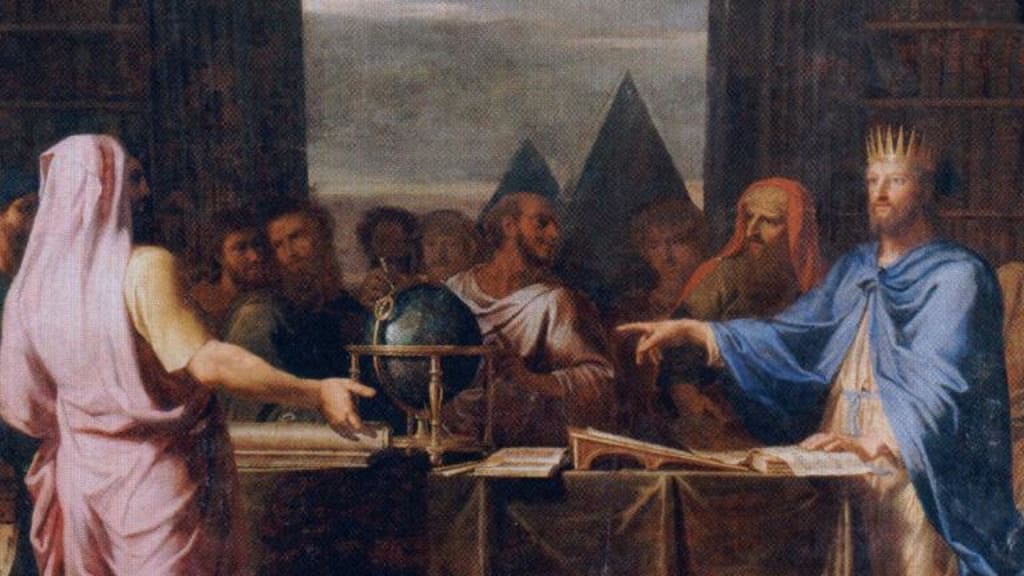
The Rise of Alexandria
In 332 BC, the Macedonian king Alexander the Great conquered Egypt while building one of the largest empires in history. The following year, he founded the city of Alexandria, named after himself, located on Egypt’s northern coast.
Despite being a foreign conqueror, Alexander was warmly welcomed by the Egyptians, who viewed him as a liberator from their Persian rulers. Alexander, in turn, respected their goodwill. Early Alexandria became a fusion of Egyptian and Greek cultures, reflecting both traditions.
This spirit of cultural harmony led to the creation of a Great Library, designed to attract scholars from around the world. However, much of the library’s history — including how it ended — is a mix of facts and legends.
---
The Foundation of the Great Library
The origins of the Library of Alexandria remain unclear. Some sources credit Alexander the Great with the idea of a universal library, where knowledge from around the world would be gathered. The goal was to enhance Egypt’s reputation and provide valuable resources for its rulers.
Alternatively, others believe the concept was realized under Ptolemy I Soter, who became Egypt’s ruler in 304 or 305 BC after Alexander’s death. A second-century BC letter mentions Demetrius of Phalerum, an advisor to Ptolemy, being tasked with acquiring books for the library.
It’s likely that the process of gathering texts began during Ptolemy I’s reign, but the physical construction of the library took place under Ptolemy II Philadelphus (283–246 BC).
---
How Were Books Collected?
According to the Letter of Aristeas, Demetrius was given a large budget with a simple mission — to collect every book in the world if possible.
Agents working for the Ptolemaic rulers went to great lengths to gather texts. They traveled to famous book markets in Athens, Rhodes, and even seized books from ships docked at Alexandria’s harbor.
Whenever possible, they aimed to acquire original manuscripts, as these were considered more authentic. A common practice involved temporarily confiscating manuscripts, copying them, and returning the copies while keeping the originals in Alexandria.
---
Inside the Library
While exact details about the library’s structure are lost, it is believed that it contained lecture halls, study rooms, gardens, and dining areas where scholars could meet and exchange ideas.
The Greek geographer Strabo, writing in the first century BC, noted that scholars in Alexandria received generous salaries and were exempt from taxes — privileges that allowed them to focus entirely on their studies.
Some of the most renowned scholars of the time worked there, including Eratosthenes of Cyrene, who calculated the Earth’s circumference with remarkable accuracy.
The poet Callimachus created the ‘Pinakes’, an early form of the modern library catalogue, helping scholars navigate the vast collection.
---
The Fall of the Library
The decline of the Great Library was gradual rather than sudden. Over time, the library lost support from political leaders whose priorities shifted away from intellectual pursuits.
Some accounts suggest that the Roman general Julius Caesar may have unintentionally caused damage during a battle in Alexandria. However, there is little evidence of one single catastrophic event leading to the library's destruction.
By the 270s AD, it is widely believed that the library had ceased to exist.
---
A Loss Beyond Measure
At its peak, the library likely held tens of thousands of texts, including works by legendary authors like Plato, Herodotus, Sophocles, Euripides, and Sappho.
Its destruction meant the permanent loss of countless literary, scientific, and philosophical works. Knowledge from thinkers such as Democritus, Anaximander, and many others may have vanished forever.
---
Conclusion
The story of the Library of Alexandria is not just a tale of a building lost — it is a symbol of the fragile nature of knowledge. Its loss reminds us how easily history, science, and wisdom can disappear if not preserved carefully.
If This Story Helped You…”
If you found this story meaningful or motivating, I’d truly appreciate it if you shared it with others who might benefit from it. Your support helps me continue sharing more valuable, real-life lessons and inspirational stories. Don’t forget to follow — a new story is coming soon.
About the Creator
Muhammad Tayyab
I am Muhammad Tayyab, a storyteller who believes that memories are treasures and words are bridges to hearts. Through my writing, I capture what time often leaves behind."
Keep reading
More stories from Muhammad Tayyab and writers in History and other communities.
The Hidden city Beneath the pyramids
The Hidden City Beneath the Pyramids: Fact, Myth, or Mystery? For centuries, the Great Pyramids of Giza have stood as symbols of ancient engineering and mystery. But recent claims suggest there might be more to them than meets the eye — a vast underground city hidden beneath the sands of Egypt. Could this be true, or is it just another archaeological myth?
By Muhammad Tayyab 7 months ago in History
Savoy Hotel – Mussoorie: The Colonial Luxury Hotel Where an Unsolved Murder Still Walks the Corridors
The First Night: Beauty Wrapped in Silence Mussoorie looks peaceful from a distance. Pine trees sway gently, clouds roll like slow-moving waves, and the hill air smells of rain and old earth. But as evening falls, the silence becomes heavier—almost watchful.
By Gaurav Guptaabout 18 hours ago in History
Is NATO Facing Its Biggest Crisis Yet?
Is NATO Facing Its Biggest Crisis Yet? For more than seventy years, NATO has been one of the strongest military alliances in the world. Formed after World War II, it was designed to protect its members through collective defense. An attack on one was considered an attack on all. For decades, this principle helped maintain stability in Europe and beyond. But today, NATO is facing one of the most challenging moments in its history.
By Wings of Time 5 days ago in History
Center Stage with Paul Stewart
*** I'm keen to republish the interviews I did for my series with Vocal creators. It's been a few years and I thought it might be nice to revisit these wonderful conversations. I'll be releasing them one at a time for a few weeks/months.
By Heather Hublera day ago in Interview



Comments
There are no comments for this story
Be the first to respond and start the conversation.