
The Punic Wars: Clash of Titans Between Rome and Carthage
A Tale of Rivalry, Strategy, and Empire-Building in the Ancient Mediterranean
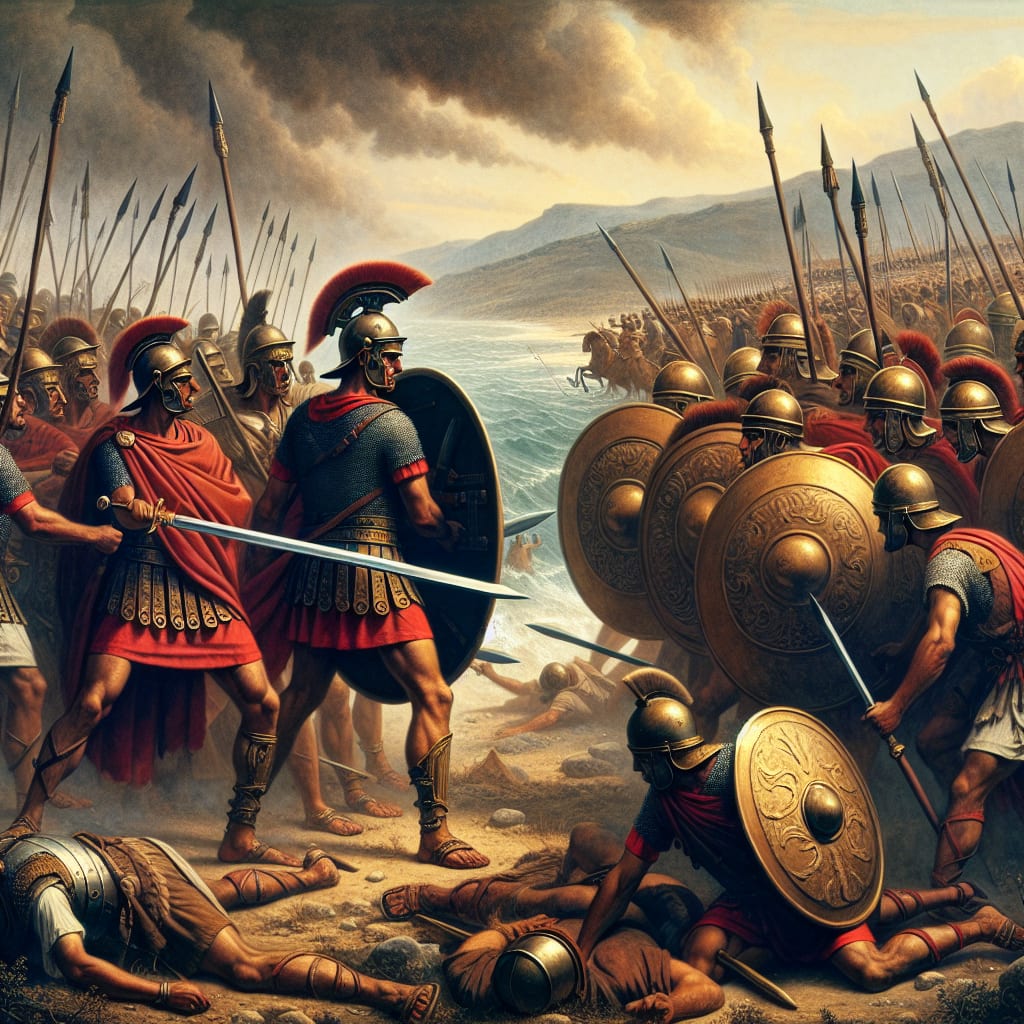
Story: The Punic Wars
In the ancient Mediterranean, two great powers vied for control over trade, territory, and influence—Rome and Carthage. Their conflict, known as the Punic Wars, spanned over a century and reshaped the course of history. This is the story of how these two civilizations clashed in a series of brutal wars, each shaping the destiny of the ancient world.
Origins of Rivalry
The seeds of the Punic Wars were sown in the early third century BCE. Rome, originally a small city-state in Italy, had grown into a powerful republic dominating much of the Italian peninsula. To the west, Carthage was a wealthy maritime empire, founded by Phoenician settlers in North Africa. Its extensive trade network across the Mediterranean gave Carthage great wealth and influence.
Both powers eyed control of Sicily—a strategically vital island at the crossroads of trade routes. This competition set the stage for the First Punic War.
The First Punic War (264–241 BCE): Naval Battles and Sicilian Struggle
The war began in 264 BCE when Rome intervened in a conflict in Sicily. Rome had a strong army but little experience at sea, while Carthage ruled the waves with its powerful navy. Recognizing this, Rome undertook a massive effort to build a fleet, even copying a captured Carthaginian warship design.
Naval battles soon dominated the conflict. Rome’s innovation and persistence paid off. The famous Battle of the Aegates Islands in 241 BCE saw Rome defeat the Carthaginian fleet decisively. Carthage was forced to surrender Sicily, marking Rome’s first overseas province.
Though victorious, the war was costly for both sides. Carthage, weakened but still a formidable power, sought to rebuild and expand its influence elsewhere.
The Second Punic War (218–201 BCE): Hannibal’s March and Rome’s Resilience
The Second Punic War is perhaps the most famous of the three. It was sparked by Carthage’s expansion in Spain under the Barcid family, especially the brilliant general Hannibal Barca. Hannibal harbored a deep hatred for Rome and sought to challenge its dominance.
In 218 BCE, Hannibal launched an audacious campaign. He famously crossed the Alps with a diverse army—including war elephants—to invade Italy. This bold and perilous journey stunned Rome and its allies.
Hannibal won several stunning victories, including the Battle of Cannae in 216 BCE, where he inflicted one of the worst defeats in Roman history. For years, Hannibal roamed Italy, hoping to inspire Rome’s allies to defect.
However, Rome’s response was relentless. Instead of engaging Hannibal directly, Roman generals adopted a strategy of attrition, avoiding major battles and cutting Carthaginian supply lines.
Meanwhile, Rome opened new fronts. Under the leadership of Scipio Africanus, Roman forces invaded Carthaginian territories in Spain and later North Africa. This forced Hannibal to leave Italy and defend Carthage itself.
The war culminated at the Battle of Zama in 202 BCE, near Carthage. Scipio’s army defeated Hannibal decisively, ending Carthage’s power as a Mediterranean rival.
The Third Punic War (149–146 BCE): Rome’s Final Blow
Despite its defeat, Carthage remained a wealthy city and trading power. Rome, wary of any resurgence, eventually declared war again. The Third Punic War was shorter but brutal.
After a lengthy siege, Rome captured and destroyed Carthage in 146 BCE. The city was razed, its population killed or enslaved, and the territory annexed into the Roman Republic. Rome emerged as the uncontested power of the western Mediterranean.
Legacy of the Punic Wars
The Punic Wars fundamentally changed the Mediterranean world. Rome’s victory paved the way for its transformation from a regional power into a vast empire. The wars also showcased the rise of military strategy, resilience, and political ambition.
Carthage’s destruction was a cautionary tale of hubris and rivalry. The name “Punic,” derived from the Latin word Punicus (meaning Phoenician), remained synonymous with this epic struggle.
The story of the Punic Wars is one of courage, innovation, and the harsh realities of power struggles. It reminds us how empires rise and fall—and how history is shaped by the will and actions of determined individuals and societies.
About the Creator
Keep reading
More stories from Anwar Jamil and writers in History and other communities.
The Korean War (1950–1953)
The Korean War: The Battle for a Divided Peninsula The Korean War, fought from 1950 to 1953, was one of the most significant and complex conflicts of the Cold War era. Often called the "Forgotten War," it was a brutal, three-year conflict that reshaped the Korean Peninsula and had lasting implications for international relations during the 20th century. The war not only reflected the ideological struggle between communism and democracy but also involved key global powers, setting the stage for decades of geopolitical tension.
By Anwar Jamil7 months ago in History
Military Strength of Alexander the Great and the Chola Empire: A Historical Comparison
Though separated by more than a thousand years and operating in vastly different geographical and cultural contexts, both forces achieved extraordinary success through discipline, innovation, and strategic brilliance. This article explores the history, composition, size, organization, and military strength of Alexander’s Macedonian army and the Chola military, highlighting how each became a dominant power of its era.
By Say the truth 4 days ago in History
The Hard Ways Trump Could Try to Take Greenland
When Donald Trump was president of the United States, he shocked the world by saying he wanted to buy Greenland. Many people laughed, but others took the idea seriously. Greenland is a huge island in the Arctic. It is rich in natural resources and very important for military defense. Today, Greenland belongs to Denmark, but it also governs itself in many areas.
By sehzeen fatima7 days ago in History



Comments
There are no comments for this story
Be the first to respond and start the conversation.