
The Political Assassination of Jesus: Did Rome Frame the Jews?
Why the story of a reluctant Pilate and a Jewish mob is one of history's most successful pieces of political propaganda.

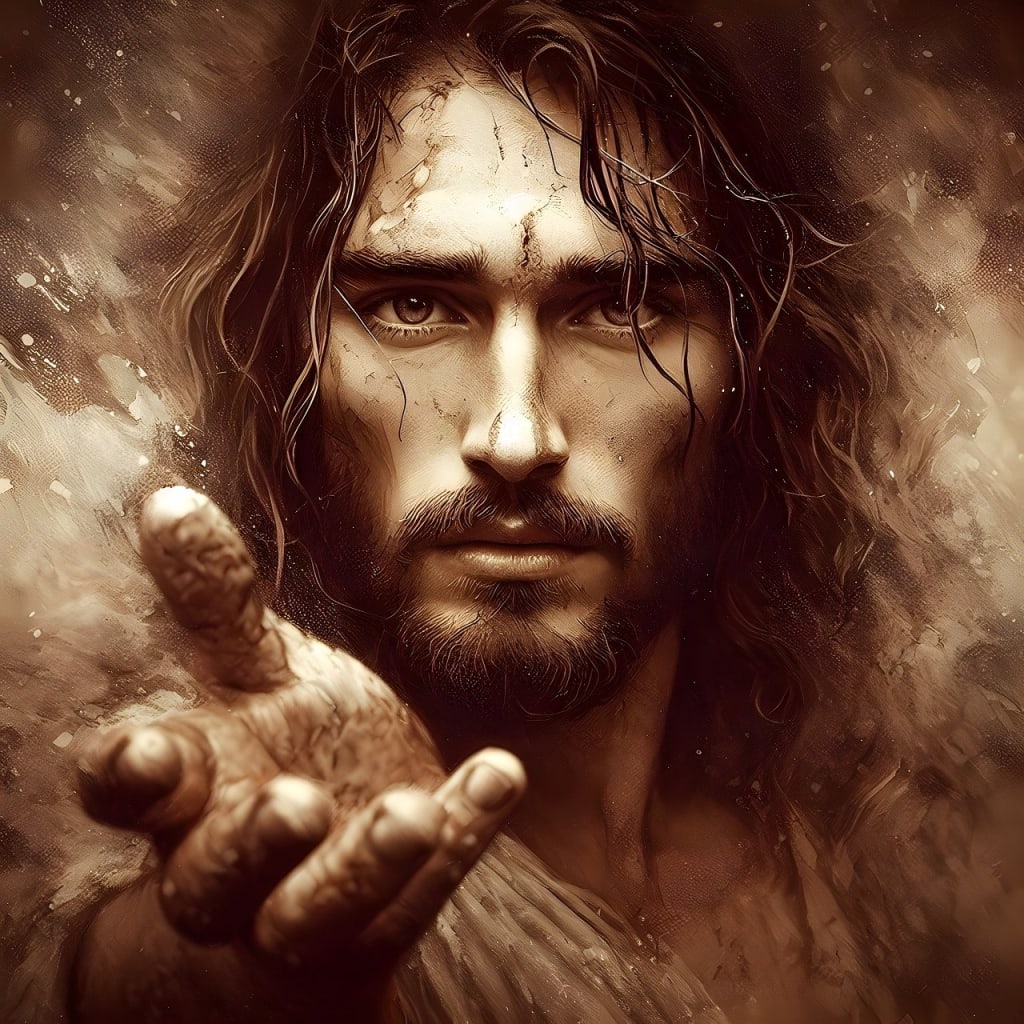
The official story is one of history’s greatest tragedies: a reluctant Roman governor, pressured by a jealous religious council, washes his hands of an innocent man’s fate. But the historical evidence paints a much darker picture, one of a calculated political execution and a brilliant post-mortem cover-up.
For two millennia, the death of Jesus of Nazareth has been presented as a crime of religious passion. The story, etched into the consciousness of Western civilization by the four Gospels, is both simple and heartbreaking. The Sanhedrin, the high council of Jewish priests, saw Jesus as a blasphemer and a threat to their authority. Lacking the legal power to execute him, they dragged him before the Roman governor, Pontius Pilate. They whipped a crowd into a frenzy, demanding crucifixion. Pilate, the story goes, saw no fault in Jesus but, being a weak and indecisive administrator, he capitulated to the mob's will, symbolically washing his hands to absolve himself of guilt.
In this narrative, Rome is a reluctant, almost passive, instrument of execution. The true blame, the deicide, is laid squarely at the feet of the Jewish people. It is a story that has fueled centuries of antisemitism and shaped the very foundations of Christianity. It is also, when placed under the cold, hard light of historical and political reality, almost certainly a fabrication.
When we strip away the layers of theology and treat the crucifixion not as a sacred event, but as a political crime scene, the official story begins to unravel. The evidence points not to a religious squabble that got out of hand, but to a calculated, state-sanctioned political assassination carried out by an empire that had zero tolerance for dissent. The trial and condemnation of Jesus were not a tragedy of indecision; they were a brutal display of Roman power, and the story we have been told is one of the most successful pieces of political propaganda ever written.
The Character of the Assassin: Who Was Pontius Pilate?
To understand the crime, we must first understand the true character of the man who presided over it. The Gospels portray Pontius Pilate as a thoughtful, almost sympathetic figure, torn between his conscience and his political duty. He engages in deep philosophical dialogue with Jesus and desperately seeks a way to release him. This portrayal is a literary masterpiece, but it is a historical fiction.
Historical, non-biblical sources paint a radically different picture. The writings of the Jewish philosopher Philo of Alexandria and the historian Flavius Josephus, both writing in the 1st century, describe Pilate not as weak, but as a ruthless, inflexible, and profoundly cruel administrator.
Philo described Pilate’s tenure as governor of Judea as being marked by "corruptibility, violence, robberies, assaults, abusive behavior, frequent executions without trial, and endless savage ferocity." Josephus recounts multiple incidents where Pilate showed nothing but contempt for Jewish customs and an iron-fisted willingness to use lethal force. On one occasion, he smuggled imperial standards bearing the emperor's image into Jerusalem under the cover of night, a profound insult to Jewish monotheistic law. When confronted by a mass of peaceful protestors, he threatened to slaughter them all. On another, he seized funds from the sacred temple treasury to build an aqueduct, and when the people protested, he sent his soldiers undercover into the crowd to indiscriminately beat them to death with clubs.
This is the real Pontius Pilate. He was not a man who would be swayed by a crowd; he was a man who crushed crowds. He was a quintessential Roman governor in a volatile province, a man whose entire career depended on stamping out any hint of rebellion. The idea that this man would tremble before the Sanhedrin and offer to release a prisoner to appease a mob is, from a historical standpoint, utterly absurd. It runs contrary to everything we know about his character and the standard operating procedure of Roman provincial rule.
The Nature of the Crime: Blasphemy or Sedition?
The Gospels present a bifurcated trial. Before the Sanhedrin, Jesus is accused of the religious crime of blasphemy, claiming to be the Son of God. But before Pilate, the accusation is political. Why? Because a Roman governor would have had zero interest in the internal theological disputes of a subject people. Blasphemy against the Jewish god was not a Roman crime.
The real charge, the one that mattered to Rome, is written for all to see on the cross itself. The titulus crucis, the plaque affixed above Jesus’s head, read "Jesus of Nazareth, King of the Jews" (INRI).
In the eyes of the Roman Empire, this was not a religious title. It was a declaration of treason.
The term "King of the Jews" was a direct, unambiguous challenge to the absolute authority of Caesar. It declared a separate sovereignty within the Roman domain. To a man like Pilate, tasked with maintaining absolute order, this was the single most dangerous claim anyone could make. It was sedition, plain and simple. In the volatile political climate of 1st-century Judea, a province simmering with messianic expectation and anti-Roman sentiment, anyone claiming to be a king was an insurrectionist.
Rome had a standard, brutally efficient method for dealing with insurrectionists: crucifixion. This form of execution was not just about causing death; it was a powerful tool of political terror. It was slow, agonizing, and public, a billboard advertising the price of rebellion. It was reserved specifically for slaves, pirates, and, most importantly, enemies of the state. It was the ultimate symbol of Roman dominance.
Jesus was not crucified for calling himself the Son of God. He was crucified for the same reason thousands of other Jewish rebels were crucified before and after him: for being perceived as a threat to the Roman order.
Deconstructing the Trial: The Barabbas Anomaly
Perhaps the most glaring inconsistency in the Gospel narrative is the story of Barabbas. The Gospels claim it was a Passover custom for the Roman governor to release one Jewish prisoner chosen by the people. Pilate, in a final attempt to save Jesus, offers the crowd a choice: Jesus, the gentle teacher, or Barabbas, a man described as a murderer and insurrectionist. The crowd, incited by the priests, chooses Barabbas.
There is not a single shred of historical evidence for this "Passover pardon" custom. It is mentioned nowhere else in Roman or Jewish historical texts. Furthermore, the very idea is politically insane. A ruthless governor like Pilate would never release a known rebel, a man guilty of the very sedition he was trying to suppress, back into a volatile population as a gesture of goodwill. It would be an act of profound political incompetence, rewarding rebellion and undermining his own authority.
The Barabbas story makes for powerful theology, the innocent dying for the guilty, but it is a historical impossibility. It is a literary device skillfully inserted to achieve one critical goal: to transfer the responsibility for Jesus’s death from Pilate's hands to the irrational choice of the Jewish crowd. It allows the narrative to show Pilate trying to free Jesus, only to be thwarted by the very people Jesus came to save.
The Motive for the Cover-Up: A Story Rewritten for Survival
If the historical evidence points so clearly to a Roman political execution, why do the Gospels, our primary sources, tell such a different story? The answer lies not in the events of 30 CE, but in the traumatic political landscape of the decades that followed.
The Gospels were not written by eyewitnesses in the immediate aftermath of the crucifixion. They were written forty to seventy years later, between 70 and 100 CE. The crucial event that occurred during this period was the First Jewish-Roman War (66-73 CE), a catastrophic rebellion that resulted in the destruction of Jerusalem and the burning of the Second Temple. In the wake of this war, the Roman Empire viewed Judaism with extreme hostility and suspicion. Jews were now officially enemies of the state. The early Christian movement, which at the time was still widely seen as a Jewish sect, faced an existential crisis. To survive and grow within the Roman Empire, it had to perform a delicate and dangerous political maneuver: it had to sever its ties to its Jewish roots and prove to the Roman authorities that it was not a threat.
And so, a new narrative was forged. A story was needed that would make this new faith palatable to a Roman audience. How could one worship a man who was executed by the Roman state for the crime of treason? The answer was to rewrite history. In this new version, the Roman executioner, Pontius Pilate, is softened and made sympathetic. He recognizes Jesus’s innocence. The blame is shifted entirely onto the Jewish authorities, the very group that was now discredited and despised by the Roman Empire. The cry of the crowd, "His blood be on us and on our children," (found only in Matthew's Gospel) becomes the theological justification for this political shift.
This narrative was a brilliant act of political survival. It allowed early Christians to say to the Romans: "We are not like those rebellious Jews. They killed our founder. You, the Romans, were merely the unwilling instrument. Our kingdom is not of this world; we pose no threat to Caesar." The story of the trial and death of Jesus is not a simple historical report. It is a post-war document, a theological and political treatise written under immense pressure with a clear agenda: to create a de-Judaized, Roman-friendly version of the Christian story.
The tragedy is not that a Roman governor was forced to kill an innocent man. The real tragedy is that a political assassination of a Jewish dissident by the Roman Empire was reframed as a religious crime, providing the foundational myth for two thousand years of catastrophic antisemitism. The historical Jesus was a victim of Roman imperialism. The story we remember is the product of his followers’ desperate, and ultimately successful, bid for survival.
History is a puzzle with most of its pieces hidden. If you believe in uncovering the truth, share this article and subscribe. Your support makes this investigation possible.
About the Creator
The Secret History Of The World
I have spent the last twenty years studying and learning about ancient history, religion, and mythology. I have a huge interest in this field and the paranormal. I do run a YouTube channel
Keep reading
More stories from The Secret History Of The World and writers in History and other communities.
Volume 7: After the Sky Opens: Life in the First Days of Disclosure
Life in the First Days of Disclosure The moment humanity has waited for will not arrive with fanfare or fireworks. It will come with silence broken by a collective gasp, a shockwave of realization that spreads not from governments or generals, but from the people who look to the sky and understand that everything has changed. Disclosure will not be the end of a mystery; it will be the beginning of a reckoning. And what follows in the days, weeks, and months after will test the very soul of humanity.
By The Secret History Of The WorldExclusive • 5 months ago
The Quiet Rise of Global Militarization
The Quiet Rise of Global Militarization Across the world, governments are increasing military spending, expanding defense industries, and modernizing weapons systems—often without openly acknowledging why. There are no formal declarations of war, no mass troop mobilizations, and no clear enemy named in many cases. Yet behind the scenes, a quiet shift is taking place. Global militarization is rising, not loudly, but steadily, reshaping international relations in ways that may define the coming decades.
By Wings of Time about 3 hours ago in History
3 Completely Innocent Decisions That Ended Very Badly
Most disasters don’t begin with villainous laughter or ominous music. They begin with someone making a perfectly reasonable decision. Sensible, even. The kind of choice you’d defend confidently if questioned later.
By Enoch Saginiabout 2 hours ago in History




Comments
There are no comments for this story
Be the first to respond and start the conversation.