
The Ottoman Empire: A Forgotten Superpower
Explore the rise and fall of the Ottoman Empire, a forgotten superpower that shaped global history for over 600 years. Discover its military conquests, cultural achievements, and lasting legacy.


The Ottoman Empire stands as one of history’s most formidable and long-lasting superpowers, yet it often remains overshadowed by its European counterparts like the Roman or British Empires.
Spanning over six centuries (1299–1922), the Ottomans ruled vast territories across three continents—Europe, Asia, and Africa—leaving an indelible mark on politics, culture, and warfare.
This article delves into the empire’s dramatic rise, golden age, and eventual decline, analyzing its military prowess, administrative innovations, and cultural contributions.
By understanding the Ottomans, we gain insight into how a modest Anatolian principality evolved into a global powerhouse and why its legacy still resonates today.
The Rise of the Ottoman Empire
Origins: From Beylik to Empire
Around 1299, Osman I, a Turkic tribal leader in northwest Anatolia, established the Ottoman Empire.
The weakening of the Byzantine Empire and the Seljuk Sultanate of Rum created a power vacuum, allowing Osman and his successors to expand through strategic marriages and military conquests.
By the mid-14th century, the Ottomans crossed into Europe, capturing Adrianople (Edirne) in 1362, which became their new capital. Under Murad I (r. 1362–1389), they established the devshirme system, recruiting Christian boys into the elite Janissary corps, ensuring a loyal and disciplined army.
The Fall of Constantinople (1453): A Turning Point
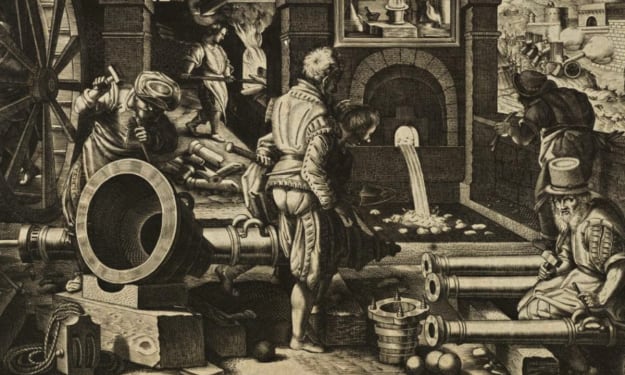
The empire’s most defining moment came under Mehmed II (Mehmed the Conqueror), who besieged Constantinople in 1453. Using massive cannons and a well-coordinated naval blockade, the Ottomans breached the legendary Theodosian Walls, ending the thousand-year-old Byzantine Empire.
Constantinople, renamed Istanbul, became the empire’s new capital, symbolizing Ottoman dominance over the Christian and Islamic worlds. The conquest also secured control over key trade routes between Europe and Asia, fueling economic prosperity.
The Golden Age: Suleiman the Magnificent and Ottoman Zenith
Military Expansion and Dominance
The 16th century marked the empire’s peak under Suleiman the Magnificent (r. 1520–1566). His reign saw:
- Conquest of Belgrade (1521) and Rhodes (1522).
- Victory at Mohács (1526), crushing Hungary and paving the way for Ottoman influence in Central Europe.
- Siege of Vienna (1529), though unsuccessful, demonstrated Ottoman reach deep into Europe.
The Ottomans also dominated the Mediterranean under admiral Barbarossa, challenging Spanish and Venetian naval power.
Administrative and Legal Reforms
Suleiman was a lawgiver in addition to a conqueror (Kanuni). He reformed the legal system, blending Islamic Sharia with secular kanun laws, ensuring efficient governance. The millet system allowed religious minorities (Christians, Jews) limited autonomy, fostering social stability.
Cultural and Architectural Flourishing
Ottoman architecture reached new heights with Mimar Sinan, the empire’s chief architect, who designed masterpieces like the Süleymaniye Mosque and Selimiye Mosque. Under royal sponsorship, miniature art, calligraphy, and literature flourished.

The Slow Decline: Challenges and Reforms
Military Stagnation and European Rivalry
The empire was confronted with difficulties toward the end of the 16th century:
- Defeat at Lepanto (1571) weakened Ottoman naval supremacy.
- Economic inflation due to New World silver flooding markets.
- Rise of European powers like Habsburg Austria and Russia.
The failed Siege of Vienna (1683) marked a turning point, after which the Habsburgs gradually pushed the Ottomans out of Hungary.
Attempts at Reform: The Tanzimat Era
In the 19th century, the Ottomans initiated the Tanzimat reforms (1839–1876), modernizing the military, bureaucracy, and education.
However, nationalist uprisings (Greece, Serbia, Bulgaria) and European interference (Crimean War, 1853–1856) weakened central authority.
The Final Collapse: The Republic of Turkey and the First World War
Germany's entry into World War I proved devastating. The empire’s defeat led to its partition by Allied powers.
The Turkish War of Independence (1919–1923), led by Mustafa Kemal Atatürk, abolished the sultanate, and the Republic of Turkey was proclaimed in 1923, ending the Ottoman era.
Legacy of the Ottoman Empire
Political and Cultural Influence
- The empire’s millet system influenced modern multicultural governance.
- Ottoman architecture and art continue to inspire global design.
- Many former Ottoman regions (Balkans, Middle East) still grapple with borders drawn by its collapse.
Why is the Ottoman Empire Forgotten?
Despite its significance, Western historiography often marginalizes the Ottomans, focusing instead on European empires. Additionally, the empire’s complex decline and the rise of nation-states overshadowed its achievements.
Conclusion
The Ottoman Empire was more than a historical footnote—it was a superpower that shaped geopolitics, culture, and religion for centuries.
From its meteoric rise under Osman I to its golden age under Suleiman and its eventual dissolution, the Ottomans left a legacy that still echoes in modern Turkey and beyond.
By revisiting this forgotten superpower, we gain a deeper appreciation for how empires rise, adapt, and fall—and how their influence endures long after their collapse.
About the Creator
Himadri Niloy
Who explores forgotten histories, cultural echoes, and the silent revolutions of time.
Keep reading
More stories from Himadri Niloy and writers in History and other communities.
Top 5 Ancient Inventions Still Used Today
Human civilization has been shaped by groundbreaking inventions that emerged thousands of years ago. Many of these innovations were so advanced that they continue to influence modern technology, infrastructure, and daily life. From the wheel to paper, ancient inventors laid the foundation for the world we know today.
By Himadri Niloy8 months ago in History
Humanity’s Greatest Promise: The Birth of Universal Human Rights
Introduction On December 10, 1948, in the aftermath of two catastrophic world wars, the United Nations General Assembly adopted one of the most significant documents in human history: the Universal Declaration of Human Rights (UDHR). Crafted as a global roadmap for freedom, dignity, and justice, the UDHR stands as a powerful commitment by the world community to uphold the inherent rights of every individual. In an age still healing from genocide, oppression, and war, this declaration became a beacon of hope, guiding the path toward a more humane world.
By DRE Explains2 days ago in History
The CEO of Everything
They say "jack of all trades, master of none," but they forgot to mention the part where the jack of all trades is also the camera woman, the makeup artist, and the person currently yelling at a tangled Wii microphone cable in a her own bathroom while recording herself singing and trying to make it look realistic and professional. (As professional as you can make it with nothing but a cell phone camera and a mic that doesn't work)
By Sara Wilson7 days ago in Humans


Comments (1)
Thank you for this article, Himadri. Ottoman Empire was fascinating. Every time I read anything about the empire, it gives me goosebumps.