
The Old Man of Hoy: Scotland’s Towering Sea Stack and a Testament to Nature’s Power
Scotland's Tower

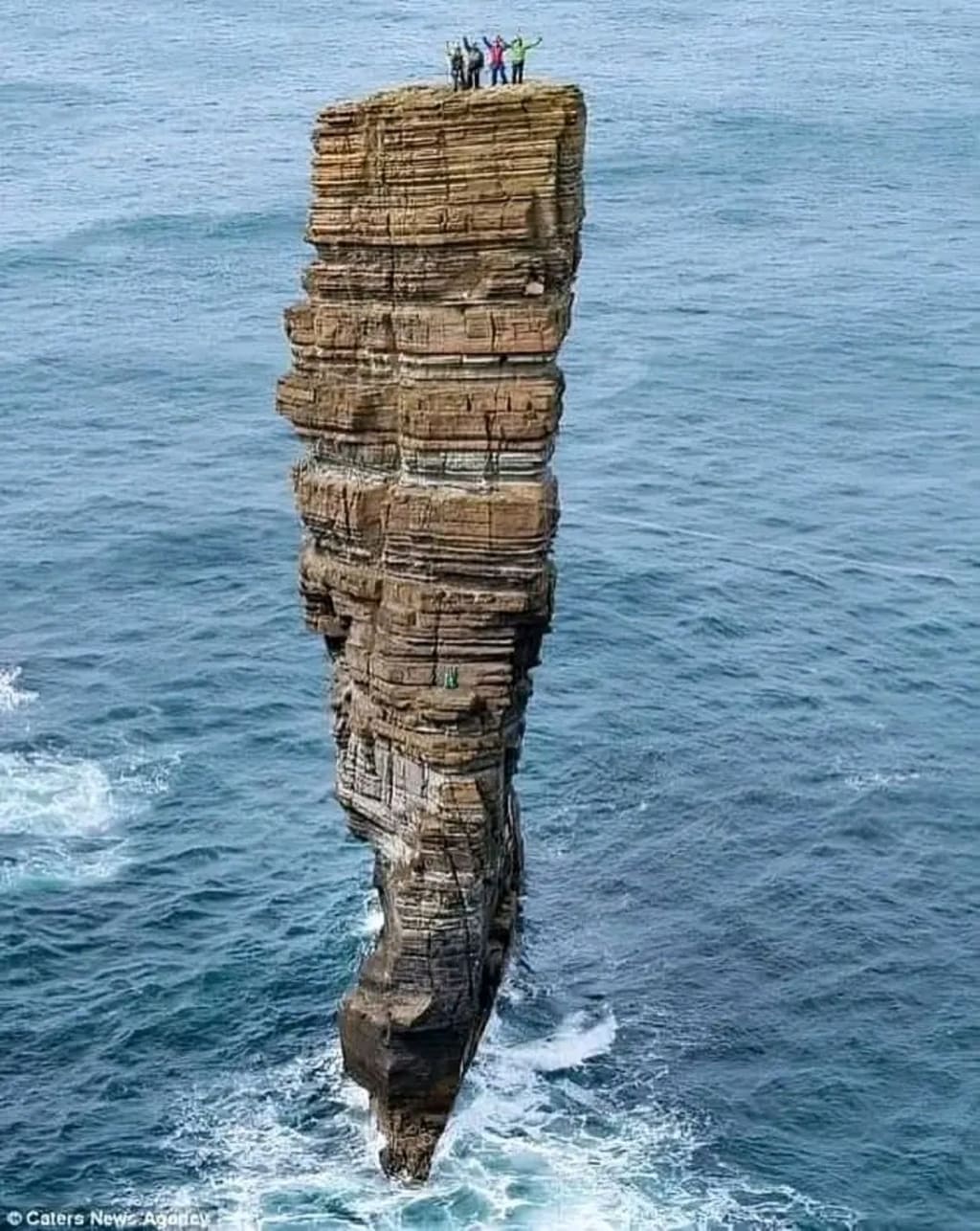
On the rugged west coast of Hoy, the second-largest of Scotland’s Orkney Islands, stands an extraordinary natural wonder—the Old Man of Hoy. Rising a staggering 137 meters (449 feet) above the churning waters of the North Atlantic, this towering sea stack is not only a geological marvel but also a symbol of the untamed power of nature. Formed through millennia of relentless erosion, the Old Man of Hoy is composed of red sandstone perched on a base of basalt, making it one of the tallest and most famous sea stacks in the British Isles. Known for its dramatic, solitary form against the open sea, the Old Man of Hoy attracts both adventurous rock climbers and curious tourists, who are captivated by its imposing presence and the unique challenges it offers.
A Brief History of the Old Man of Hoy
Despite its timeless appearance, the Old Man of Hoy is a relatively recent formation in geological terms. It was likely created less than 400 years ago, as evidenced by maps from the 17th and 18th centuries, which show a different coastline without the presence of a sea stack in this location. Geologists believe that the Old Man of Hoy was once part of the mainland cliff, carved away over centuries by the unyielding forces of wind and waves. Eventually, this erosion sculpted the stack into its now-familiar shape, with two “legs” forming an arch. However, by the mid-19th century, further erosion caused one of the legs to collapse, leaving behind the freestanding column that we see today.
Since then, the Old Man of Hoy has continued to erode. Standing atop layered sandstone that sits precariously on a base of harder basalt, it faces ongoing weathering from the elements. Some predict that it may eventually collapse, just as its “legs” did centuries ago. This knowledge lends an urgency to visitors’ desire to witness and explore the stack before it’s potentially reclaimed by the sea.
A Climber’s Challenge: Conquering the Old Man of Hoy
The Old Man of Hoy is not only a visual spectacle; it has also become an iconic destination for rock climbers. Its first recorded ascent took place in 1966, when a team that included renowned climbers Sir Chris Bonington, Rusty Baillie, and Tom Patey successfully reached the top. This televised event captivated audiences and spurred interest in climbing the Old Man, cementing its status as one of the UK’s most sought-after climbing challenges.
Climbers are drawn to the stack for its unique sandstone formations, which provide a variety of gripping surfaces and crevices. However, the climb is no easy feat. The rock is notoriously brittle in places, and sections of the sandstone can crumble unexpectedly, making the ascent unpredictable and requiring careful technique. The route to the top is typically divided into several pitches, each presenting its own set of challenges, from steep verticals to narrow ledges and precarious overhangs.
Despite the challenges, the climb is incredibly rewarding, offering breathtaking views of the Orkney coastline and the open Atlantic Ocean. On a clear day, climbers who reach the top are treated to sweeping panoramas of Hoy’s dramatic cliffs and distant islands, a view that few others get to experience. For many, conquering the Old Man of Hoy is a bucket-list accomplishment and a testament to their skill and determination.
An Icon of the Orkney Islands
While the Old Man of Hoy has gained fame among climbers, it’s also an iconic symbol of the Orkney Islands and a popular attraction for tourists. The stack’s remote location and unique appearance have made it a natural landmark, drawing visitors who wish to see its impressive silhouette against the sea. For those less inclined to climb, a scenic walk offers a way to admire the Old Man from a distance, along trails that showcase the island’s rugged terrain, diverse wildlife, and coastal scenery.
The walk to the viewpoint, beginning at Rackwick Bay, is about a three-hour round trip and offers some of the best views of the Old Man. Along the way, visitors may encounter seabirds like puffins, fulmars, and kittiwakes nesting in the cliffs, adding to the natural beauty of the experience. For many, the combination of the wild landscape, rich history, and the towering presence of the Old Man makes this journey one of the most memorable excursions in the Orkneys.
Geological Significance: A Testament to Coastal Erosion
The Old Man of Hoy is not only an icon but also a striking example of coastal erosion, providing a glimpse into the powerful natural processes that shape our landscapes. The formation of the sea stack is a result of weathering and erosion—forces that have slowly but persistently sculpted the cliffs of Hoy over centuries. Sandstone, while relatively resilient, is still susceptible to the relentless pounding of waves, wind, and rain, which gradually wears down the rock.
Geologists believe that the Old Man of Hoy may not stand for many more centuries. The same forces that shaped it continue to act upon it, weakening its foundation and eroding its sandstone structure. For scientists, the Old Man serves as a living laboratory to study the effects of coastal erosion, offering insights into how landscapes evolve over time and the role of natural forces in shaping our environment.
Conclusion: An Enduring Symbol of Nature’s Majesty
The Old Man of Hoy stands as a powerful reminder of the beauty and impermanence of nature. Towering above the Orkney coast, it captures the imagination of climbers, scientists, and tourists alike, each drawn to its rugged allure and the sense of history embedded within its stone. It’s a place where geology and adventure intersect, where the past and present collide, and where humans come face-to-face with the awe-inspiring forces of the natural world.
Whether you visit the Old Man of Hoy to marvel from a distance, embark on a challenging climb, or simply appreciate the geological wonder, it’s a destination that leaves a lasting impression. In its stark isolation and quiet strength, the Old Man of Hoy embodies the raw power of Scotland’s landscapes—a steadfast guardian standing watch over the Orkney Islands as it has for centuries, and as it will, for as long as nature allows.
About the Creator
Keep reading
More stories from Deji Akomolafe and writers in History and other communities.
Unearthing the Past: Ancient Artifacts Uncovered in Canada's Melting Ice at Mount Edziza
The rugged and remote terrain of Mount Edziza Provincial Park, nestled within Canada’s wilderness, has been known for its stunning volcanic landscapes and profound cultural significance to the Tahltan people. Yet, as climate change accelerates ice melt in this beautiful region, something else has emerged—a collection of extraordinary artifacts that are over 7,000 years old, offering us a rare glimpse into ancient North American civilizations. In the summer of 2019, after two particularly mild winters, researchers took to the ice patches of Mount Edziza with the hope of unearthing remnants of early life preserved in the frozen ground. Their efforts were rewarded when they discovered 56 well-preserved artifacts, casting a light on the resilience and craftsmanship of the people who inhabited these lands millennia ago.
By Deji Akomolafeabout a year ago in History
The Catastrophic Aftermath of the Dinosaur-Killing Asteroid
Approximately 66 million years ago, the Earth experienced one of the most dramatic and catastrophic events in its history: a massive asteroid, now identified as the Chicxulub impactor, collided with the planet near what is today the Yucatán Peninsula in Mexico. Measuring roughly 10 kilometers in diameter, this space rock unleashed energy equivalent to billions of atomic bombs, marking the end of the Cretaceous period and triggering a chain of events that wiped out approximately 75% of all species on Earth, including the iconic non-avian dinosaurs.
By Irshad Abbasi a day ago in History
A Transparent Look at Vocal Challenges and Top Stories
Almost three years ago, we shared a resource article that served as a place for people to suggest new challenge prompts. We thought it would be a good idea to refresh that thread, and take the opportunity to answer a few common questions about top stories, how challenges are judged and how submissions are reviewed.
By Vocal Curation Team4 days ago in Resources


Comments
There are no comments for this story
Be the first to respond and start the conversation.