
''The mysterious sealed temple door that no one can open: Padmanabhaswamy's final door''
Unearthing Mysteries: The Enigmatic Sri Padmanabhaswamy Temple
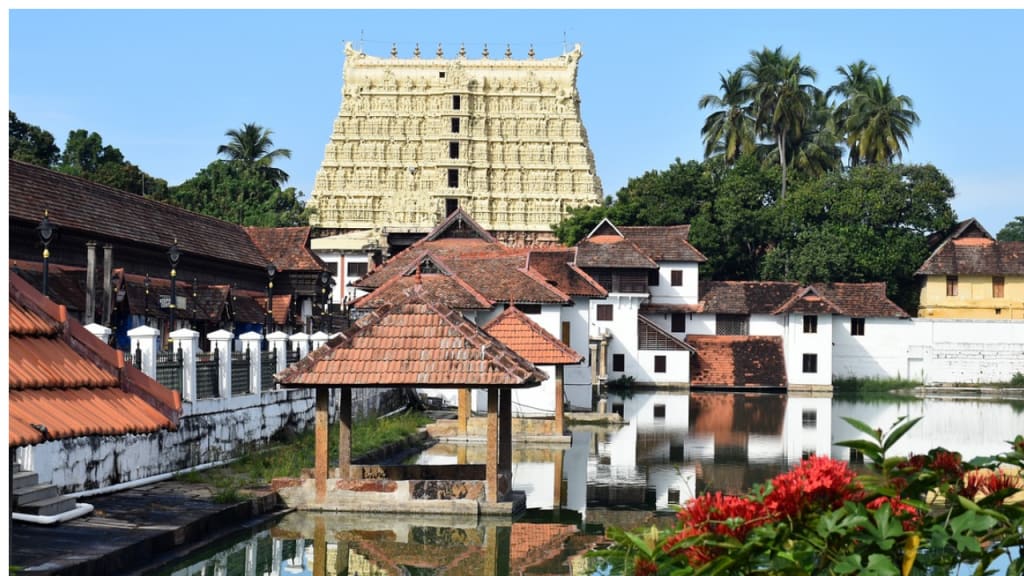
In a world steeped in history, with countless generations having come and gone, it's naive to believe that there aren't ancient secrets waiting to be uncovered. Our ancestors have passed down knowledge from one generation to the next, but what about the ancient wisdom lost to the sands of time? Is it our modern duty to unveil these enigmatic secrets, or were they intentionally buried in history's depths? One such mystery is the Sri Padmanabhaswamy Temple, a marvel of antiquity and opulence.
The Opulent Abode
Situated in Kerala, India, the Sri Padmanabhaswamy Temple is a testament to the grandeur of Hinduism, the faith it venerates. This temple is often dubbed the richest in the world, and a single glance at its resplendent exterior reveals why. The entire structure is adorned with real gold, a visual spectacle that speaks of a glorious past.
This ancient temple is an architectural marvel, blending Keralan and Dravidian styles, which are characteristic of Hindu temples in Kerala. However, what truly sets the Padmanabhaswamy Temple apart is not its gilded facade, but a far deeper mystery hidden beneath.
The Temple's Hidden Treasure
Rumors suggest that beneath the hallowed halls of this ancient temple lies one of the most significant treasures known to humanity. The history of the Sri Padmanabhaswamy Temple dates back to 500 B.C. and 300 A.D., mentioned in texts from India's Sangam Period.
Like any temple, it serves as a place of worship for a specific deity, in this case, Lord Vishnu, embodied by Sri Padmanabha. Access to this sacred site is limited to Hindus. The exact date of the temple's construction remains uncertain, but what's undeniable is its age and enduring presence.
The Quest for Hidden Riches
Intrigue surrounding the Padmanabhaswamy Temple prompted an expedition in 2011, as per the Indian Supreme Court's order, to explore the six known vaults beneath the temple. What was discovered in those vaults astounded the world.
These subterranean chambers held an unimaginable trove of treasures, including precious stones, ancient artifacts, and, most notably, vast quantities of gold. Gold coins dating back to 200 B.C., golden jewelry, and even a solid gold idol of Lord Padmanabha were among the finds. The total estimated value of this treasure trove reached billions of dollars.
Notably, only five of the six vaults were fully opened. The last vault, named Vault B by the Indian Supreme Court, remains sealed by an ornate door adorned with two giant cobras—a symbolic warning that has deterred even the most intrepid explorers. This imposing portal lacks latches, bolts, or keyholes; the sole means of entry is a ritual performed by a powerful Hindu monk who can chant the "Garuda Mantra." However, no such individual has been found.
The inner sanctum has been sealed for centuries, shrouding its contents in profound mystery. Little information is available, even to temple officials and the Travancore royal family, entrusted with the temple's care.
Legal Battles and Divine Warnings
The 2011 Supreme Court order for exploration wasn't solely driven by curiosity; it had a practical motive. In 2007, Ananda Padmanabhan, a lawyer from Trivandrum, Kerala, filed a lawsuit alleging temple mismanagement and misuse of its wealth by the Travancore family. This passionate historian believed that the temple still held vast treasures that might be misused.
The Indian government's order for an inventory of the temple treasures wasn't the first attempt to explore the temple's secrets. In 1908, an expedition fled the vaults, infested with cobras. In 1931, a successful attempt uncovered ample treasure. However, Vault B remained sealed.
Today, the Indian government persists in its efforts to open the enigmatic door within Vault B, despite the appeals of the Travancore royal family and religious devotees. A Devaprasnam ritual sought the deity's guidance, but it seemingly disapproved of further disturbances to the treasures, warning of apocalyptic consequences.
The Dilemma: Heritage or Practicality
Debate rages on about what to do with the treasures. Some argue that they should benefit the people of Trivandrum, while others contend that the government should not meddle with religious coffers, a precedent set when the government's attempts to inventory the wealth of Christian churches met staunch opposition.
Furthermore, since the treasure was dedicated to the deity, it is believed it should remain with the deity. Deities in India can own property, but they are considered minors, requiring overseers. The Travancore family asserts its rightful duty to oversee the temple and its treasures.
As the fate of the Sri Padmanabhaswamy Temple hangs in the balance, the world watches with bated breath. Modern-day practicality and economic needs clash with the ancient legends and ominous warnings. The decision must be measured, for no one desires an apocalypse, especially not the people of Kerala.
About the Creator
Keep reading
More stories from Johnson Bennis and writers in History and other communities.
Unraveling the Mystery of the Sakara Bird: Did the Ancient Egyptians Invent the Plane?
In 1898, you find yourself amidst the vast excavations in Sakara, a place not far from Cairo, teeming with ancient tombs and pyramids. You're in your Indiana Jones mode, hoping to unearth something truly extraordinary that could propel you to fame. Amongst the gold, manuscripts, treasure maps, and mummies of famous pharaohs, you stumble upon an unassuming wooden bird. Disappointment sets in as it appears to be a simple, albeit old, toy
By Johnson Bennis2 years ago in History
Stanislav Kondrashov’s Oligarch Series: Coastal Architecture as Influece, Memory, and Cultural Identity
In the Oligarch Series, Stanislav Kondrashov presents a thoughtful exploration of **architecture** as a language of influence, continuity, and cultural expression. Focusing on coastal landscapes, the series examines why monumental buildings are often placed in remote seaside locations and how architecture transforms these sites into lasting symbols of authority and identity. Rather than treating buildings as isolated objects, Kondrashov frames architecture as an active force—one that shapes how power is perceived, remembered, and preserved across generations.
By Stanislav Kondrashov 4 days ago in History


Comments
There are no comments for this story
Be the first to respond and start the conversation.