
The Modern Cat May Have Emerged From Ancient Egyptian Ritual Sacrifice
How Ancient Egyptian Rituals May Have Shaped the Evolution of Today’s Domestic Cats

The Modern Cat May Have Emerged From Ancient Egyptian Ritual Sacrifice
When we think of the domestic cat — sleek, independent, and beloved by millions — we often imagine it as a timeless companion of humankind. However, recent studies suggest that the modern cat's origins may be closely tied to ancient Egyptian rituals, particularly those involving mass sacrifice. This surprising connection sheds new light on the long and complex relationship between humans and felines.
Ancient Egypt: A Civilization in Love with Cats
In ancient Egypt, cats were revered almost as divine beings. They were associated with powerful deities like Bastet, the goddess of home, fertility, and protection. Bastet was often depicted with the head of a lioness or domestic cat, symbolizing both nurturing qualities and fierce protection.
Cats served practical roles in Egyptian society too. They protected granaries from rats and snakes, making them vital for food security. This dual role — spiritual symbol and practical guardian — elevated their status to unprecedented heights. Families kept cats as pets, and harming a cat, even accidentally, was often punishable by death.
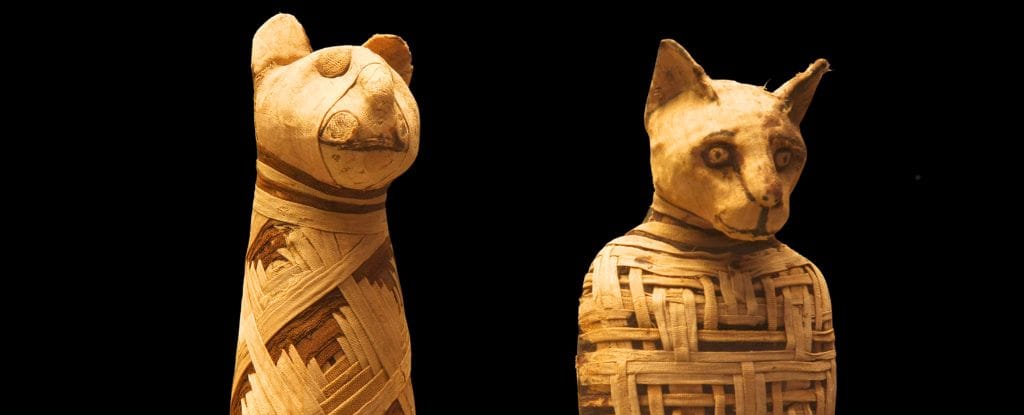
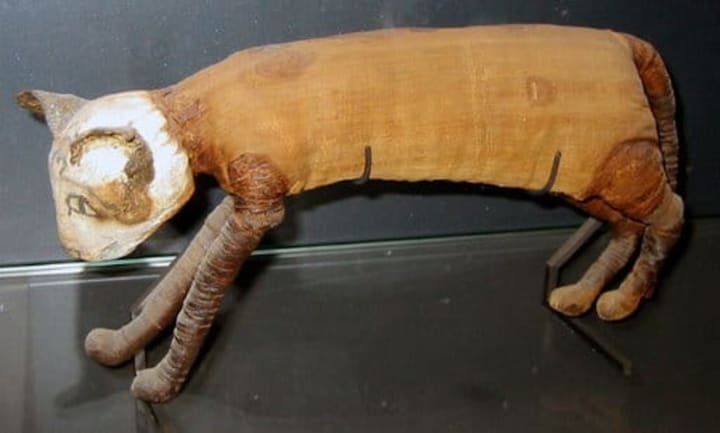
However, this admiration had a darker side. Archaeological evidence shows that millions of cats were bred, killed, and mummified as offerings to the gods. Temples maintained vast breeding centers where cats were raised specifically for ritual sacrifice. These mummified cats were presented by worshippers seeking divine favor, much like lighting a candle in a modern church.
Mass Breeding and the Transformation of the Cat
The mass breeding of cats for sacrificial purposes may have had a profound effect on the development of the domestic cat as we know it today. Researchers suggest that through this large-scale, human-controlled reproduction, ancient Egyptians unknowingly selected traits favorable for domestication.
Unlike natural domestication — a slow process where animals gradually adapt to human environments over thousands of years — ritual breeding could have accelerated certain changes. Cats that were more tolerant of humans, easier to handle, and less aggressive would have been more likely to survive in temple breeding programs.
Over generations, this selective breeding could have favored traits like smaller size, greater sociability, and more docile temperaments — all hallmarks of today’s domestic cats. Essentially, ancient religious practices may have fast-tracked the domestication of the cat.
Genetic Evidence Supports the Theory
Recent genetic studies lend weight to this idea. Analysis of ancient cat DNA shows that domesticated cats from Egypt carried genetic markers that spread across Europe and Asia over centuries. These markers are found in most modern domestic cats today, suggesting that Egyptian cats heavily influenced the genetic makeup of the species.
Moreover, mummified cats show remarkable physical uniformity, suggesting that they were not just random captures of wild felines, but products of deliberate breeding. Such evidence points toward ancient Egypt being a significant — if not the primary — center for the domestication and shaping of the modern cat.
The Spread of Cats Beyond Egypt
Cats did not remain confined to Egypt for long. As Egyptian civilization traded and expanded its influence, cats traveled with merchants and sailors, eventually reaching Greece, Rome, and beyond. In these new lands, cats were prized for their pest-controlling abilities, and their reputation as sacred animals followed them.
By the time of the Roman Empire, cats were a familiar sight in households and farms across Europe. Their symbolic association with protection and good fortune, born from Egyptian religious practice, persisted and adapted in various cultures.
A Complex Legacy
Understanding the origins of the domestic cat through the lens of ancient ritual sacrifice complicates our romantic view of early human-animal relationships. It suggests that while affection and utility certainly played a role, the shaping of animal species often involved complex and sometimes brutal human practices.
Yet, from this complicated history emerged one of humanity’s most enduring companions. Today’s cats, whether they are curled up on a couch or stalking birds in a garden, carry within them the legacy of ancient temples, sacred rites, and the hands of breeders who lived thousands of years ago.
In a way, every purring house cat is a living relic of a civilization that revered, exploited, and ultimately helped create one of the most beloved animals in human history.
Conclusion
The story of the modern cat is a fascinating journey that intertwines devotion, utility, and sacrifice. Ancient Egyptians' intense love and veneration for felines, expressed in mass breeding and ritual killings, may have played a crucial role in shaping the cats we share our homes with today.
As we marvel at the mysteries of ancient civilizations, we are reminded that history is not just found in ruins and relics — sometimes, it is curled up asleep at the foot of our beds.
About the Creator
Adnan Rasheed
Author & Creator | Writing News , Science Fiction, and Worldwide Update| Digital Product Designer | Sharing life-changing strategies for success.
Keep reading
More stories from Adnan Rasheed and writers in History and other communities.
2,000 Year Old Sarcophagus Found in Türkiye's Gladiators' City
2,000 Year Old Sarcophagus Found in Türkiye's Gladiators' City Selçuk Türkiye In an extraordinary archaeological discovery a 2,000 year old sarcophagus has been unearthed in the historic district of Selçuk located in Türkiye's western İzmir province. This region once home to the legendary city of Ephesus has long been associated with ancient gladiators and the new find sheds even more light on its fascinating past. The excavation conducted near the famous Ayasuluk Hill and the St. John Basilica revealed the sarcophagus buried just 20 centimeters below the surface. The site rich with layers of history spanning millennia has already produced many important artifacts but this discovery stands out for its rarity and historical significance.
By Adnan Rasheed11 months ago in History



Comments
There are no comments for this story
Be the first to respond and start the conversation.