
The Magnificence of Ancient African Empires
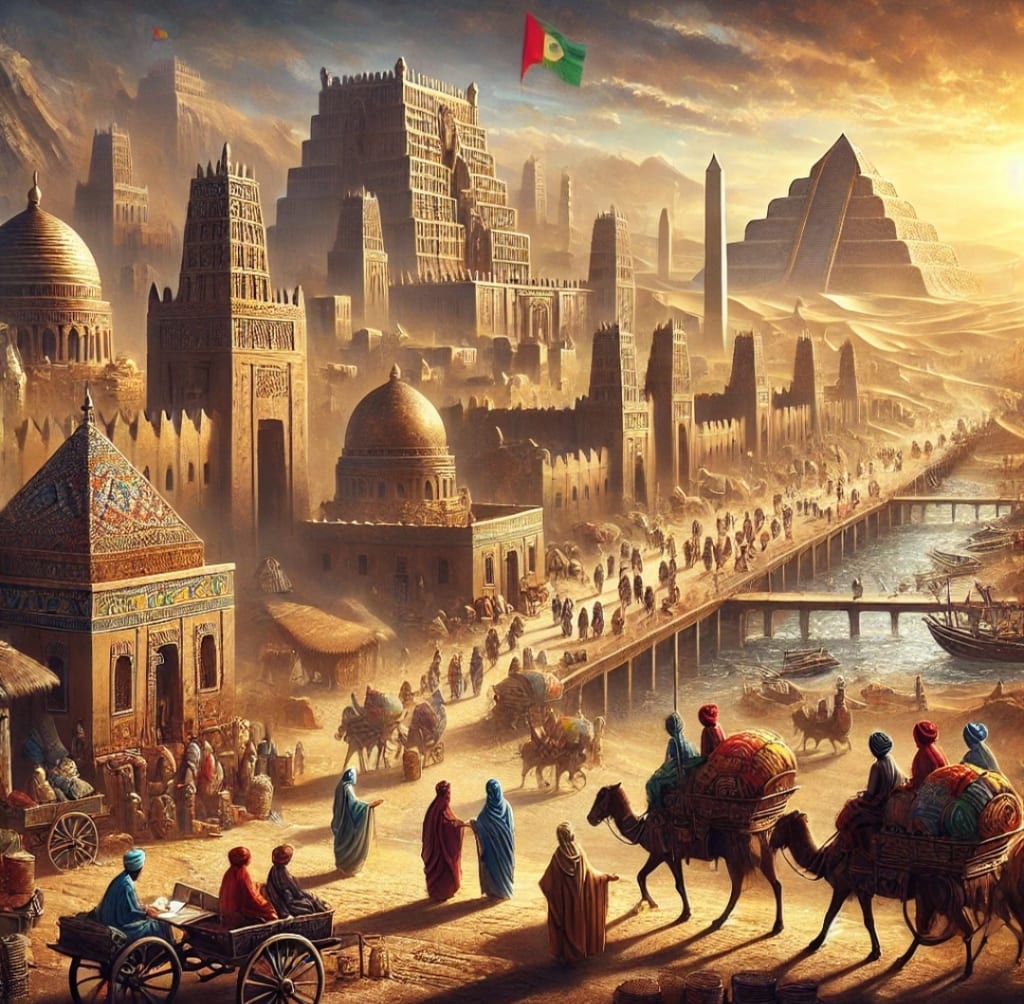
This artwork showcases the historical grandeur of ancient African empires, highlighting the wealth, trade, and cultural legacy of civilizations like the Mali Empire, Kush, and Timbuktu. The scene emphasizes the richness of African heritage, depicting caravan trade routes, scholars, and majestic architectural marvels that symbolize the continent's historical significance.

The Rich History and Resources of Ancient Africa: Part 1
Africa, often described as the cradle of humanity, has played a pivotal role in shaping world history. From the powerful empires of the past to its vast reserves of natural resources, Africa’s legacy is one of wealth, resilience, and cultural innovation. This article, the first in a nine-part series, delves into the ancient history, resources, and estimated economic impact of Africa's early civilizations, focusing on the period before European colonization.
Ancient African Empires and Their Wealth
Africa's history is defined by powerful empires that flourished for centuries, many of which controlled valuable trade routes and natural resources. Some of the most notable ancient African empires include:
1. The Kingdom of Kush (c. 1070 BCE – 350 CE)
Located in present-day Sudan, the Kingdom of Kush was one of Africa’s earliest civilizations. The Kushites controlled gold mines, making the kingdom a center of wealth and trade. Gold, ivory, ebony, and slaves were traded with Egypt and later with the Roman Empire. The Kushite kings became so powerful that they ruled Egypt for nearly a century, establishing the 25th Dynasty, also known as the "Black Pharaohs." The kingdom's wealth, combined with its architectural achievements, including pyramids, highlights its importance in ancient times.
2. The Carthaginian Empire (814 BCE – 146 BCE)
The city of Carthage, located in modern-day Tunisia, was a dominant force in the Mediterranean. Known for its naval supremacy and trade networks, Carthage accumulated wealth through commerce in silver, gold, and precious metals. It competed with Rome for control of trade routes, eventually clashing in the Punic Wars. Carthage’s strategic location and wealth from trade helped it thrive until its destruction by Rome.
3. The Mali Empire (1235 CE – 1600 CE)
Perhaps the most famous African empire, the Mali Empire reached its zenith under Mansa Musa, who is widely regarded as the richest person in history. Mansa Musa’s legendary pilgrimage to Mecca in 1324 showcased his immense wealth, as he distributed gold along his journey. The empire controlled gold and salt mines, which were essential commodities in medieval trade. Scholars from around the world traveled to Timbuktu, the empire’s cultural and intellectual hub.
Natural Resources: Africa’s Hidden Wealth
Africa has been endowed with vast natural resources that have historically contributed to the wealth of its empires and continue to drive its economy today. Key resources include:
1. Gold and Precious Metals:
Gold has been a central element of African wealth for millennia. Ancient empires such as Mali and Ghana controlled vast gold mines, which supplied much of the gold used in Europe and the Islamic world. Even today, South Africa remains one of the largest producers of gold in the world.
2. Diamonds:
The discovery of diamonds in the 19th century transformed Africa's economy. Countries like South Africa, Botswana, and Namibia became key players in the global diamond trade. The Kimberley mine in South Africa, known as "The Big Hole," became one of the most famous diamond mines in history.
3. Salt:
In the ancient world, salt was as valuable as gold. The trans-Saharan trade routes that connected North Africa with West Africa facilitated the exchange of salt, gold, and other goods. Salt mines in the Sahara Desert were crucial to the prosperity of ancient empires.
4. Oil and Natural Gas:
In modern times, Africa’s wealth has expanded due to the discovery of oil and natural gas reserves. Nigeria, Angola, and Algeria are among the top oil-producing countries on the continent, generating billions of dollars in revenue. However, the exploitation of these resources has also led to environmental challenges and political instability.
Estimated Net Worth of Ancient African Empires
Estimating the net worth of ancient empires is challenging due to the lack of consistent historical records. However, historians agree that Mansa Musa’s wealth was unparalleled, with some estimates placing his fortune at over $400 billion in today’s terms. The gold reserves of the Kingdom of Kush and the trade wealth of Carthage also contributed to Africa’s economic dominance in ancient times.
The Legacy of Africa’s Wealth
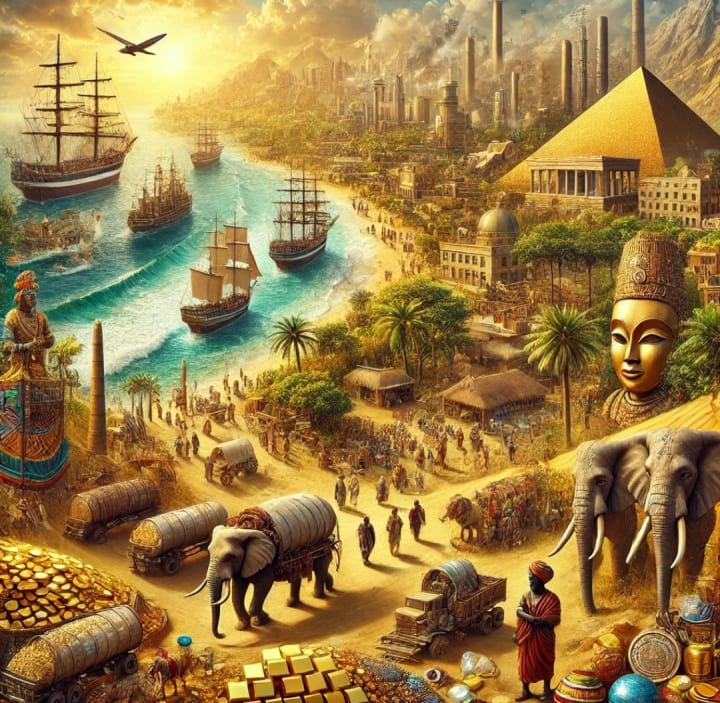
The wealth of Africa’s ancient empires laid the foundation for its influence on global trade and culture. Despite centuries of colonization and resource exploitation, Africa remains a continent of immense potential. Its natural resources, combined with its rich cultural heritage, position it as a key player in the global economy.
Conclusion
This article is just the beginning of a deeper exploration of Africa’s history and resources. In the next part of the series, we will explore the impact of the trans-Saharan trade routes and the rise of other influential African empires, including the Kingdom of Axum and the Songhai Empire. Africa’s story is one of resilience, wealth, and innovation—a legacy that continues to shape its future.
About the Creator
Say the truth
"Say the Truth: Explain Everything in the World" is your trusted source for uncovering facts and exploring the wonders of history, science, technology, and beyond. We simplify complex ideas and reveal truths to inspire curiosity .
Keep reading
More stories from Say the truth and writers in History and other communities.
The Golden Age of Ancient Africa
The Wealth and Influence of Ancient African Empires Africa’s history is a rich tapestry woven with stories of kingdoms that flourished, built empires, and amassed wealth through trade, natural resources, and cultural achievements. While much of Africa's ancient history is overshadowed in mainstream narratives, the continent played a central role in global trade, resource extraction, and innovation for centuries. In this article, we’ll explore the legacy of prominent African empires, focusing on the wealth they accumulated and how natural resources and trade routes played a crucial role in shaping their dominance.
By Say the truth 10 months ago in History
The Quiet Name on Maple Street
Kim Jong-un was born into a world unlike almost any other—a world sealed by borders, ideology, and secrecy. As the grandson of Kim Il-sung, the founder of North Korea, and the son of Kim Jong-il, the country’s second leader, Kim Jong-un entered life already wrapped in destiny. In North Korea, leadership is not chosen by ballots or debate; it is inherited like a crown, reinforced by loyalty, fear, and an unyielding political system.
By The best writer 4 days ago in History


Comments
There are no comments for this story
Be the first to respond and start the conversation.