
The Golden Age of Ancient Africa
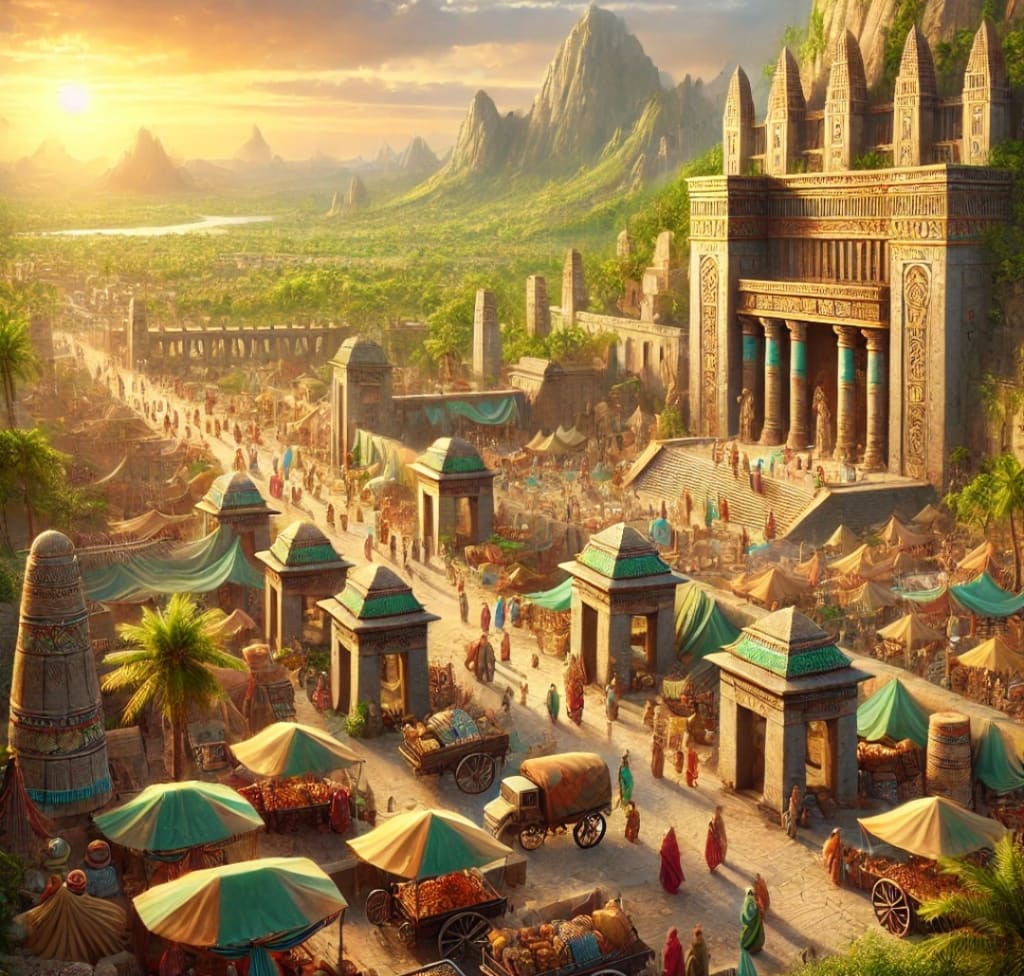
This artwork showcases a vibrant scene from ancient Africa during its golden age. Traders, merchants, and scholars gather in a thriving marketplace filled with gold, ivory, and spices. Magnificent stone structures tower in the background, reflecting the architectural brilliance of empires like Mali and Great Zimbabwe. The warm glow of the setting sun bathes the city, highlighting the prosperity, culture, and history of ancient African civilization.

The Wealth and Influence of Ancient African Empires
Africa’s history is a rich tapestry woven with stories of kingdoms that flourished, built empires, and amassed wealth through trade, natural resources, and cultural achievements. While much of Africa's ancient history is overshadowed in mainstream narratives, the continent played a central role in global trade, resource extraction, and innovation for centuries. In this article, we’ll explore the legacy of prominent African empires, focusing on the wealth they accumulated and how natural resources and trade routes played a crucial role in shaping their dominance.
1. The Mali Empire: A Center of Wealth and Scholarship
The Mali Empire, established in the 13th century, became one of the wealthiest empires in history due to its abundant gold reserves. Its most famous ruler, Mansa Musa, often cited as the richest person in history, put Mali on the world map when he embarked on a pilgrimage to Mecca in 1324. His caravan reportedly included thousands of attendants, camels carrying gold, and luxurious gifts that he distributed along the way, causing economic inflation in some regions.
Mali’s economy thrived on gold, salt, and ivory trade. The empire’s cities, including Timbuktu and Gao, were not only trading hubs but also centers of learning. Timbuktu housed libraries and universities that attracted scholars from across Africa and beyond, cementing Mali’s reputation as a center of wealth and intellect.
2. The Kingdom of Aksum: Trade Hub of the Ancient World
The Kingdom of Aksum, located in present-day Ethiopia and Eritrea, was a dominant trading empire from around 100 AD to the 7th century. Aksum controlled key trade routes connecting the Roman Empire, India, and the Arabian Peninsula. Its port city of Adulis facilitated the exchange of goods such as gold, ivory, spices, and textiles.
Aksum was also known for minting its own gold and silver coins, a rare achievement in the ancient world that reflected its economic strength. The kingdom adopted Christianity in the 4th century, further boosting its influence and shaping its cultural legacy. The towering obelisks of Aksum remain architectural marvels, symbolizing the kingdom’s advanced engineering skills and wealth.
3. The Riches of the Great Zimbabwe
The Great Zimbabwe civilization, flourishing between the 11th and 15th centuries, is another testament to Africa’s historical wealth. Its massive stone structures, including the Great Enclosure, were built without mortar, showcasing the advanced architectural techniques of the time.
The economy of Great Zimbabwe was driven by gold mining and trade. The civilization was part of a larger trade network that extended to the Swahili Coast, the Middle East, and even China. Artifacts such as Chinese porcelain and Arabian glass have been found at Great Zimbabwe, indicating its role in global trade.
4. The Swahili Coast: Maritime Trade Powerhouse
Stretching along the eastern coast of Africa, the Swahili Coast was a thriving maritime trading network that linked Africa to the Indian Ocean world. Cities like Kilwa, Mombasa, and Zanzibar were prosperous trade centers dealing in gold, ivory, spices, and slaves.
The Swahili traders developed a unique culture that blended African, Arab, and Persian influences. The wealth generated from trade allowed these city-states to flourish, building coral-stone mosques, palaces, and trading posts that showcased their prosperity.
5. The Kingdom of Benin: Art, Trade, and Power
The Kingdom of Benin, located in present-day Nigeria, was renowned for its sophisticated artistry and economic strength. The Benin Bronzes, intricate plaques and sculptures made from brass and bronze, are world-famous examples of the kingdom’s artistic legacy.
Benin was a major player in the trans-Saharan trade, dealing in ivory, pepper, and textiles. Its powerful military and centralized government allowed it to maintain control over trade routes and expand its influence.
6. The Role of Natural Resources in Africa’s Wealth
Africa’s natural wealth played a central role in the prosperity of its ancient empires. The continent’s vast reserves of gold, diamonds, copper, and other minerals made it a coveted region for trade and exploration.
Gold: Gold from West Africa fueled the wealth of empires like Ghana, Mali, and Songhai. It was a key commodity in the trans-Saharan trade and was exchanged for salt, textiles, and other goods.
Ivory: Ivory was highly prized in ancient times and was a major export from regions like the Congo Basin and the Swahili Coast.
Salt: Known as “white gold,” salt was as valuable as gold in ancient Africa. It was essential for preserving food and was traded across the Sahara Desert.
7. Africa’s Lasting Legacy
The wealth and influence of Africa’s ancient empires continue to inspire awe and admiration. However, the legacy of these civilizations is often overlooked in global narratives. Understanding the history of Africa’s wealth helps to challenge misconceptions and highlight the continent’s significant contributions to world history.
Conclusion
Africa’s ancient empires were centers of wealth, trade, and cultural achievement that played a crucial role in shaping global history. From the gold-laden caravans of Mansa Musa to the towering obelisks of Aksum, these civilizations left behind a legacy that endures to this day. As we uncover more about Africa’s past, it becomes clear that the continent’s history is one of resilience, innovation, and immense wealth.
In the next part, we will delve deeper into the rise and fall of specific African empires, exploring the factors that contributed to their success and the challenges they faced. Stay tuned for part 3 of this series on Africa’s historical treasures.
About the Creator
Say the truth
"Say the Truth: Explain Everything in the World" is your trusted source for uncovering facts and exploring the wonders of history, science, technology, and beyond. We simplify complex ideas and reveal truths to inspire curiosity .
Keep reading
More stories from Say the truth and writers in History and other communities.
The Lost Treasures of America: Hidden Wealth Waiting to Be Discovered
America’s Greatest Absent Treasures: History, Mystery, and the Hunt Throughout history, America has been a acreage of befalling and fortune. But alongside its riches, the country holds some of the world’s greatest alien treasures. From charlatan gold to hidden caches of Civil War wealth, endless legends allege of fortunes still cat-and-mouse to be found. This commodity explores the better abundance that charcoal missing in the United States, delving into its history, the attempts to balance it, and the accessible net account of these hidden riches.
By Say the truth 10 months ago in History
The Rise and Fall of Nicolae Ceaușescu
Nicolae Ceaușescu’s rise to power was initially marked by promise, even optimism. Born in 1918 into a poor peasant family, he entered politics early, shaped by the ideological rigidity of interwar and wartime communism. When he became General Secretary of the Romanian Communist Party in 1965, following the death of Gheorghe Gheorghiu-Dej, many Romanians saw in him a younger leader, one who might soften the harsh Stalinist legacy that had defined the previous decades. For a society weary of repression and deprivation, Ceaușescu appeared to embody the possibility of cautious change.
By Pure child2 days ago in History
A woman from a vanished female dynasty was discovered buried with 270,000 beads.
In a Copper Age tomb close to Seville, Spain, the Montelirio bead assemblage contains over 270,000 beads that identify the ladies buried there as elites. The discovery is the biggest collection of beads ever
By Francis Dami4 days ago in History


Comments
There are no comments for this story
Be the first to respond and start the conversation.