
The lost heritage of Belarus. St.Alexei church.
Smarhoń in the WW1

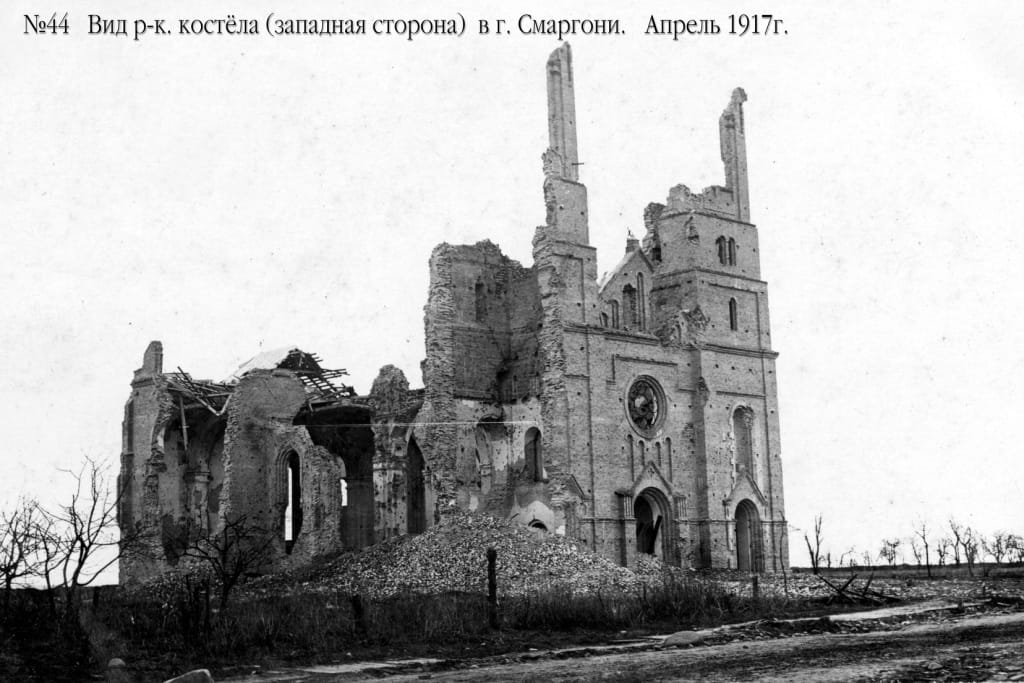
Belarus lost many architectural masterpieces in the disasters of the 20th century. A number of them were destroyed in the First World War, even more in the Second. In addition to that, the Bolsheviks destroyed dozens of churches, monasteries and other religious buildings that didn't correspond to the communist ideology.
Some of the lost heritage has been restored afterwards. Unfortunately, many objects are gone forever, because it is impossible to rebuild them at their historical place — there are other buildings there now, totally different landscape.
But still, we can imagine what amazing towns and cities built by our ancestors looked like.Witnesses of the era long gone — old postcards and photos will help us with this.
My colleagues, Uladzimir Bahdanaŭ and Uladzimir Prychač have got a worthy collection. We will open only one page of it and see an example of amazing architecture that Smarhoń lost in the fire of the First World War — the Church of St.Alexei.
Pre-war Smarhoń
Before the WW1 Smarhoń was a city in Hrodna region, steadily growing due to the development of local railways. As any other settlement in the west of Belarus, its population was rather multiethnic: among 16000 people of Smarhoń were Jewish, Polish, Belarusians and Russians.
At the beginning of the XX century local catholics still didn't have their church, but amendments to religious policies in the Russian Empire soon changed the situation. Believers got a permission to build a church in the center of the city, that's how it was going to look like:
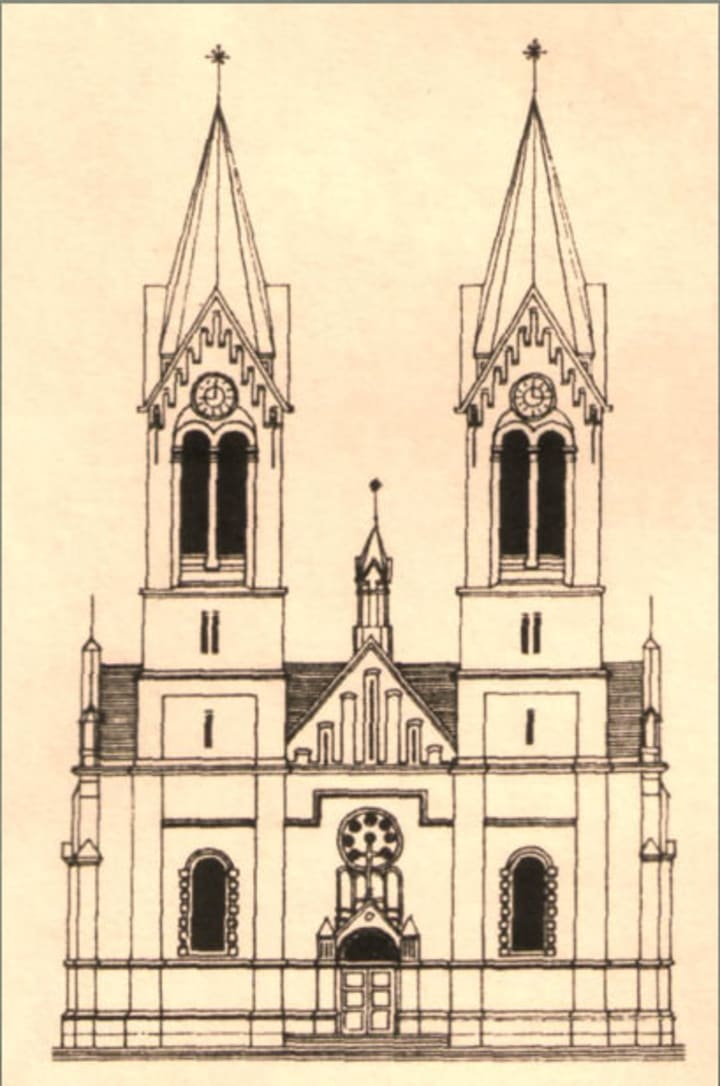
In 1911 the construction was finished. The result was impressive: a beautiful neo-gothic church became the highest building in the city. Its 30-metres towers were seen for miles around.
Unfortunately, the church functioned just a few years: the Great war came to here in 1915.
The Battle of Smarhoń
At the beggining of Septmeber 1915, the 6th German Cavalry Corps began a raid on the rear of the Imperial Russian Army. On 13 September, the German cavalry approached the lakes Naroch and Svir. From here, the 1st and 4th German cavalry divisions advanced to Smorgon, the Vilnius–Molodechno railway and the crossings over the Viliya River.
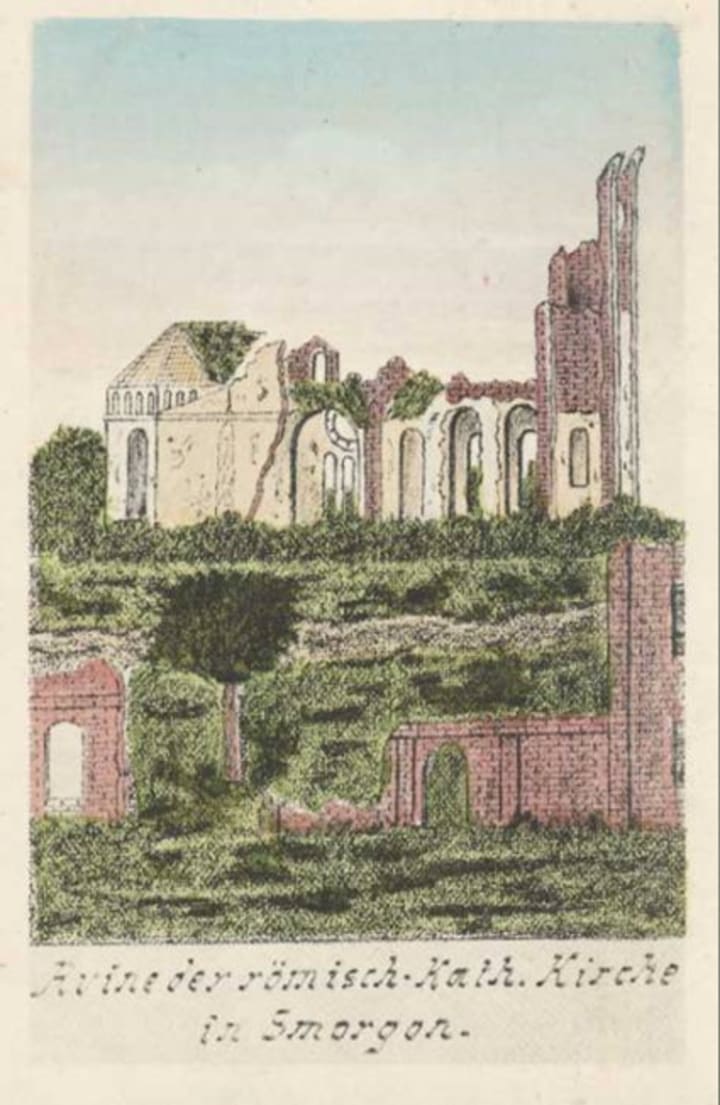
Later on that month, multiple fights between the Russian and Kaiser troops took place both in Smarhoń and around the city. One of such clashes was painted by an unknown german artist, his work was then printed on postcards. This might be the only evidence of that time, where you can see the church still not destroyed:
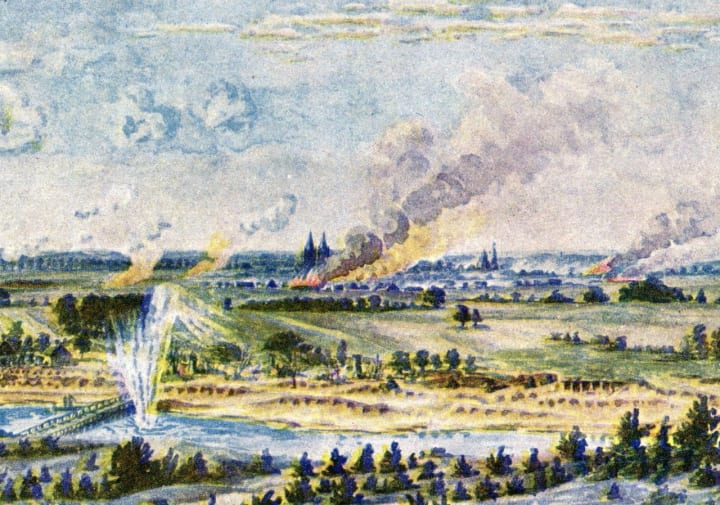
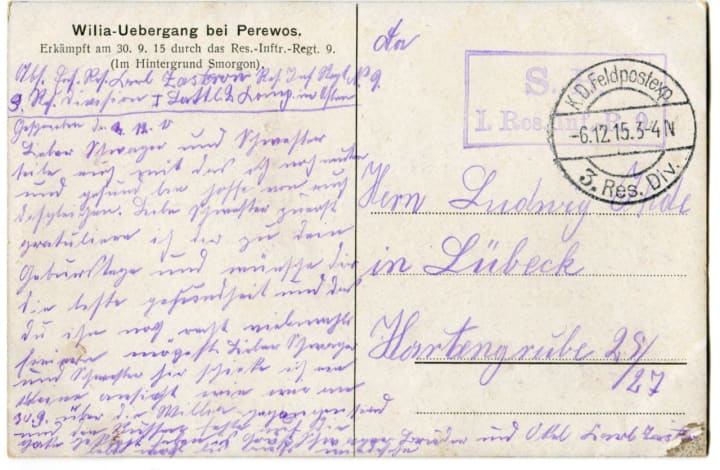
By the end of 1915, the enemies had exhausted its resources and started building defensive positions. The terrain between the German and Russian trenches was relatively flat and open, sloping from west to east, creating favorable conditions for the use of chemical weapons. As a result, Smarhoń became one of the first places of mass use of chemical weapons on the Eastern Front.
The "trench warfare" lasted more than 2 years resulting in multiple casualties from both sides. The settlement was completely destroyed and got a nickname "dead city" by the Russian media of that time.
The fate of St.Alexei church
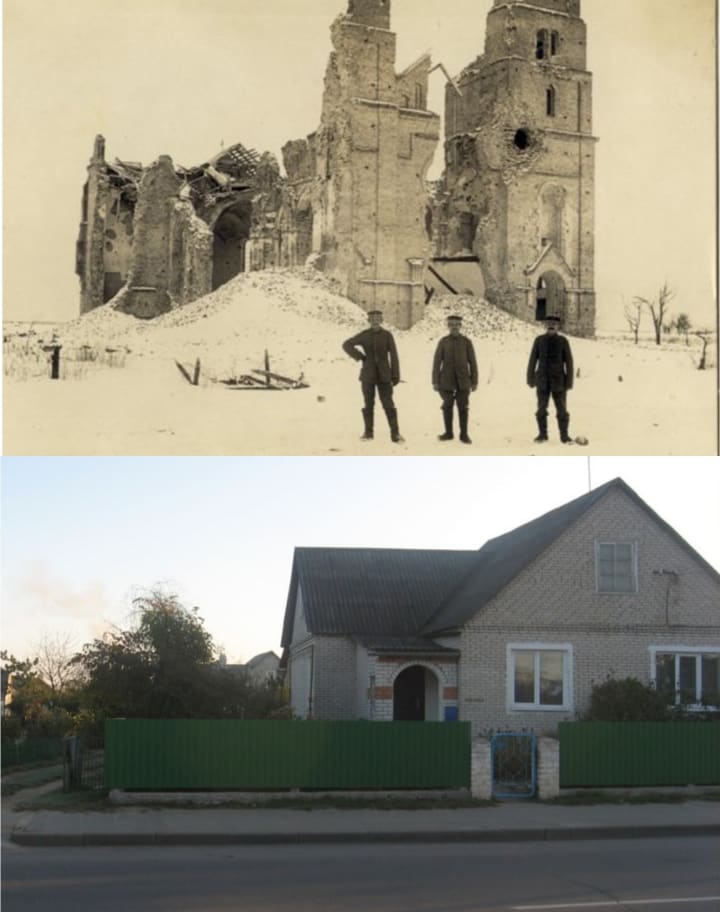
The location of the church and its heights made the building an easy target. It couldn't last long under the artillery fire and very soon became ruins. Valiancin Katajeŭ, a russian writer who took part in the battle of Smarhoń, compared the remains of church to a "fish skeleton".
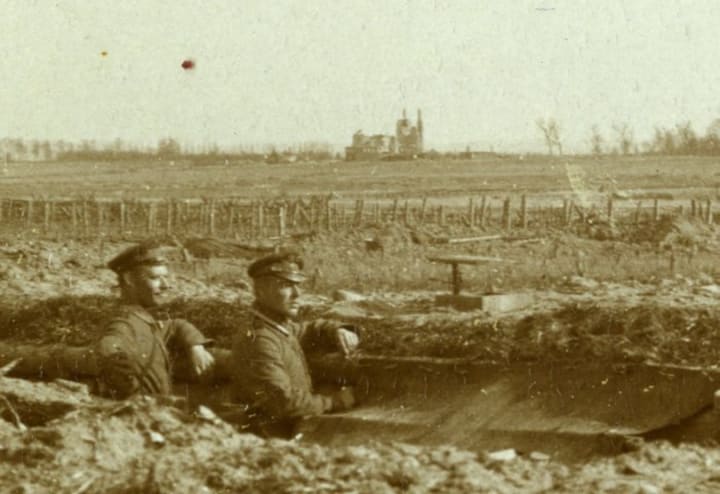
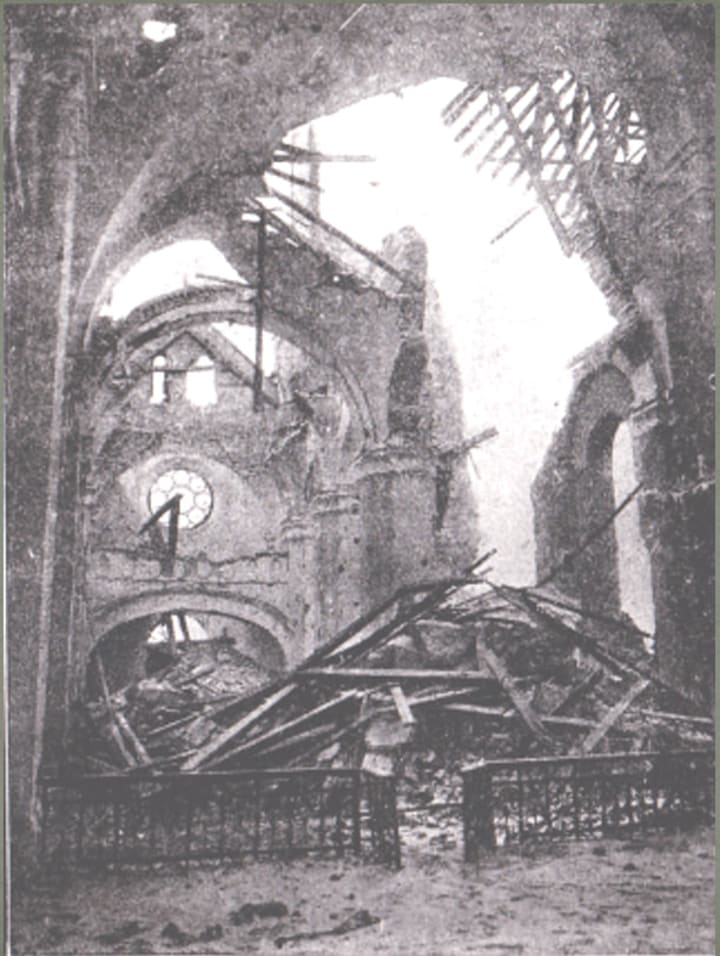
Having been severely destroyed, the building was still towering over the city. The tragic site became a popular theme for German sketches:
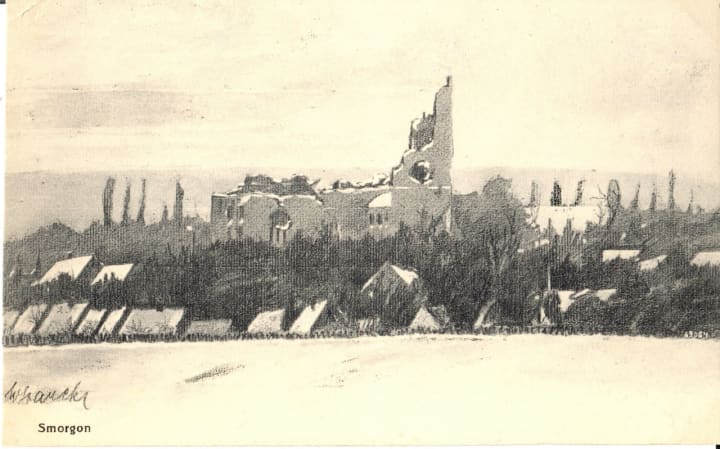
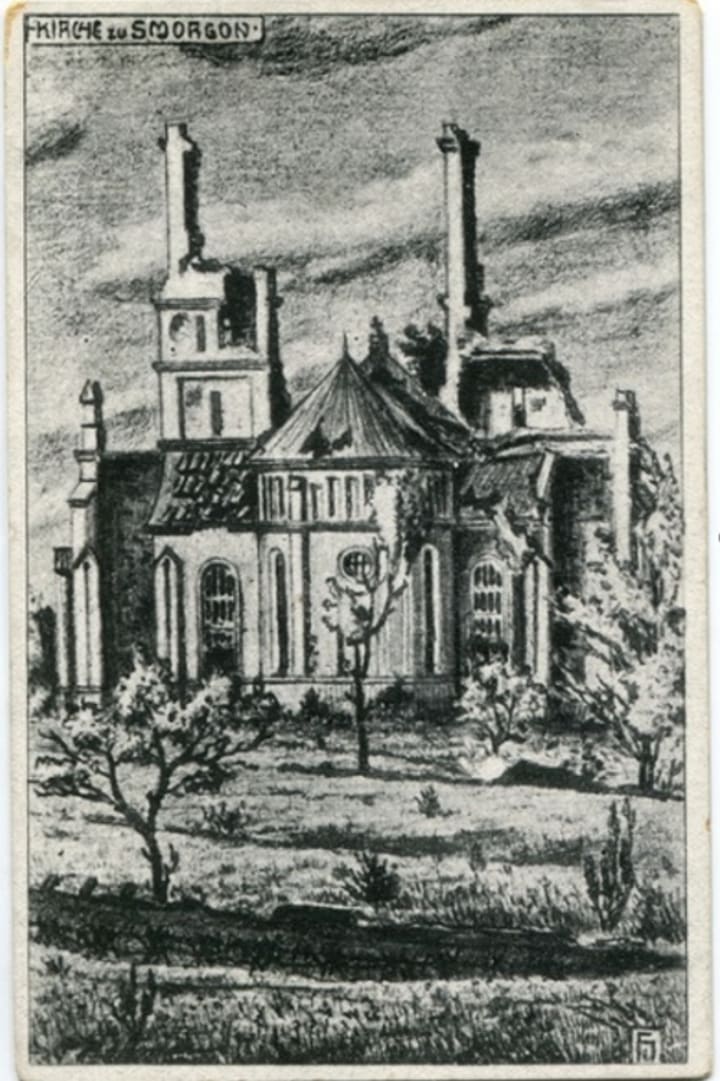
This is just one unfortunate example of countless losses that belarusian architecture suffered through the wars last century. St.Alexei church wasn't rebuilt afterwards and now lives only in memories brought by vintage photos and postcards. The restoration of it at the historical place is impossible, now it is a residential area in the city.
*****
Credits to local historians Uladzimir Bahdanaŭ and Uladzimir Prychač, who generously shared photos and postcards from their archives and assisted with the article.
If you are interested in vintage postcards and history, feel free to watch and read more in Poshtabel blogs in social media, please subscribe:
About the Creator
Poshtabel
💌 Vintage postcards and their history.
Here I share some old postcards from my collection. If you are interested in history, art, architecture, or just like antiques - welcome to my page, I hope you will find something intresting :)
Sometimes It's Like That and That'sThe Way It Is
It was the late 1960s, and ten-year-old Gloria Coleman was standing with her grandmother on the side of the highway waiting for the bus. As the Greyhound pulled up, it seemed monstrous and intimidating. Grandma Elizabeth grabbed Gloria's hand, holding it tightly as they boarded.
By Cheryl E Preston3 days ago in Fiction



Comments
There are no comments for this story
Be the first to respond and start the conversation.