

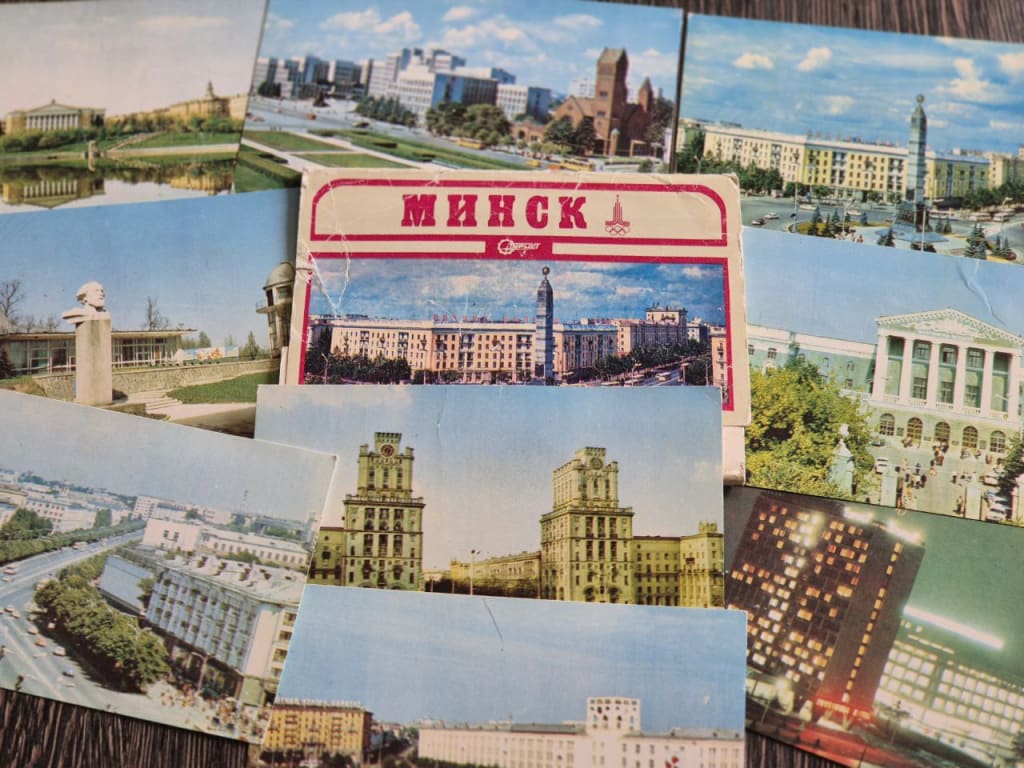
When travelling abroad, I always try to visit local flea markets. It’s good chance to get something for your collection and at a reasonable price. If you happen to be in Tbilisi – go to the Dry Bridge, where they sell vintage things every day. I was lucky to find an old set of postcards showing the capital of my home country.
Let’s have a look at Minsk and see what it was like 40 years ago!
A bit of history
Games of the XXII Olympiad took place in the USSR and were officially branded as “Moscow 1980”. A number of events took place in other big soviet cities, among them was Minsk. Expecting many guests, soviet tour agencies made a lot of souvenir items with the official logo of the Olympiad.
Multiple sets of postcards were printed to praise the achievements of economy and cities development in the Soviet Union. Their purpose was mostly propaganda, so the cards depicted not only beautiful sights, but also places and stuff which were of great importance to the communist ideology. Minsk example here is quite vivid:
#1 Victory Square
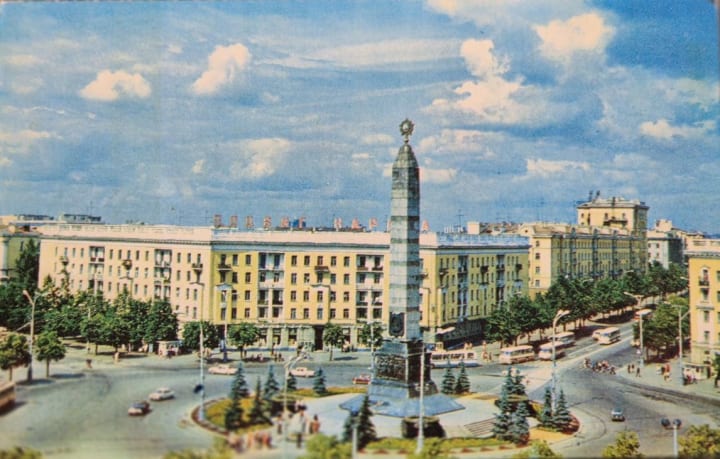
In 1946 the BSSR government opened a competition for the design of a Victory Memorial. The winner project was a 48-metre monument made of white pink marble. To open the memorial by the 10th anniversary of liberation of Belarus, the design was adjusted to use gray granite and make the column shorter.
In 2003, the square was slightly reconstructed to improve the monument's stability due to damage from metro trains running under it.
#2 Leninskiy Avenue
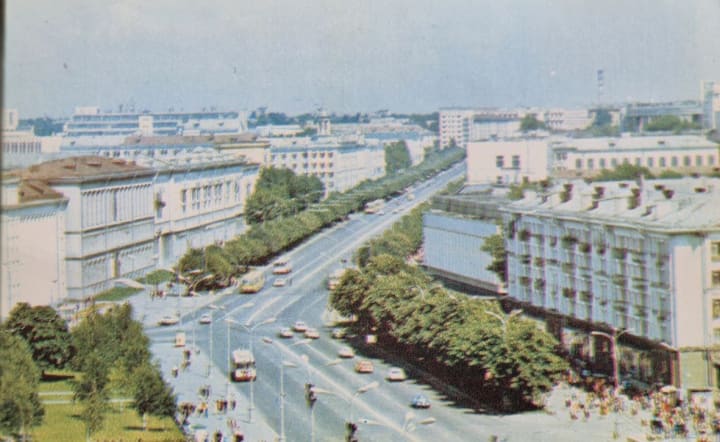
Today the main street of Minsk is known as “Independence Avenue”. There are plenty of beautiful buildings: universities, libraries, and other governmental institutions built in the post-war period.
#3 Yakuba Kolasa Square
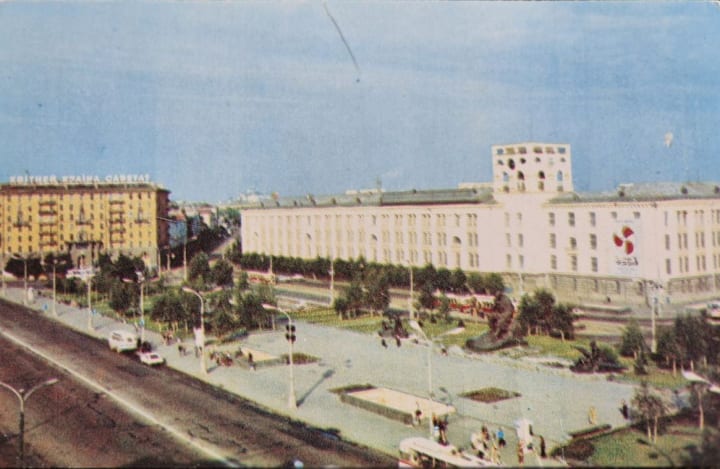
It is located at the place of the historical village Kamarouka, initially the square was also called "Kamarouskaya". In 1956 the square was renamed in the honour of the national poet - Yakub Kolas.
#4 «Minsk Gate»
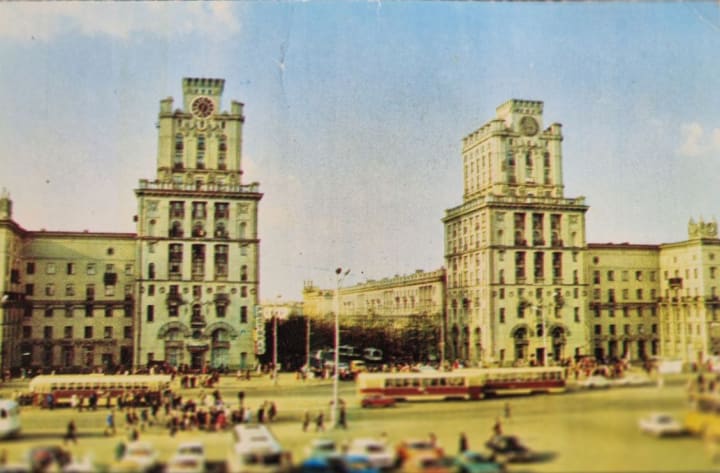
After the WWII the architects began to restore the capital of Belarus. Railway station square was intended to be the gates of the city. That’s when the idea to create two magnificent twin towers appeared.
#5 Belarusian National Technical University
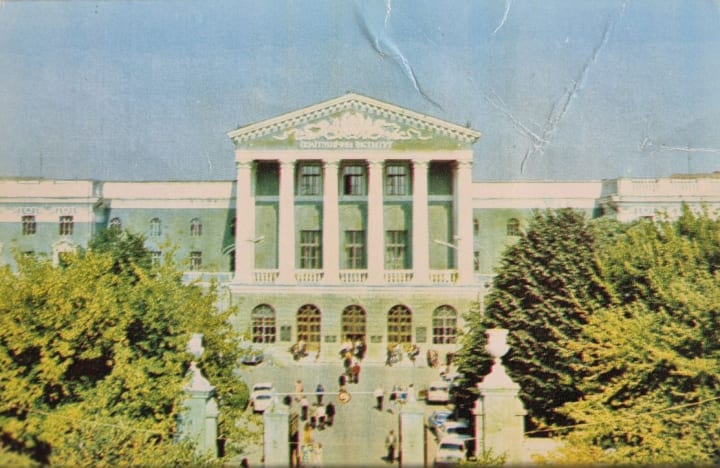
Back then Belarusian State Polytechnic Institute" (BSPI) was established to train engineers with higher education in the main areas of the state's industrial activity. In 2002, the Belarusian State Polytechnic Academy was reorganized into the Belarusian National Technical University (BNTU).
The complex of university buildings is recognized as the historical and cultural heritage due to its remarkable architecture.
#6 Lenina Square
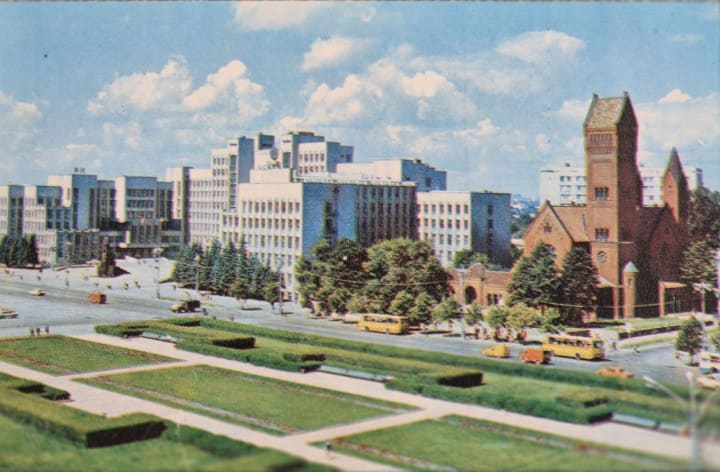
Designed by a famous soviet architect and sculptor, Iosif Langbard, it was created for conducting rallies and to serve as Minsk main ceremonial venue.
St.Symon and Helen church survived not only the WWII but also many antireligious campaigns. It is a true miracle that such object was preserved in the very center of a soviet city unlike many others destroyed.
#7 House of the 1st Congress of the RSDLP
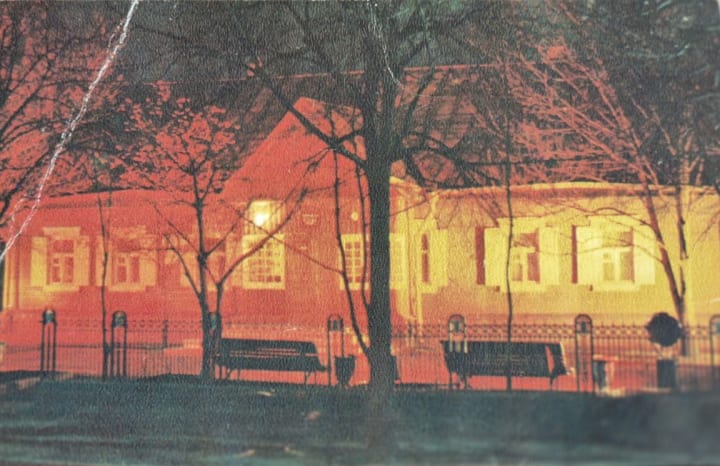
1st Congress of the Russian Social Democratic Labour Party, a memorable event of the soviet history, was held in this house in 1898. The venue was a house belonging to a local railway worker. The cover story was that they were celebrating the nameday of Rumyantsev's wife. A stove was kept burning in the next room in case secret papers had to be burnt.
Now the building serves as a museum.
#8 Gorky Park
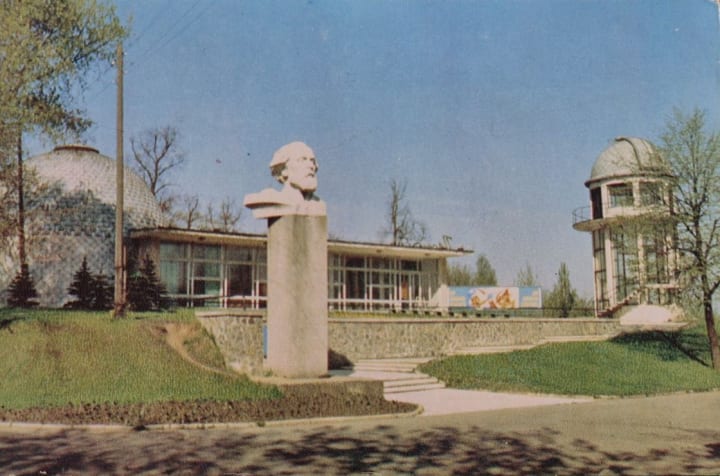
The park was established in 1800 under the name “Governor's Garden”. During the Soviet time it was renamed after the famous Russian/Soviet writer Maksim Gorky. Parks with this name have been established in many cities of the Soviet Union. A part of the park's territory is occupied by an amusement park, there is also an educational observatory with a planetarium.
#9 The Śvislač
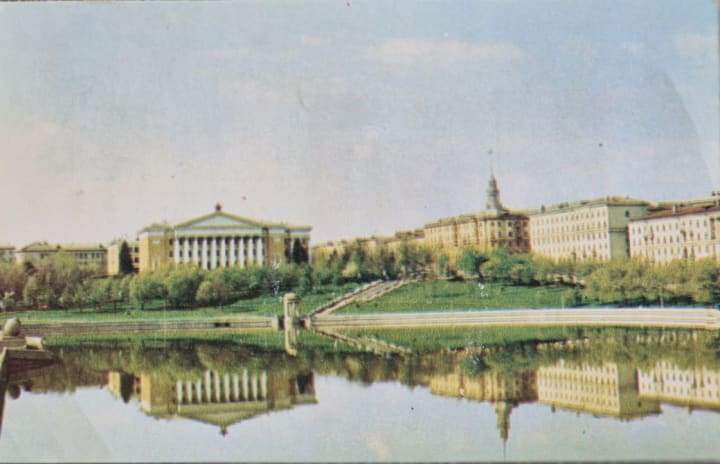
The river flows through Minsk, its banks are a popular place for walking or cycling among the residents and guests of the city.
#10 Minsk Sport Center
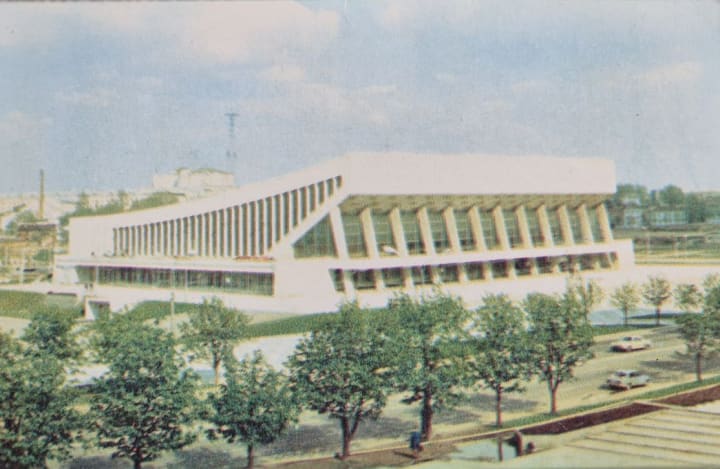
The arena was opened in 1966. It hosted various championships and international tournaments in wrestling, fencing, boxing, weightlifting and gymnastics This place was also a venue of the the Communist Party meetings.
Since 1990, its premises have been leased to various exhibition and sporting events.
#11 Tractor “Belarus”
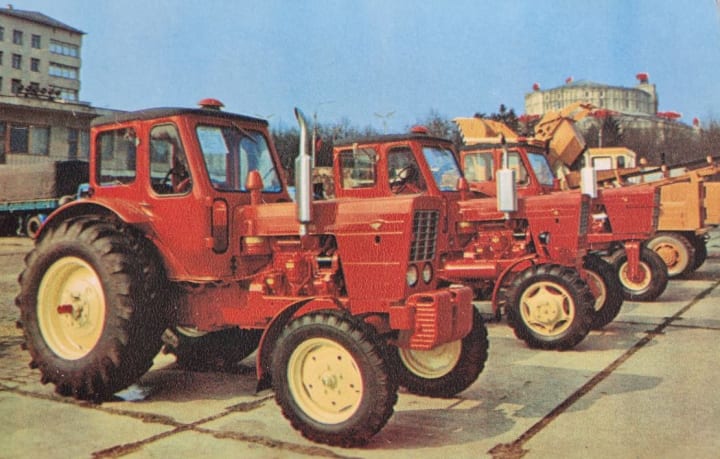
Perhaps the most recognized vehicle ever produced in Belarus. These tractors are very well known especially in post-soviet countries, now are still exported to many places abroad.
#12 Hotel “Tourist”
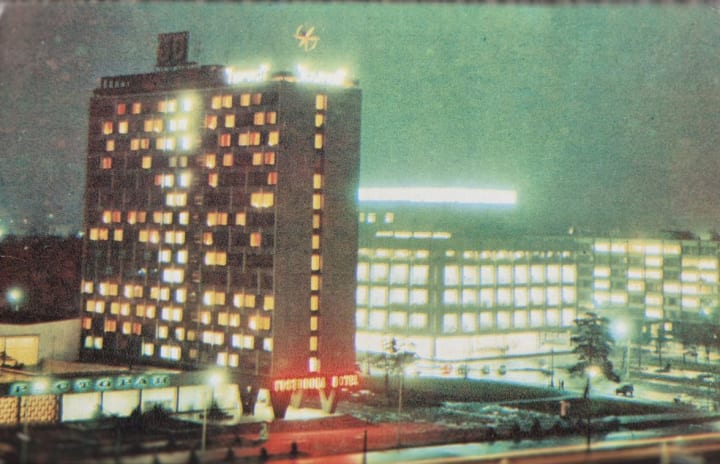
Built in 1963, quickly became one of the touristic centers of Minsk, still functioning.
#13 Zaslawskaye reservoir
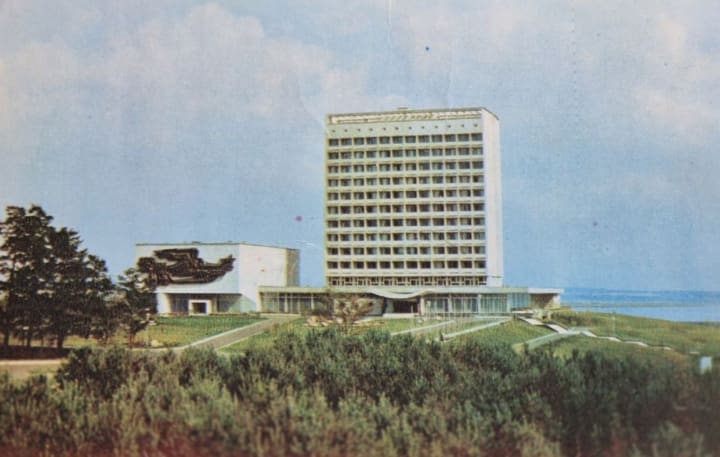
It is the second largest artificial lake in Belarus. It was created in 1956 to prevent overflows of the river Svislač. A few soviet sanatoriums and tour bases were built nearby. Today is a popular recreational zone among the citizens.
#14 Mound of Glory
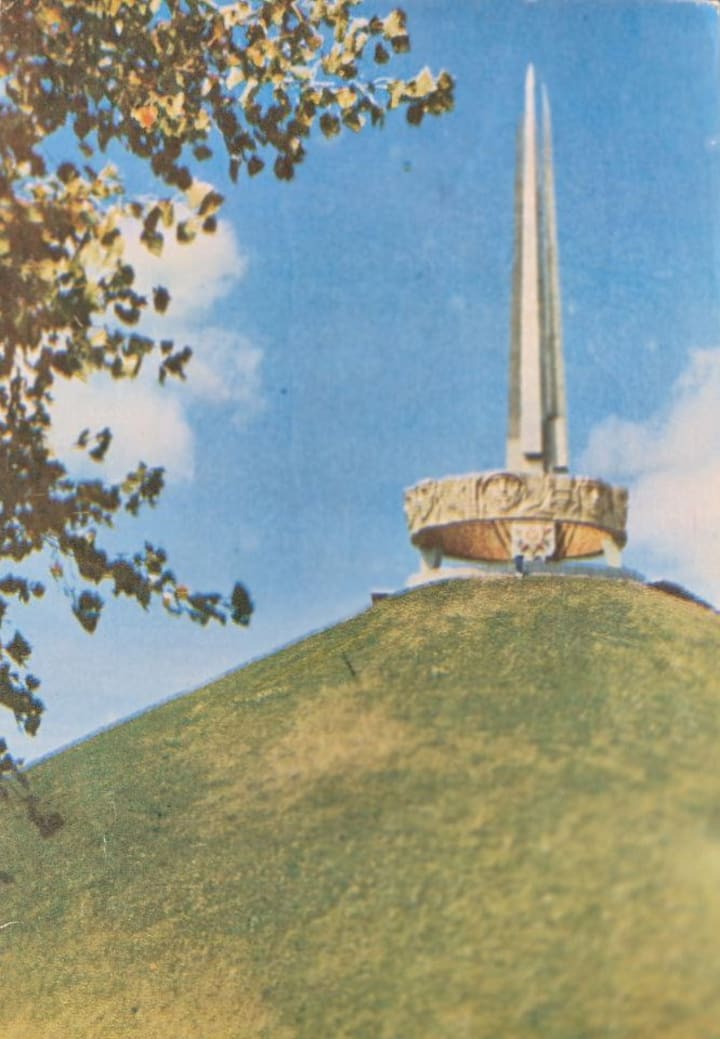
It is a memorial complex honouring Soviet soldiers who fought during World War II. It was established in 1969 celebrating the 25th anniversary of the liberation of Belarus during Operation "Bagration" (1944).
#15 Khatyn memorial
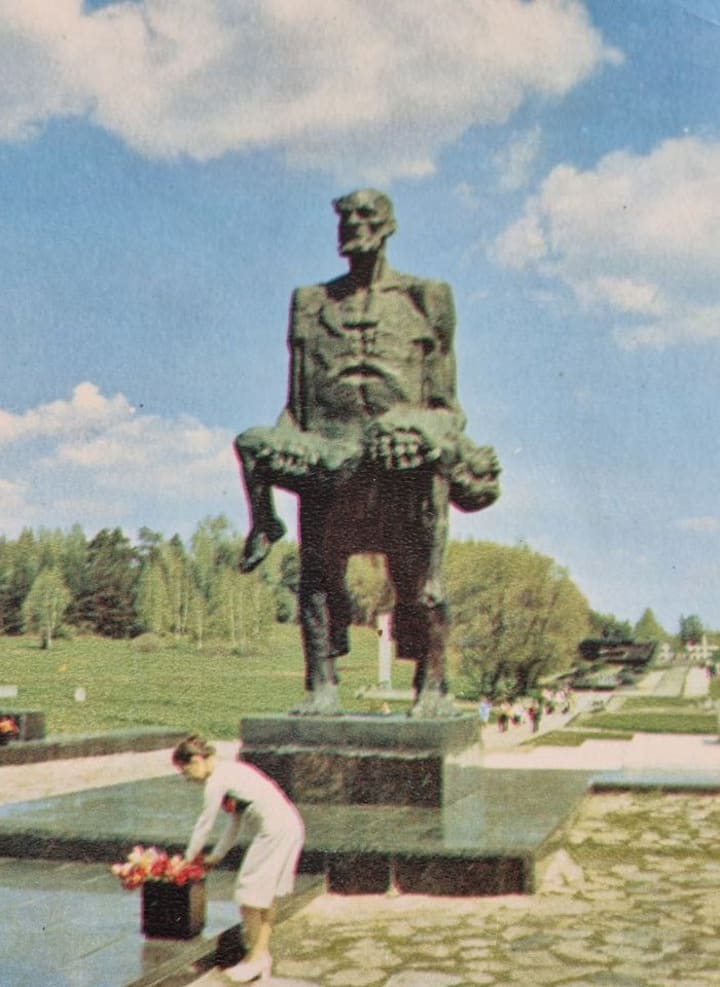
Before the war Khatyn was a small village in Minsk region. On 22 March 1943, almost the entire population of it was massacred by German troops as a response to Soviet partisans attacking German convoy.
Even though there were hundreds of similar cases, Khatyn was chosen to become a symbol of mass killings of the civilian population during the fighting between partisans, German troops, and collaborators.
Summary
The set contains 15 cards showing most important (according to the publisher) places to see in Minsk and around the city back in the 80-s.
Making huge number of copies – 300.000 postcards, unfortunately, they economized on quality. The photos are blurred, it’s difficult to enjoy the pictures when you can’t actually get the details.
Nevertheless, such postcards are interesting artefacts of the epoch, giving food for thought and some research material for those, who are interested in history.
About the Creator
Poshtabel
💌 Vintage postcards and their history.
Here I share some old postcards from my collection. If you are interested in history, art, architecture, or just like antiques - welcome to my page, I hope you will find something intresting :)
A System That Isn’t Working Challenge Winners
Systems promise order. They organize behavior, distribute opportunity, and suggest that if everyone follows the rules, things will work. The entries in A System That Isn’t Working look closely at what happens when that promise begins to slip.
By Vocal Curation Team3 days ago in Resources



Comments
There are no comments for this story
Be the first to respond and start the conversation.