
The Lost Golden Temple: Unraveling the Enigma of a Neglected Wonder
Concealed within the annals of ancient history resides the tale of a Golden Templean extravagant shrine purportedly constructed entirely from gold, situated in a forgotten realm. Narratives of its breathtaking magnificence, enigmatic beginnings, and abrupt vanishment have resonated throughout civilizations for centuries. Was it tangible, or simply folklore? This article explores the origins, potential sites, and the persistent enigma surrounding the Golden Temple.

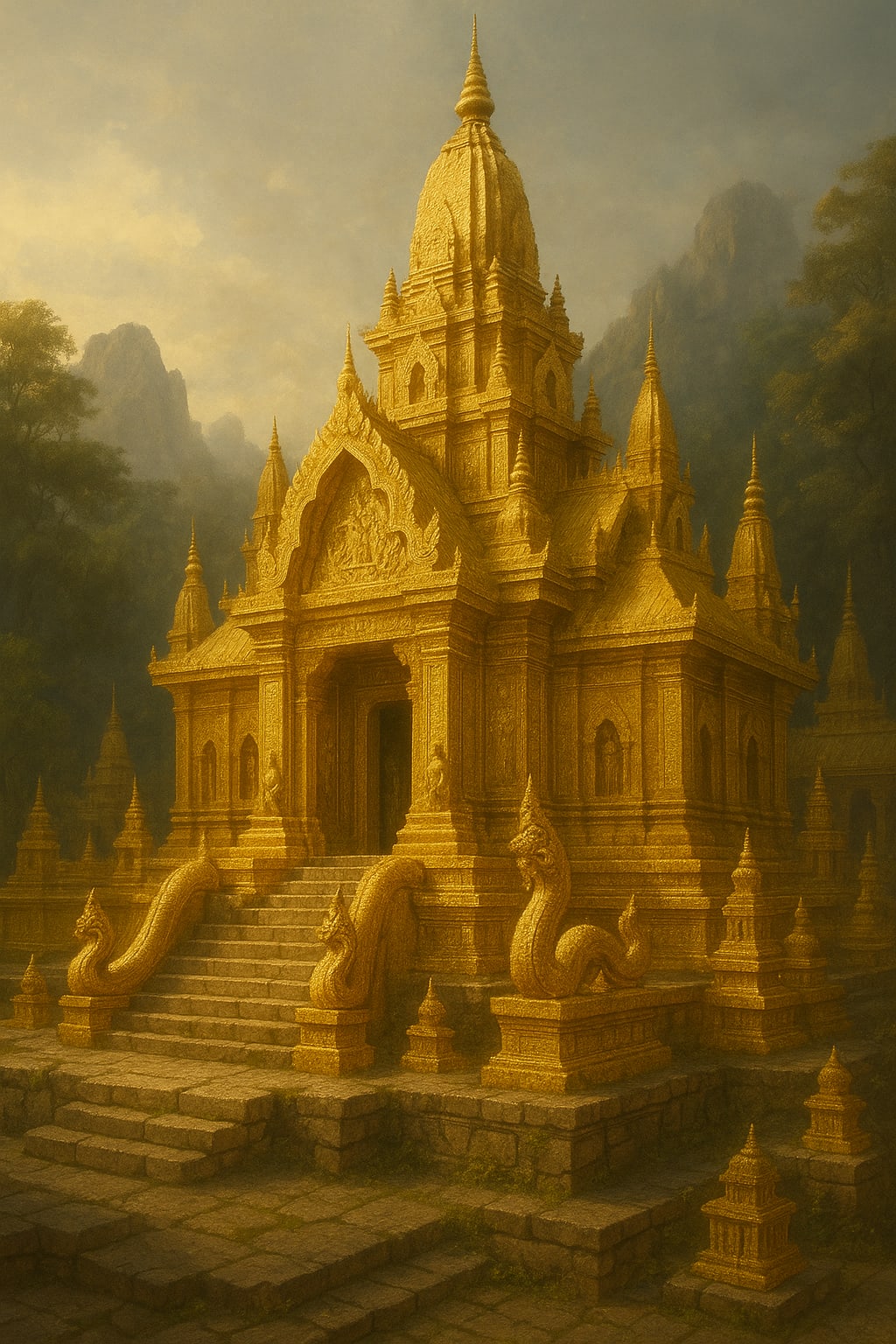
The Tale of the Golden Temple
Throughout ancient societiesfrom the thick forests of Southeast Asia to the peaks of South Americamyths recount a splendid temple erected not from stone or timber, but from pure gold. According to various cultural narratives, this edifice served not only as a place of veneration but also as a treasury of unimaginable riches, sacred relics, and esoteric wisdom.
While numerous locales assert to have sheltered such a temple, one narrative, in particular, stands outthe myth of the Golden Temple of the Sun, believed to have flourished within the ancient Incan Empire, near present-day Peru.
The Temple of the Sun: A Neglected Marvel
The most enduring legend revolves around the Coricancha (translated as “Golden Courtyard”), the hallowed temple dedicated to the sun deity Inti in the heart of Cusco, Peru. Initially constructed by the Inca and subsequently altered by Spanish colonizers, this sanctuary was once adorned with layers of gold, showcasing golden statues, altars, and even vegetation fashioned entirely from precious metal.
According to Spanish conquistadors who arrived in the 16th century, the temple dazzled with its brilliance:
Walls clad in gold.
Golden effigies towering above visitors.
Life-sized golden llamas, maize fields, and altars devoted to the sun.
The Coricancha was not merely a site of worship; it was the spiritual and economic nucleus of the Inca Empire. Priests performed rituals, monitored celestial movements, and safeguarded royal treasure in subterranean vaults.
The Conquest and Vanishing
When Francisco Pizarro and his men reached the Andes, they were astonished by the wealth they encountered. However, their astonishment rapidly transformed into avarice. The Spanish plundered the Coricancha and other shrines, melting the gold and dispatching it back to Spain.
Nevertheless, Incan chronicles and oral histories recount a divergent narrativeone of strategic defiance. As tidings of the Spanish incursion spread, Incan priests and nobles allegedly smuggled a significant portion of the treasure out of Cusco before it could be seized. The fate of this concealed gold has remained a mystery for centuries.
Some accounts suggest it was taken deep into the jungles to the east of the Andes, to a clandestine temple constructed entirely of goldnever discovered by outsiders.
El Dorado and the Temple Association
The myth of a Golden Temple soon intertwined with another South American legend: El Dorado, the city of gold. Early explorers believed that within the unexplored interior, a city or temple shimmered in sunlight, its rooftops and spires adorned with pure gold.
Numerous expeditions were undertaken:
Spanish explorers such as Gonzalo Pizarro and Francisco de Orellana journeyed into the Amazon basin in pursuit of it.
English navigators during the 17th century chased tales of a solar temple concealed within the Orinoco or Magdalena rivers.
Throughout the 20th century, satellite imagery and archaeological assessments perpetuated the searchalbeit without achievement.
Nonetheless, the legend of the temple persisted.
Other Theories and Global Resonances
Beyond South America, other cultural reflections of a golden temple exist:
In India, the Golden Temple of Amritsar stands todayhowever, it is a subsequent creation from the 16th century CE and constructed more symbolically than mythically.
Ancient Khmer folklore alludes to a golden shrine hidden within the Cambodian jungle, potentially predating Angkor Wat.
In China, Taoist writings reference a mystical “Palace of the Golden Phoenix” situated in a mountain shrouded in mist, though historians have yet to validate its existence.
Each narrative implies humanity’s fascination with sacred sites composed of the most enduring substancegold.
Is the Golden Temple Authentic?
Skeptics contend that the notion of a temple entirely fashioned from gold is logistically improbable, particularly in ancient epochs. Gold is pliable and dense, unsuitable for structural stability. Nevertheless, as a symbolic façade or ceremonial covering, its application is feasibleespecially in a culture where spiritual contributions were intertwined with material affluence.
Archaeological excavations in Cusco have verified that Coricancha was indeed covered in gold prior to the Spanish incursion. Numerous Inca artifacts retrieved from cave systems and subterranean rivers bolster the hypothesis that substantial hoards of gold were deliberately concealed.
Could the fabled Golden Temple have been an actual siteperhaps an extension or hidden sanctuary constructed by the Incas in exile?
The Pursuit Persists
Contemporary innovationsLIDAR, satellite imaging, and ground-penetrating radarhave unveiled new possibilities in the quest for the Golden Temple. Explorers continue to examine remote areas of the Andes and the Amazon, discovering ruins, pathways, and previously unidentified settlements.
Yet, the temple itself remains elusive.
Whether concealed beneath the soil, obscured by foliage, or merely a symbol of spiritual wealth lost to the annals of time, the Golden Temple endures as one of history’s most captivating enigmas.
Conclusion
The Golden Temple signifies more than mere architectural aspirationit embodies the zenith of ancient devotion, the human longing for immortality through prosperity, and the narratives that transcend even empires. Until it is discoveredor definitively established as a myththe legend will continue to illuminate, captivating the souls of treasure seekers and historians alike.
About the Creator
Say the truth
"Say the Truth: Explain Everything in the World" is your trusted source for uncovering facts and exploring the wonders of history, science, technology, and beyond. We simplify complex ideas and reveal truths to inspire curiosity .
Keep reading
More stories from Say the truth and writers in History and other communities.
The Abandoned Wealth of Emperor Nero: Gold Amidst Infernos
The Ascendance of a Golden Sovereign Nero Claudius Caesar Augustus Germanicus ascended to the throne in 54 CE at the tender age of 17. Although youthful, Nero wielded considerable authority, inherited from a complicated lineage of Julio-Claudian rulers tracing back to Augustus. With the Roman Empire at its zenith in terms of territory and commerce, Nero assumed the imperial position during a period of extraordinary affluence.
By Say the truth 8 months ago in History
Are Banks Open on Martin Luther King Jr. Day?
Introduction Martin Luther King Jr. Day, also called MLK Day, is a national holiday in the United States. Many people enjoy a day off from work or school on this day. However, a common question people ask is: Are banks open on MLK Day?
By Farhan Sayedabout 14 hours ago in History
Power's Sake
When it comes to gaining power, bad people use it to gain more They never gain power to do something with it, they gain power to have it, relish in it, double it down on itself so it grows exponentially and never goes anywhere. Even if you see the people in power commit an atrocity, that is never the true goal. It is a deplorable action for sure but the action itself usually doesn't matter it's the outcome.
By Donny Foley6 days ago in History




Comments
There are no comments for this story
Be the first to respond and start the conversation.