
The longest conflict of history
The longest religion based conflict
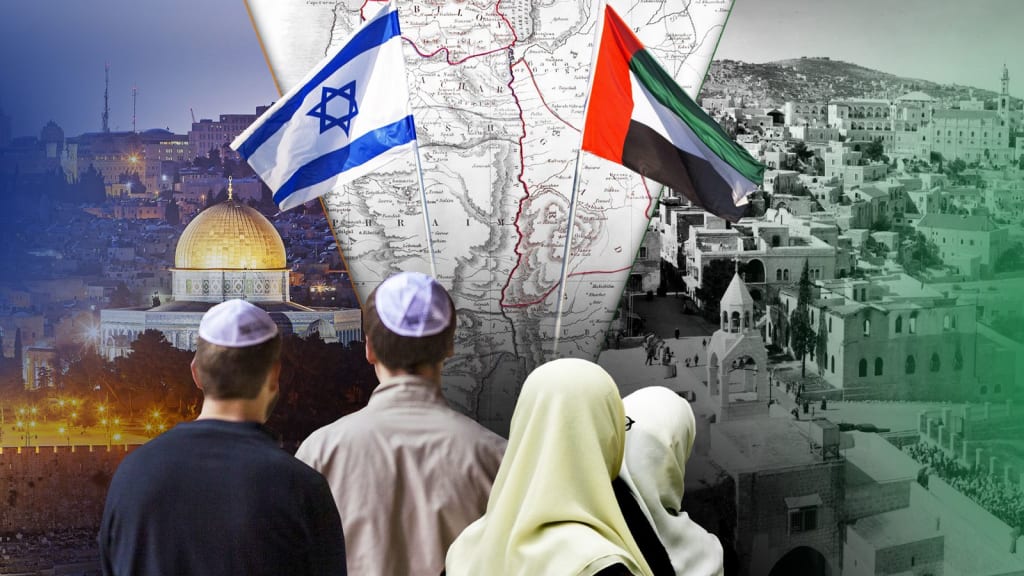
Understanding the Conflict Between Israel and Palestine: Its Origins, Causes, and Future One of the world's most complicated and long-running geopolitical disputes is the Israel-Palestine conflict. It revolves around the territorial claims, national identity, religion, and political sovereignty that Israelis and Palestinians in the historically Palestinian region have in common. The conflict continues to be fueled by deeply ingrained historical grievances, cycles of violence, and divergent national aspirations, despite numerous attempts at peace and international mediation. Background in History The conflict began in the late 19th and early 20th centuries, when nationalist movements in Europe grew and the Ottoman Empire fell apart. In response to growing anti-Semitism in Europe, Zionism, a movement for the establishment of a Jewish homeland, gained momentum. In Ottoman Palestine, where an Arab population had lived for centuries, many Jews began migrating. The League of Nations gave Britain authority over Palestine following World War I. In 1917, the British government supported a "national home for the Jewish people" in Palestine in the Balfour Declaration. The Jewish and Arab communities, which both desired self-determination in the same land, became embroiled in conflict as a result. Arab resistance also increased with Jewish immigration. Arab uprisings against British rule and Jewish immigration were brutally crushed from 1936 to 1939. Tensions had skyrocketed by 1947, when Britain withdrew from the war. Israel's Birth and the UN Plan for Partition In 1947, the United Nations proposed a partition plan that would divide Palestine into two states: one Jewish and one Arab, with Jerusalem under international administration. The plan was accepted by Jewish leaders, but Arab states and Palestinian leaders rejected it because they thought it was unfair and colonial. When Israel declared independence in 1948, surrounding Arab nations launched a war against the new state. Over 700,000 Palestinians fled or were driven from their homes in what is referred to as the Nakba (catastrophe), but Israel prevailed and expanded its territory beyond the UN plan. The conflict is still centered on these refugees and their heirs. Wars and occupation that continue The landscape was further shaped by subsequent wars in 1956, 1967, and 1973. The most significant was Israel's capture of the West Bank, East Jerusalem, Gaza Strip, Sinai Peninsula, and Golan Heights during the 1967 Six-Day War. Israel continues to occupy the West Bank and East Jerusalem, and it imposed a blockade on Gaza after Hamas took control in 2007. Sinai was returned to Egypt under a peace treaty in 1982. There has been widespread international criticism of the occupation of Palestinian territories. The West Bank has seen an increase in settlements, which the majority of nations consider to be against international law. Israel cites security concerns, particularly in light of the numerous attacks from militant groups, while Palestinians face restrictions on movement, land confiscation, and economic hardship. Movements of Palestinian Nationalism In 1964, the Palestinian Liberation Organization (PLO) was established with the intention of representing Palestinians and pursuing armed struggle for their liberation. In 1993, as part of the Oslo Accords, a major peace initiative that established the Palestinian Authority and a framework for a two-state solution, the PLO shifted toward diplomacy. However, ongoing violence, such as the Second Intifada (2000–2005), suicide bombings, and Israeli military incursions, slowed progress. The Palestinian Authority in the West Bank, which is led by Fatah, and Hamas, an Islamist group that is deemed a terrorist organization by Israel and the United States and runs Gaza, exacerbated the situation. Impact on Humanity The conflict has caused significant human suffering. During decades of violence, thousands of civilians on both sides have been killed or injured. Multiple wars in Gaza, particularly those in 2008–09, 2014, and more recently in 2021 and 2023, have destroyed infrastructure and exacerbated humanitarian crises. Rocket attacks from Gaza and occasional violence in the West Bank pose a constant threat to Israelis. Under the blockade, Palestinians, particularly in Gaza, have limited access to clean water, electricity, and medical care, making for miserable living conditions. Youth have few opportunities and high rates of unemployment. Perspectives from Around the World The way the conflict should be resolved continues to divide the international community. The majority of nations favor a two-state solution in which Palestine and Israel coexist in a sovereign state with East Jerusalem as its capital. However, facts on the ground, such as the expansion of settlements, make a negotiated two-state solution increasingly difficult, and peace talks have stalled since 2014. Israel has always had strong ties to the United States, which has supported the country politically and provided military assistance. While many nations in the Global South support Palestinian statehood and view the conflict through an anti-colonial lens, European nations have frequently attempted to strike a balance with both sides. Arab nations have historically backed the Palestinian cause, but recent normalization agreements under the Abraham Accords between Israel and a number of Arab nations, including the United Arab Emirates, Bahrain, and Morocco, have shifted regional dynamics. Despite their focus on diplomatic and economic ties, these agreements have not resolved fundamental Palestinian grievances. Identity and Religion: Their Contributions Religion is a big part of the conflict, especially when it comes to Jerusalem, which is holy to Christians, Muslims, and Jews. Conflicts have repeatedly broken out over control of holy sites like the Al-Aqsa Mosque compound, which Jews also call the Temple Mount. The conflict is primarily about identity and belonging, not religion. Palestinians and Israelis both believe that they are native to the land and want their stories and rights to be recognized. After centuries of persecution, the state of Israel provides a haven for many Israelis. An ongoing injustice for Palestinians is the ongoing occupation and displacement. Opportunities for Peace Many people believe that peace can still be achieved despite the grim outlook. Reconciliation is still being worked on by grassroots initiatives, joint Israeli-Palestinian organizations, and international mediators. The most important problems that need to be fixed are: Borders: deciding where a future Palestinian state will be located. Security: ensuring that Palestinians and Israelis alike feel safe. Concerning Palestinian refugees' right to return, refugees. Jerusalem: settling on the city's status. The fate of Israeli settlements in the West Bank is at stake here. The status quo is likely to continue, marked by cycles of violence, political impasse, and human suffering, unless progress is made on these fronts. Conclusion
The conflict between Israel and Palestine is more than just a territorial dispute. It is also a deeply emotional and symbolic struggle that is rooted in trauma, history, and competing narratives. Understanding the conflict's complexity is a necessary step toward resolution, despite the immense obstacles to peace. To ensure a just and lasting peace for both of the people who call the land home, empathy, dialogue, and international will are required.
About the Creator
Napoleon Bonaparte — From Corsican Outsider to Emperor of Europe
Napoleon Bonaparte was born on August 15, 1769, on the Mediterranean island of Corsica, a land that had only recently come under French control. His family was of modest noble status, and young Napoleon grew up feeling like an outsider—Corsican by culture, yet educated as a Frenchman. This sense of being different shaped his fierce ambition and iron will. From an early age, he showed a sharp mind, a deep love for history, and an unusual talent for mathematics, which later proved essential in warfare.
By The best writer 6 days ago in History
The Red Sea Crisis and the Fragility of Global Trade
The Red Sea Crisis and the Fragility of Global Trade The Red Sea has quietly become one of the most critical pressure points in global affairs. Once seen mainly as a commercial shipping route connecting Asia, Europe, and Africa, it is now a zone of rising military tension, disrupted trade, and geopolitical rivalry. What happens in this narrow stretch of water is no longer a regional issue—it is reshaping global economics and international security.
By Wings of Time about 24 hours ago in History


Comments
There are no comments for this story
Be the first to respond and start the conversation.