
Title: Hitler's Invasions and the Outbreak of World War II: A Historical Overview
Adolf Hitler's invasions across Europe in the late 1930s and early 1940s stand as some of the most significant—and devastating—events in modern history. Hitler's aggressive expansionist policies and military campaigns as leader of Nazi Germany resulted in the outbreak of World War II and altered the course of the 20th century. This article explores the key invasions orchestrated under his regime, their causes, and their profound global consequences.
Prelude to Invasion: Hitler's Rise and Ideology
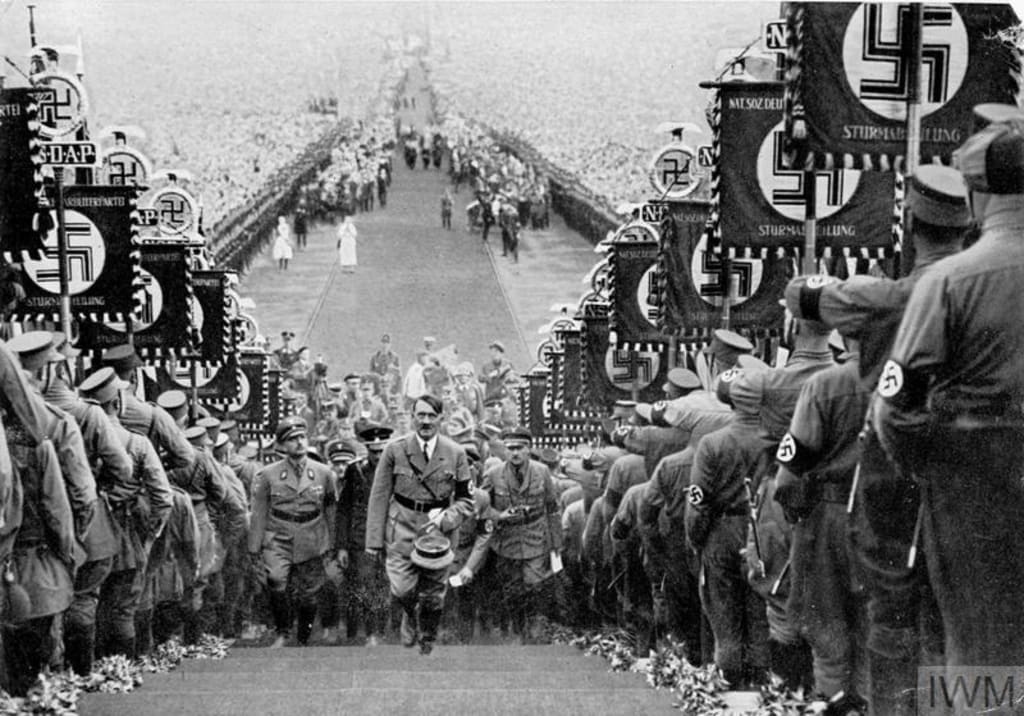
Adolf Hitler rose to power in Germany in 1933, becoming Chancellor and later consolidating power as Führer. His political platform, which was founded on ultra-nationalism, anti-Semitism, and opposing the Treaty of Versailles that was signed after World War I, called for the restoration of Germany's greatness through territorial expansion, or Lebensraum. The idea was to expand eastward, displacing or exterminating populations deemed undesirable by the Nazi regime, particularly Jews, Slavs, and others.
Hitler’s ambitions were clear in his book Mein Kampf, published in 1925, where he outlined his goals of racial purity and territorial expansion. While some European leaders dismissed his rhetoric as mere political grandstanding, Hitler proved committed to realizing his plans—through force.
The Anschluss, or Austrian Invasion, occurred in March 1938. Germany's first major act of territorial expansion under Hitler came with the annexation of Austria in March 1938, an event known as the Anschluss. Although officially framed as a unification of all German-speaking peoples, the annexation was carried out under the threat of military force.
With little resistance from Austria and none from the Western powers, Hitler’s success emboldened him. The failure of the international community to take decisive action, particularly Britain and France's policy of appeasement, sent a clear signal that additional aggression may go unchecked. 1938–1939: The Sudetenland and Czechoslovakia Later in 1938, Hitler requested the Sudetenland, a Czechoslovakian region with a significant German ethnic population. Germany was granted permission to annex the Sudetenland in accordance with the Munich Agreement, which was signed in September 1938 by Germany, Britain, France, Italy, and Germany without Czechoslovakia's participation. This policy of appeasement failed. In March 1939, Hitler broke his promise and invaded the rest of Czechoslovakia, marking the first time Nazi Germany had seized land that was not primarily ethnically German. This was a turning point because it demonstrated that Hitler's goals included not only unifying German-speaking populations but also complete conquest. The Invasion of Poland – September 1939
The invasion of Poland on September 1, 1939, is widely recognized as the event that triggered World War II. Just a few days earlier, Hitler and the Soviet Union had signed the Molotov-Ribbentrop Pact, a non-aggression agreement that secretly divided German and Soviet influence in Eastern Europe. Germany’s invasion employed a new military tactic called Blitzkrieg, or “lightning war,” which combined fast-moving infantry, tanks, and airpower to overwhelm enemy forces quickly. Within weeks, Poland was defeated, and by the end of September, the Soviet Union had invaded from the east, completing the country’s partition.
Britain and France, bound by treaties to defend Poland, declared war on Germany on September 3, 1939. This marked the beginning of a six-year global conflict, despite the fact that they provided little immediate military assistance. Western Europe: France, Belgium, and the Low Countries – 1940
Hitler turned his attention to the west after a brief lull known as the "Phoney War." In May 1940, Germany launched a sweeping invasion of Belgium, the Netherlands, and Luxembourg, once again utilizing Blitzkrieg tactics.
The French had thought it unlikely that the German army would get around the heavily fortified Maginot Line by advancing through the Ardennes forest. The Low Countries were conquered in a matter of weeks, and France was soon destroyed. On June 22, 1940, France signed an armistice with Germany. Hitler's occupation of Western Europe shocked the world and left Britain to stand alone against Nazi aggression.
The Battle of Britain – July to October 1940
Following the fall of France, Hitler attempted to force Britain into submission through aerial bombardment. The German Luftwaffe began sustained bombing campaigns against British cities and military targets in what became known as the Battle of Britain.
Despite heavy casualties and widespread destruction, Britain held firm. New radar technology and brave pilots helped the Royal Air Force (RAF) successfully defend the skies. Hitler was forced to postpone and eventually abandon plans for a land invasion, marking his first major military setback.
Operation Barbarossa – June 1941
Operation Barbarossa, Hitler's invasion of the Soviet Union, was one of his most ambitious and ultimately disastrous decisions. Launched on June 22, 1941, it was the largest military operation in history, involving over three million Axis troops.
The invasion was successful at first. The Baltic States, Ukraine, and a portion of Russia were rapidly taken over by German forces. However, the German advance was slowed by logistical issues, fierce Soviet resistance, and the bitter cold as the campaign progressed into winter. The failure to capture Moscow before winter marked a turning point in the war.
Operation Barbarossa also unleashed a wave of atrocities. Nazi ideology viewed Slavs and Jews as subhuman, and the invasion became a pretext for mass executions, forced relocations, and the establishment of extermination policies that would culminate in the Holocaust.
The Effects and Legacy Hitler's invasions upended the global balance of power. In addition to provoking war in Europe, the aggressive expansion also attracted nations from Asia, Africa, and the Americas. The scale of destruction, loss of life, and human suffering was unprecedented. During World War II, more than 70 million people, many of them civilians, perished. Additionally, the Nazi invasions served as a sobering reminder of the perils posed by totalitarianism, unchecked militarism, and racist ideology. The United Nations and international laws aimed at preventing genocide and crimes against humanity were established as a result of the world's efforts to prevent such devastation from occurring again following the war. Conclusion
Adolf Hitler’s invasions, driven by ideology and ambition, were central to the outbreak and escalation of World War II. While they initially brought swift victories, they ultimately led to Germany’s downfall and left a legacy of devastation that still resonates today. Understanding the historical context and consequences of these invasions remains essential—not only as a lesson in history but also as a reminder of what can happen when hate-fueled ideologies go unchecked.
About the Creator
World War I
The morning fog lay thick over the trenches of northern France, clinging to the earth as if it too feared what was about to happen. Private Thomas Hale pulled his coat tighter around himself, though it did little to stop the cold from seeping into his bones. He had been in the trenches for six months, yet the damp smell of mud, smoke, and fear still felt unfamiliar, like a nightmare he could not wake from.
By Maavia tahir6 days ago in History
Chicago Hospital Held Newborn Baby for 8 Months Over an Unpaid Medical Bill
Debts were handled much differently in the 19th and early 20th century. Back then, people who accrued debt had more to fear than letters and calls from collection agencies the same way we do today, especially if they owed a hospital or doctor money.
By Criminal Matters7 days ago in History
How to Succeed at the Benson Directory®
Congratulations and welcome to the Benson Directory® employee #22391! As our newest call handler, you will have the privilege of speaking with dozens of unique and interesting people on a daily basis as well as the opportunity to earn bonuses for high performance. Contained within this handbook you will find a set of ease to follow instructions designed to help you settle in to your new role and begin paving the way to success.
By S. A. Crawford2 days ago in Fiction




Comments (1)
Nice