
The Life and Legacy of Facebook’s Founder
The Journey of a Tech Visionary Who Changed the Way the World Connects

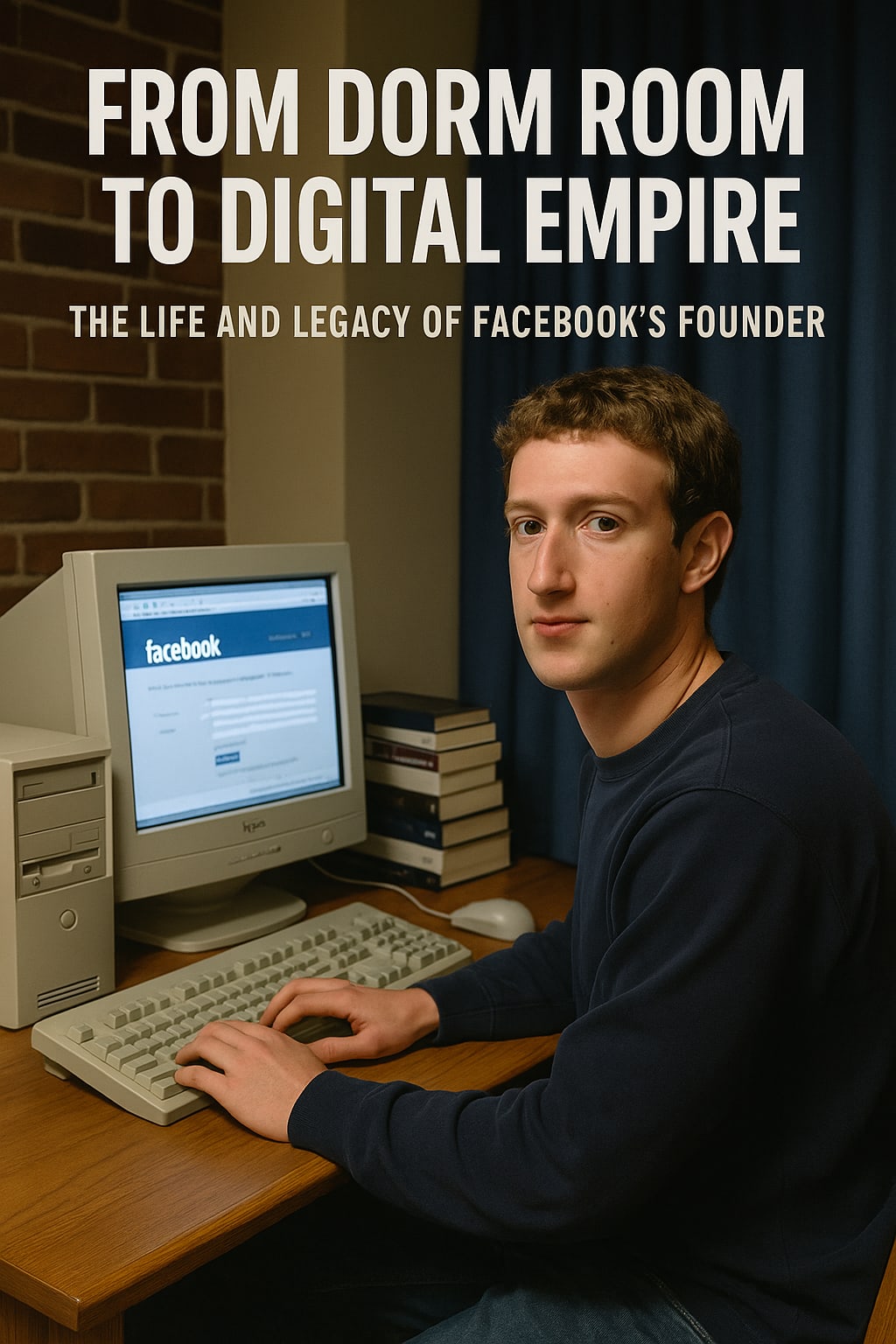
Mark Elliot Zuckerberg, born on May 14, 1984, in White Plains, New York, is one of the most influential figures in the modern digital era. As the co-founder and CEO of Facebook (now Meta Platforms Inc.), Zuckerberg’s journey from a Harvard dorm room to becoming one of the world’s youngest self-made billionaires is a tale of innovation, ambition, controversy, and transformation.
Early Life and Education
Mark grew up in Dobbs Ferry, a small town in Westchester County. His father, Edward Zuckerberg, was a dentist, and his mother, Karen, was a psychiatrist. He was the second of four children in a supportive and intellectually stimulating household. From an early age, Zuckerberg exhibited a deep interest in computers. At just 12 years old, he created “ZuckNet,” a messaging program that connected his father’s dental office to their home.
His talent did not go unnoticed. While attending Phillips Exeter Academy, a prestigious preparatory school, Zuckerberg excelled in academics and developed a reputation as a programming prodigy. He built early versions of music software similar to Pandora, which caught the attention of major companies like Microsoft and AOL. However, instead of accepting job offers, he enrolled at Harvard University in 2002.
The Birth of Facebook
At Harvard, Zuckerberg majored in psychology and computer science. It was there, in 2004, that he launched “TheFacebook” with roommates Eduardo Saverin, Andrew McCollum, Dustin Moskovitz, and Chris Hughes. Originally designed as a social networking platform for Harvard students, the site quickly expanded to other Ivy League schools and eventually to universities across the country.
By the end of 2004, Facebook had over a million users. Zuckerberg dropped out of Harvard to focus on growing the company, moving operations to Palo Alto, California. In 2005, the platform dropped “The” from its name and simply became “Facebook.” That same year, Facebook received a $12.7 million investment from Accel Partners, marking the beginning of its transformation into a global tech powerhouse.
Rapid Growth and Global Influence
Under Zuckerberg’s leadership, Facebook expanded beyond colleges and opened its doors to the general public in 2006. Its user base exploded, eventually surpassing one billion active users by 2012. The platform revolutionized how people communicated, shared content, and built online communities. It introduced features such as the News Feed, photo tagging, and the Like button—tools that have become ingrained in modern digital culture.
Zuckerberg’s vision extended beyond social networking. He oversaw the acquisitions of Instagram in 2012 and WhatsApp in 2014, turning Facebook into a social media empire. He also launched initiatives such as Internet.org (now called Free Basics), aimed at providing free internet access to underdeveloped regions, reflecting his belief in connecting the world.
Challenges and Controversies
Despite immense success, Zuckerberg’s journey has not been without controversy. Facebook has faced criticism over issues ranging from user privacy to the spread of misinformation. The 2016 U.S. presidential election brought intense scrutiny, as the platform was used to spread disinformation and influence voter behavior through targeted political ads and fake news.
The 2018 Cambridge Analytica scandal marked a turning point. It was revealed that the data of millions of Facebook users had been improperly accessed and used for political profiling. Zuckerberg testified before the U.S. Congress and the European Parliament, facing tough questions about data security, corporate responsibility, and regulation. Though he apologized and committed to improving platform transparency, the incident severely impacted public trust.
Zuckerberg’s leadership style—intensely focused, data-driven, and sometimes secretive—has drawn both praise and criticism. Some admire his strategic thinking and long-term vision, while others see a leader too slow to respond to ethical concerns. Nonetheless, he has remained a central figure in steering Facebook through storms and shifting landscapes.
The Metaverse and a New Chapter
In 2021, Zuckerberg announced a major rebranding: Facebook, Inc. would become Meta Platforms, Inc., reflecting a shift in focus toward the “metaverse.” This vision of the future involves a virtual-reality-based internet, where people interact in 3D environments for work, play, and socializing. Meta invested heavily in technologies like Oculus VR and Horizon Worlds, betting on a future beyond the traditional web.
While the metaverse vision has been met with skepticism and questions about feasibility, Zuckerberg remains steadfast. He sees the metaverse as the next big frontier in computing and social interaction, akin to the mobile revolution a decade earlier.
Personal Life and Philanthropy
Despite his high-profile career, Zuckerberg has tried to maintain a relatively private personal life. In 2012, he married Priscilla Chan, a fellow Harvard student and pediatrician. Together, they have two daughters. The couple is known for their philanthropic efforts, notably the Chan Zuckerberg Initiative (CZI), which focuses on education, science, and social justice.
In 2015, the couple pledged to give away 99% of their Facebook shares during their lifetime to support causes that advance human potential and promote equality. Though critics have debated the structure and impact of their philanthropic efforts, the scale of their giving places them among the world’s leading donors.
Legacy and Impact
Mark Zuckerberg’s story is emblematic of the power and complexity of the digital age. He redefined global communication, enabled new forms of community and activism, and created one of the most valuable and influential companies in history. At the same time, his journey highlights the ethical dilemmas and societal consequences of rapid technological innovation.
Whether celebrated as a genius entrepreneur or critiqued as a monopolistic figure, Zuckerberg’s influence is undeniable. His legacy is still unfolding, but one thing is clear: he has forever altered the fabric of how humans connect, share, and live in the 21st century.
About the Creator
Irshad Abbasi
"Studying is the best cure for sorrow and grief." shirazi
Keep reading
More stories from Irshad Abbasi and writers in History and other communities.
The Warrior Sultan and Founder of the Khalji Dynasty
In the long and complex history of the Delhi Sultanate, Jalal ud-Din Firuz Khalji stands out as a unique and transitional figure. A seasoned warrior and a pragmatic ruler, he rose to power in a time of great political uncertainty and became the founder of the Khalji Dynasty—marking the end of the Mamluk (Slave) Dynasty and the beginning of a new chapter in medieval Indian history. Jalal ud-Din’s reign, though relatively short (1290–1296), was significant for the political and social changes it brought about, as well as for the strategic manner in which he consolidated power.
By Irshad Abbasi 7 months ago in History
Dust
It was dust. Dust had weight there. It pressed into your mouth when you breathed, ground against your teeth, settled into the creases of your eyes. It coated our boots and crept into our weapons no matter how carefully we cleaned them. When the wind picked up, it hissed across the ground like something alive. Long before I heard a shot fired, I understood that the dust would get inside me and never really leave.
By Gaofeng Wang6 days ago in History



Comments
There are no comments for this story
Be the first to respond and start the conversation.