
The Journey of Women’s Rights in Europe
A Simple Story of Big Dreams and Strong Women

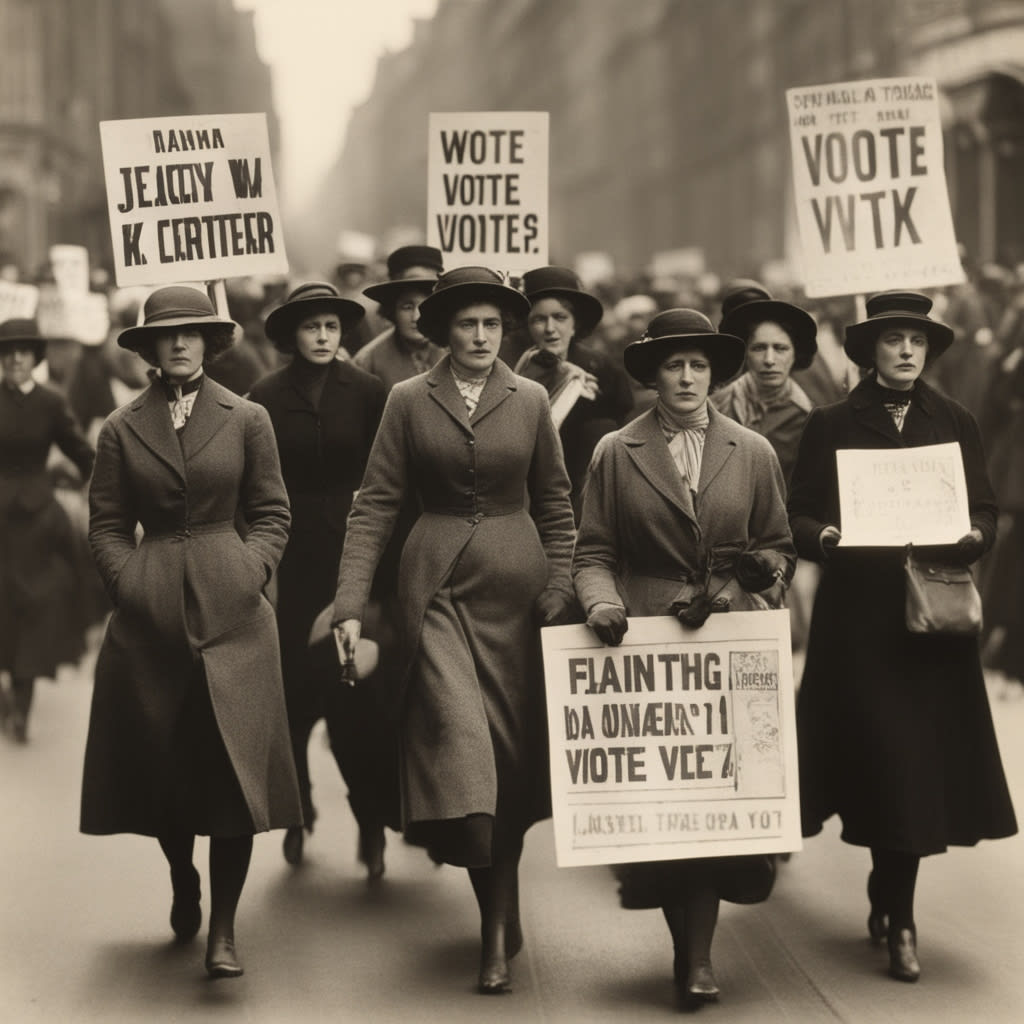
Once upon a time, in many parts of Europe, women did not have the same rights as men. They could not vote. They could not go to school like boys. They could not work in many jobs. They were told to stay at home, cook, clean, and raise children. This was the life of many women in Europe, just 100 years ago. But slowly, things began to change. Women started to speak up. They asked a simple question:
“Why don’t we have the same rights as men?”
The Fight for Voting Rights
In the early 1900s, women in Europe began to fight for their right to vote. This was called the women’s suffrage movement. In countries like the United Kingdom, Germany, and France, brave women marched on the streets, held signs, and gave speeches. Some were even put in jail for speaking out.
In 1918, women in the United Kingdom won the right to vote — but only those over 30 years old. Ten years later, in 1928, all women over 21 could vote, just like men. In other countries like Germany, women got the right to vote in 1919. In France, it took longer — women there could not vote until 1944.
This was a big step. Now women could help choose the leaders of their countries.
Going to School and Working
Before, girls were not always allowed to go to school. Even if they did, they were not encouraged to study science, law, or politics. These subjects were seen as “only for boys.”
But by the mid-1900s, more schools opened to girls. Women started going to university and becoming doctors, teachers, lawyers, and scientists. They proved they were just as smart and capable as men.
Women also began working outside the home. At first, many jobs paid women less than men. In some places, women had to leave their job if they got married or pregnant. This was not fair.
Women spoke out again. They said, “Equal work deserves equal pay.” Slowly, laws changed to support women at work and protect them from unfair treatment.
Equal Rights in the Law
By the 1970s and 1980s, many countries in Europe had passed laws to protect women’s rights. These laws said:
• Men and women must be paid the same for the same work.
• Women cannot be fired for being pregnant.
• Women have the right to own land, open a bank account, and sign contracts without a man’s permission.
• Girls and boys should be treated equally in school.
• Domestic violence and abuse against women is a crime.
The European Union (EU) also helped by making rules that all member countries had to follow. These rules made sure women were treated fairly at work and in society.
Women in Leadership
More and more women began to enter politics. They ran for office and won. Some even became presidents and prime ministers.
For example, Angela Merkel became the leader of Germany in 2005. She was one of the most powerful women in the world for many years. Women in other countries also became ministers, judges, and mayors.
Today, in many parts of Europe, women can do any job they choose. They can be leaders, scientists, athletes, or artists. They can decide if they want to marry or not, have children or not, work or stay home — and these choices are theirs to make.
Still More to Do
Even with all the progress, there are still problems. In some countries, women still earn less money than men for the same work. Women are not always safe from violence, especially at home. In many places, men still hold most of the top jobs in government and business.
Some people still believe that women should only stay home and raise children. These old ideas are slowly changing, but they still exist.
This is why women’s rights groups continue to speak up. They teach others about fairness. They help women know their rights. And they remind us all that women’s rights are human rights.
The Power of Equality
The story of women’s rights in Europe shows how change is possible. It shows what can happen when people stand up for what is right. Women in Europe today have many more freedoms than their grandmothers did. But this freedom did not come easily — it came from hard work, courage, and never giving up.
Now, it is up to all of us — men and women, young and old — to protect these rights and keep moving forward. When women are strong, the whole world becomes stronger.
About the Creator
Junaid Shahid
“Real stories. Real emotions. Real impact. Words that stay with you.”
“Observing society, challenging narratives, and delivering stories that matter.”
“Questioning power, amplifying the unheard, and writing for change—one story at a time.”
Keep reading
More stories from Junaid Shahid and writers in History and other communities.
DREAM YOUR LIFE
Everyone, at some point of his or her life, has dreamed of being somebody special, somebody big. Who hasn't fantasized about being the one who hits the game-winning homer? Who hasn't dreamed of being the homecoming queen? And how many times have we dreamed of being rich, or successful, or happy with our relationships?
By Junaid Shahid about 12 hours ago in Motivation
3 Real People Who Accidentally Became Myths
History has a strange habit of refusing to leave certain people alone. Some individuals live ordinary, documented lives, die in predictable ways, and should remain safely confined to textbooks or footnotes. Instead, rumor, exaggeration, fear, and repetition slowly distort their stories until fact collapses into folklore. Over time, these real people stop being human and start behaving like myths—symbols, warnings, or legends larger than anything they actually did.
By Enoch Sagini4 days ago in History
Silver Screen Magic with Mae West
American actress and singer Mae West became a popular film actress during the Great Depression. She started entertaining in vaudeville, then performed on Broadway, and finally went to Hollywood. She signed up with Paramount Pictures and made her debut in the 1932 film “Night After Night.” She also starred in musicals, comedies, and crime dramas. The American Film Institute named her one of the best classic Hollywood actresses.
By Rasma Raisters5 days ago in Geeks


Comments
There are no comments for this story
Be the first to respond and start the conversation.