
The Iron Amir: The Story of Abdur Rahman Khan
For 21 years, Abdur Rahman ruled Afghanistan like a steel fist

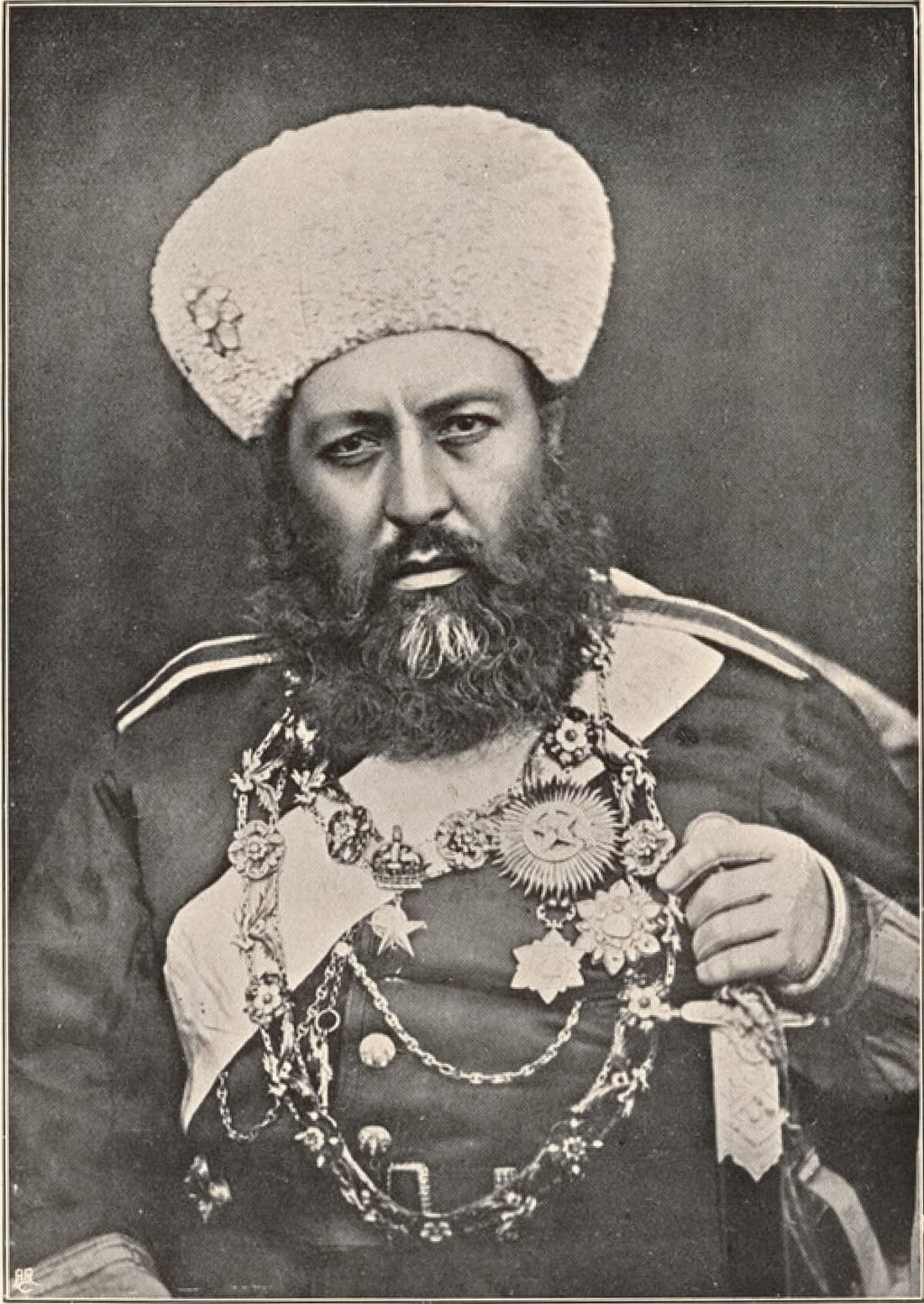
The Iron Amir: The Story of Abdur Rahman Khan
In the heart of 19th-century Afghanistan, when the winds of empire and rebellion blew fiercely across the mountains, a man of steely will emerged to forge unity from chaos. His name was Abdur Rahman Khan, a prince in exile, a warrior by blood, and the man who would become known as “The Iron Amir.”
Born in 1844 in Kabul, Abdur Rahman was the grandson of Dost Mohammad Khan, the founder of the Barakzai dynasty. From the beginning, his life was steeped in the turmoil of dynastic rivalry. Afghanistan was a fractured land—tribes held more power than kings, and foreign powers circled like vultures. When his father, Mohammad Afzal Khan, rebelled against the ruling emir, Abdur Rahman joined him, learning early the bloody language of politics and war.
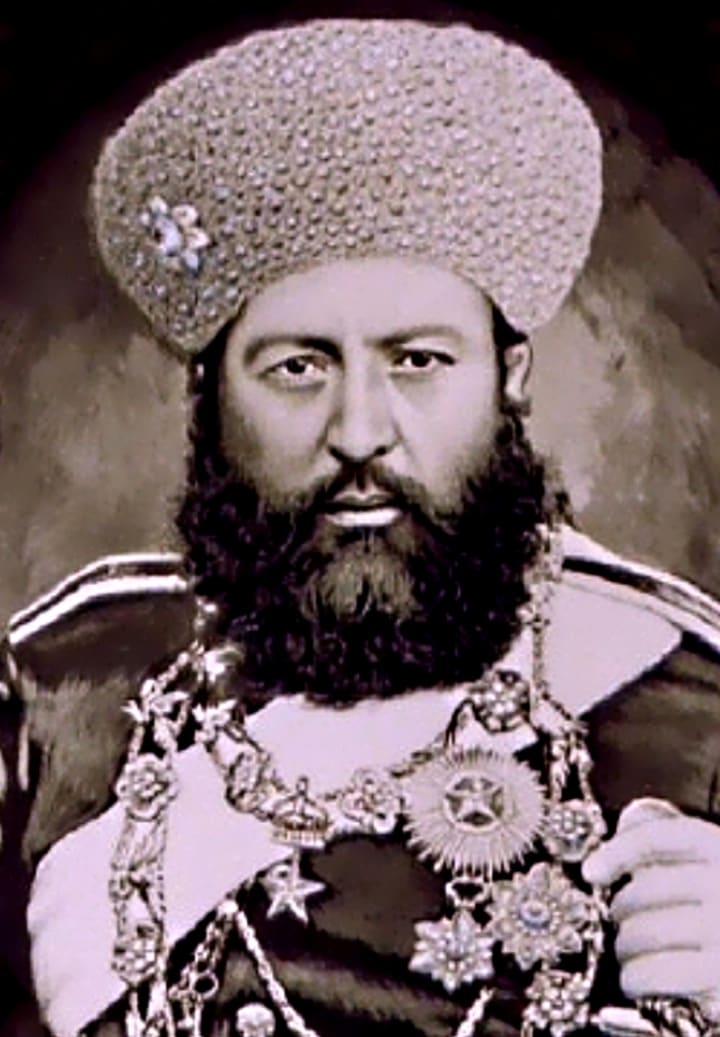
By the time he was in his twenties, Abdur Rahman had earned a fearsome reputation. He was a skilled commander, ruthless when needed, and unwaveringly loyal to his cause. But fate had other plans. In 1868, after years of civil war, Sher Ali Khan defeated Abdur Rahman’s father. The young warrior was forced into exile in Russian-held Central Asia, where he would remain for over a decade, sharpening his political mind and watching the shifting tides of empire from afar.
Then came an opportunity.
In 1879, after the British invaded Afghanistan in response to the killing of their envoy in Kabul, the country plunged into disorder once again. Sher Ali was dead, and the British needed a strong Afghan ruler—one who could bring stability without threatening their influence. Their eyes turned to Abdur Rahman.
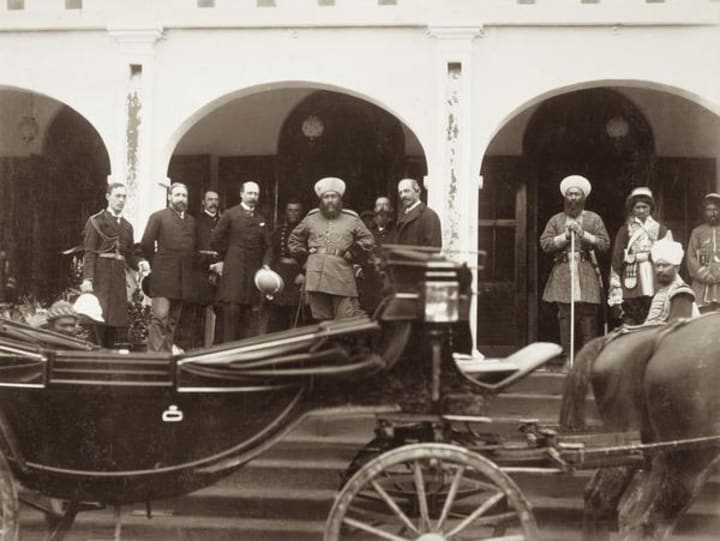
With British support, he returned to Kabul in 1880. At first, many doubted him. He had been gone too long, they whispered. He was a Russian puppet, they claimed. But the doubts didn’t last. Within a year, he had crushed rivals, subdued tribal leaders, and declared himself Amir of Afghanistan.
From the moment he seized power, Abdur Rahman ruled with iron discipline. He saw no room for compromise in a land divided by tribal rivalries and foreign ambitions. If Afghanistan was to survive, it needed unity—by peace or by force.
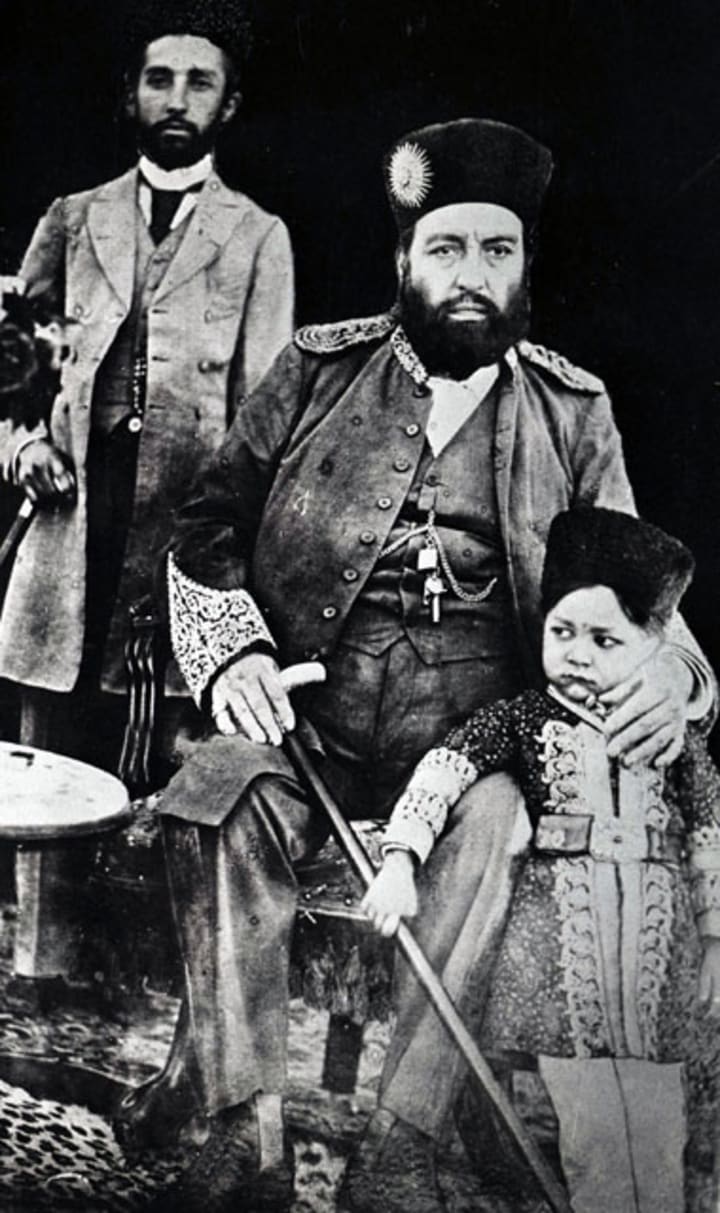
And so he went to work.
Tribes that defied him were met with harsh retribution. Whole regions were uprooted and resettled to prevent rebellion. He disarmed local militias, built a central army loyal only to him, and created a vast intelligence network to crush dissent before it could grow. His punishments were legendary—imprisonments, executions, and even public displays meant to instill fear.
But beneath the cruelty was a vision. Abdur Rahman wanted a strong, independent Afghanistan. He knew that neither the British to the south nor the Russians to the north would allow full sovereignty, but he played them with cunning skill. He accepted the British-drawn Durand Line in 1893—dividing Pashtun lands between Afghanistan and British India—but ensured that no foreigner would govern inside Afghan territory. He took British subsidies, but denied them control. He walked a tightrope between empires and never fell.
Internally, he introduced reforms. He centralized the tax system, reorganized the army, and even tried to modernize aspects of Afghan society—though always within limits. He opened the first factories and encouraged trade. But freedom of speech, political opposition, or religious dissent? Those were luxuries he refused to afford.
For 21 years, Abdur Rahman ruled Afghanistan like a steel fist wrapped in strategy. To some, he was a tyrant. To others, a unifier. But all agreed on one thing: without him, the nation might have collapsed into warring factions or become a colony.
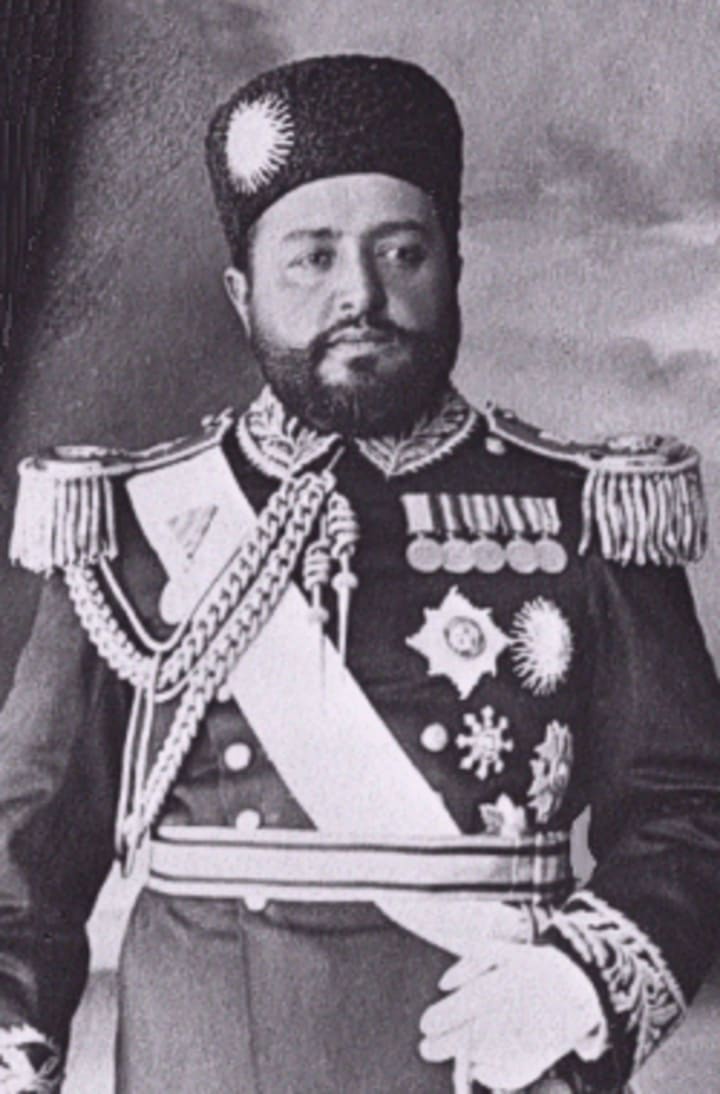
In 1901, his health declining, he handed power to his son, Habibullah Khan, and died soon after. The Iron Amir was gone, but his legacy endured.
Today, Afghanistan remains a land of contradictions, caught between tradition and modernity, sovereignty and survival. But in the long arc of its history, few figures have left as deep a mark as Abdur Rahman Khan. He was not a kind ruler, nor a democratic one—but he was, perhaps, the ruler his fractured country needed at the time.
He brought unity through force, stability through fear, and independence through shrewd diplomacy. And in doing so, he etched his name forever into the rugged stones of Afghan history.
About the Creator
Ihsas Feeling
I'm a writer writing information about technology. Discovery. history .Etc....Sta
Keep reading
More stories from Ihsas Feeling and writers in History and other communities.
Wazir Akbar Khan: The Lion of Kabul
Wazir Akbar Khan: The Lion of Kabul In the heart of 19th-century Afghanistan, where rugged mountains carved the land into fierce independence, a young warrior emerged from the shadows of legacy and war. His name was Wazir Akbar Khan — son of the great Dost Mohammad Khan, prince of Kabul, and a man whose name would be forever etched into the tumultuous history of the British invasion of Afghanistan.
By Ihsas Feeling 8 months ago in History
Imran Khan: The Journey of a Believer
Imran Ahmed Khan Niazi was born on October 5, 1952, in Lahore, into a well-educated Pashtun family. From an early age, he showed independence of thought and a quiet confidence that often set him apart. Educated first in Lahore and later at Aitchison College, he was sent to England for further studies, eventually attending the Royal Grammar School Worcester and later Keble College, Oxford, where he studied Philosophy, Politics, and Economics. At Oxford, Imran was exposed to global ideas, cultures, and debates. He was not only a student but also a sportsman, playing cricket with intensity and pride. Those years shaped his worldview—combining Eastern roots with Western education—and gave him a belief that discipline, preparation, and courage could change destiny. Rise of a Cricketing Icon Imran Khan’s greatest early fame came from cricket. Tall, athletic, and fiercely competitive, he entered Pakistan’s national team in the early 1970s. The beginning was not easy. He faced criticism for inconsistency and injuries, and some questioned whether he had the temperament for leadership. But Imran was relentless. He trained hard, studied the game deeply, and refined his skills as a fast bowler and all-rounder. Over time, he became the backbone of Pakistan’s cricket team. What truly set him apart was not just his performance, but his ability to inspire teammates. He believed in building confidence, unity, and self-respect within the team—qualities Pakistan cricket had often lacked on the world stage. His defining moment came in 1992, when he led Pakistan to victory in the Cricket World Cup. Against all odds, with an injured body and an underdog team, Imran captained Pakistan to its first—and so far only—World Cup win. That triumph transformed him into a national hero. For millions of Pakistanis, he became a symbol of hope: proof that belief and determination could overcome adversity. A New Mission: Giving Back After retiring from cricket, Imran Khan surprised many by not choosing a comfortable life of fame. Instead, he turned toward philanthropy. Inspired by the death of his mother from cancer, he envisioned building a world-class cancer hospital in Pakistan—something many considered impossible. In a country where public trust in institutions was low, raising funds for such a project seemed unrealistic. Yet Imran traveled across Pakistan and abroad, appealing directly to people. He spoke not as a celebrity, but as a son fulfilling a promise. Against expectations, Shaukat Khanum Memorial Cancer Hospital became a reality in 1994, offering free or subsidized treatment to thousands of patients. Later, he founded Namal University to provide quality education to underprivileged students. These projects strengthened his image as a man who could turn dreams into institutions—someone willing to sacrifice comfort for a cause. Entering Politics: A Difficult Road Imran Khan entered politics in 1996 by founding Pakistan Tehreek-e-Insaf (PTI). His message was simple but bold: justice, accountability, and independence from corruption and foreign influence. At a time when Pakistani politics was dominated by powerful families and entrenched interests, Imran was seen as an outsider—idealistic, but unrealistic. For years, PTI struggled. In elections, Imran sometimes won only a single seat, or none at all. Critics mocked him, calling him irrelevant and disconnected from political realities. Many former supporters lost patience. But Imran refused to quit. He believed that real change takes time and that nations are not transformed overnight. Slowly, his message began to resonate, especially with the youth. His speeches emphasized dignity, rule of law, and a Pakistan that could stand on its own feet. Massive rallies followed, particularly after 2011, when PTI emerged as a major political force. For the first time, Pakistan’s young generation felt represented by a leader who spoke their language. Prime Ministership: Power and Pressure In 2018, after more than two decades in politics, Imran Khan became the Prime Minister of Pakistan. Supporters celebrated it as the victory of perseverance. For Imran, it was the hardest phase of his life. Governing a country of over 200 million people came with immense challenges: economic crises, debt, political opposition, and complex foreign relations. Imran promised reforms, accountability, and welfare programs. His government introduced initiatives like the Ehsaas Program to support the poor and attempted to reform health and governance systems. However, criticism followed closely. Opponents accused him of inexperience and poor economic management. Political tensions remained high, and compromises—inevitable in politics—disappointed some of his most loyal supporters. Imran often spoke of the gap between ideals and reality, learning firsthand how difficult it is to bring change within an old system. Removal from Power and Continued Struggle In 2022, Imran Khan was removed from office through a vote of no confidence. He claimed it was the result of internal conspiracies and foreign pressure, while opponents argued it was due to governance failures. Whatever the interpretation, his removal marked another dramatic turn in his story. Instead of retreating, Imran returned to public rallies with renewed intensity. He framed his struggle as one not just for power, but for sovereignty and justice. Legal battles, arrests, and political restrictions followed, making his path even more difficult. To his supporters, Imran Khan became a symbol of resistance—someone standing against a powerful status quo. To critics, he remained a divisive figure. Yet no one could deny his impact on Pakistan’s political consciousness. Legacy Still Being Written Imran Khan’s story is not finished. Unlike his cricket career, which ended with a clear victory, his political journey remains open-ended. He has inspired millions to believe in change, to question authority, and to demand accountability. At the same time, he has faced criticism for mistakes, rigidity, and unmet promises. What makes Imran Khan unique is not perfection, but persistence. From cricket fields to cancer wards, from opposition benches to the prime minister’s office, his life reflects a constant refusal to accept limits imposed by others. In the end, Imran Khan stands as one of Pakistan’s most influential figures—a man who dared to dream big, stumbled often, but never stopped walking forward. Whether history judges him as a great leader, a flawed reformer, or both, his story will remain deeply woven into the narrative of modern Pakistan.
By The best writer about 20 hours ago in History
Military Strength of Alexander the Great and the Chola Empire: A Historical Comparison
Though separated by more than a thousand years and operating in vastly different geographical and cultural contexts, both forces achieved extraordinary success through discipline, innovation, and strategic brilliance. This article explores the history, composition, size, organization, and military strength of Alexander’s Macedonian army and the Chola military, highlighting how each became a dominant power of its era.
By Say the truth 6 days ago in History


Comments
There are no comments for this story
Be the first to respond and start the conversation.