
The Hubble Space Telescope: Peering into the Cosmos
Unveiling the Mysteries of the Universe Through the Lens of the Hubble Space Telescope
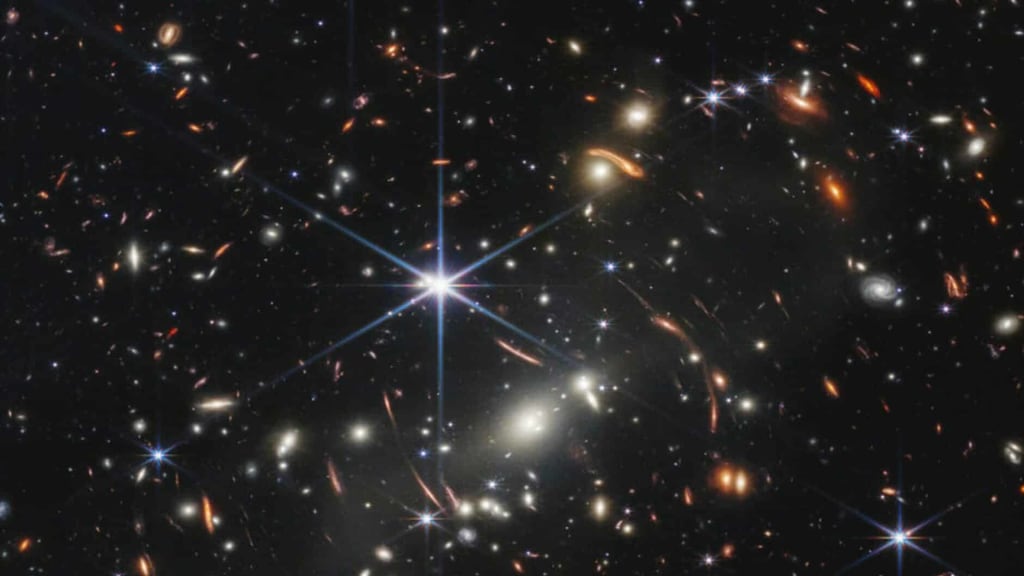
In the vast expanse of space, amidst the stars and galaxies that dot the cosmic canvas, there exists a sentinel of human ingenuity and scientific discovery—the Hubble Space Telescope. Launched into orbit on April 24, 1990, the Hubble has become an icon of space exploration, revolutionizing our understanding of the universe and peering into the cosmos with unparalleled clarity.
As the story goes, the idea for the Hubble Space Telescope was conceived in the 1940s by astronomer Lyman Spitzer. He envisioned a telescope positioned above Earth's distorting atmosphere, where it could capture celestial objects with unprecedented precision. Spitzer's dream took decades to become a reality, but its eventual realization would forever change the course of astrophysics.
The Hubble's journey began with its launch aboard the Space Shuttle Discovery. It was a breathtaking moment as the telescope, cocooned within the shuttle's cargo bay, rose above the Earth's atmosphere. Once released, it gently unfolded its massive sunshield, protecting its sensitive instruments from the harsh rays of the sun.
However, the triumph of the launch was soon overshadowed by an unexpected setback. When scientists began analyzing the first images sent back by the Hubble, they were confronted with a harsh reality—the images were blurry. A manufacturing error had caused a misalignment in the primary mirror, rendering the telescope's vision compromised.
The news of the Hubble's initial failure sent shockwaves through the scientific community and the public alike. It was a crisis, but it was also an opportunity—a chance for humanity to demonstrate its resilience and determination in the face of adversity.
In 1993, a daring mission known as STS-61 was launched to repair the Hubble. Astronauts performed five back-to-back spacewalks, installing corrective optics and advanced instruments. It was a testament to human skill and teamwork as they meticulously adjusted and repaired the telescope's components.
The success of the repair mission transformed the Hubble from a symbol of failure into a beacon of hope. The telescope's images, once marred by blurriness, now unveiled the cosmos in breathtaking detail. It captured the exquisite beauty of galaxies, nebulae, and star clusters, painting a vivid picture of the universe's diversity and complexity.
One of the Hubble's most iconic images is the "Pillars of Creation" in the Eagle Nebula. This photograph, taken in 1995, revealed towering columns of gas and dust where new stars were being born. The image not only captured the cosmic grandeur but also ignited the imagination of millions, inspiring a deep sense of wonder about the universe.
Over the years, the Hubble continued to make groundbreaking discoveries. It measured the rate of the universe's expansion, known as the Hubble constant, and helped confirm the existence of dark energy—a mysterious force driving the universe's accelerated expansion. It also peered billions of years into the past, capturing the light from galaxies that had existed when the universe was in its infancy.
The telescope's ability to observe distant exoplanets marked another milestone in its legacy. It analyzed the atmospheres of these alien worlds, searching for signs of habitability and even the potential presence of extraterrestrial life. The Hubble's findings expanded our understanding of the cosmos beyond our solar system and kindled the hope of finding life beyond Earth.
Throughout its mission, the Hubble has been a testament to the power of international collaboration. Astronomers and scientists from around the world have come together to utilize the telescope's capabilities and analyze its data. The Hubble's observations have inspired countless research papers, sparked scientific debates, and fueled our curiosity about the universe.
However, the Hubble Space Telescope's remarkable journey has not been without challenges. As it orbited Earth, it endured the harsh conditions of space, including exposure to radiation and micrometeoroid impacts. Yet, it continued to operate, thanks to a series of servicing missions and upgrades.
As the years passed, the Hubble's technology began to age, and its systems required more frequent repairs. However, with each visit from astronauts, the telescope was rejuvenated, allowing it to continue its mission of cosmic exploration. The telescope's enduring legacy is a testament to the dedication of the people who have worked tirelessly to keep it operational.
In April 2020, the Hubble celebrated its 30th anniversary in space. It marked three decades of peering into the cosmos, capturing images that have deepened our understanding of the universe's history and evolution. The Hubble's contributions to astronomy are immeasurable, and it remains a symbol of humanity's insatiable curiosity and unwavering quest for knowledge.
As we look to the future, the Hubble Space Telescope continues to inspire the next generation of astronomers and scientists. It serves as a reminder that even in the face of adversity, humanity can achieve great feats when driven by a shared vision of exploring the cosmos. The Hubble's story is not just a tale of technological marvel; it is a testament to the human spirit's capacity to reach for the stars and unlock the secrets of the universe.
About the Creator
Vlad Țepeș
Vlad Țepeș: Sovereignty Written in Blood History remembers kings by their victories, saints by their sacrifices, and tyrants by their cruelties. Vlad Țepeș is remembered by all three and understood by none. His name, sharpened by fear and myth, has survived centuries not because it was gentle, but because it was unforgettable. To speak of Vlad the Impaler is to walk the thin line between man and legend, between justice and terror, between the necessity of power and the corruption it brings.
By Pure child5 days ago in History
3 Things That Were Invented for Good Reasons and Used for Terrible Ones
Human history is full of optimism. Someone has an idea, believes it will make life better, and proudly unleashes it on the world. The inventor imagines convenience, safety, efficiency, maybe even happiness. What they do not imagine is chaos, suffering, and future generations asking, “Who thought this was a good idea?”
By Enoch Sagini6 days ago in History




Comments
There are no comments for this story
Be the first to respond and start the conversation.