
The History of Minecraft
In the world of video games, few titles have achieved the universal acclaim and cultural impact of Minecraft.

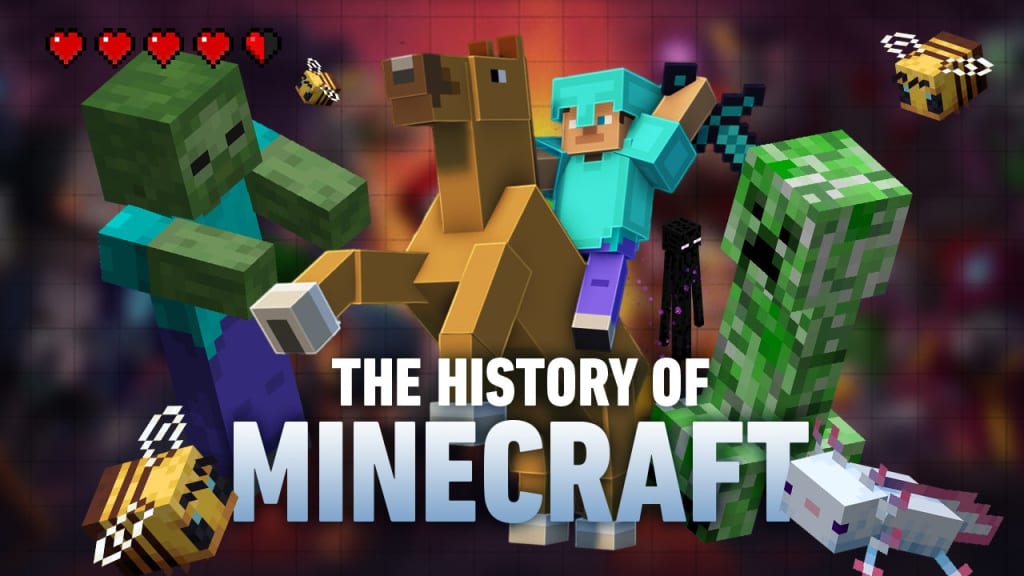
In the world of video games, few titles have achieved the universal acclaim and cultural impact of Minecraft. With its distinctive blocky graphics and limitless creative possibilities, Minecraft has captured the imaginations of millions worldwide. But how did this pixelated sandbox game grow from a modest prototype into one of the best-selling video games of all time? Let’s take a deep dive into the fascinating history and evolution of Minecraft.
The Spartan Beginnings Minecraft was the brainchild of Markus Persson, better known as "Notch," a Swedish programmer and game designer. In May 2009, Persson began working on a new project inspired by popular games like Dwarf Fortress, Dungeon Keeper, and Infiniminer. His goal was to make a simple but fun sandbox where players could freely build and explore. The first version, later known as the "Classic" version, was released to the public on May 17, 2009. Players were captivated by its freedom and creativity, despite its basic graphics and limited features. It quickly gained attention. Players could place and break blocks in a 3D environment — simple actions that opened up endless possibilities.
Development and Rise to Fame
Following the game's initial success, Persson continued to develop Minecraft while listening closely to player feedback. New features like crafting, survival mechanics, mobs (enemies), and various biomes were added frequently. Mojang Studios was established by Persson shortly after Minecraft entered its "Alpha" phase in June 2010 to support the expanding development. A day-and-night cycle, hostile creatures like zombies and skeletons, and the requirement for players to gather resources in order to survive were all introduced during the Alpha phase, which was crucial because it established Minecraft's distinctive identity. Players could now mine deep underground for valuable ores, build intricate structures, and craft tools, weapons, and armor.
Minecraft entered its "Beta" phase in December 2010. With growing popularity, the community around the game flourished. YouTube became a significant platform for Minecraft, with content creators producing tutorials, gameplay series, and massive building projects. This grassroots promotion helped Minecraft reach audiences far beyond traditional marketing channels.
Official Release and Beyond
On November 18, 2011, during MineCon, the first-ever gaming convention, Minecraft was released officially. By this point, Minecraft was a cultural phenomenon and had already sold millions of copies. Given that it was an independent game developed outside of the typical corporate framework, its success was unprecedented. In 2014, seeing Minecraft's massive potential, Microsoft acquired Mojang Studios and the rights to Minecraft for a staggering $2.5 billion. New versions of the game have been released for a variety of platforms, including consoles, mobile devices, and even virtual reality, as a result of this acquisition. Why Minecraft Stands Out
Minecraft’s success lies in its simplicity and the boundless creativity it offers. Players are not constrained by predetermined narratives or goals. Instead, players can create their own experiences by building a Taj Mahal replica, going on dangerous survival missions, or building elaborate Redstone-powered devices—Minecraft's equivalent of electrical engineering. Additionally, the game's modding community has been a massive force in its growth. Thousands of player-made mods have introduced new game modes, creatures, items, and even entirely new worlds, keeping the experience fresh and exciting for seasoned players.
Educational institutions have also embraced Minecraft, recognizing its potential as a teaching tool. "Minecraft: Education Edition" was developed to help students learn subjects like math, history, and computer programming through interactive, hands-on activities.
A Legacy to Last Today, Minecraft boasts over 238 million copies sold across all platforms, making it the best-selling video game in history. Its player base remains vibrant, with millions logging in daily to explore, create, and connect. Books, merchandise, spin-offs like Minecraft Dungeons, and even discussions about a movie adaptation have emerged from the game. More than just a game, Minecraft has become a platform for imagination, a tool for learning, and a shared space for community and collaboration. From its humble beginnings as a personal project to its status as a global icon, Minecraft's journey is a testament to the power of creativity and the magic of an idea brought to life.
One thing is certain, even as the world continues to change: Minecraft will always hold a special place in the hearts of players of all ages, inspiring new generations to dream big, build bigger, and explore without limits.
About the Creator
Keep reading
More stories from SHAHADAT hossain and writers in History and other communities.
Can Global Peace Exist Without a Global Authority?
Can Global Peace Exist Without a Global Authority? The idea of global peace without a global authority sounds appealing to some people. In theory, nations could manage their own affairs, respect each other’s borders, and resolve disputes peacefully without an overarching institution telling them what to do. Supporters of this view argue that global bodies are slow, biased, and often ineffective. But history and current events raise a difficult question: can lasting global peace truly exist without a central authority to guide it?
By Wings of Time 3 days ago in History
UAE and India Sign a Major Defense Agreement
UAE and India Sign a Major Defense Agreement The United Arab Emirates (UAE) and India have taken another important step in their growing relationship by signing a new defense cooperation agreement. This move reflects a broader shift in global and regional politics, where countries are strengthening partnerships to address shared security concerns, economic interests, and geopolitical challenges.
By Wings of Time 3 days ago in History




Comments
There are no comments for this story
Be the first to respond and start the conversation.