
The Hidden Treasure of the Mughal Empire: A Legacy of Opulence and Mystery
The Mughal Empire, which flourished in the Indian subcontinent from the early 16th to the mid-18th century, was renowned for its architectural marvels, sophisticated art, and unparalleled wealth. Emperors such as Akbar, Jahangir, and Shah Jahan built an empire marked by cultural refinement and economic prosperity, with vast treasures amassed through conquests, tribute, and trade. Over time, however, much of this magnificent wealth was lost, hidden, or dispersed due to invasions, internal strife, and the eventual decline of the empire. Today, the mystery surrounding the hidden treasure of the Mughal Empire captivates historians, treasure hunters, and enthusiasts alike, with modern estimates suggesting that its net worth could reach astronomical figures in today's dollars. This article explores the origins, nature, estimated net worth, and possible locations of the Mughal treasure, as well as the historical evidence that supports its legendary status.

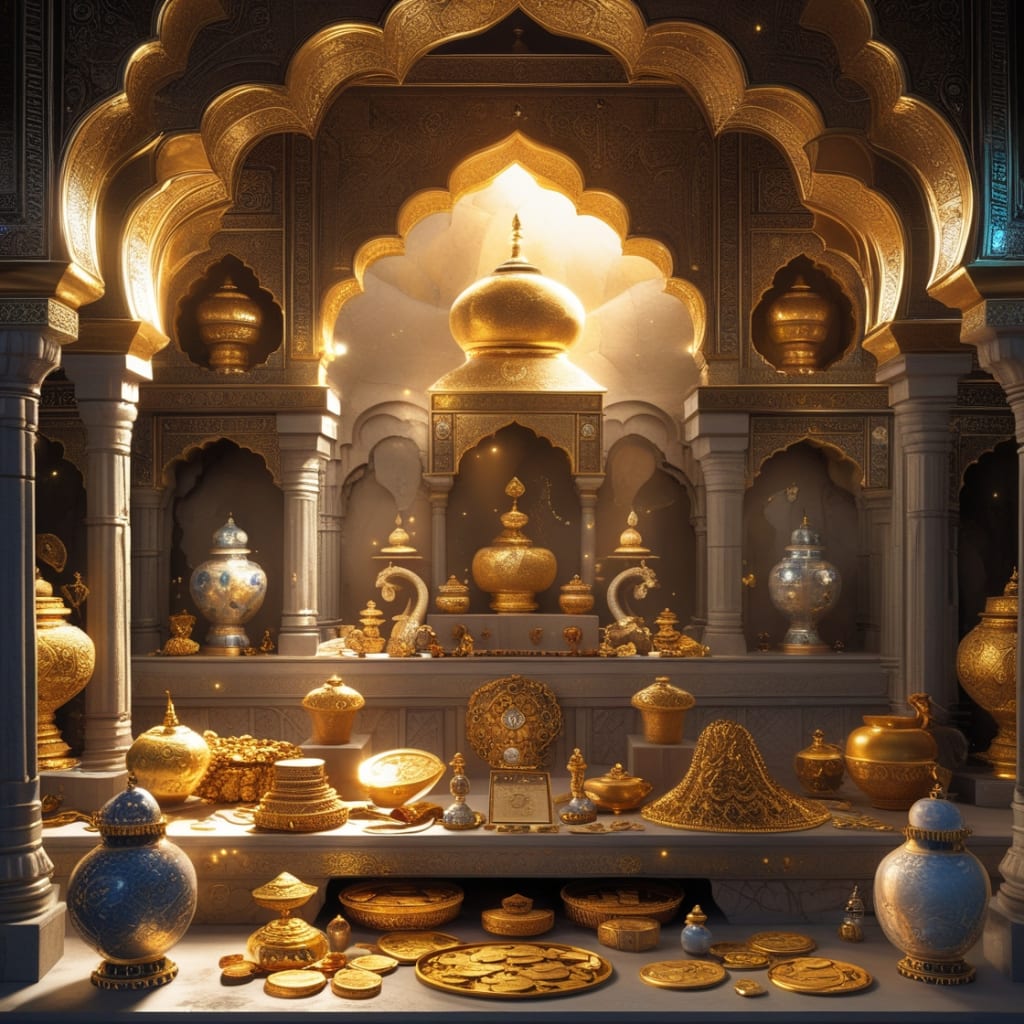
Historical Background of the Mughal Empire
The Mughal Empire was founded in 1526 by Babur, a descendant of Timur and Genghis Khan, who invaded India and established a dynasty that would last over three centuries. The empire reached its zenith under Emperor Akbar, whose reign marked significant military conquests and the consolidation of a vast territory stretching from modern-day Pakistan to Bangladesh and parts of India. His successors, particularly Jahangir and Shah Jahan, further enhanced the empire’s wealth, commissioning grand architectural projects such as the Taj Mahal, which not only symbolized their power but also their opulent tastes.
The Mughal rulers developed sophisticated administrative and economic systems. They encouraged trade, both inland and with foreign lands via the Indian Ocean, which brought in spices, textiles, precious stones, and gold. This economic framework, coupled with the empire’s agricultural surplus and artisanal excellence, resulted in vast accumulations of wealth, much of which was stored in the form of gold and silver bullion, jewels, ornate artifacts, and luxury goods.
Sources of Mughal Wealth
1. Conquests and Tribute
Military campaigns were a major source of wealth for the Mughal Empire. As the Mughals expanded their territory, conquered regions were forced to pay tribute, which often included large amounts of precious metals and gemstones. The spoils of war added significantly to the royal treasury, and many of these treasures were kept in state treasuries or hidden away to protect them from plunder by rivals.
2. Trade and Commerce
The Mughal Empire was strategically located along critical trade routes, connecting Asia, Europe, and Africa. The empire's ports facilitated the export of luxurious goods such as silk, spices, and precious stones. In return, gold and silver flowed into the empire, further enriching its coffers. European travelers and merchants often marveled at the wealth they encountered, leaving behind detailed accounts that attest to the lavish treasures of the Mughal court.
3. Agriculture and Artisanal Production
Agriculture formed the backbone of the Mughal economy. Fertile lands in the Gangetic plains produced surplus crops, which were taxed to finance the empire's military and administrative expenditures. Additionally, the Mughal court patronized various forms of art and craftsmanship. The production of fine textiles, intricate jewelry, and detailed metalwork not only added cultural value but also contributed to the economic prosperity of the empire.
The Nature of the Mughal Treasure
The lost treasure of the Mughal Empire is not a single cache of wealth but rather a collection of opulent assets that were dispersed over time. Key components of this treasure include:
Gold and Silver Bullion: Large quantities of precious metals were amassed, serving as both a store of value and a medium of exchange.
Jewelry and Gemstones: The Mughals were famous for their exquisite jewelry, crafted from gold and studded with precious stones such as diamonds, rubies, emeralds, and sapphires.
Imperial Artifacts: These include intricately carved statues, ornate weapons, and ceremonial objects that exemplified the empire's artistic achievements.
Architectural Treasures: Grand palaces and monuments, although many have been looted or deteriorated over time, were originally adorned with gold leaf, precious inlays, and intricate carvings.
Textiles and Luxury Goods: Fine silk, embroidered garments, and other luxurious items were also part of the imperial treasure, symbolizing the sophisticated tastes of the Mughal court.
Estimated Net Worth of the Mughal Treasure
Determining the exact net worth of the lost Mughal treasure is challenging due to the scarcity of detailed records and the dispersed nature of the wealth. However, modern historians and economists have attempted to provide estimates based on surviving accounts and recovered artifacts. Conservative estimates suggest that the value of the Mughal treasury could have been in the range of $500 billion to $1 trillion in today’s currency. Such figures take into account the historical significance, rarity, and craftsmanship of the artifacts, as well as the intrinsic value of gold and silver that formed the backbone of the empire’s wealth.
Evidence and Proof
The legend of the Mughal treasure is supported by historical texts, traveler accounts, and archaeological findings. European chroniclers during the Renaissance marveled at the opulence of the Mughal court and left detailed descriptions of its riches. In India, several ancient texts, including court records and royal decrees, mention vast quantities of gold, silver, and precious stones that were collected through conquest and trade.
Archaeological excavations in regions once under Mughal control have unearthed numerous artifacts that hint at the immense wealth of the empire. However, many treasures were lost to time, looted during invasions, or hidden away in secret vaults that remain undiscovered. The ongoing search for these lost treasures continues to fuel both academic research and the adventurous spirit of treasure hunters.
Where Could the Treasure Be Found?
Various theories exist regarding the possible locations of the hidden Mughal treasure:
Secret Vaults in Historical Palaces: Some believe that the treasure was hidden in underground chambers of royal palaces in Delhi, Agra, or Lahore to protect it during times of crisis.
Remote Fortresses and Temples: Other theories suggest that parts of the treasure were concealed in remote forts or even in temples dedicated to the Mughals.
Looted and Dispersed: It is also possible that the treasure was divided among various conquerors and lost to private collections or foreign museums over the centuries.
Conclusion
The lost treasure of the Mughal Empire remains one of the most tantalizing mysteries in history. Its estimated net worth, which could reach up to a trillion dollars in today’s terms, symbolizes not only the material wealth of a once-great empire but also its cultural and artistic legacy. The combination of opulent gold, priceless jewels, and exquisite artifacts tells the story of a dynasty that reigned over vast territories and left an indelible mark on the world.
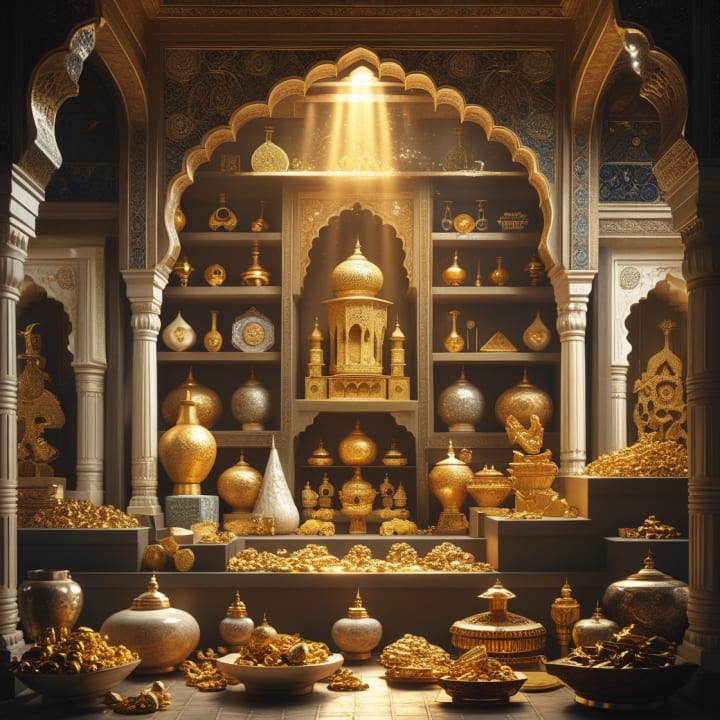
Despite centuries of intrigue and numerous exploratory efforts, much of the Mughal treasure remains hidden, waiting to be rediscovered. As modern technology advances and historical research continues, the possibility of unearthing this lost wealth offers the promise of a glimpse into one of the richest chapters of human history—a treasure that, if found, would not only be of immense financial value but also of priceless cultural and historical significance.
The quest to uncover the Mughal treasure continues to inspire and captivate, a testament to the enduring allure of lost riches and the mysteries of the past.
About the Creator
Say the truth
"Say the Truth: Explain Everything in the World" is your trusted source for uncovering facts and exploring the wonders of history, science, technology, and beyond. We simplify complex ideas and reveal truths to inspire curiosity .
Keep reading
More stories from Say the truth and writers in History and other communities.
"Socrates: The Eternal Seeker of Truth"
Socrates' Knowledge: The Foundation of Western Thought Socrates, one of the best affecting philosophers in Western history, is acclaimed for his different access to ability and his adamant following of truth. Though he larboard no accounting works himself, his account were immortalized by his disciples, decidedly Plato and Xenophon, and abide to appearance our compassionate of philosophy, ethics, and the animal condition. This commodity explores the attributes of Socrates’ knowledge, his characteristic adjustment of inquiry, and the abstruse bequest of his bookish contributions.
By Say the truth 12 months ago in History
3 Times Ordinary Objects Did Something Deeply Unsettling
Objects surround us every day. They make life easier, more comfortable, or more entertaining. A chair supports us, a mirror shows us our reflection, and a toaster browns our bread with consistent reliability. Most of the time, they behave exactly as expected.
By Enoch Sagini6 days ago in History
When Allies Disagree: How Global Partnerships Are Being Redefined
When Allies Disagree: How Global Partnerships Are Being Redefined For much of the modern era, global alliances appeared firm and predictable. Powerful countries formed blocs, promised mutual support, and stood together during times of war and crisis. But in today’s world, those alliances are changing. Recent disagreements between long-standing partners show that global cooperation is no longer based on automatic loyalty—it is increasingly shaped by national interests, public opinion, and long-term stability.
By Wings of Time 4 days ago in History




Comments
There are no comments for this story
Be the first to respond and start the conversation.