
"The Hidden Treasure of Alexander the Great"
Great has intrigued historians and explorers for centuries. Believed to contain golden artifacts, rare jewels, and ancient knowledge, this lost fortune reflects the grandeur of Alexander's empire. Hidden amidst ruins blending Greek, Persian, and Babylonian influences, the treasure symbolizes the vast cultural and material wealth of his conquests, buried under layers of history and mystery.

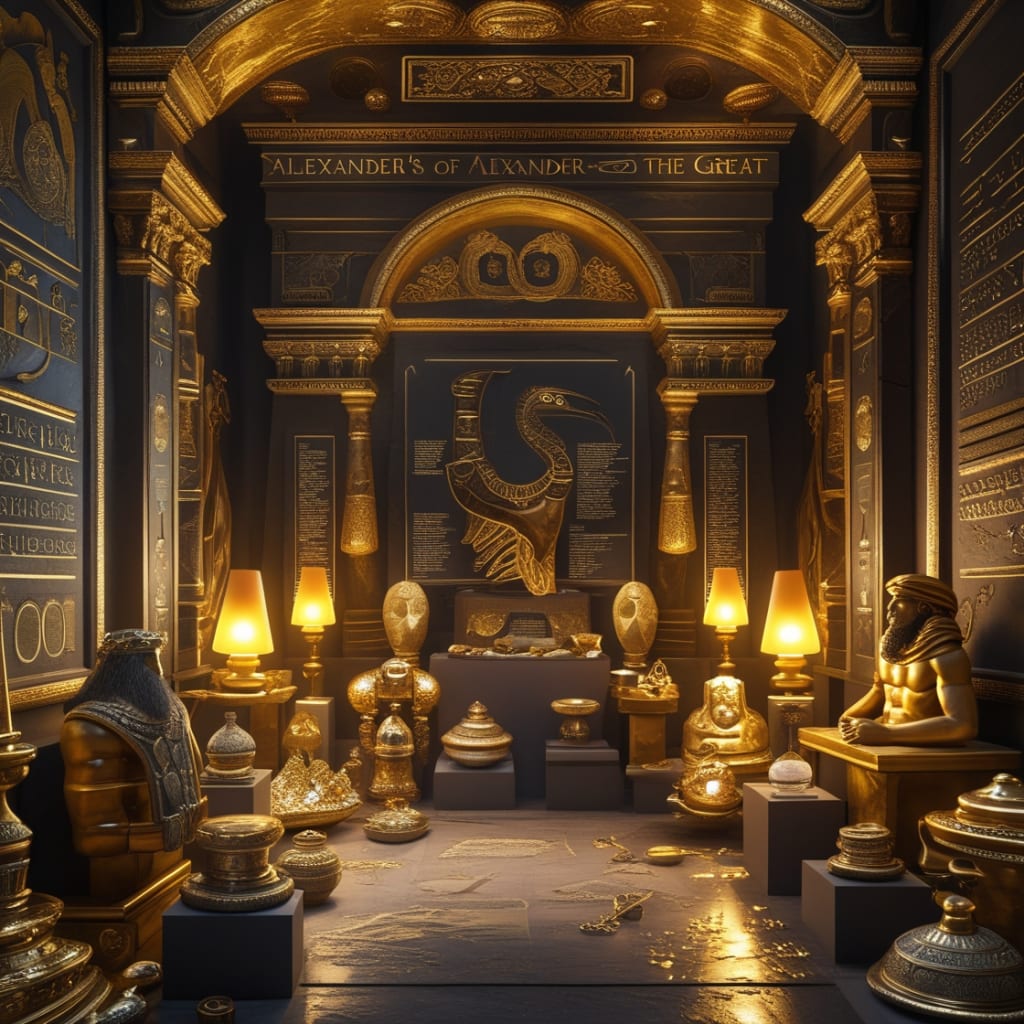
The Hidden Treasure of Alexander the Great
The legacy of Alexander the Great, one of the most influential and legendary figures in history, is often characterized by his unparalleled military conquests and the vast empire he established. However, alongside tales of his military prowess and cultural integration, there exist stories of hidden treasures that he is said to have left behind—treasures that have fascinated explorers, historians, and treasure hunters for centuries. This article delves into the myths, legends, and facts surrounding the hidden treasure of Alexander the Great.
Alexander’s Wealth and Conquests
Alexander the Great, born in 356 BCE, inherited the throne of Macedon at the age of 20 after the assassination of his father, King Philip II. Over the next decade, he conquered much of the known world, stretching from Greece to Egypt and into the vast expanse of Persia and India. His military campaigns were not only about territorial expansion but also about amassing unimaginable wealth.
The Persian Empire, under Darius III, was renowned for its riches, and Alexander's victories at Issus and Gaugamela granted him access to vast treasures. The legendary treasury of Persepolis, the Persian capital, alone is said to have held an immense quantity of gold, silver, and other precious items. Historical accounts suggest that the treasure Alexander looted from Persia was so immense that it had to be transported by thousands of camels and mules.
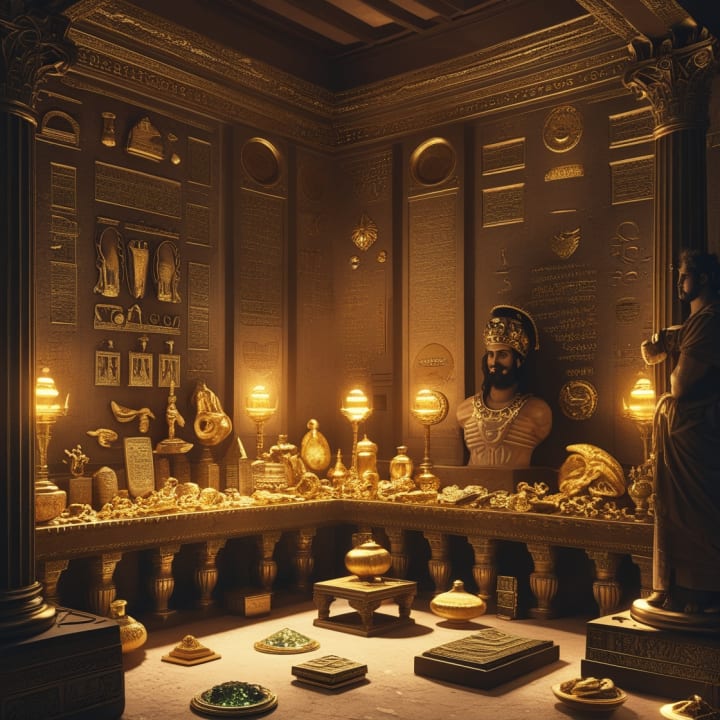
The Mystery of Alexander's Hidden Treasure
Despite Alexander's monumental conquests, the fate of much of his wealth remains a mystery. Historical records indicate that Alexander's empire began to fragment after his death in 323 BCE in Babylon. His generals, known as the Diadochi, divided the empire among themselves, leading to internal conflicts and wars. During this tumultuous period, it is believed that some of Alexander’s treasure might have been hidden or lost.
Several theories about Alexander's hidden treasure persist:
Buried in Babylon
Some historians believe that part of Alexander's wealth was buried near Babylon, the site of his death. Babylon was a city of immense significance in his empire, and it is possible that his treasure was hidden there for safekeeping. However, the exact location remains unknown.
Lost in Transit
As Alexander’s army marched across continents, transporting immense wealth was a logistical challenge. There are accounts of treasures being lost in rivers, deserts, or mountain passes during these movements. For instance, the Gedrosian Desert, which Alexander crossed during his return from India, is rumored to have swallowed a portion of his wealth.
Theories of Secret Caches
Another popular theory is that Alexander instructed his trusted generals to hide portions of his treasure in strategic locations across his empire. These caches, if they exist, have never been found.
Looted by Successors
Some of Alexander's successors, such as Ptolemy and Seleucus, may have seized parts of his treasure during the wars of succession. However, records of these transactions are sparse, leading to speculation about the unaccounted wealth.
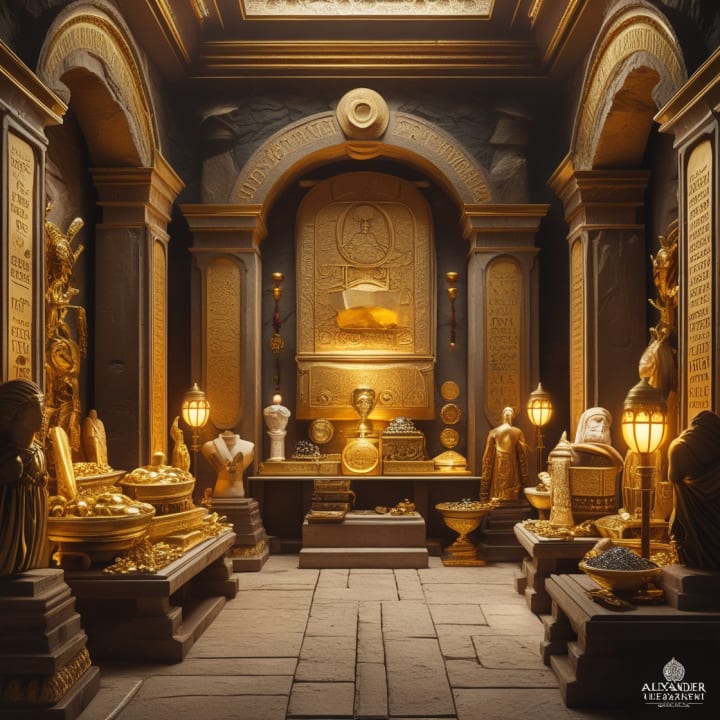
The Search for Alexander’s Treasure
The allure of Alexander's treasure has inspired numerous expeditions and archaeological efforts. Explorers and treasure hunters have scoured regions like modern-day Iraq, Iran, and Afghanistan in search of hidden wealth. However, no definitive evidence has surfaced to confirm the existence of these treasures.
One of the most intriguing aspects of the search lies in the lack of clear documentation from Alexander's era. Unlike later empires, such as the Romans, detailed records of Alexander's wealth and its distribution are scarce. This has fueled both curiosity and skepticism about the true extent of his hidden riches.
Cultural and Historical Significance
Alexander's treasure, whether lost or hidden, holds more than just monetary value. It represents the wealth of an era that bridged diverse cultures and civilizations. The artifacts, relics, and riches associated with Alexander's conquests provide insights into the ancient world, including its trade, craftsmanship, and cultural exchanges.
For historians, the treasure symbolizes the immense power and influence wielded by Alexander. For archaeologists, it represents a missing link to understanding the dynamics of his empire. And for treasure hunters, it remains a tantalizing mystery waiting to be unraveled.
Modern Implications
While the hidden treasure of Alexander the Great is often seen as a historical enigma, it also raises questions about cultural heritage and ownership. If such treasures were discovered today, they would undoubtedly spark debates about rightful ownership, preservation, and the ethical implications of redistributing ancient artifacts.
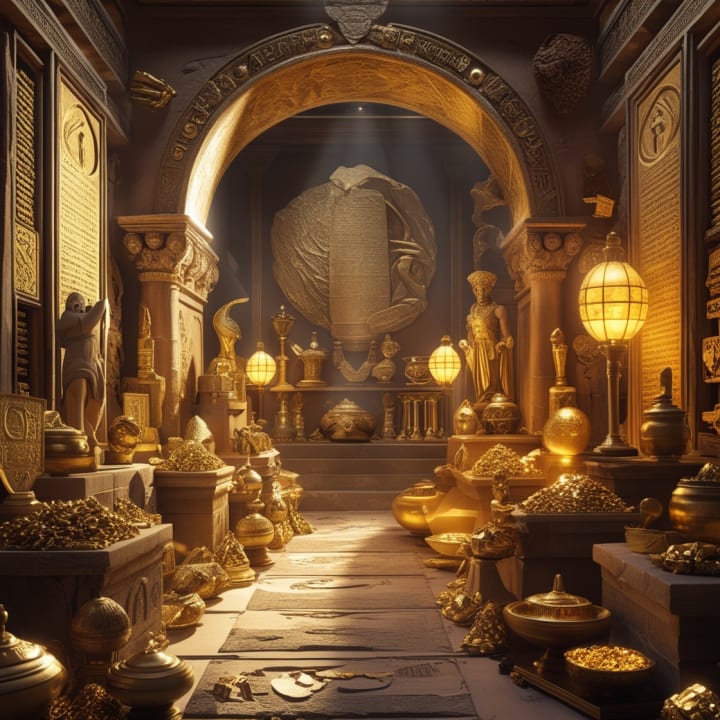
Conclusion
The hidden treasure of Alexander the Great continues to captivate the imagination of people around the world. Its existence remains a topic of speculation, fueled by fragments of historical evidence and enduring legends. Whether buried in the sands of Babylon, lost in the Gedrosian Desert, or hidden in the mountains of Persia, the treasure symbolizes the grandeur and mystery of one of history's greatest figures.
As the search for Alexander's treasure persists, it serves as a reminder of the enduring legacy of his empire and the unyielding human desire to uncover the secrets of the past.
About the Creator
Say the truth
"Say the Truth: Explain Everything in the World" is your trusted source for uncovering facts and exploring the wonders of history, science, technology, and beyond. We simplify complex ideas and reveal truths to inspire curiosity .
Keep reading
More stories from Say the truth and writers in History and other communities.
Plato: The Beacon of Knowledge
Plato: The Philosopher of Ability and Idealism Plato, one of the greatest philosophers in animal history, is a cornerstone amount in Western thought. Built-in in Athens about 427 BCE, Plato was a apprentice of Socrates and the abecedary of Aristotle, basic a leash that has greatly afflicted philosophy, science, and political theory. His contributions to epistemology, metaphysics, ethics, and political aesthetics abide foundational. Axial to Plato’s aesthetics is his compassionate of knowledge, decidedly his Approach of Forms, which explores the attributes and banned of animal compassionate and perception.
By Say the truth 12 months ago in History
THE GRAND EGYPTHION MUSEUM
Let’s be real for a second. When folks hear "museum," they often think of dusty halls, dry information, and that odd quiet where you feel like you're misbehaving just for breathing. But the Grand Egyptian Museum isn't like that. I really don't think that's it. It's not accurate at all. This just seems wrong. This place is really nice. Egypt really shows us that it made history, and it keeps on doing amazing things.
By Beshoy Zayerabout 21 hours ago in History
The Quiet Name on Maple Street
Kim Jong-un was born into a world unlike almost any other—a world sealed by borders, ideology, and secrecy. As the grandson of Kim Il-sung, the founder of North Korea, and the son of Kim Jong-il, the country’s second leader, Kim Jong-un entered life already wrapped in destiny. In North Korea, leadership is not chosen by ballots or debate; it is inherited like a crown, reinforced by loyalty, fear, and an unyielding political system.
By The best writer about 4 hours ago in History


Comments
There are no comments for this story
Be the first to respond and start the conversation.