
The Heritage of Kush
An Examination of One of Africa's Ancient Civilizations.


Africa, recognized as one of the oldest and largest continents on the planet, has served as a cradle for numerous populations, each adding their distinct cultures, ethnic backgrounds, and belief systems to the tapestry of human history. Today, we shall embark on a historical exploration of one of the extraordinary civilizations that flourished in Africa and made a lasting impact on history—the Kingdom of Kush.
The Kingdom of Kush flourished in northern Africa in the region that corresponds to modern-day Sudan. It was part of a larger complex of centralized civilizations, sharing the fertile Nile River basin with other emerging powers. While the Nile is often associated with ancient Egypt, it played a crucial role in nurturing diverse cultures, including Kush. Evidence suggests that the region was inhabited as early as 8,000 BCE.
The Egyptians of the Old Kingdom period (c. 2613–2181 BCE) referred to the Nubian region as Ta-Sety, or "The Land of the Bow," a nod to the Kushites' renowned archery skills. Over time, the Egyptians referred to the northern part of Nubia as Wawat, while the southern area became synonymous with Kush. Interestingly, the name "Nubia" might derive from the Egyptian word for gold, nub, highlighting the region's significance as a source of the precious metal.
To the Greeks and Romans, the region was known as Aethiopia, meaning "Land of Burnt Faces," a reference to the dark skin of its inhabitants. The Arabs later called it Bilad al-Sudan, or "Land of the Blacks." Despite these external names, the people of Kush had their own distinct identity and culture.
By 2500 BCE, the Kerma culture had emerged as the preeminent force in the region. Recognized as the first documented state in Nubia, Kerma centered around the city of the same name. The rulers of Kerma erected impressive mud-brick edifices, including the deffufa, a fortified religious structure that reached a height of 18 meters and was encircled by a vibrant urban community.
Kerma's relationship with ancient Egypt was multifaceted. Although the two civilizations often competed for fertile territories and control over the Nile, they also participated in advantageous trade exchanges. Egypt depended on Kush for resources such as gold, ebony, ivory, and other exotic commodities. Despite experiencing periods of conquest by Egyptian rulers, including Pharaoh Mentuhotep II and later Thutmose I, Kerma continued to thrive as a resilient and prosperous city.
Following the decline of Kerma around 1500 BCE, which was precipitated by Egyptian military campaigns, the city of Napata emerged as a prominent center of power for the Kushites. By the 11th century BCE, as Egypt experienced significant internal strife, the Kushites established themselves as a formidable independent kingdom.
Napata thrived as a religious center, deeply influenced by Egyptian culture. Its rulers, starting with King Alara, strengthened Kushite authority and embraced Egyptian customs, such as the construction of pyramids and the veneration of the deity Amun. Eventually, Napata became the capital of a reunified Egypt during the 25th Dynasty, commonly referred to as the "Kushite Dynasty."
Kushite pharaohs, including Kashta, Piye, Shabaka, Shabataka, Taharqa, and Tanutamun, ruled Egypt with a commitment to cultural preservation. These leaders upheld Egypt’s ancient traditions while incorporating elements of Kushite culture, resulting in a distinctive cultural amalgamation.
Following the collapse of the 25th Dynasty in 656 BCE, the capital of the Kingdom of Kush relocated to Meroë. This city flourished as a hub for trade, agriculture, and iron manufacturing. Meroë developed a unique cultural identity, characterized by the introduction of the Meroitic script and a departure from Egyptian cultural influences.
A significant aspect of Meroë's history was the emergence of female monarchs known as Candaces. These queens held considerable authority, commanding armies and participating in diplomatic relations. For example, Queen Amanirenas effectively thwarted Roman incursions during the Meroitic Wars (27–22 BCE), successfully negotiating advantageous terms with Emperor Augustus.
Nevertheless, Meroë encountered various challenges. Its heavy dependence on iron production resulted in deforestation, while overgrazing and soil degradation put pressure on its agricultural resources. These issues, combined with the invasion by the Axumites in 330 CE, contributed to the city's eventual decline. By 350 CE, Meroë was deserted, signaling the conclusion of the Kingdom of Kush.
The Kingdom of Kush exemplifies the rich diversity and intricate nature of Africa's historical narrative. It counters the erroneous belief that Africa is a singular entity, revealing a vibrant mosaic of cultures, traditions, and civilizations that flourished and faded over thousands of years.
About the Creator
A História
"Hi. My name is Wellington and I'm a passion for general history. Here, I publish articles on different periods and themes in history, from prehistory to the present day.
Keep reading
More stories from A História and writers in History and other communities.
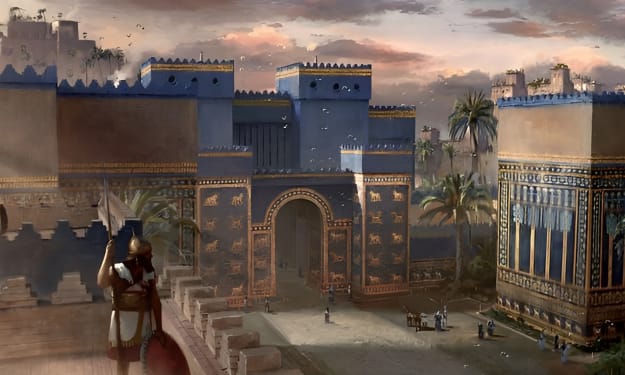
The Mysterious Heritage of Babylon
Today, we begin an exploration of the captivating history of Babylon, a civilization celebrated for its remarkable contributions to the ancient world. Beyond the splendor of its legendary city, Babylon's impact on art, politics, religion, and science resonates throughout history. 1. The earliest reference to Babylon can be traced to a clay tablet from the era of Sargon of Akkad in the 23rd century BCE. At that time, it served as a modest center for religion and culture, lacking the independence it would later achieve. Under the Akkadian Empire, Babylon was part of larger political structures before it began to gain prominence.
By A Históriaabout a year ago in History
The Year 1995 in Review: Fun Facts, Trivia, and Historic Highlights
This quick read is a collection of fun facts, trivia, and historic events from the year 1995. Discover the year’s top news stories, most influential people, sports trivia, retail prices, Internet news, and much more.
By Gregory DeVictor4 days ago in History



Comments
There are no comments for this story
Be the first to respond and start the conversation.