

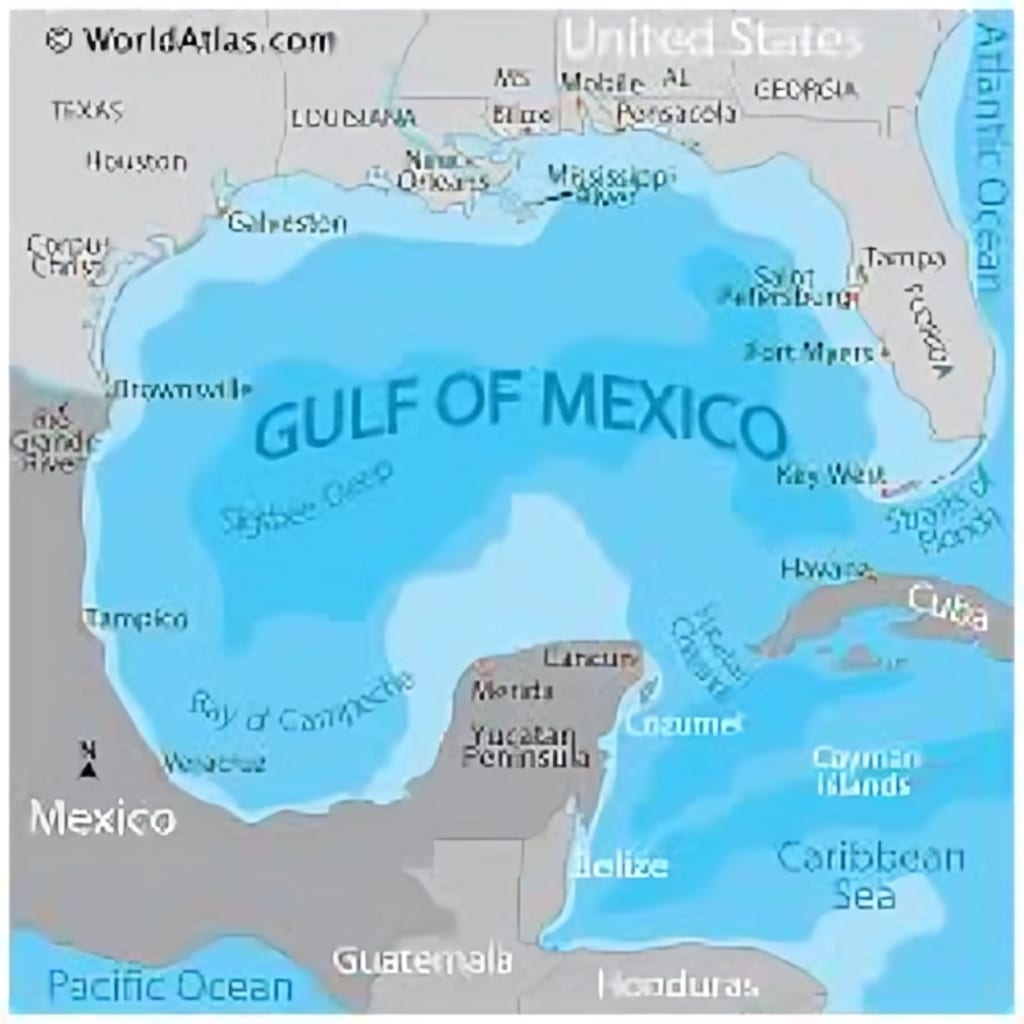
The Gulf of Mexico is one of the most important and fascinating bodies of water in the world. Located between the southern United States, eastern Mexico, and the island of Cuba, the Gulf plays a crucial role in the environment, economy, and culture of the region. This article explores its geography, wildlife, industries, and importance in simple terms.
Geography of the Gulf of Mexico
The Gulf of Mexico is an ocean basin connected to the Atlantic Ocean by the Florida Straits and to the Caribbean Sea by the Yucatán Channel. It covers an area of about 600,000 square miles (1.5 million square kilometers) and has a coastline that stretches over 3,000 miles. The Gulf is relatively shallow, with an average depth of about 5,000 feet, but some areas, like the Sigsbee Deep, reach depths of more than 14,000 feet.
The Gulf borders five U.S. states: Texas, Louisiana, Mississippi, Alabama, and Florida. In Mexico, it touches six states, including Tamaulipas, Veracruz, and Yucatán. The Gulf’s warm waters and unique geography make it a vital habitat for marine life and a key resource for humans.
Wildlife in the Gulf of Mexico
The Gulf of Mexico is home to a wide variety of marine life. Its waters are rich with fish, sea turtles, dolphins, and sharks. It also supports coral reefs, mangroves, and seagrass beds, which provide shelter and food for many species.
Some notable animals found in the Gulf include:
Sea Turtles: Five of the world’s seven species of sea turtles, including the endangered Kemp’s ridley turtle, live in the Gulf.
Fish: Popular fish species like red snapper, grouper, and tuna are found here, making it a prime location for fishing.
Birds: The Gulf’s wetlands and barrier islands are critical habitats for birds, including pelicans and herons.
The Gulf’s biodiversity is vital for the health of the planet and supports millions of people who depend on its resources.
Industries and Economic Importance
The Gulf of Mexico is a hub of economic activity. It supports various industries that are crucial to the economies of the United States, Mexico, and the wider region.
Fishing and Seafood: The Gulf is one of the most productive fishing areas in the world. Shrimp, crab, and fish from the Gulf are a major part of the seafood industry, providing food and jobs for millions.
Oil and Gas: The Gulf of Mexico is rich in oil and natural gas. Offshore drilling platforms extract these resources, making the Gulf a key energy provider. The oil and gas industry has contributed significantly to the economies of the United States and Mexico.
Tourism: The Gulf’s warm waters, beautiful beaches, and diverse marine life attract millions of tourists each year. Popular destinations include Florida’s Gulf Coast, Cancún in Mexico, and the barrier islands of Alabama and Louisiana.
Environmental Challenges
Despite its importance, the Gulf of Mexico faces many environmental challenges. Pollution, overfishing, and climate change threaten its delicate ecosystems.
Oil Spills: The Gulf has experienced major oil spills, such as the Deepwater Horizon spill in 2010, which caused significant damage to marine life and coastal communities.
Dead Zones: Runoff from agriculture and urban areas has led to nutrient pollution, creating "dead zones" where oxygen levels are too low for most marine life to survive.
Rising Temperatures: Climate change is warming the Gulf’s waters, affecting marine life and increasing the frequency of hurricanes.
Efforts are underway to address these issues, including conservation programs, stricter regulations, and community involvement.
Cultural and Historical Significance
The Gulf of Mexico has a rich cultural and historical heritage. Indigenous peoples, such as the Maya, depended on its resources for thousands of years. Later, it became a crucial area for trade and exploration during the age of European colonization.
Today, the Gulf continues to influence the culture of the region. Its food, music, and traditions reflect a blend of Native American, African, European, and Caribbean influences.
Conclusion
The Gulf of Mexico is a vital part of the planet, providing resources, supporting biodiversity, and enriching the lives of millions. While it faces challenges, its importance to the environment, economy, and culture cannot be overstated. Protecting and preserving the Gulf of Mexico is essential for future generations to enjoy its beauty and benefits.
About the Creator
Farhan Sayed
Hi, I’m Farhan Sayed 🌹! I’m here to share stories, thoughts, and maybe sprinkle a little magic along the way. ✨
💡 Passion for:
Exploring new ideas 🧠
Writing from the heart ❤️
Inspiring and connecting with amazing souls like you 🌍
Keep reading
More stories from Farhan Sayed and writers in History and other communities.
The Palisades Fire
The Palisades Fire was a devastating wildfire that struck the Pacific Palisades area in Los Angeles, California. This event highlighted the dangers of wildfires and the resilience of communities in the face of natural disasters. In this article, we will explore what happened during the Palisades Fire, its impact, and the lessons learned.
By Farhan Sayedabout a year ago in History
Circumcision in Ancient Egypt: Ritual, Identity, and Medical Practice
Circumcision, the surgical removal of the foreskin from the male genitalia, is a practice that dates back thousands of years. Among the earliest civilizations known to have practiced circumcision were the ancient Egyptians. Evidence from archaeological discoveries, wall carvings, and historical writings suggests that circumcision was not merely a medical procedure in Ancient Egypt but a practice deeply embedded in religious beliefs, social identity, and cultural traditions.
By Irshad Abbasi 2 days ago in History



Comments (1)
Hello, just wanna let you know that if we use AI, then we have to choose the AI-Generated tag before publishing 😊