
The Great American Heists You’ve Never Heard Of...
Five Astonishing Crimes That Redefined American Grit

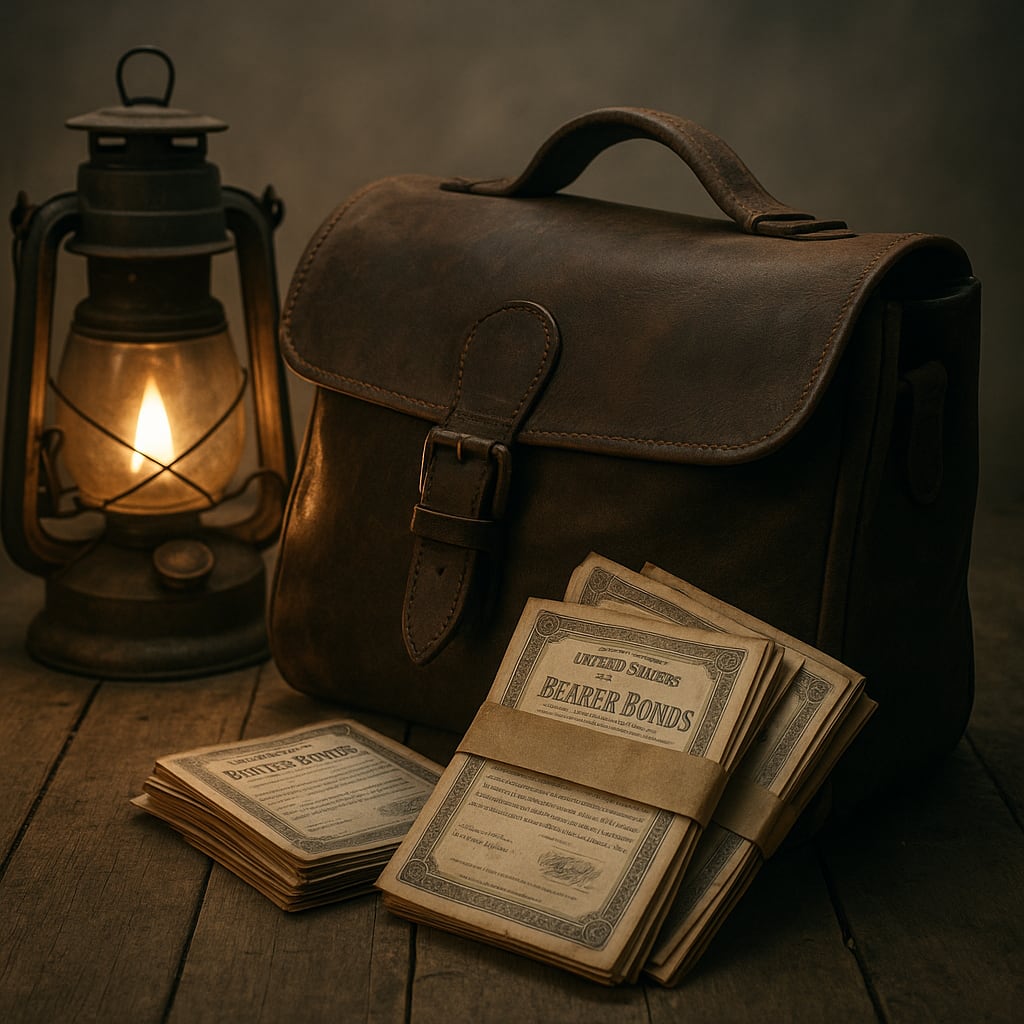
Midnight on the frontier came quietly... soft wind, a lone lantern flickering on a porch, a distant coyote harmonizing with the stars. Towns slept with their doors locked and their hopes tucked under thin quilts. But not everyone slept.
Because somewhere out there, across prairies and dusty mountain passes, in barns and saloons and train yards… Someone was planning a heist.
Not the glamorous Hollywood kind. Not the polished, tuxedo-wearing, diamond-stealing affairs. No... these were heists pulled off by ranch hands, miners, traveling salesmen, and ex-cobblers who misread a map. Heists so bold, so strange, so ingenious that they should be impossible.
But this is America. And the outlaw imagination here has always burned brighter than the lanterns meant to stop it.
Tonight, The Iron Lighthouse shines its beam on five heists forgotten by time. True stories of cunning, chaos, and sheer nerve that carved themselves into the dusty margins of American history.
Let us begin...
I. The 1878 Manhattan Diamond Swindle - When Two Nobodies Outsmarted a City
New York City was booming in the late 1800s. Millionaires strolled Broadway in tailored suits. Jewelry shops glittered like temples of light. And into this world of polished shoes and polished lies walked two men:
William Train (a smooth-talking “gentleman” who’d never been to school) and George Engle (a man whose criminal résumé was less “mastermind” and more “tries really hard”).
Together, they pulled off a diamond heist so audacious that modern thieves still study it.
Here’s how it went down:
- Train bought a set of cheap glass gems. Not diamonds, glass.
- He then bought a set of real diamonds.
- And he walked into a Manhattan jeweler like he owned the place.
He examined the jeweler’s diamonds, nodded wisely, and asked if he could compare them to his “own collection.”
The jeweler; trusting, sophisticated, and not expecting a man with such a glorious mustache to be a criminal... agreed.
Train compared the stones. Complimented them. Asked for a cloth. Distracted the jeweler with a question about settings. And in a moment that would make Danny Ocean proud… He swapped the real stones with the fake ones and walked out with $25,000 in diamonds (worth over $600,000 today). The jeweler didn’t realize the theft until hours later.
Train and Engle had already left the state. They weren’t caught for years. No weapons... No break-ins... Just a mustache, a polite tone, and a pocketful of glass.
America took note... Sometimes the boldest heist begins with a “Good afternoon, sir.”
II. The Tunnel Under the Tennessee Bank - The 1904 Burrowing Bandits
Picture Tennessee in 1904: quiet towns, brick banks, wooden sidewalks, the smell of coal smoke drifting through open windows.
Now picture a crew of criminals who didn’t believe in dynamite. Didn’t trust gunfire. Didn’t have the guts for a loud robbery. Instead… they dug a tunnel. Under the bank... For WEEKS.
Every night around 2 a.m., the gang climbed into the basement of a seemingly abandoned barbershop across the street. They dug with shovels, hand picks, and iron buckets. Sometimes using only their hands to avoid noise.
Their tunnel ran beneath the street, beneath a horse trough, beneath the bank itself.
Finally, at dawn one morning, they broke through the vault floor. Inside, they found thousands in cash. Wages, mortgages, bonds, savings, you name it. They stuffed their sacks, sealed the hole behind them, and crawled out the way they came.
The bank opened at 9 a.m. Everything looked normal. No broken locks. No blown doors. No suspicious footprints. Just a vault… empty as a politician’s promise.
The town was completely baffled. Newspapers were stunned. The police suspected “spiritual intervention.” Yeah... you heard that right!
The criminals were never caught. Their tunnel collapsed during a storm years later, discovered only when a cow fell through the weakened earth.
To this day, historians consider it one of the most perfectly executed heists in Southern history... quiet, clever, patient. A reminder that ingenuity sometimes beats dynamite.
III. The 1893 Colorado Blizzard Stagecoach Heist - Outlaws vs. Nature
Colorado, 1893... A stagecoach carrying cash boxes, silver coins, and payroll for local mines was making its weekly run through the mountains. Then the blizzard hit. The driver pressed on, determined, reins frozen in his hands. Snow blinded the horses. The coach creaked and groaned through drifts taller than a man. But someone else was watching.
A gang of outlaws had planned a robbery, but not like this. They used the storm. As the stagecoach struggled through an icy gorge, the gang lit lanterns on a nearby ridge. They hung them from trees, making them flicker like ghostly signals in the whiteout.
The driver, half-frozen and desperate to find the road, steered toward the lights. Hoping they marked a mining camp or a rescue party. Instead, the lanterns led him straight into a ravine blocked by snow. Before he could react, the outlaws stepped through the blizzard in heavy coats and bandanas thick with frost.
No gunfight. No chaos. Just cold efficiency. They took the money, tied the driver to the coach wheel (gently, to avoid hypothermia), and vanished. Leaving only lanterns swaying in the storm.
When rescuers found the scene hours later, they were baffled. Tracks had already been buried. The gang had disappeared without a trace. And the driver insisted the lanterns looked “like stars on earth.”
It remains one of the most mysterious stagecoach heists ever recorded. A robbery executed by men who knew the mountains better than the law ever could.
IV. The Great Gold Bullion Switch of 1905 - When Thieves Outsmarted a Railroad Giant
Railroads were the arteries of America, and robbing them was as dangerous as robbing a military base. Guards with shotguns. Locked cars. Tight schedules. But in 1905, a few thieves beat the system.
A shipment of gold bullion was being transported westward. Heavy bars stacked in wooden crates, sealed, signed, and watched by armed agents. At every stop, guards checked the seals. Everything looked perfect.
What no one realized was this. The thieves had switched the bullion BEFORE the train left the station. How? They bribed a night watchman. Paid off a dock worker. Studied the seal designs until they could replicate them perfectly. Then, under cover of darkness, they swapped the heavy gold bars for lead bars painted yellow. Nearly identical in weight and shape.
When inspectors opened the crates at the final destination… Yellow paint. Scratched metal... Lead. Millions in gold? Gone...
By the time authorities traced the crime back to its starting point, the thieves had already melted the bullion, recast it, and shipped it out of the country.
This heist wasn’t bold. It was utterly brilliant. Not a single shot fired. Not a single suspect identified. Not a single mistake made. A flawless crime in an age when criminals usually relied on dynamite and hope.
V. The Missing Bonds of Wall Street - The 1911 Heist Pulled Off With Pure Confidence
This one is almost too simple to believe... In 1911, a courier for a major Wall Street firm was walking down the street carrying a satchel containing about $2.5 million in negotiable bonds (roughly $75 million today).
A man approached him politely and said, “Excuse me, sir, are you the courier from Livingston & Co.? I’ve been sent to relieve you of the package.”
The courier blinked. “Ah... yes, sir.” He handed it over. And just like that... That was it! The thief then walked away into the Manhattan crowd and vanished forever. No disguise. No gun. No fake badge. Just confidence.
The bonds were never recovered. Investigators concluded the thief must have studied the courier routes, timing, and routines. Then simply asked for the loot.
It remains one of the cleanest crimes in American history. A heist completed with a single sentence.
VI. Why These Heists Matter (and Why They Still Thrill Us)
We love these stories not because of the crime, but because of what they reveal about the American spirit. These were not masterminds with degrees in criminology. They were ordinary people living in extraordinary times. Farmers, miners, clerks and drifters. Men with empty pockets and wild ideas.
What each heist shows is a unique strain of American creativity. Sometimes misguided, sometimes illegal, but always undeniably ingenious.
We marvel at the patience of the Tennessee tunnel diggers. The hilariously brazen confidence, of the Wall Street “courier”. The cunning use of nature in the Colorado blizzard. The artistic sleight of hand in the diamond swindle and the meticulous precision of the bullion switch.
These heists remind us that history isn’t just battles and presidents and monuments. History is also the strange, chaotic, hilarious, and brilliant things people do when faced with pressure... or opportunity.
They also force us to ask some of these questions. What would we be capable of if pushed to our limits? Would we dig a tunnel under a bank Would we outsmart a railroad empire? Would we stare down a blizzard for a chance at fortune?
Probably not, but the people in these stories did. And their legends; dusty, forgotten, half-smiling, still drift through the pages of American lore, waiting to be rediscovered.
The Iron Lighthouse shines its beam on them today, tomorrow, and the years to come.
About the Creator
The Iron Lighthouse
Where folklore meets freeway. A guide to the strange heart of the American backroads...
Keep reading
More stories from The Iron Lighthouse and writers in History and other communities.
The Five Lost Gold Legends That Still Haunt America...
There’s something peculiar about gold. People will cross deserts for it. Kill for it. Abandon families for it. Lose their minds for it. And sometimes, die clutching maps so weather-worn, the ink looks like dried blood.
By The Iron Lighthouseabout a month ago in History
The Fall of Croesus
The Fall of Croesus: Wealth, Pride, and the Wisdom of Time More than two and a half thousand years ago, in the ancient land of Lydia, there lived a king whose name became legendary throughout history. His name was Croesus, and he was known across the world as the richest man alive. Gold flowed through his kingdom like water. His palaces glittered with treasure, his vaults overflowed with coins, and traders from distant lands spoke of his wealth in awe. Even today, the phrase “rich as Croesus” is used to describe immense riches.
By The best writer 2 days ago in History




Comments (1)
What a fun read. The title didn't lie, I haven't heard of these.