
The Grand Majesty: India’s Largest Palace Ever Built
India is home to some of the most opulent palaces in the world, but one stands above the rest in sheer size, grandeur, and historical significance. This article explores the largest palace ever built in India, detailing its massive land area, the years it took to construct, the immense labor force involved, and its astonishing architectural and cultural value. From royal dynasties to modern-day marvels, discover the legacy of this grand palace and why it remains a symbol of India's rich heritage.

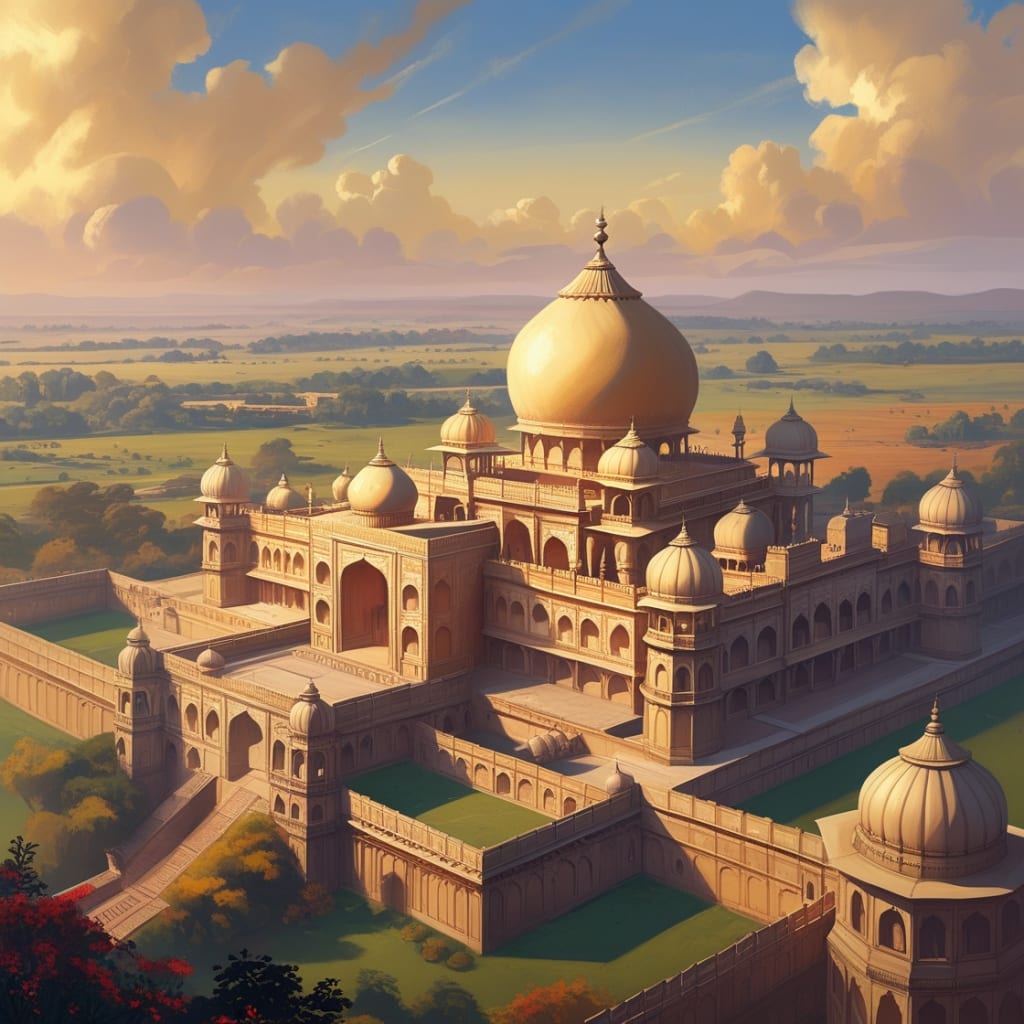
The Grandeur of Mysore: The Most Majestic Palace Ever Constructed in India
India is a realm of splendor and architectural wonders, featuring some of the most lavish palaces globally. Among these, the Mysore Palace emerges as the largest and most splendid ever erected in India. It serves not solely as a symbol of the royal legacy of the Wadiyar dynasty but also as an emblem of the nation's rich architectural heritage. From its extensive expanse to the considerable human resources and duration dedicated to its creation, Mysore Palace persists as one of the most magnificent edifices in India.
Historical Context
The Mysore Palace, commonly referred to as the Amba Vilas Palace, is situated in the center of Mysore, Karnataka. It acts as the official residence of the Wadiyar dynasty, which governed the Kingdom of Mysore for more than five centuries. The structure that exists today was constructed following a catastrophic fire in 1897 that consumed the prior wooden edifice during the nuptials of Princess Jayalakshmi Ammanni. The then Maharaja, Krishnaraja Wadiyar IV, appointed British architect Henry Irwin to devise and supervise the building of the new palace, which reached completion in 1912.
Expanse and Design
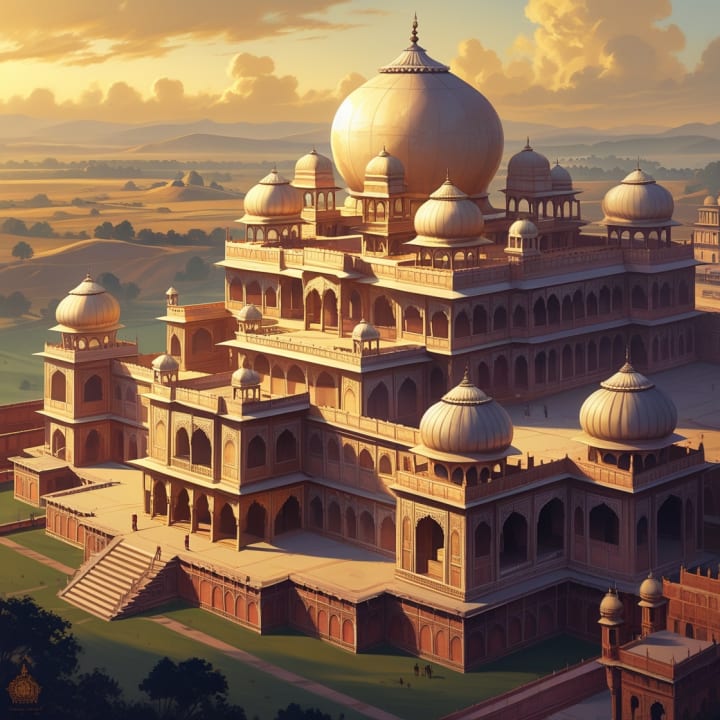
The Mysore Palace spans an extensive area of 72 acres, establishing it as the largest palace in India by built-up area. The palace complex consists of several courtyards, gardens, and ancillary edifices. The Indo-Saracenic architectural stylea fusion of Hindu, Gothic, Rajput, and Mughal influencescharacterizes its splendor. It boasts intricate carvings, domes, arches, and a commanding façade that radiates under lighting during celebrations.
Construction Duration and Labor Force
The construction of the Mysore Palace necessitated around 15 years to finalize, from 1897 to 1912. A vast labor force was enlisted, comprising proficient artisans, engineers, and laborers from various regions of India. It is estimated that upwards of 5,000 workers participated in the building endeavor. The palace’s interiors were embellished with imported materials, such as Belgian stained glass, Italian marble, and Burmese teak, underscoring the international influences on its design.
Treasures and Riches of the Palace
The Mysore Palace is not merely an architectural wonder but also a vault of considerable wealth. It contains invaluable artifacts, paintings, sculptures, and a collection of royal jewelry, including the renowned Mysore Golden Throne, which is embellished with precious stones and gold plating. The palace’s lavish Durbar Hall, featuring a gilt ceiling and massive chandeliers, exemplifies the grandeur of the Wadiyars’ reign.
Contemporary Relevance
Presently, the Mysore Palace serves as a prominent tourist destination, attracting over 6 million visitors each year, rendering it one of the most frequented monuments in India. During the Dussehra festival, the palace becomes aglow with nearly 100,000 bulbs, providing a mesmerizing display that highlights the edifice’s magnificence.
Conclusion
The Mysore Palace transcends being merely a royal domicile; it embodies India’s majestic history, architectural ingenuity, and cultural legacy. Its vast expanse, extended construction timeline, and the considerable labor force engaged render it the largest and most illustrious palace ever erected in India. It perpetually enthralls visitors with its unmatched splendor and historical importance, establishing it as a genuine treasure in India’s architectural heritage.
The Grand Majesty: India’s Largest Palace Ever Built and Its Legendary Golden Throne
:
India is home to some of the most opulent palaces in the world, but one stands above the rest in sheer size, grandeur, and historical significance. This article explores the largest palace ever built in India, detailing its massive land area, the years it took to construct, the immense labor force involved, and its astonishing architectural and cultural value.
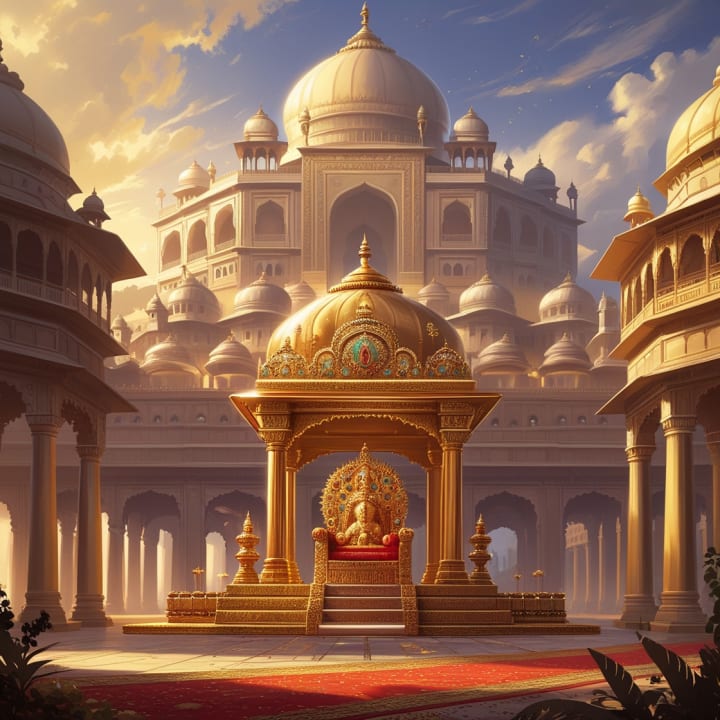
A special highlight is the Golden Throne, a legendary artifact symbolizing the power and prestige of the ruling dynasty. Crafted from pure gold, embedded with precious gemstones, and intricately designed by master artisans, this throne was more than just a seat—it was a statement of divine rule. Learn about its history, estimated worth, and how it became an iconic symbol of India's royal past.
From royal dynasties to modern-day marvels, discover the legacy of this grand palace, its treasured artifacts, and why it remains a symbol of India's rich heritage.
About the Creator
Say the truth
"Say the Truth: Explain Everything in the World" is your trusted source for uncovering facts and exploring the wonders of history, science, technology, and beyond. We simplify complex ideas and reveal truths to inspire curiosity .
Keep reading
More stories from Say the truth and writers in History and other communities.
The History of the Biggest Palace Ever Built
The Most Magnificent Palace Ever Erected: A Testament of Affluence, Authority, and Heritage Throughout the annals of history, magnificent palaces have been constructed to exhibit the affluence and authority of empires and sovereigns. Some of these architectural wonders have endured the passage of time, while others have diminished into obscurity. Nevertheless, one palace eclipses all others regarding dimensions, grandeur, and historical importancethe Forbidden City in Beijing, China. This article delves into the history of the Forbidden City, its construction, relevance, and how it contrasts with other palaces throughout the ages.
By Say the truth 10 months ago in History
Are Banks Open on Martin Luther King Jr. Day?
Introduction Martin Luther King Jr. Day, also called MLK Day, is a national holiday in the United States. Many people enjoy a day off from work or school on this day. However, a common question people ask is: Are banks open on MLK Day?
By Farhan Sayedabout 5 hours ago in History
Power's Sake
When it comes to gaining power, bad people use it to gain more They never gain power to do something with it, they gain power to have it, relish in it, double it down on itself so it grows exponentially and never goes anywhere. Even if you see the people in power commit an atrocity, that is never the true goal. It is a deplorable action for sure but the action itself usually doesn't matter it's the outcome.
By Donny Foley6 days ago in History




Comments
There are no comments for this story
Be the first to respond and start the conversation.