
The History of the Biggest Palace Ever Built
This article explores the grandest palaces ever constructed, from their architectural magnificence to the immense wealth they housed. Delving into the history of these monumental structures, it uncovers the stories of kings, emperors, and rulers who commissioned these marvels, the treasures they contained, and their cultural and historical significance.

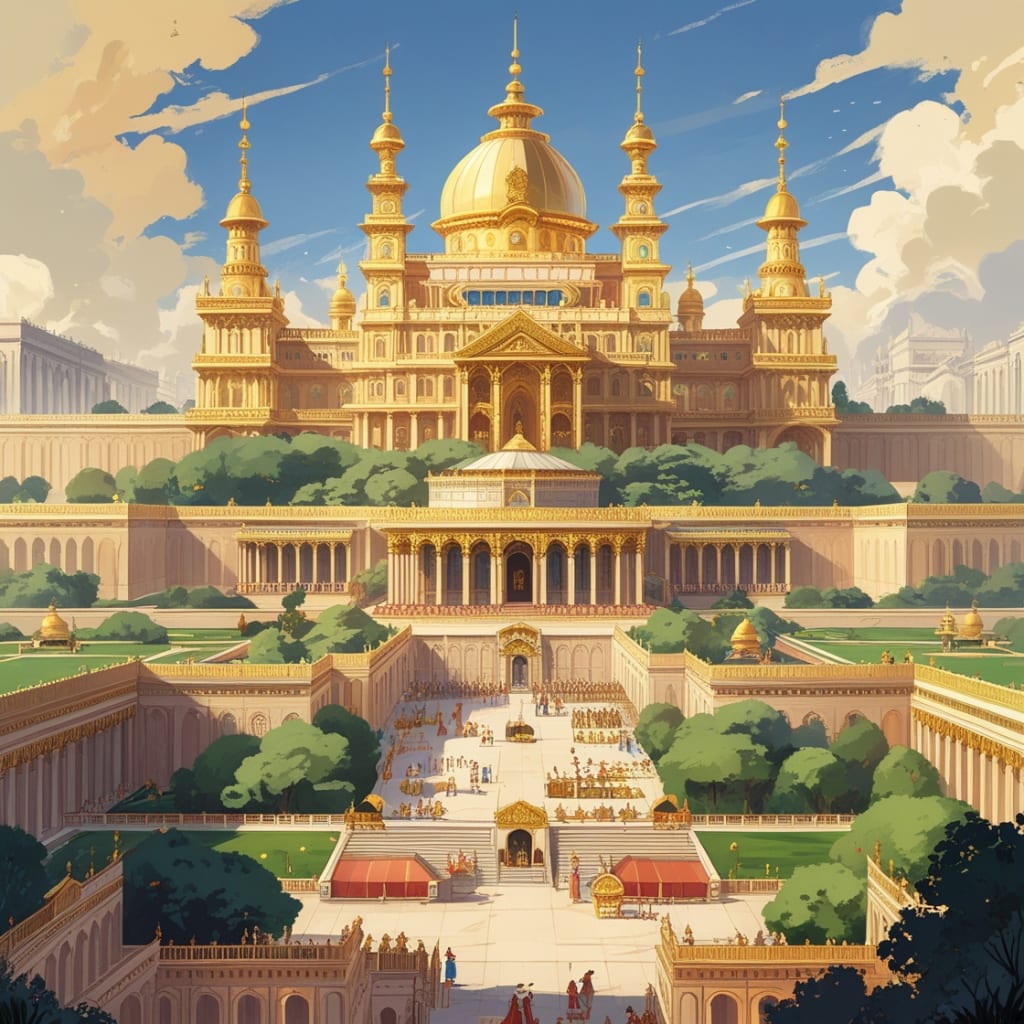
The Most Magnificent Palace Ever Erected: A Testament of Affluence, Authority, and Heritage
Throughout the annals of history, magnificent palaces have been constructed to exhibit the affluence and authority of empires and sovereigns. Some of these architectural wonders have endured the passage of time, while others have diminished into obscurity. Nevertheless, one palace eclipses all others regarding dimensions, grandeur, and historical importancethe Forbidden City in Beijing, China. This article delves into the history of the Forbidden City, its construction, relevance, and how it contrasts with other palaces throughout the ages.
The Forbidden City: The Most Expansive Palace Complex in History
The Forbidden City, situated in the center of Beijing, China, is the most extensive palace complex ever created. Spanning approximately 180 acres (720,000 square meters), it comprises 980 extant edifices featuring over 8,700 chambers. Erected during the early Ming Dynasty, this palace functioned as the imperial domicile of 24 emperors for nearly five centuries, from the Ming Dynasty (1368–1644) to the Qing Dynasty (1644–1912).
Construction of the Forbidden City
Initiated by: Emperor Yongle of the Ming Dynasty in 1406.
Finalized in: 1420.
Labor Force: In excess of 1 million laborers, including 100,000 proficient craftsmen.
Materials Utilized:
Millions of bricks and timber beams.
Golden roof tiles imported from various regions of China.
White marble transported from quarries located hundreds of miles away.
Special nanmu wood obtained from dense forests.
The construction required 14 years, with artisans and engineers devising a structure reflecting Chinese cosmic and philosophical principles, particularly Feng Shui and Confucian thought.
Symbolism and Design
The Forbidden City was carefully conceived and organized to embody the emperor's celestial power. Some distinct characteristics of the palace encompass:
Hall of Supreme Harmony: The largest wooden edifice in China, utilized for significant state ceremonies.
The Meridian Gate: The primary entrance, symbolizing the emperor's supreme authority.
Nine Dragons Screen: A symbolic barrier that wards off malevolent spirits.
Golden Roofs: Exclusively employed for imperial structures to denote the emperor’s divine status.
Comparison to Other Noteworthy Palaces
1. Versailles Palace (France)
Constructed by: Louis XIV in the 17th century.
Dimensions: 87,728 square meters (~21 acres).
Renowned for: The Hall of Mirrors, expansive gardens, and opulent Baroque architecture.
2. Buckingham Palace (United Kingdom)
Originally Built: As Buckingham House in 1703, expanded in the 19th century.
Dimensions: 77,000 square meters (~19 acres).
Prominent Features: Official residence of the British monarchy, housing 775 rooms, and the iconic Changing of the Guard ceremony.
3. Topkapi Palace (Turkey)
Built by: Sultan Mehmed II in 1465.
Dimensions: 700,000 square meters (~173 acres, featuring open courtyards, unlike the Forbidden City).
Significance: The administrative hub of the Ottoman Empire for over four centuries.
Despite the grandeur of these palaces, none rival the vast scale and historical profundity of the Forbidden City.
The Forbidden City’s Role in History
From the Ming Dynasty to the decline of the Qing Dynasty, the Forbidden City remained the political and cultural core of China. Notable events include:
Ming Dynasty governance (1368–1644): The palace was the nucleus of Chinese administration and culture.
Qing Dynasty reign (1644–1912): Manchu rulers assumed control, maintaining the city's relevance.
Dissolution of the Qing Dynasty (1912): Emperor Puyi abdicated, signifying the conclusion of imperial rule in China.
Preservation as a museum (1925–Present): Currently referred to as the Palace Museum, drawing millions of guests each year.
Estimated Worth of the Forbidden City
Although it is challenging to attribute a monetary worth to such an iconic location, approximations indicate that the Forbidden City could exceed $70 billion owing to:
Its cultural and historical importance.
The expense of materials and labor in contemporary currency.
The worth of artifacts housed within the palace, encompassing ancient paintings, calligraphy, jade items, and imperial treasures.
Conclusion
The Forbidden City remains the largest, most historically significant palace complex ever constructed. Its architectural excellence, rich history, and substantial cultural value render it incomparable among the world’s most remarkable palaces. While other magnificent palaces exhibit wealth and dominance, the Forbidden City distinctly embodies centuries of Chinese imperial heritage. Even today, it continues to evoke admiration, serving as a testament to China’s imperial splendor and cultural legacy.
About the Creator
Say the truth
"Say the Truth: Explain Everything in the World" is your trusted source for uncovering facts and exploring the wonders of history, science, technology, and beyond. We simplify complex ideas and reveal truths to inspire curiosity .
Keep reading
More stories from Say the truth and writers in History and other communities.
Plundered Empires: The Impact of Invasions on Wealth and Civilization
Plundered Empires: The Impact of Invasions on Wealth and Civilization (Continuation) The Devastation of Conquest Invasions throughout history have reshaped civilizations, not only in terms of power but also through economic and cultural transformations. The collapse of societies due to conquest led to the destruction of infrastructure, forced migrations, and the plundering of vast riches. The aftermath of these invasions often saw former centers of knowledge and culture reduced to ruins while conquerors amassed unimaginable wealth.
By Say the truth 10 months ago in History
3 Completely Normal Jobs With Disturbing Hidden Histories
Every job has a backstory. Some are boring, some are inspiring, and some are better left buried. While modern versions of certain professions look harmless—sometimes even respectable—their origins tell a much darker story.
By Enoch Sagini5 days ago in History
Albert Einstein: The Mind That Changed the Universe
Albert Einstein was not born a legend. When he entered the world on March 14, 1879, in the quiet German city of Ulm, nothing about his early life suggested that he would one day transform science forever. In fact, his beginnings were remarkably ordinary—and in some ways, difficult. As a child, Einstein spoke slowly, so slowly that his parents worried something might be wrong. Teachers considered him distracted and stubborn, a boy who questioned too much and obeyed too little. Yet hidden beneath that quiet exterior was a restless, powerful curiosity that would later reshape the universe itself.
By The best writer 4 days ago in History




Comments
There are no comments for this story
Be the first to respond and start the conversation.