
The Good, the Bad, and the Ugly of American Presidents: Part 9
Rutherford B. Hayes, James A. Garfield, and Chester A. Arthur


All too often, American presidents are generalized. This one was good, this one was bad, or all of them were bad before or after this point. In reality, each President has positive or negative aspects that may be frequently overlooked. Sometimes what seemed good at the time is not so good in retrospect, or what was controversial would be accepted today. In this series, we'll look at the highlights of each President from the founding of America to today.
In Part 8, we looked at the presidencies of Andrew Johnson and Ulysses S. Grant. We now continue with two more presidents, Rutherford B. Hayes, James A. Garfield, and Chester A. Arthur.
19. Rutherford B. Hayes (in office March 4, 1877 – March 4, 1881)
Worked as a successful attorney.
He was a lifelong abolitionist, often defending runaway slaves in court.
Served in the Civil War, wounded in battle five times and decorated for bravery, eventually achieving the rank of brevet major general.
After the war, started his political career, joining the Republican party as what would be known today as a "moderate", but what known then as part of the "half-breed" faction of Republicans, identified as those in favor of political reform and opposed to cronyism and political machines.
Served in the U.S. Congress, representing Ohio.
Served two terms as Ohio Governor and elected to a third term before being elected president. He was the first person to be elected to a third term as governor of Ohio.
While governor, reduced the state debt of Ohio, reestablished the Board of Charities, and oversaw the building of a school for the deaf and a reform school for girls.
Achievements as President
Took the oath of office in the Red Room of the White House, making Hayes the first president to take the oath inside the White House.
Defeated Congress's attempts to allow local groups (such as the rapidly spreading Ku Klux Klan and the Red Shirts) to influence elections by intimidating voters, specifically by keeping freed blacks from voting.
Tried to make blacks truly equal in the South by changing social norms and affecting societal change.
Formed a special cabinet committee to draw up new standards and forms to assess the qualifications of government appointments. In this effort, it became immediately clear that in one New York office alone, 20% of the staff were immediately expendable, serving no real purpose.
When railroad workers went on strike, protesting multiple cuts in their pay so the railroads could stay in business, Hayes sent troops to keep the peace, and the troops eventually had to use force to stop riots, with no loss of lives on either side. This was the first time a president sent troops to stop a protest against a private company. In contrast, when state militias were used to control violent protests during the same strike, lives were lost on both sides.
Mediated a territorial dispute between Paraguay and Argentina.
When Mexican bandits started raiding American towns, Hayes authorized American troops to pursue, them, even into Mexico, which enraged the president of Mexico. Hayes agreed to have American and Mexican troops pursue bandits together, and the raids stopped.
Used the Monroe Doctrine to assert control over a proposed canal in Panama, telling Congress it was important to the security of the United States to ensure that any canal in Panama be under American control.
Embarked on a 71-day rail tour of the Western United States, becoming the 2nd sitting president to travel west of the Rocky Mountains.
Influenced by his wife's temperance, and witnessing drunken behavior by some guests at a White House function early in his term, Hayes banned alcohol from the White House for the rest of his term, making him popular among Protestants, ministers, and many Republicans.
Pledged to serve one term, and kept his promise, retiring to his home in Ohio after leaving the White House.
Failures
While he vetoed Congress's attempts to protect groups that intimidated black voters, Congress denied funding for the marshals who would actually enforce laws protecting black voters, thus making it a moot point.
Could not affect the societal change he sought in the South that would make blacks truly equal and free.
While he fought to reform the selection of government employees, and build government efficiency, when he demanded that a number of government employees in New York resign because they were unqualified for their jobs, they refused. Further, when he selected better-qualified replacements for these employees, including future president Theodore Roosevelt, Congress refused to confirm all but one of them.
Hayes sought to make Native Americans self-sufficient by breaking up Native American land into allotments for individual families. He failed to consider the effect of Indians selling their lands to land speculators, who then sold those lots as "surplus land", reducing the total amount of Indian land.
Hayes vetoed a bill allowing American coins to be minted in both silver and gold, fearing it would inflate the value of American currency and damage the economy. His veto was overridden, the only time Congress overrode his veto.
Controversies
In his campaign for governor, a major part of his platform was opposing state aid to Catholic schools. While it's unknown if he was actually anti-Catholic, he opposed public funding for those schools, and used popular anti-Catholic fervor to overcome his opponent and win the election.
As governor of Ohio, continued his anti-Catholic policies by repealing the Geghan Bill, which allowed the appointment of Catholic priests to public schools and state penitentiaries.
He lost the popular vote for president, in a contested election that once again was decided by a Congressional vote, which was also locked up. He finally won through what was essentially a backroom deal, the Compromise of 1877. In this deal, a decisive number of members of Congress agreed to vote for him if he would end federal support for post-war reconstruction and remove troops from the South, which effectively ended enforcement of post-war regulations ensuring good and fair treatment of former slaves.
Because they never accepted the results of the election, many Democrats referred to Hayes as "Rutherfraud" or "His Fraudulency" for the 4 years of his term. In turn, Democrats largely won the Northern states due to an influx of immigrants, and Republicans achieved an electoral victory by winning the Western states and key southern states, while accusing the Democrats of electoral fraud and suppression of black votes in the South.
In 1868, under President Johnson, Congress ratified the Burlingame Treaty, establishing friendly relations with China and allowing unlimited numbers of Chinese immigrants. This became a problem in Western states after the economic Panic of 1873, and residents of those states complained that Chinese immigrants were taking their jobs and cheap Chinese labor was reducing wages. Anti-Chinese riots broke out in San Francisco. To halt the influx of Chinese immigrants, Congress passed the Chinese Exclusion Act, which Hayes vetoed, because it nullified the Burlingame Treaty. He didn't believe treaties should be nullified without negotiating with the other country(ies). This upset Democrats in the Western states so much they tried to impeach him. Hayes was only saved from impeachment when Republicans refused to vote on the matter.

20. James A. Garfield (in office March 4, 1881 – September 19, 1881)
Grew up in poverty, without a father, which made him the subject of mockery from classmates and other children. He sought solace from their teasing by reading voraciously, learning of the power of the written and spoken word.
Went to seminary and supported himself as a preacher, a teacher, and a carpenter as he put himself through college, graduating Phi Beta Kappa and salutatorian of his class.
Became a lawyer after graduating college and became involved in politics, winning election for Ohio state senate.
While he considered the Civil War a holy crusade against slavery and knew he should enlist, he was asked by the governor of Ohio to delay enlistment and instead go on a speaking tour of Ohio, using his speaking skills to encourage others to enlist.
Once he did enlist, Garfield was immediately made a colonel and told his first assignment was to fill the ranks of his regiment. He was eventually promoted to the rank of major general and commander of the western armies.
While still active in the Army, Garfield was nominated as a candidate for Congress. He refused to campaign, focusing on the war, and won. Unsure what to do, he asked President Lincoln, who told him the country had too many generals and not enough effective members of Congress, so he resigned from the Army and took his seat in the House of Representatives, serving for nine terms, eventually being elected to the Senate by the Ohio General Assembly. He didn't serve in the Senate, as he had also been elected President.
While in Congress, worked to reform enlistment practices, including ending bounties and the practice of commutation, in which weatlhy individuals could pay a fee rather than serve. His efforts caught the attention of President Lincoln, who agreed with him, affecting the change.
Became a born-again Christian.
Started working as a lawyer again while in Congress because he needed the money.
He is the only sitting member of the House of Representatives to be elected President.
Achievements as President
Asserted the civil rights of African Americans.
Refinanced the national debt by giving bondholders the option of cashing out their bonds immediately or holding them and receiving a payout of 3% rather than 6% interest in the future. This saved the government an estimated $10 million.
Worked to root out corruption of postal workers, resulting in the investigation and resignation of corrupt postal officials.
Proposed a universal education system funded by the federal government, believing education was the key to truly freeing former slaves.
Appointed several African Americans, including Frederick Douglass, to prominent government positions.
Failures
Congress refused to fund Garfield's plan for a national educational system.
Sought to increase American prosperity through trade with Latin America and Korea, but he was killed before these plans were realized.
Garfield shared a common belief at the time, that President Lincoln's assassination was a fluke, and the president didn't need to be guarded. This was a fatal mistake, as Garfield shot by an assassin, dying in agony 11 weeks later either of his injuries or the attempts of doctors to remove the bullet with unclean hands and tools.
Controversies
During his military service, Garfield became ill with jaundice and was nursed back to health by his wife. After he recovered he insisted on returning to military service and travelled to Washington, D.C. to await a new assignment. While he was there, there were rumors that he was having an affair. These rumors persisted, threatening his marriage until his wife chose to ignore them.
He believed the residents of the Southern states forfeited their constitutional rights when they seceded, and he favored harsh treatment for members of the Confederate government and army, including seizure of their property and money, and imprisonment or execution.

21. Chester A. Arthur (in office September 19, 1881 – March 4, 1885)
Was a successful lawyer.
Served as a quartermaster general in the Civil War.
Appointed as Collector for the Port of New York, the chief customs collector.
Served as vice president under President James A. Garfield.
Achievements as President
Successfully faced opposition from Garfield's cabinet when he assumed the presidency after Garfield's assassination. Because they were of the opposing faction of a divided Republican party, most of the cabinet resigned quickly, at a time when Congress was in recess and could not approve cabinet nominations. In total, Arthur had to replace all but one of the cabinet members.
Served without a Vice President, because the Constitution did not require nor allow that post to be filled in the event the position of president was vacated and then filled by the vice president.
Rebuilt the Navy after most ships became inoperative after the Civil War, growing the Navy more than any other president in history.
Ended the "spoils system" of hiring government, opting to hire and appoint on merit, an undertaking started by President Garfield. Garfield was assassinated by a frustrated office-seeker, proving that civil service reform was a key issue to be addressed.
Implemented harsher restrictions on immigration, preventing the mentally ill, cognitively disabled, criminals, or anyone who might be dependent on public assistance, from entering the United States.
Reduced tariffs in order to balance a budget surplus the government had been operating under due to high taxes left over from the Civil War.
Retired at the end of his term due to failing health, but was celebrated by contemporary critics for his performance in office.
Failures
Tried to form coalitions to improve racial equality in the South, but failed everywhere but in Virginia.
When Congress struck down the Civil Rights Act of 1875, Arthur was unable to successfully replace it.
Controversies
Arthur's family moved frequently when he was a child, leading some to speculate that he was born in Canada, or Ireland, making him ineligible to be Vice President or President. It was proven that he was born in Vermont.
Signed the Chinese Exclusion Act, banning Chinese immigrants for 10 years.
Signed legislation making polygamy a federal crime, and keeping polygamists from holding public office or voting. This was specifically directed at controlling members of the Church of Latter-Day Saints (the Mormons) in Utah.
Next: Grover Cleveland and William McKinley
About the Creator
Gene Lass
Gene Lass is a professional writer and editor, writing and editing numerous books of non-fiction, poetry, and fiction. Several have been Top 100 Amazon Best Sellers. His short story, “Fence Sitter” was nominated for Best of the Net 2020.
The Rise and Fall of Nicolae Ceaușescu
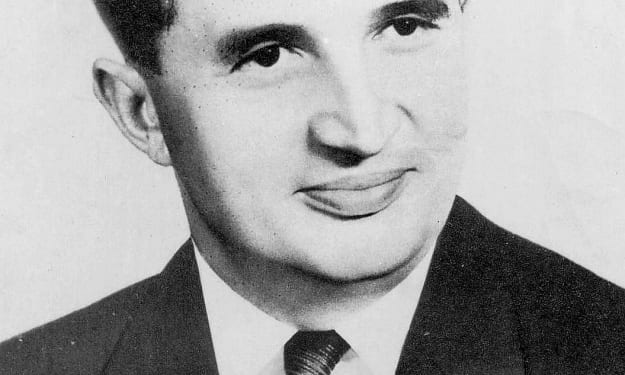
Nicolae Ceaușescu’s rise to power was initially marked by promise, even optimism. Born in 1918 into a poor peasant family, he entered politics early, shaped by the ideological rigidity of interwar and wartime communism. When he became General Secretary of the Romanian Communist Party in 1965, following the death of Gheorghe Gheorghiu-Dej, many Romanians saw in him a younger leader, one who might soften the harsh Stalinist legacy that had defined the previous decades. For a society weary of repression and deprivation, Ceaușescu appeared to embody the possibility of cautious change.
By Pure child3 days ago in History
A woman from a vanished female dynasty was discovered buried with 270,000 beads.
In a Copper Age tomb close to Seville, Spain, the Montelirio bead assemblage contains over 270,000 beads that identify the ladies buried there as elites. The discovery is the biggest collection of beads ever
By Francis Dami5 days ago in History



Comments
There are no comments for this story
Be the first to respond and start the conversation.