
The Forgotten Whaling Ports of the Eastern Seaboard
Friday Frolic Edition

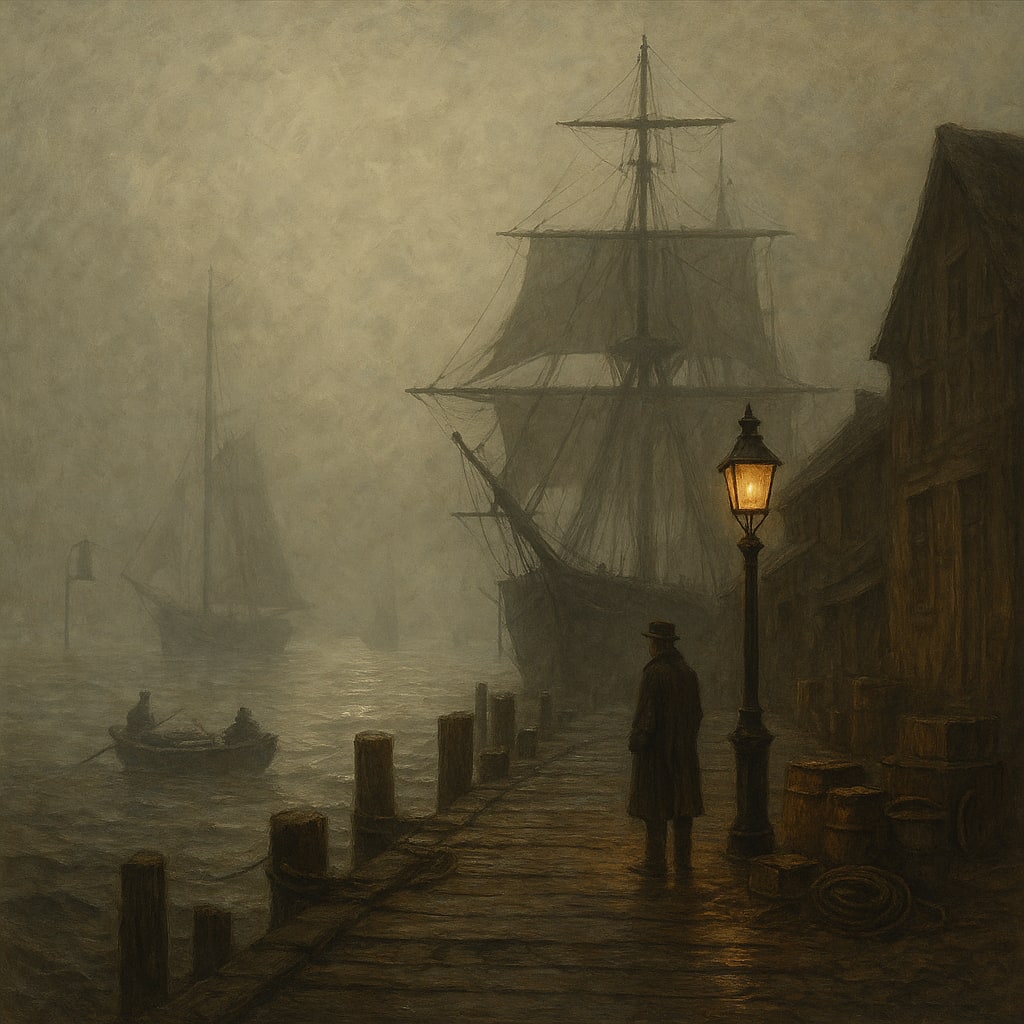
On a foggy morning in 1847, a solitary figure stood on a creaking New England pier, staring out into a gray and endless horizon. The brine of the Atlantic clung to his coat, and somewhere in the mist, a ship’s bell tolled. Around him, the harbor groaned with life: men heaving barrels of whale oil onto carts, the smell of salted blubber drifting through the air, gulls circling with their mournful cries. It was the heartbeat of a world now almost forgotten—a world where tiny coastal towns lit the globe with the oil of giants from the sea.
Before the rise of petroleum, before steel and industry replaced sails and harpoons, America’s Eastern Seaboard was powered by whales. Whale oil fueled lamps from New York to London, lubricated the gears of factories, and filled the pockets of daring captains who sailed into the teeth of the unknown. For nearly two centuries, the coast of New England thrived on this perilous trade, transforming sleepy fishing villages into bustling ports. Today, many of these harbors have slipped into quiet obscurity, their glory swallowed by time and tide. But if you walk their weathered docks, history still whispers through the creak of old timbers.
The Golden Age of Whaling
By the early 1700s, Americans had discovered that the ocean wasn’t just a boundary, it was a treasure chest. Sperm whales and right whales cruised the Atlantic in massive numbers, and the oil in their heads and blubber was more valuable than gold. Whale oil burned clean and bright, the ideal fuel for lamps before kerosene’s invention. The rare substance known as spermaceti; a waxy oil from the heads of sperm whales, lit the streets of cities and filled the candles of kings.
This was a trade of extraordinary peril. Whalemen set out in small wooden boats with hand-thrown harpoons, chasing animals as long as city buses. A single mistake could lead to a shattered boat, a man lost to the depths, or a vengeful whale turning predator. Tales of smashed hulls and storms at sea were common, but so were the riches. By the 19th century, the United States led the world in whaling, and Eastern ports thrived on the boom. The oceans became highways of wealth and graveyards of those who dared to harvest it.
Ports That Time Forgot
Though some names like Nantucket and New Bedford still ring with maritime fame, dozens of once-vital whaling ports now linger as quiet coastal towns, their wharves lined with yachts instead of barrels. To walk them today is to drift through a living ghost story.
1. New Bedford, Massachusetts – “The Whaling Capital of the World”
No port symbolized the height of American whaling like New Bedford. By the mid-1800s, it was the richest city per capita in the United States, thanks to the river of whale oil flowing through its harbor. Herman Melville himself sailed from here and immortalized its whalemen in Moby Dick. Ships like the Charles W. Morgan embarked on years-long voyages to the Pacific, chasing whales from the Azores to the Arctic. Today, the New Bedford Whaling Museum stands as a tribute to this brutal and astonishing era, its walls lined with harpoons, scrimshaw carvings, and logbooks stained with salt.
2. Nantucket, Massachusetts – “The Island That Lit the World”
Before New Bedford’s rise, Nantucket reigned supreme. This tiny island community once controlled the global whaling trade, sending its men across the world in search of oil. Life here was dominated by the sea: women managed households alone for years while husbands chased the horizon, and the island reeked of boiling blubber during the summer months. By the 1850s, the industry began to slip away, as petroleum discovery and larger ports took the lead. Today, Nantucket thrives on tourism, but its cobblestone streets still whisper of a time when it lit the lamps of the world.
3. Edgartown, Martha’s Vineyard – “A Whaler’s Paradise Turned Quiet”
In the early 19th century, Edgartown was a glittering jewel of whaling wealth. Captains’ mansions lined the harbor, their widows’ walks perched high for wives to scan the horizon. The waters buzzed with activity, and ships returned heavy with oil and bone. When whaling collapsed, Edgartown slipped into a quiet charm it never lost. Today, sailboats drift where whaling ships once braved storms, and the harbor echoes with the ghosts of fortune and danger.
4. Greenport, Long Island – “The Forgotten Harbor”
On the North Fork of Long Island, Greenport saw its own brief whaling boom. In the 1840s, it was alive with blacksmiths, cooperages, and the thunder of barrels rolling onto docks. But its glory was short-lived, fading by the Civil War as larger ports eclipsed it. Now, Greenport is better known for oysters and vineyards, but the skeletons of old warehouses and preserved harpoons in its maritime museum remind visitors of its salty, dangerous past.
5. Sag Harbor, New York – “The Tiny Titan”
Tucked on the eastern end of Long Island, Sag Harbor punched far above its weight in the 1830s. Its fleet of whalers roamed to the edges of the world, and the wealth they brought back transformed the little port into a maritime powerhouse. Today, the harbor gleams with polished yachts, but the past is never far. You can still see the Old Whaler’s Church, built by those who risked everything for oil from the sea. Each of these towns thrived on the labor of men who might never return, their ships vanishing into storms or succumbing to the wrath of leviathans. The ocean gave, and the ocean took away.
The Fall of the Whale Kings
The end came swiftly. In 1859, the discovery of petroleum in Pennsylvania lit the world in a cheaper, safer flame. Steam power, the Civil War, and declining whale populations sealed the fate of the industry. By the late 1800s, the grand age of whaling was over, leaving behind shuttered warehouses, quiet docks, and families who had given their lives to the sea.
What was once the engine of global light became a cautionary tale of overreach and change. Towns that had roared with activity fell silent, waiting for tourism or fishing to replace the old trade. A few became ghost ports, remembered only in maritime logs and old sepia photographs.
Ghosts, Museums, and Legacy
Today, you can still walk these historic streets and sense the old world. New Bedford Whaling Museum lets you touch history with a full-scale whaling ship and relics of a dangerous life at sea. Nantucket’s Whaling Museum brings the age of ambergris and scrimshaw to life. Greenport and Sag Harbor maintain small but fascinating maritime collections that honor the risk and sacrifice of men who once chased whales into the abyss.
In the quiet of these harbors, the ghosts of the past still seem to linger. The tide laps against the piers, the gulls cry, and if you close your eyes, you might hear the creak of rigging or the call of a distant lookout:
“There she blows!”
Closing Reflections
The Eastern Seaboard’s forgotten whaling ports are more than dots on a map... they are living testaments to ambition, peril, and change. They remind us that entire worlds can vanish in a single generation, swallowed by progress and tide alike.
If you ever find yourself wandering these weathered docks at dusk, the fog rolling in like a gray memory, pause for a moment. Listen. Somewhere beyond the horizon, the echoes of the past still call, and a lonely ship’s bell tolls for the men who went to sea… and never came home.
About the Creator
The Iron Lighthouse
Where folklore meets freeway. A guide to the strange heart of the American backroads...
Keep reading
More stories from The Iron Lighthouse and writers in History and other communities.
Ghost Towns You Can Actually Visit
There’s a special hush that settles over a ghost town. Its not just silence, its history holding its breath. Wooden sidewalks creak underfoot, doors hang slightly ajar, and the wind whistles through empty window frames like a ghostly flute. Visiting a ghost town isn’t like strolling through a museum or a park. It’s stepping into a paused moment in time, where the bustle of miners, shopkeepers, and schoolchildren faded long ago.
By The Iron Lighthouse6 months ago in History
The Shadow of a Giant
I never met him. But I knew his voice. It came through our black-and-white TV in 1983, calm and steady, speaking of “morning in America” while my father fixed dinner and my mother worried about bills. To me, he was just a man in a suit—distant, polished, untouchable.
By KAMRAN AHMAD5 days ago in History
Can the United States Leave NATO?
Can the United States Leave NATO? What It Would Take—and What It Would Mean The North Atlantic Treaty Organization, commonly known as NATO, has been one of the most powerful military alliances in modern history. Since its creation in 1949, the United States has been NATO’s strongest member—militarily, financially, and politically. But in recent years, debates have grown louder about whether the U.S. should remain in the alliance. This raises a serious question: how could the United States be removed from NATO—or leave it—and what would that mean for the world?
By Wings of Time about 6 hours ago in History
'20/20'
"Do It Again" the track that would ultimately open the Beach Boys final album on Capitol Records which was released on February 10th 1969 had originally been released as a single in August of 1968. The track was the first of many post-Pet Sounds era throwbacks to the early Beach Boys sound which would become continually more cliched and eventually lead the Beach Boys to the level of self-parody they would eventually succumb to in the 1980s while their closest contemporaries The Beatles nearing the end of their run in 1969 would go on to be viewed as the most influential band of all time. However, the song itself is not bad on its surface, and it opens with a futuristic sounding (for 1969) drumbeat captured by then-Beach Boys engineer Stephen Desper using tape delays on the drums performed by Dennis Wilson and John Guerin. The song has been re-recorded numerous times over the years on various Beach Boys-related projects most notably the 2011 re-recording at Capitol studios featuring the five surviving Beach Boys at the time backed instrumentally by various members of both the Brian Wilson Band and Mike Loves touring "Beach Boys" to promote the then upcoming Beach Boys 50th Anniversary reunion tour in 2012. The hammering and power drill sound at the end of the song was an excerpt from a track called "Workshop" that was to be a part of the uncompleted "SMiLE" album.
By Sean Callaghan6 days ago in Beat




Comments
There are no comments for this story
Be the first to respond and start the conversation.