
The Forgotten Island
A 15-Year Mystery Unraveled

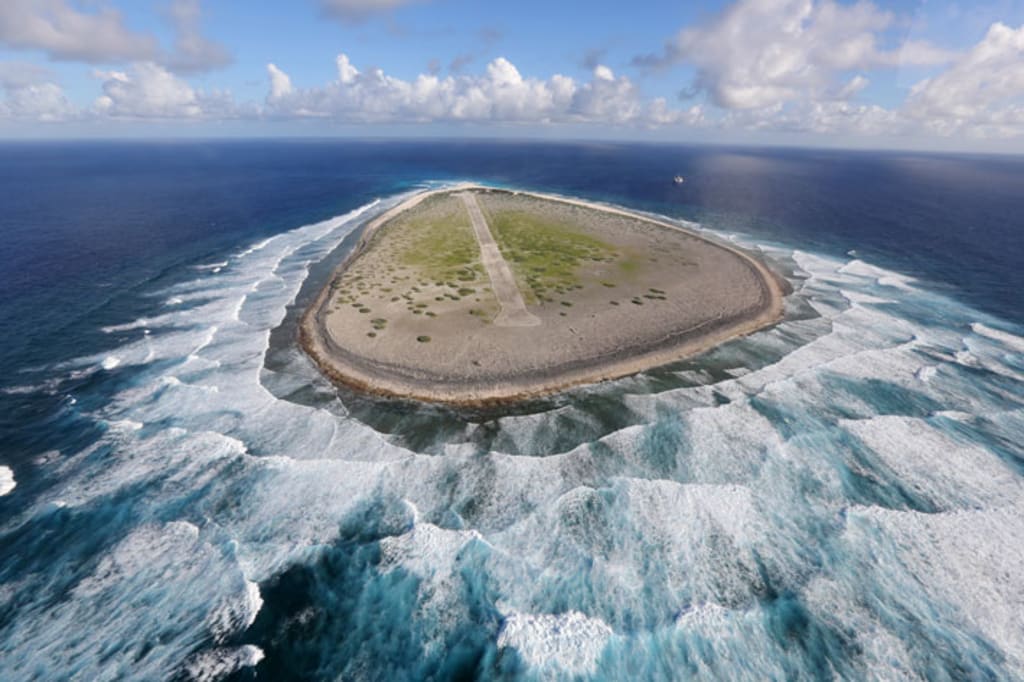
In the vast expanse of the Indian Ocean lies a speck of land barely visible on the world map. Today, it's known as Tromelin Island, but for a long time, it was simply called Sand Island. This tiny, flat islet, surrounded by coral reefs and battered by the relentless ocean, is a rather unremarkable place—the sort of sand spit that savvy sailors would sail straight past without a second thought. But there's nothing unremarkable about this island because it is home to one of the most remarkable tales in all of human history.
The Unlawful Mission
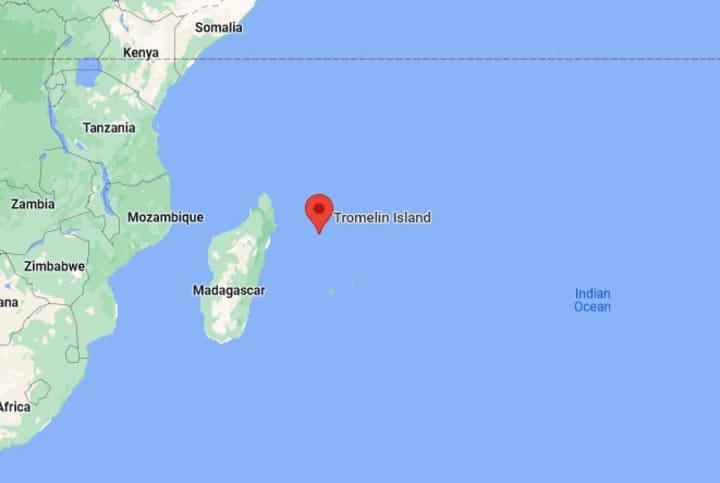
In the 18th century, the Indian Ocean was a bustling theater of naval routes, colonial ambitions, and the dark trade in human lives. Amidst this global scramble, the island of Mauritius, then known as Île de France, emerged as a pivotal outpost for the French in their Indian Ocean interests. Against this backdrop, in 1761, a ship belonging to the French East India Company embarked on a secretive and unlawful mission. It set sail from Madagascar under the canvas of stars, heavily laden with a valuable cargo—not spices, textiles, or gold, but human lives. Malagasy slaves, natives of Madagascar, approximately 160 men, women, and children were on board, bound for the slave market of Mauritius.
The Shipwreck
The trade in enslaved people was a lucrative business despite rapidly growing ethical and legal constraints against it. Jean Lafargue, the captain of L’Utile, was driven by profit, ignoring the colonial authorities' prohibition against such a trade. As L’Utile navigated the treacherous waters of the Indian Ocean, it approached the small, uninhabited île de Sable, or Sand Island in English. But to history, this island would soon be bestowed with a new name—Tromelin Island.
Despite the island being only one mile long by half a mile wide, it still caused mayhem as it appeared on the horizon. The captain had two navigational charts of the area, the only problem being they both contradicted each other, and they were both completely wrong. This, paired with inclement weather, caused the ship to steer off course, and on the night of July 31, 1761, L’Utile struck the coral reefs surrounding Tromelin Island. The hull shattered, and within minutes, the sea claimed many lives, mostly those of the slaves trapped in the cargo hold.
Survival Against the Odds
The dawn following the shipwreck revealed a desolate scene. The survivors, a mix of French crew members and Malagasy slaves, stood amidst the wreckage on a sliver of land in the middle of the Indian Ocean, their fates now as uncertain as the horizon that stretched endlessly around them. Leadership fell to the ship's first officer, Barthélemy Castellan du Vernet, as Captain Lafargue had succumbed to a mental breakdown under the weight of the tragedy. Castellan rallied the survivors to salvage what they could from the wreckage, creating a stockpile of materials that would prove vital in the coming months. Amongst the debris, they found barrels of food, tools, and pieces of timber. The most pertinent use of those materials was constructing rough shelters, as the island offered no natural protection against the elements—a flat, barren landscape scorched by the relentless sun by day and chilled by winds at night.
Two camp areas were established—one for the slaves and another on the other side of the island for the crew. Castellan also built a forge and an oven with materials recovered from the wreck. The island offered no fresh water, but the castaways soon sorted that with a Herculean group effort. Over the next three days, they dug an impressive five-meter-deep well. But then the hunger set in. The initial rations salvaged from the ship were all but consumed within a few days, and the island's barren landscape wasn't exactly Mother Nature's pantry. The castaways turned to the sea, where they found fish and turtles, and to the sky, where birds provided some sustenance.
The Abandoned Survivors
Fishing required skill and patience, and catching birds was no easy task on an island with little cover for stalking prey. Yet, necessity drove innovation, and the survivors adapted their methods, crafting makeshift fishing gear from the wreckage and devising new traps to catch birds. Before long, Castellan and other crew members began the construction of a boat using timber from the wreck. In a little over a month, they completed it and named her Providence. On September 27, two months after arriving on the island, the jerry-rigged Providence set sail. On board were 122 men—all French crew members and officers—not a single slave was permitted on board. They promised to return to rescue the slaves, but as their captors disappeared over the horizon, the Malagasy must have felt about as worthless as it's possible to feel.
After four days at sea, the crew aboard Providence reached Madagascar, then continued on to Île de France, where an unknown number of them died from tropical diseases. Eventually, the remaining crew reached Mauritius, returning to civilization. To be fair to them, they did ask the port authorities to send a vessel to rescue the slaves they left behind, but their request was instantly denied. Over the following years, members of the rescue party would repeatedly ask for salvation for the slaves, but time and time again, those in power refused to lift a finger.
A Decade of Neglect
And that's the way it stayed for 15 years. The plight of the Tromelin Island castaways remained a distant echo in the corridors of power in the French colony of Mauritius and back in France. Quite simply, the machinations of the empire and European politics overshadowed the plight of marooned slaves. France had recently come out of the Seven Years' War against Britain and Prussia, and the French East India Company, the empire's main machinery of trade, went bankrupt and was dissolved shortly afterward in 1769. So, it's fair to say that the French were preoccupied. The rescue of a few lost slaves was quite simply at the very bottom of the to-do list.
It's not like nobody knew they were there. Their abandonment and lack of rescue for what was now over a decade were occasionally talked about in French newspapers. It's just that people simply didn't care enough. This was a time when society was still brutally divided into classes, and to most people, a bunch of lost Malagasy slaves were about as lowly as they came. Having said that, there were actually two rescue missions in 1773, but both were small in scale, and both failed miserably. In fact, the second attempt failed so spectacularly that one of the crew ended up getting marooned with the slaves on the island. Once on the island, he built a raft and loaded it with three Malagasy men and three women, but they all ended up getting lost and probably died at sea. So, yeah, basically, the second rescue mission ended up killing six slaves and rescuing zero.
The Rescue Mission
However, back in France, the relentless advocacy of Barthélemy Castellan du Vernet, the first officer of L’Utile, gradually began to pierce the veil of neglect. Castellan, haunted by the memories of those he left behind and bound by a promise of return, embarked on a tireless campaign to orchestrate a rescue mission. For years, Castellan's efforts were met with indifference. The logistical challenges of mounting a rescue operation to such a remote and perilous location had proved too great, as the first two rescue missions had shown. However, Castellan's persistent lobbying, supported by a few sympathetic ears within the naval and colonial administration, slowly began to yield results. Furthermore, the attitude towards slavery was starting to shift to be more sympathetic within the echelons of high French society, so public pressure was steadily mounting.
Eventually, Castellan's campaigning paid off. Jacques-Marie Rouzet de Tromelin, a captain in the French Navy, was finally persuaded of the necessity of the mission after sympathizing with the plight of the slaves. Tromelin was able to secure the necessary funds and resources. In November 1776, after 15 years of isolation for the survivors of Tromelin Island, the mission set sail under Tromelin's command. Tromelin's navigational skill and his crew's resolve were put to the test as they neared the island, contending with the same hazardous reefs that had claimed L’Utile 15 years ago. But they finally made it.
The Legacy of Tromelin Island
Upon their arrival, they found a small holdout of human life. The survivors were now reduced to a mere seven women and an eight-month-old infant. They were fragile but alive and well, dressed in garments they had crafted entirely from bird feathers. The rescue party was surprised to find a fire still lit. This same fire had been lit 15 years ago upon their arrival and had not stopped burning for a single day in all that time. How, when there was not a single tree on the island? There was a significant amount of wood left over from the wreckage of L’Utile, and the survivors occasionally topped it up with driftwood.
After bringing the slaves home and declaring them free women, no longer under the shackles of French slavery, Sand Island was officially renamed to Tromelin Island after Captain Tromelin, who led the rescue mission. The tale of survival on Tromelin Island lingered like a ghost story, largely untold and relegated to the footnotes of history, until renewed interest emerged in the late 20th and early 21st centuries. Archaeologists and historians, with a desire to uncover what really happened during those 15 years on the island, set off to find out for themselves. Max Guérout, a former French naval officer turned archaeologist, and fellow archaeologist Thomas Raman embarked on what they named Expedition Forgotten Slaves. It was a series of expeditions over several years. They meticulously excavated the site, uncovering incredible artifacts that told a story of survival against all odds.
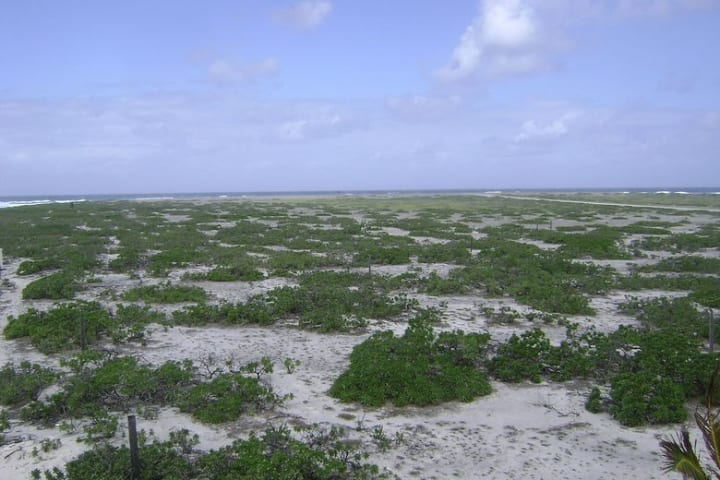
Fortunately for them, since the castaways had left over two centuries ago, a 30 cm layer of white sand had accumulated on the island, largely preserving every detail of the castaways' camp. They found remains of extensive shelters made from coral and a makeshift brick called beachrock. Beachrock is a kind of natural cement made from coral crushed into a powder, mixed with water, and then dried in the sun. The survivors made thick slabs of beachrock and used them to build stone walls. After a few months, they had constructed an entire hamlet made entirely from coral, water, and sunlight. Their construction was precise, going as far as positioning the windows of the buildings out of the typical path of the wind to counteract the typhoons that regularly battered the island. These pseudo-buildings also had kitchen areas complete with rudimentary utensils fashioned from material salvaged from the shipwreck or found on the island, including copper pots that showed evidence of being repaired multiple times over the years.
Closing
The lost slaves of Tromelin Island were handed a bad card in the deck of life. Already taken as slaves by a colonial power, they were then marooned on a strange island with no natural resources, no shelter, and no means of escape. Their only means of escape, the boat that the crew constructed two months after landing, disappeared and abandoned them. Then they were ignored by the same colonial power that had seen them marooned in the first place for no less than 15 years. They didn’t have the best time to put it lightly. But what the archaeological evidence shows is that these were men and women who didn’t quit. In fact, I don’t think I’ve ever read a story that shows more tenacity, strength, and ingenuity in the face of hardship. The fact that not one but seven of them survived on this barren hellscape for 15 years is probably one of the greatest stories of human endurance and willpower of all time. So, I think the least we can do is remember and retell their remarkable story.
About the Creator
Horace Wasland
Research analyst, writer & mystical healer. Exploring the edge where science meets mystery. From mystery/the mystical, to facts, news & psychology. Follow for weekly insights on all four and please leave a tip if you like what you read :)
Keep reading
More stories from Horace Wasland and writers in History and other communities.
The Aztec Blood Rituals
The Aztec Empire, a dominant force in pre-Columbian America, flourished in Central Mexico through a network of alliances and ruthless military conquests. Despite its brief existence of less than a century, the Aztec Empire left a profound mark on history with its massive stone temples, innovative farming techniques, and unique city planning. However, one of the most striking aspects of Aztec culture was their ritualistic practice of blood sacrifice. This post delves into the sacred significance of these rituals and what drove the Aztecs to center much of their religion and culture on the shedding of blood.
By Horace Waslandabout a year ago in History
World War I
The morning fog lay thick over the trenches of northern France, clinging to the earth as if it too feared what was about to happen. Private Thomas Hale pulled his coat tighter around himself, though it did little to stop the cold from seeping into his bones. He had been in the trenches for six months, yet the damp smell of mud, smoke, and fear still felt unfamiliar, like a nightmare he could not wake from.
By Maavia tahir4 days ago in History


Comments
There are no comments for this story
Be the first to respond and start the conversation.