
The Forgotten Fortunes: Rajasthan’s Vanishing Palaces and Their Lost Legacy
Rajasthan, once the heart of India's regal heritage, is home to countless majestic palaces built by Rajput kings and noble clans. While some have been preserved or turned into luxury hotels, many others—especially in remote districts—have been lost to time, neglect, or dismantling. This article explores the hidden architectural marvels that dot the desert state, their estimated historical value, and how modern India may have lost over $50 billion in cultural and economic wealth. The vanishing palaces of Rajasthan are not just stones and stories—they are silent witnesses to a grand history, now fading into the sands.

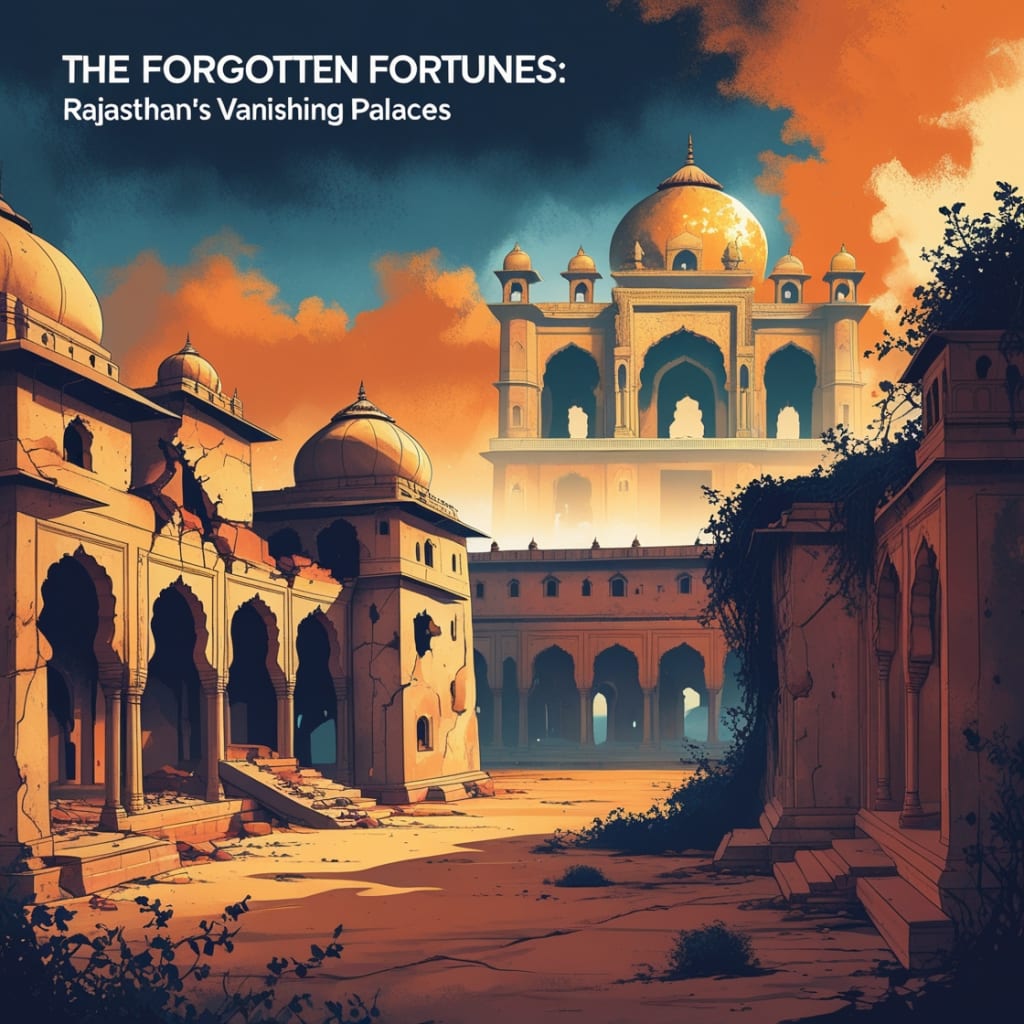
Whispers in the Sand: The Forgotten Palaces of Rajasthan
Rajasthan—literally meaning “Land of Kings”—is often celebrated for its grand forts, regal culture, and tales of valiant warriors. Cities like Jaipur, Udaipur, and Jodhpur boast world-renowned palaces such as the City Palace, Hawa Mahal, and Mehrangarh Fort. However, beyond the popular tourist trail lies another Rajasthan—one composed of forgotten palaces, crumbling mansions, and vanishing architectural wonders. These structures, once the pride of princely estates and merchant kingdoms, now lie in ruins, hidden under layers of dust and silence, their stories fading with each passing year.
This article explores the fascinating, overlooked world of Rajasthan’s vanishing palaces, their historical importance, and the urgency of preserving this disappearing legacy.
1. The Legacy of Forgotten Royalty
Rajasthan was once divided into numerous princely states, or thikanas, each ruled by powerful feudal lords under the larger umbrella of Rajput dynasties. While the capital cities boasted palaces that remain preserved and visited today, hundreds of lesser-known palaces in remote districts like Karauli, Barmer, Shekhawati, Bundi, and Tonk are in disrepair.
These estates were not just royal residences but also centers of political power, art, culture, and wealth. From ornate mirror work and hand-painted murals to secret courtyards and underground chambers, they were a testament to the region’s architectural brilliance. Many of these palaces were even grander than some of today’s iconic buildings.
Yet after the end of princely rule in 1947 and the eventual abolition of royal privileges in 1971, many of these thikanas were left without adequate income or recognition. Over time, the families moved out, and the palaces fell into decay.
2. Shekhawati – The Fading Open-Air Museum
Nowhere is the decline more visible than in Shekhawati, a region once called the "open-air art gallery of Rajasthan." It was home to some of India’s wealthiest merchant families during the 18th and 19th centuries, who built lavish havelis (mansions) adorned with frescoes, gold leaf work, and intricate carvings.
Today, most of these havelis—particularly in towns like Mandawa, Nawalgarh, and Fatehpur—are crumbling. Many have broken roofs, faded murals, and are used as storage barns or have been completely abandoned.
Historians estimate that more than 2,000 such structures exist, many of them worthy of World Heritage recognition, but less than 10% are maintained.
3. The Royal Estates of Forgotten Forts
Beyond Shekhawati, several other thikanas hold palaces that are fading into obscurity:
Bundi Palace: Though renowned for its wall paintings, much of the structure remains unrestored. Entire chambers with priceless murals have been left to rot.
Karauli Palace: Home to the Yaduvanshi kings, this palace has intricate stonework and halls once gilded with gold. However, tourism is minimal, and preservation efforts are limited.
Kuchaman Fort: Perched atop a steep hill, this fort-palace is mostly unknown outside local circles. While a section has been converted into a heritage hotel, vast areas are abandoned.
These forts once housed libraries, treasuries, weapon stores, and artworks—many of which have been stolen, lost, or deteriorated due to lack of care.
4. What Was Lost: Treasure, Culture, and Identity
Rajasthan’s forgotten palaces weren’t just about stone and mortar. They held:
Historical Manuscripts: Genealogies, treaties, and philosophical texts.
Treasure Rooms: Coins, jewelry, gold-plated furniture.
Royal Paintings: Many now looted or held in private collections abroad.
Local Art Forms: Wall art like Pichhwai, Miniature, and Phad paintings, which are vanishing.
The cultural identity of many small towns was tied to their palace. As the buildings collapsed, so did traditional crafts, festivals, and a sense of communal pride.
5. Why the Palaces Vanished
Several factors have contributed to this decline:
Neglect after Independence: Many royal families were left without adequate funds to maintain their properties.
Urban Migration: Heirs moved to bigger cities, abandoning ancestral homes.
Lack of Government Support: ASI and state bodies often prioritize well-known sites, leaving smaller palaces undocumented.
Looting and Encroachment: Several properties have been vandalized, illegally occupied, or stripped for building materials.
6. The Path Forward: Restoring a Legacy
Not all hope is lost. A few passionate individuals and NGOs are working to restore forgotten palaces and promote them through heritage tourism. For example:
The Neemrana Group has restored several old palaces into boutique hotels.
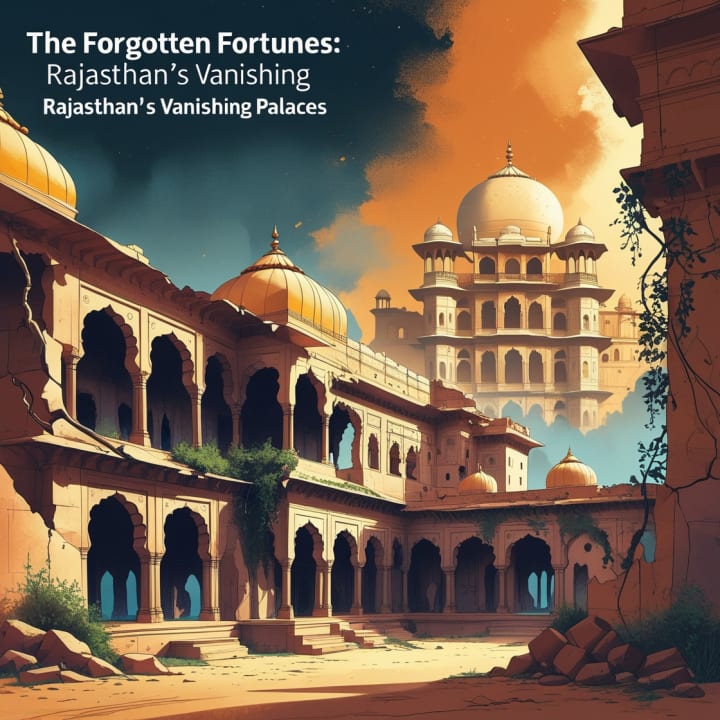
Shekhawati Heritage Trust works to raise awareness of the fading havelis.
Young descendants of royal families are trying to reopen old libraries and galleries for public view.
However, large-scale intervention is needed. If even 20% of Rajasthan’s forgotten palaces were restored and promoted, the region could gain millions in tourism revenue and reclaim its position as a center of culture and heritage.
Conclusion
Rajasthan’s vanishing palaces serve as a powerful metaphor for forgotten glory—a land that once sparkled with royal treasures and tales of bravery now echoes with silence. These palaces are more than architecture; they are living history books, waiting to be read again.
Reviving them is not just about tourism or luxury—it’s about reconnecting with India’s forgotten soul. Before the sands of time completely bury these marvels, we must shine a light on them once again.
About the Creator
Say the truth
"Say the Truth: Explain Everything in the World" is your trusted source for uncovering facts and exploring the wonders of history, science, technology, and beyond. We simplify complex ideas and reveal truths to inspire curiosity .
Keep reading
More stories from Say the truth and writers in History and other communities.
“The Fortune That Escaped the Empire: British Colonialism’s Greatest Missed Treasures”
The Lost Riches: The Biggest Treasure Missed by the British Empire Throughout the era of colonial expansion, the British Empire plundered immense wealth from its colonies across Asia, Africa, and the Americas. From India's diamonds and spices to Africa’s gold and minerals, Britain amassed unprecedented fortunes. However, history also holds fascinating accounts of enormous treasures that evaded British grasp—treasures buried, lost, or hidden in plain sight, never to be seized by the crown. Among these, one of the most legendary missed fortunes lies in India: the hidden treasures of the Maratha Empire and Tipu Sultan’s lost wealth.
By Say the truth 10 months ago in History
3 Harmless Habits That Once Caused Absolute Chaos
Most habits are comfortingly dull. You chew gum. You clap at events. You check your phone. You assume—reasonably—that these actions will not destabilize governments, bankrupt industries, or end lives. Society depends on this assumption. If every small habit carried catastrophic potential, we would never leave the house.
By Enoch Sagini4 days ago in History
Brosley Punch — The Strike That Shook Fate
Brosley was never taught how to throw a punch. He learned it the hard way—through hunger, through survival, through a childhood spent on a world that showed no mercy. Long before the universe would whisper his name in fear, Brosley was just a boy standing on cracked red stone, staring at a sky that never answered his questions.
By The best writer 2 days ago in History


Comments
There are no comments for this story
Be the first to respond and start the conversation.